At Mezzecrete, a Tuscan Estate Turns Heritage and Traceability Into Award-Winning Olive Oil
At Mezzecrete in Tuscany’s Crete Senesi, Patrick Zinelli has built an organic olive oil project that combines deep family ties to the land with modern traceability tools.
The Mezzecrete farm lies in the heart of the Crete Senesi, a striking area south of the Tuscan city of Siena known for its rolling clay hills, gullies and cliffs.
The area’s distinctive landscape was shaped by clay and marine sediments dating to the Pliocene era, between 2.5 and 4.5 million years ago. Over time, those ancient layers formed the undulating terrain that now defines this part of Tuscany.
I believe that we farmers have both the merit and the responsibility to care for and safeguard this extraordinary landscape.
In the village of Asciano, the Mezzecrete estate extends across 260 hectares of woodland, arable land, natural truffle ground, vineyard and olive groves. From that orchard, the company produces Olio Nece, its organic Terre di Siena PDO extra virgin olive oil, which earned a Gold Award at the 2026 NYIOOC World Olive Oil Competition.
“It all began with my wife Martha’s grandfather, Arturo Mezzedimi, who, at a young age, started working in eastern Africa and, as the architect to the last Emperor of Ethiopia [Haile Selassie], designed major projects of institutional and social relevance,” Patrick Zinelli told Olive Oil Times. “When the revolution broke out, in the 1970s, he returned to Italy.”
“Originally from Siena, he maintained a strong connection to his hometown, for which he had a special affection,” Zinelli said. “His love for the city, today a UNESCO World Heritage Site, and for the beautiful landscape surrounding it was passed down to his son Sergio with his wife Caterina and to his grandchildren Martha and Marcello. This inspired them to eventually create a farm in the area, in a corner of remarkable beauty.”
In 2002, the family established Mezzecrete, combining “Mezz,” the opening of their surname and an element once used in Arturo Mezzedimi’s logo studio, with “Crete,” a reference to the surrounding landscape of the Crete Senesi.
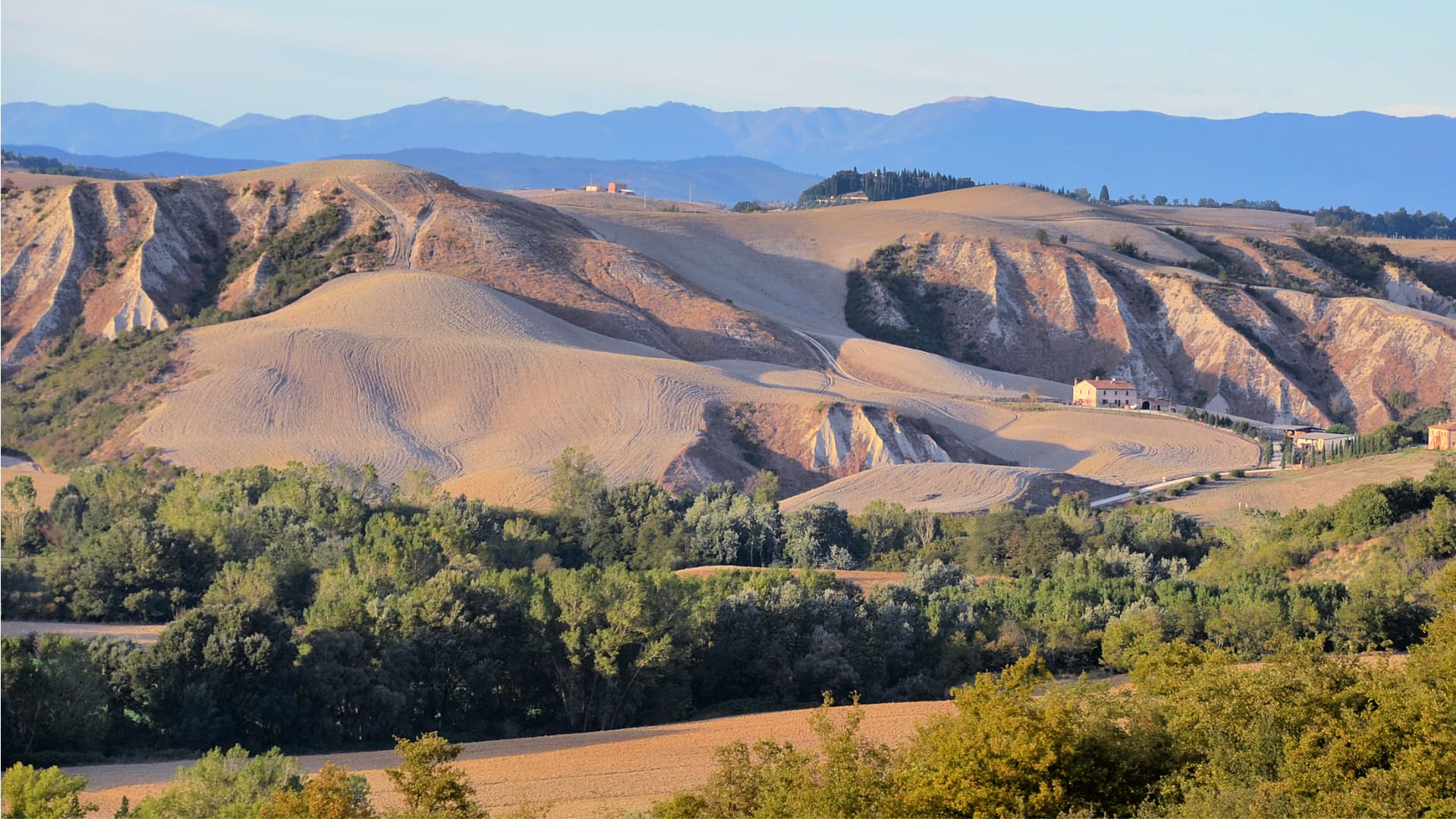
The distinctiveness of the Crete Senesi lies in the warm gray soil with subtly shifting hues, formed by the presence of clay and marine sediments dating back to the Pliocene era.
The property originally included a one-hectare olive grove. As the company decided to make olive oil one of its flagship products, the grove was expanded to 10 hectares and converted to organic production.
The new plantings were selected from traditional Tuscan olive varieties, including Leccino, Frantoio, Moraiolo and Pendolino, to meet the requirements of the Terre di Siena Protected Designation of Origin.
Within hours of harvest, the fruit is taken to Oliviera Sant’Andrea in Sinalunga, a mill equipped with advanced technology designed to ensure high processing standards.
To help consumers follow the oil’s path from grove to bottle and verify its chemical and organoleptic characteristics, the company introduced a blockchain-based traceability system accessible through a QR code on each Olio Nece bottle.
“I realized that there was useful information we could offer consumers beyond what appears on the label. That is why I decided to embrace blockchain traceability, which works like a digital passport,” Zinelli said. “Through a QR code, consumers can access data such as the certificate issued by the Terre di Siena DOP control body, the full profile including polyphenol levels, as well as the harvest period and fruit yield. All these details provide further assurance of the oil’s quality and document each step we have taken to craft a top-tier product.”
While the company relies on technology to communicate its commitment to quality, it also remains closely tied to local tradition and the territorial legacy that continues to shape its identity.
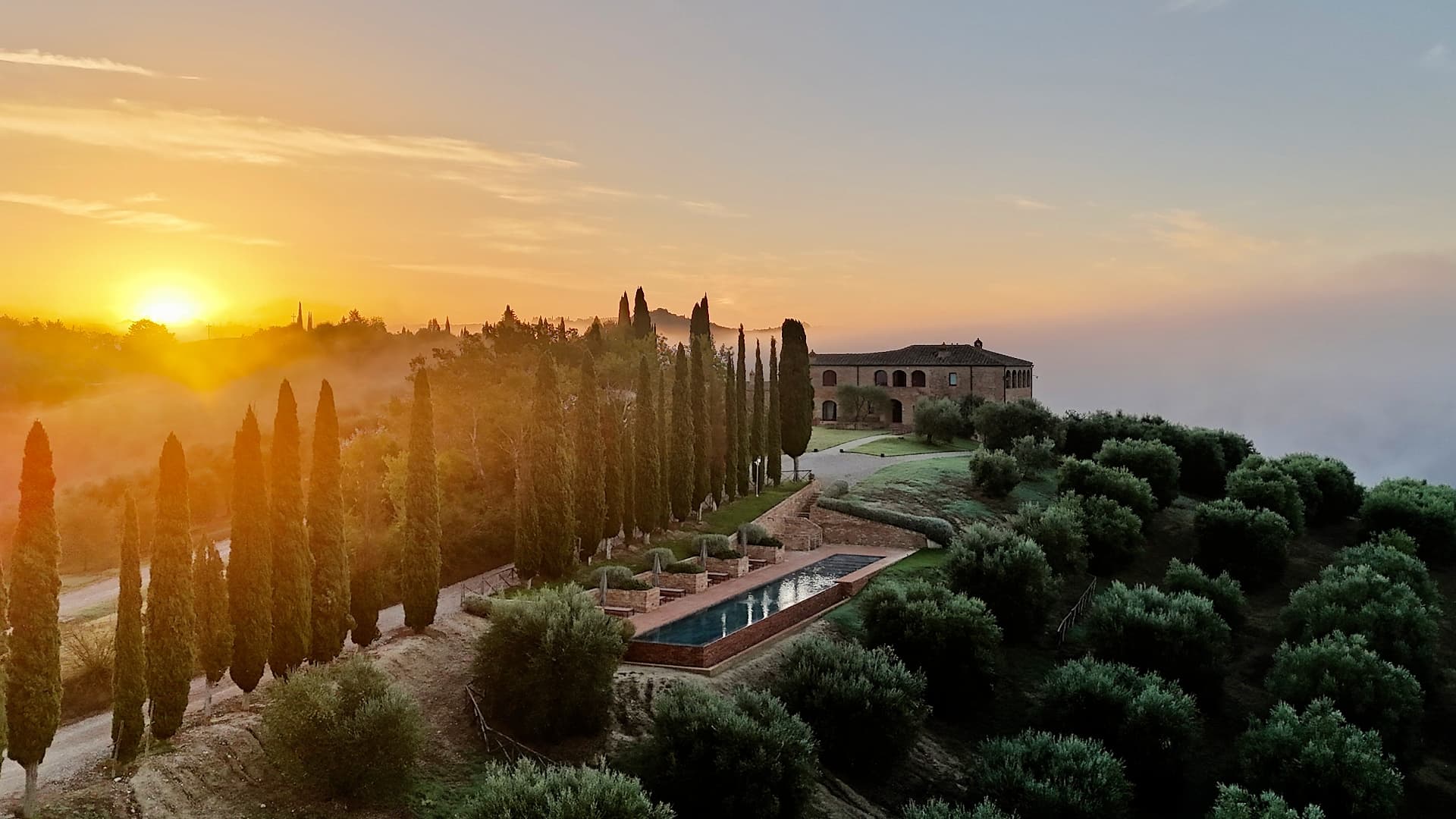
The Mezzecrete estate sits near the Abbey of Monte Oliveto Maggiore, a major monastic complex founded in 1313, whose community has ever since upheld a longstanding tradition of olive oil production.
“To strengthen the link with the history of this land, we named our oil after the name of this area in medieval times, when it formed part of the holdings of the nearby Abbey of Monte Oliveto Maggiore,” Zinelli said.
A landmark in the region, Monte Oliveto Maggiore is a major monastic complex founded in 1313, and its community has long maintained a tradition of olive oil production.
Zinelli said a 1383 sharecropping contract found in the monastery’s ancient library recorded that a tenant farmer rented olive groves from the abbey in the district of Nece. That earlier toponym, slightly different from the current one, was later chosen as the name of the oil.
More recently, the company revived a seven-hectare stretch of white-truffle ground on the property and established a two-hectare vineyard of native grape varieties, including Sangiovese, Canaiolo and Vermentino.
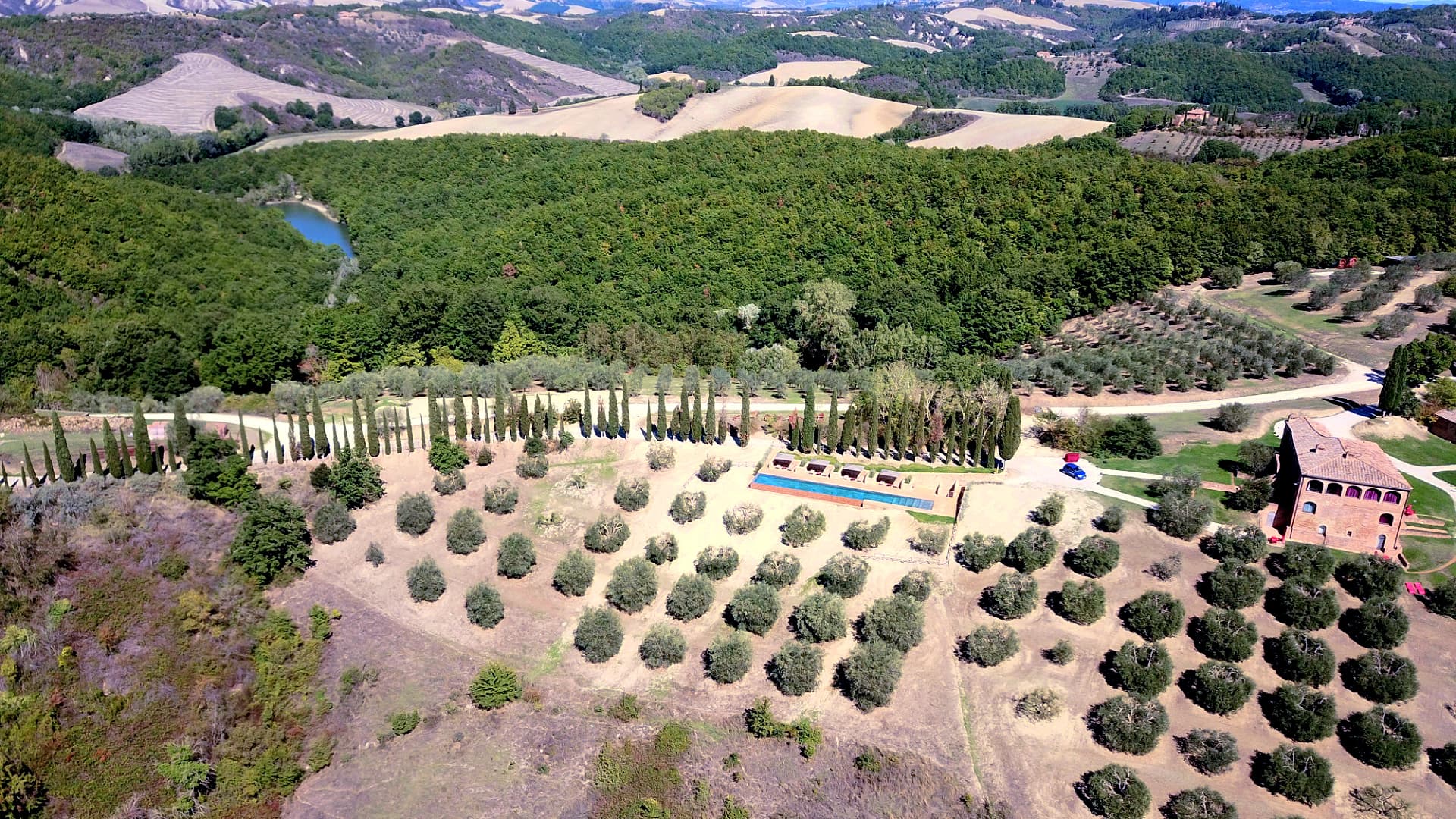
In the village of Asciano, the Mezzecrete estate cover 260 hectares, comprising woodland, arable fields, a natural truffle-ground, a vineyard and an olive grove.
The estate also includes a one-hectare rain-fed reservoir used for emergency irrigation during periods of scarce rainfall.
“We converted the farm to organic, because I believe this is a fundamental requirement that aligns with our commitment to managing the land sustainably,” Zinelli said.
He added that the olive trees retain a traditional planting pattern, a deliberate choice intended to respect the landscape and preserve environmental balance.
“Working on these slopes can be demanding because of the characteristics of the terrain, with its unevenness, which requires extra effort,” he said. “I believe that it is important to convey to consumers the great work and the year-round dedication that go into managing our orchards with the aim of obtaining a product of the highest quality.”
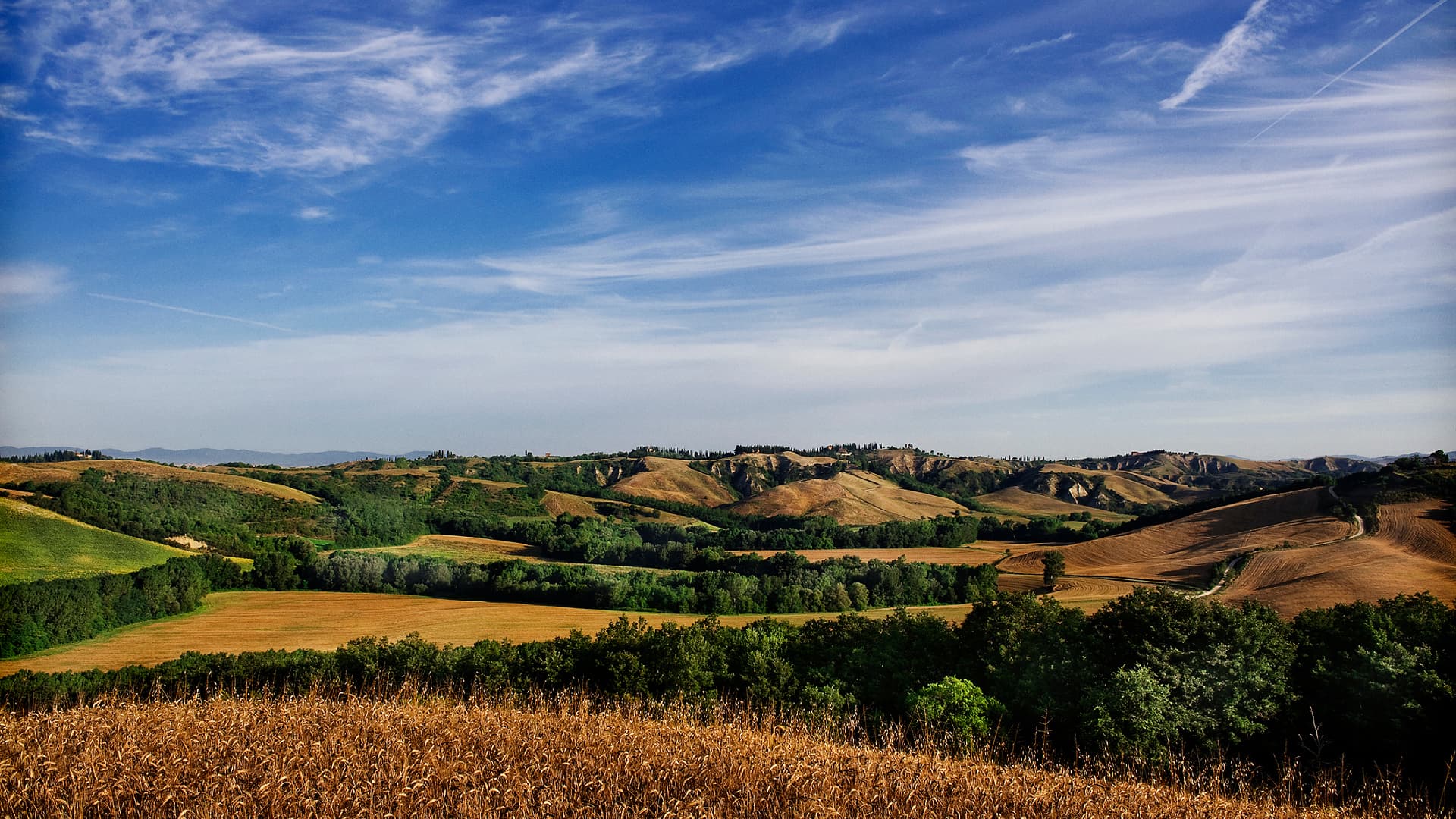
The Mezzecrete farm is nestled at the heart of the Crete Senesi, south of Siena, in Tuscany.
Zinelli said he began dedicating himself fully to the company in 2012, after a successful career in investment banking.
“My wife and I were expecting our first child, and this was a major factor that convinced me to put my job aside, so I could be more present with them. Initially, I intended to follow only the real estate development project on the property, but then I was really drawn to olive oil production,” he said. “It was a real enlightenment. I began training, becoming an olive oil sommelier and focusing on high-quality production. I literally left banking for the land, and today the joy of crafting exceptional extra virgin olive oil, crowned by the NYIOOC awards, confirms that this journey is as rewarding as it is meaningful.”
“We have the privilege to live and work in a wonderful place, and we take great care to integrate the company and all its structures into the surrounding environment,” Zinelli added. “Our activity must necessarily include a commitment to safeguarding a landscape that can truly be called iconic. Our olive groves also play a major role in this, and I believe that we farmers have both the merit and the responsibility to care for and safeguard this extraordinary landscape.”