Portuguese Olive Oils Find New Path to U.S. Market
A network of Portuguese producers working with Wildly Virgin is bringing small-batch olive oils from Alentejo, Trás-os-Montes and Ribatejo to U.S. consumers, backed by three Gold Awards at the NYIOOC.
Some of Portugal’s finest olive oils may be finding a new path to the U.S. market as a handful of producers from across the country come together under a single brand whose oils have earned three Gold Awards at the NYIOOC World Olive Oil Competition.
As you begin exploring Portugal, you quickly realize how amazing Portuguese olive oil is and how little most of the world knows about it.
A U.S.-based olive oil sommelier with a background in technology who now spends much of his time in Portugal, Wildly Virgin co-founder Nader Akhnoukh has spent the past decade building a network of traditional quality growers in regions ranging from the rolling plains of Alentejo to the steep terraces of Trás-os-Montes and the milder landscapes of Ribatejo.
“As you begin exploring Portugal, you quickly realize how amazing Portuguese olive oil is and how little most of the world knows about it,” Akhnoukh told Olive Oil Times. “That is even truer in the United States. There’s some olive oil from California and there’s Greek and Spanish, Italian, but nobody really talks about Portuguese olive oil. Once you are here, you realize very quickly that the secret to the food is just the olive oil.”
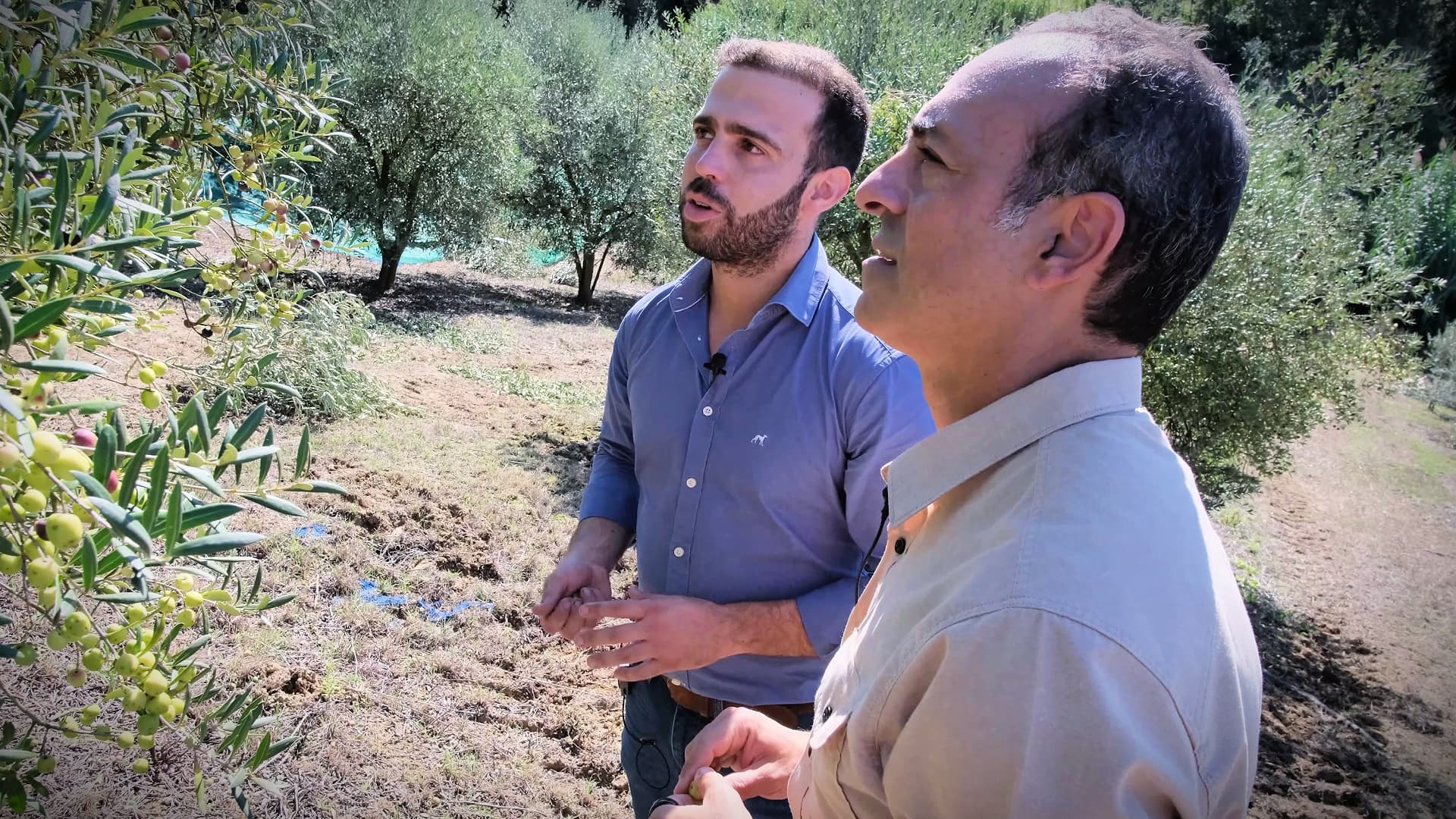
Akhnoukh with producer João Mendes in Ribatejo
According to Akhnoukh, Wildly Virgin does not operate groves or mills. Instead, the company positions itself as a curator, traveling across Portugal to identify exceptional producers, often family-run operations rooted in generations of experience. These growers retain their independence, while part of their production is selected, bottled under the Wildly Virgin label and introduced to international consumers.
While not limited to certified organic farms, Wildly Virgin works with producers that follow organic practices or similar approaches. Traditional harvesting methods, including hand-picking and mechanical raking, are favored over fully automated systems, especially in regions where terrain makes industrial methods impractical.
From Akhnoukh’s perspective, those choices are linked not only to environmental considerations but also to sensory results. “I find that the super-intensive oils don’t have the same depth of flavor,” he said.
Building the network has required constant travel and years of relationship-building. “It’s really word of mouth. I talk to somebody, and they say this person makes a really nice olive oil, and I go meet them, and they introduce me to other people,” Akhnoukh said. “At the beginning, I would just show up or call somebody and ask if I could come visit their farm.”
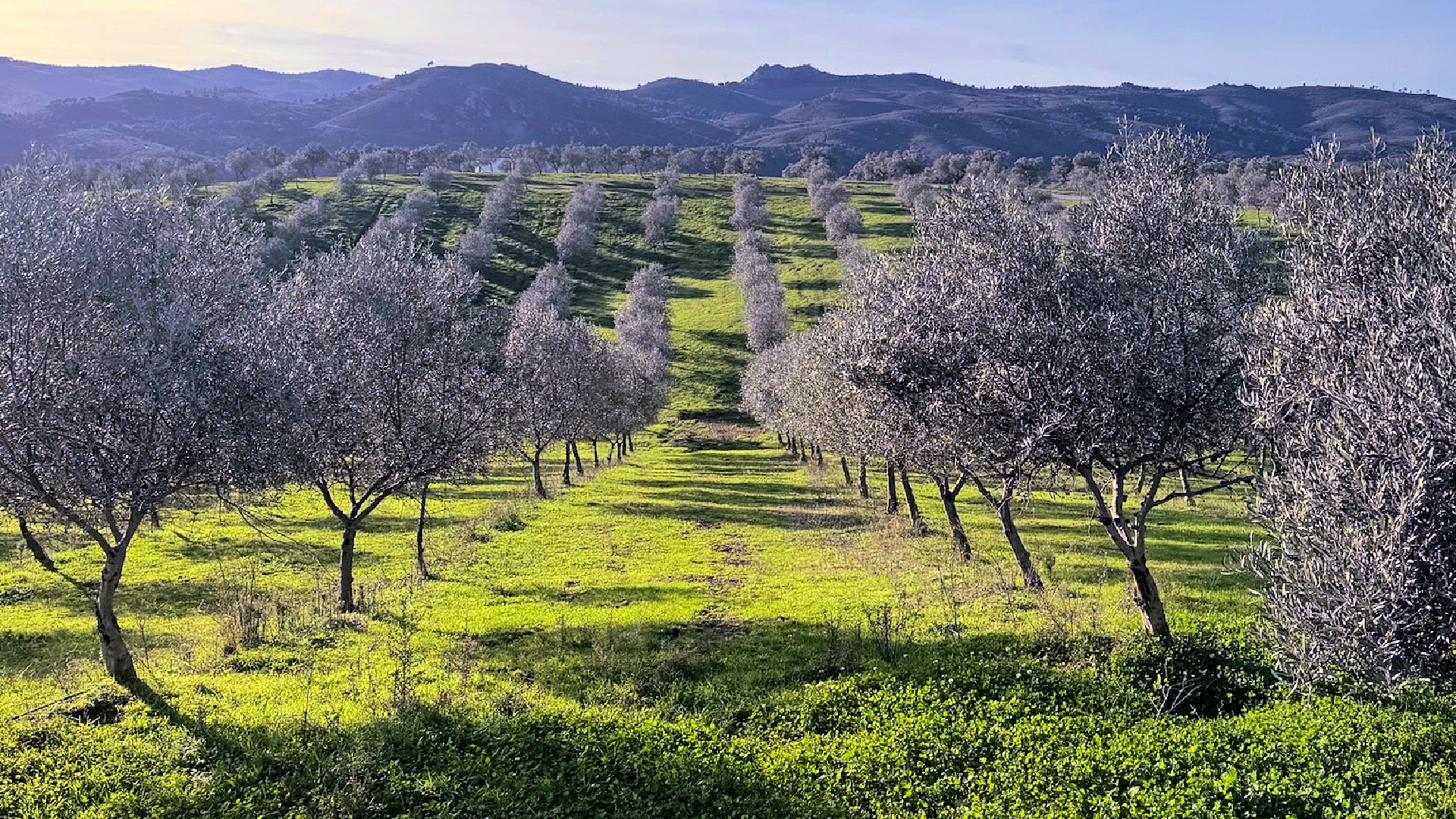
Groves in northern Portugal
“These are all people that I know. These are people I have meals with and WhatsApp with all the time. We have good relationships,” he added.
Akhnoukh said each oil comes from a single producer, a single farm and a single harvest. “Each product is between 600 and 2,300 bottles,” he noted. Those volumes allow for a level of control that would be difficult to maintain on an industrial scale while preserving the distinctive characteristics of each origin.
Forte, the first of the winning extra virgin olive oils, is produced in the sunbaked plains of Alentejo and built around the rare Coreana varietal grown in rocky soils that limit yields but contribute to its robust, complex profile.
Farther north, in Trás-os-Montes, the second Gold Award winner, Joaquim’s Reserve, comes from ancient groves of old Cobrançosa trees growing in a harsh mountainous environment where unpredictable yields give rise to structured, elegant oils.
Also rooted in northern Portugal, Verde is a Gold Award-winning PDO blend that reflects a long and certified regional tradition. The blend can include Cobrançosa, Madural, Cordovil and Verdeal olives under the PDO protocol.
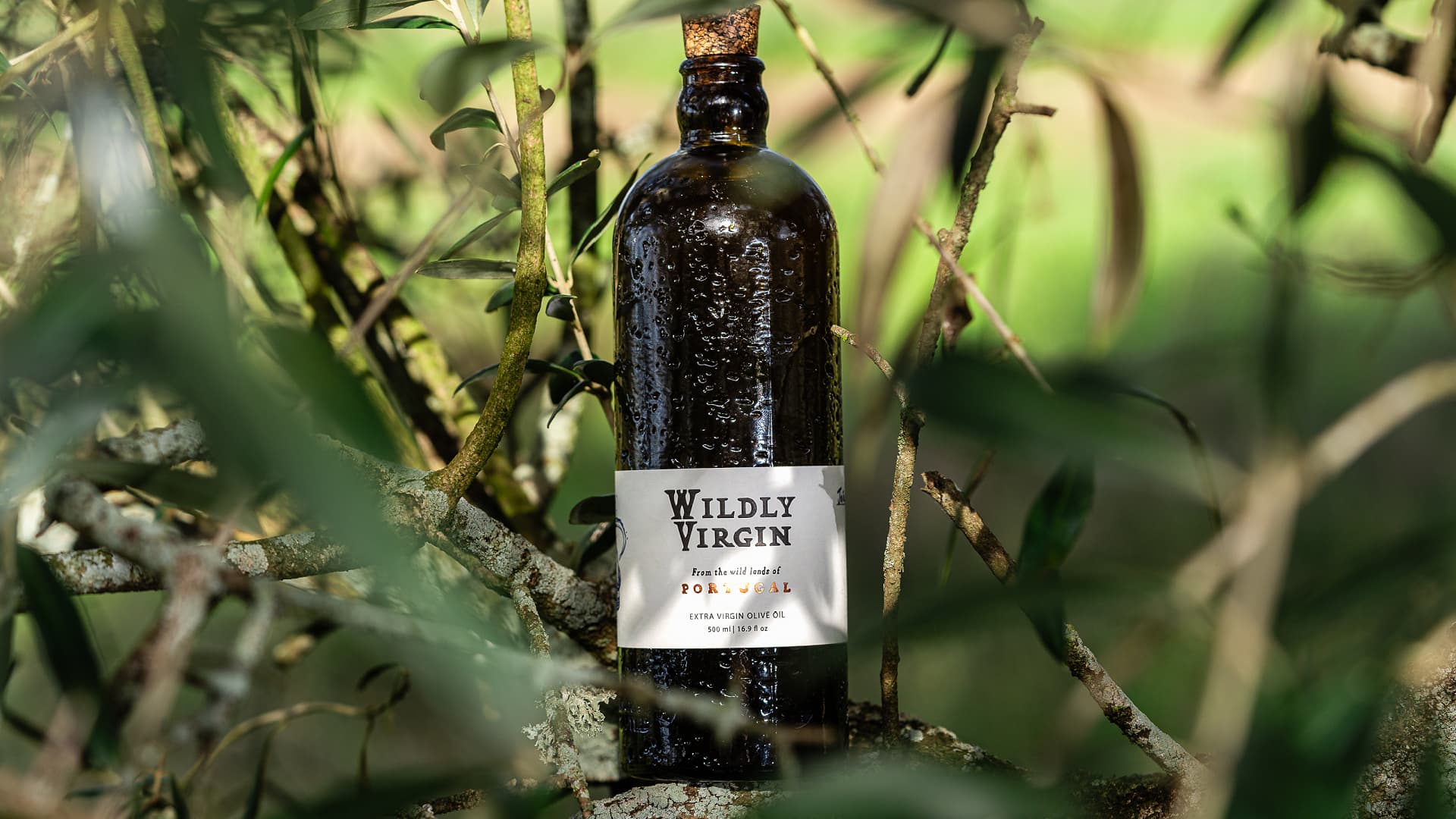
A Wildly Virgin bottle
Akhnoukh said Portugal’s olive oil sector is both complex and evolving. Large-scale, super-intensive groves have expanded, particularly in the south, bringing efficiency and volume. At the same time, a dense network of smaller, traditional producers continues to operate, often in difficult terrain where mechanization is limited or impossible.
According to Akhnoukh, the diversity of Portuguese terroirs plays a central role in Wildly Virgin’s search for quality. In Alentejo, where summers are hot and dry, olive oils tend to show intensity, with pronounced fruitiness, bitterness and pungency. Moving north, Ribatejo produces oils shaped by milder conditions, while Trás-os-Montes brings altitude, colder winters and a greater prevalence of native varieties.
“We’re trying to tell the story of Portugal through the olive oils. Not just one style, but different regions, different varietals, different expressions,” Akhnoukh said.
He added that varieties such as Cobrançosa and Galega can also serve as tools for consumer education, especially in markets where olive oil is still seen as a mostly uniform product. “I feel that olive oil is maybe where wine was 30 years ago,” he said. “People are only now starting to understand that there are different olive varietals and the olive oil they produce tastes different.”
“Most people do not know that there are so many different cultivars and olive oils, at least not in the United States,” he added.
That educational approach is also reflected in the company’s labeling. Each bottle carries detailed information about its contents, including varietal composition, harvest date, origin and, in some cases, technical parameters such as polyphenol content and acidity.
According to Akhnoukh, the goal is both to inform consumers and build trust. “We don’t want to hide anything. We’re proud of what we have, so we show it,” he said.