Rome Festival Celebrates Olio di Roma PGI and the City’s Olive Oil Heritage
Rome’s first Olio di Roma PGI Festival brought together tastings, talks, tours and cultural programming to showcase the capital’s deep-rooted connection to extra virgin olive oil.
Rome hosted the inaugural edition of the Olio di Roma IGP Festival from April 10 to 21, highlighting the city’s cultural and agricultural heritage through a wide-ranging program that drew strong interest from the public and sector professionals.
The timing of the initiative was deliberate. The festival coincided with the day marking the city’s birth: according to legend, Romulus founded Rome on April 21, 753 B.C., when he traced the first sacred furrow defining its original boundary, on a day already consecrated to the ancient pastoral feast of the Palilia.
The festival featured olive oil tastings, talks, live culinary demonstrations, edutainment workshops for schools and guided tours, along with the presentation of the book “L’Olio di Roma,” published by the Rome Chamber of Commerce and curated by Agro Camera.
The concluding day featured the L’Eterno Award in the prestigious setting of the Curia Iulia, the ancient seat of the Roman Senate. The recognition honored individuals and organizations that contributed to promoting extra virgin olive oil culture and Roman heritage.
Among the honorees were journalist Susanna Savage, the Italian team competing in the Bocuse d’Or, Rai daytime director Angelo Mellone, journalist Patrizia Miotti on behalf of the television program Donnavventura, oncologist Debora Rasio, fashion designer Ilaria Venturini Fendi, fencer Daniele Garozzo, Marika Aakesson on behalf of the IED Istituto Europeo di Design and former Colosseum Archaeological Park director Alfonsina Russo.
“We thank the institutions for welcoming this initiative in the Eternal City,” Tiziana Torelli, vice president of the Olio di Roma PGI Consortium, told Olive Oil Times. “With this festival we aim not only to promote an agri-food excellence, but also to preserve a living cultural legacy, capable of connecting history and future through the bond between community, landscape and the supply chain.”
The event concluded with a guided visit to the Palatine Hill olive grove within the Colosseum Archaeological Park. It is one of the oleotourism itineraries presented by the Olio di Roma IGP Consortium as part of a program showcased the previous day at the Temple of Hadrian.
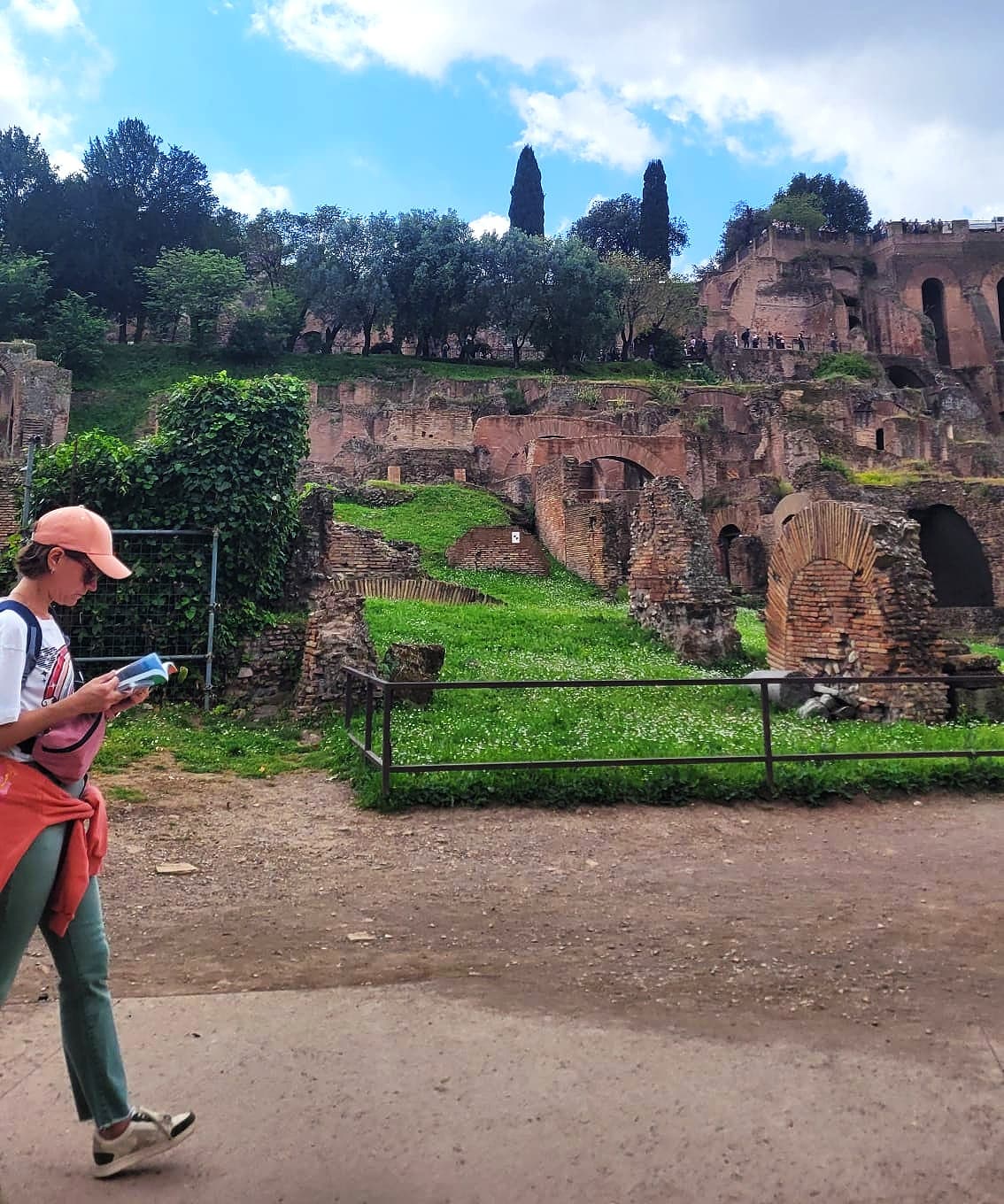
The Palatine Hill Olive Grove is one of the sites included in the oleotourism itineraries presented at the Olio di Roma IGP Festival (Photo by Ylenia Granitto)
The consortium also signed and presented the memorandum of understanding “Le vie dell’Olio di Roma IGP” (“The Routes of Rome’s PGI Olive Oil”) with the Italian travel industry federation FIAVET and ITS Turismo Academy.
Aimed at integrating culture, gastronomy and territory, the agreement is designed to highlight Roman olive growing as a historic and identity-defining heritage while expanding experiential and sustainable tourism activities that support the local economy and certified supply chains.
Below are three sites included in the oleotourism itineraries presented at the Olio di Roma IGP Festival.
Palatine Hill Olive Grove — Since ancient times, olive trees have been an integral part of the Palatine Hill landscape, which today contains the remains of Roman emperors’ residences. In his “Naturalis Historia,” Pliny the Elder mentions “ficus, olea, and vitis” — fig tree, olive tree and vine — among the plants cultivated in the area.
Today, the Palatine Hill olive grove is home to 189 olive trees from different periods, including century-old specimens near the Arch of Titus. From them, an Olio di Roma IGP-certified extra virgin olive oil is produced to enhance their archaeological and landscape value.
Temple of Hercules Victor — The oldest marble building in the city, the Temple of Hercules Victor stands in the archaeological area of the Forum Boarium, which served as the meat market in ancient Rome. Also known as the Temple of Hercules Olivarius, it was built in the 1st century B.C. by the Roman corporation of olive oil producers and dedicated to Hercules, protector of the agricultural world.
An expression of the longstanding relationship between olive oil production and the ancient Roman world, it is, together with the Pantheon and the Temple of Portunus, one of the three Roman temples preserved in their entirety.
Monte dei Cocci in Testaccio — In the heart of Rome’s historic Testaccio district, near the site of the ancient Roman river port, Monte Testaccio, also known as Monte dei Cocci, is an artificial mound made largely of fragments of olive oil amphorae used between the Augustan period and the mid-third century A.D.
Carefully stacked over time, the shards gradually formed the hill, which rises 36 meters above street level and has a circumference of about one kilometer. It stands as a one-of-a-kind archaeological site and an important source of information on the economic development of the Roman Empire and on ancient dietary habits.