For Some Olive Oils, Wind-Powered Cargo Adds New Appeal
For a small group of producers and importers, moving olive oil by wind alone is less about volume than about sustainability, positioning and a closer link between product and story.
A sailing cargo vessel recently unloaded French and Italian olive oils in New York, carrying them across the Atlantic by wind alone. Operated by French company Grain de Sail, the shipment points to a quiet but significant shift not only in how olive oil is transported, but also in how it is positioned and perceived, as logistics itself becomes part of the product’s story.
We produce olive oil without polluting, and then we transport it to America without polluting. It gives you chills.
More vessels are now crossing the Atlantic under sail with pallets of high-quality food, offering a low-impact mode of transport that could reshape how consumers value some olive oils.
“We did not invent it,” Tanguy Passini, operations and sales manager at Grain de Sail, told Olive Oil Times. “If you think about it, sailing cargo boats have been there since the beginning of navigation. What we did is put into it modern criteria, advanced ship design, technology and a lot of passion.”
Grain de Sail has operated in the North Atlantic for years, transporting raw materials such as green coffee beans and cocoa paste from Central America to France, initially for its own production, while exporting finished products to the United States. High-quality olive oil is the latest addition to that business.
The latest shipment grew out of the French activities of Dan Beekley, a longtime U.S. wine importer. “My lifetime career has been in wine,” Beekley told Olive Oil Times. “A lot of it happens behind the scenes. Most customers would have no idea how often a bottle or a box of wine moves around. It is shocking, actually.”
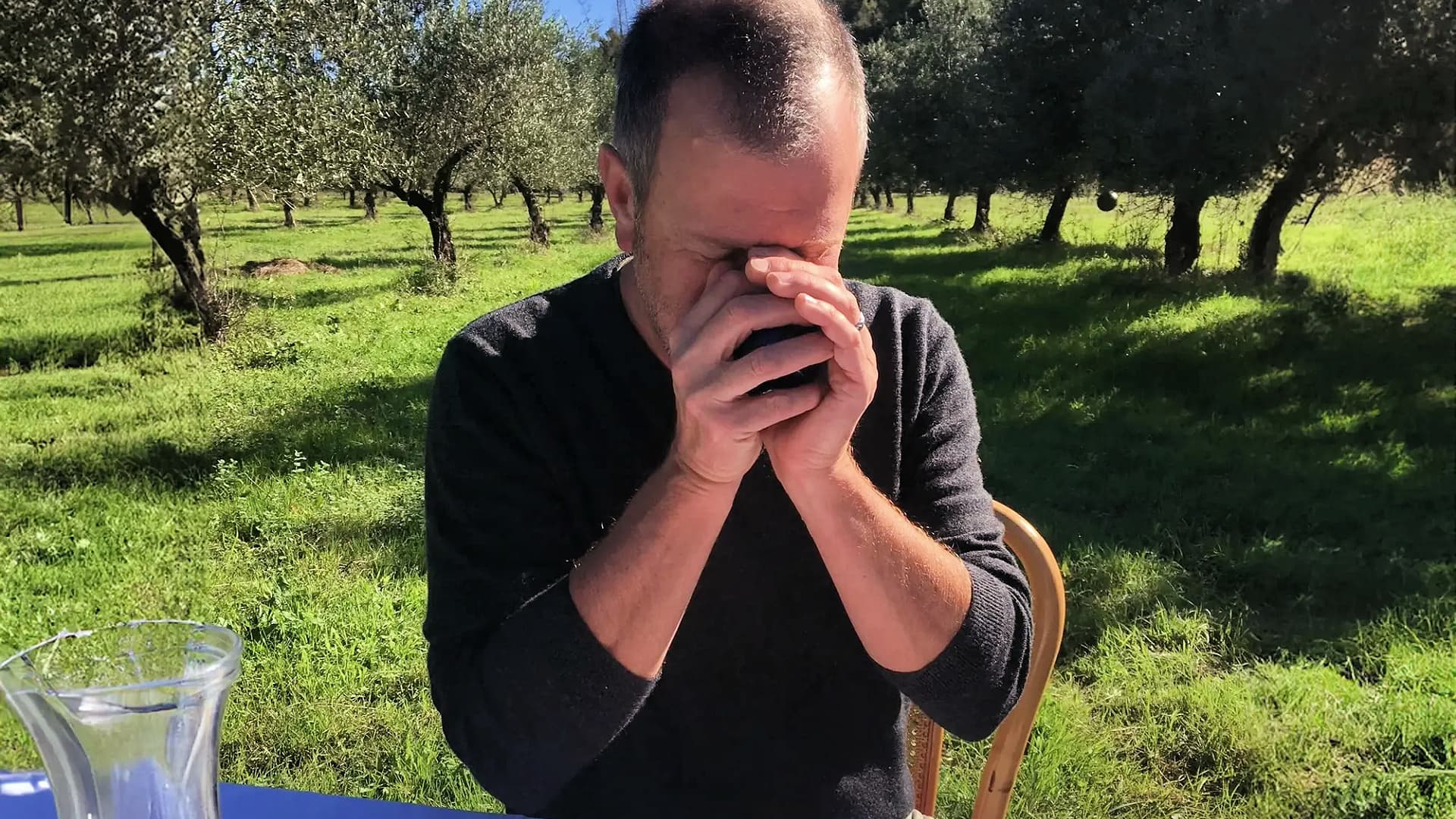
Dan Beekley, an olive oil sommelier, helped bring the first sail-powered shipment of selected European olive oils to New York, linking low-impact transport with a new approach to premium olive oil marketing. (Photo: Olivette.biz)
Beekley said his view changed further after entering the world of olive oil. “I did the Olive Oil Sommelier Certification Program organized by Olive Oil Times in London a couple of years ago, which was sort of an eye opener,” he said. “I was realizing there is a lot more to this world than I would have imagined.”
After decades of relying on conventional shipping, he said he became increasingly critical of its environmental cost. Olive oil, in his view, offered a chance to shorten the distance between producers and consumers and to align his business with his personal values.
For his first shipment to New York, Beekley selected oils from a small group of producers he knows personally. He and his wife traveled through France and southern Italy to meet them and taste their oils, later purchasing small quantities for sale in Europe and the United States.
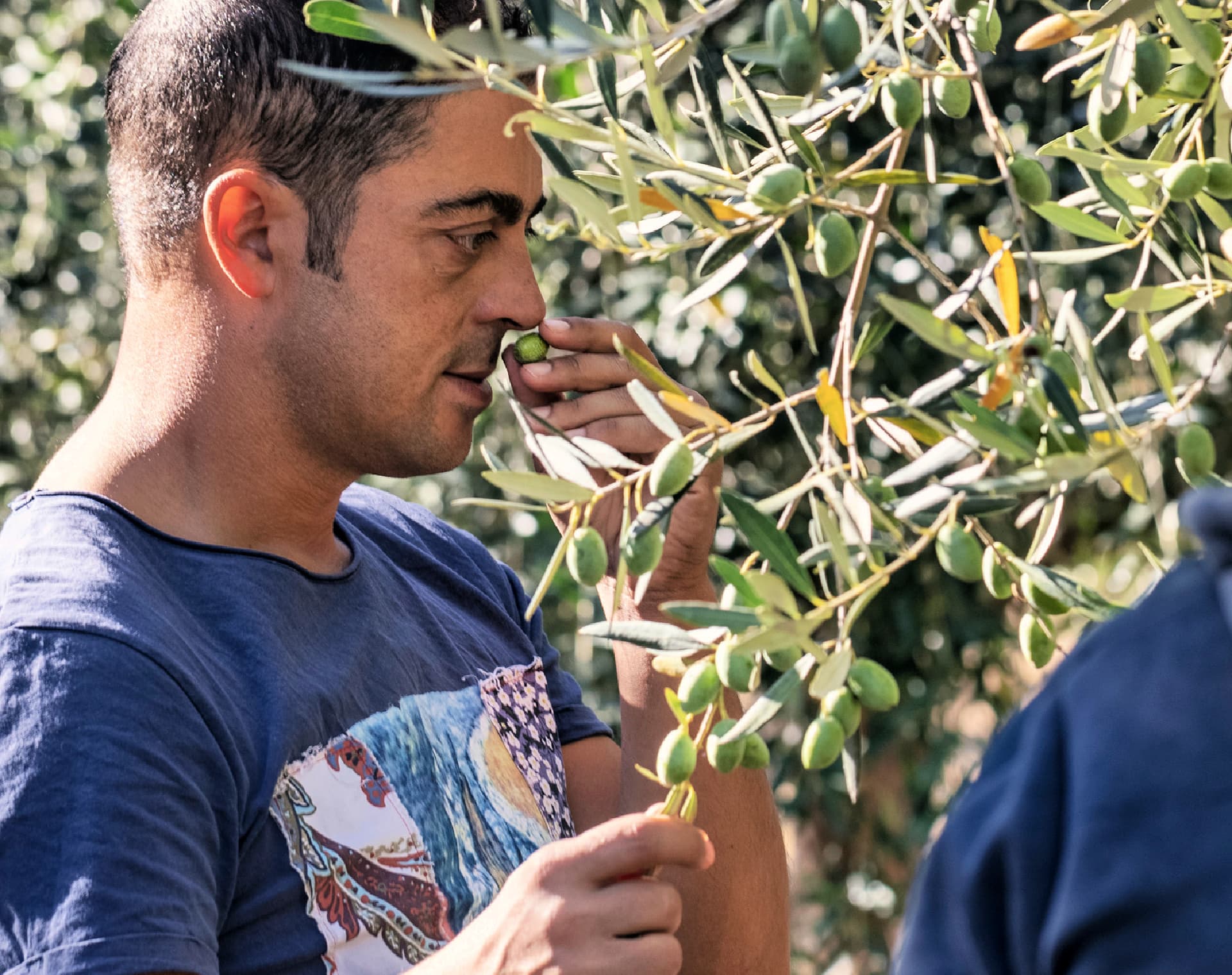
Francesco Mastrangelo, founder of Trespaldum in Molise, sees sail-powered shipping as a natural extension of the low-impact approach that shapes his olive oil production.
Among them is Francesco Mastrangelo, founder of Trespaldum, an olive mill in Italy’s Molise region. The company has spent more than a decade producing high-quality extra virgin olive oils. Its flagship is a Gentile di Mafalda monocultivar made from a variety Mastrangelo himself identified and registered in 2017.
“I have always processed olives with zero impact,” Mastrangelo said, pointing to investments in solar energy, biomass heating and circular waste use. “Nothing is thrown away. Everything we produce is reused within the system.”
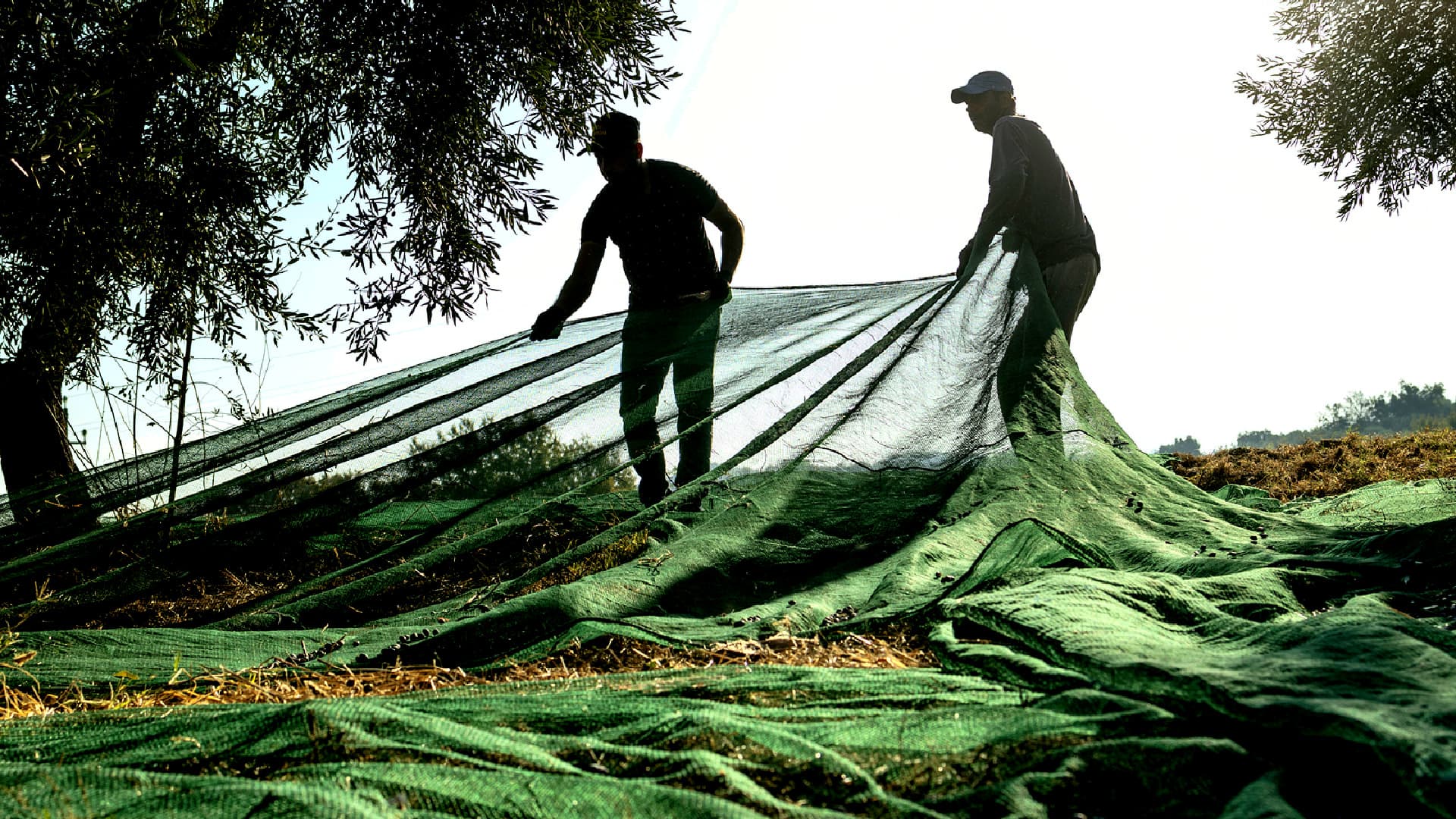
Harvest at Trespaldum
When Beekley proposed shipping olive oil across the Atlantic by sail, Mastrangelo said he embraced the idea immediately. “We produce olive oil without polluting, and then we transport it to America without polluting, in such a sustainable way,” he said. “It gives you chills.”
Shared values also drew Rosa and Giorgio Bianchini, producers in the central Italian region of Latium, into the project. “We select our partners based on sustainability and environmental values,” Rosa Bianchini told Olive Oil Times. “When we met Beekley we immediately saw we could partner with his idea. The project reflects exactly our mindset.”
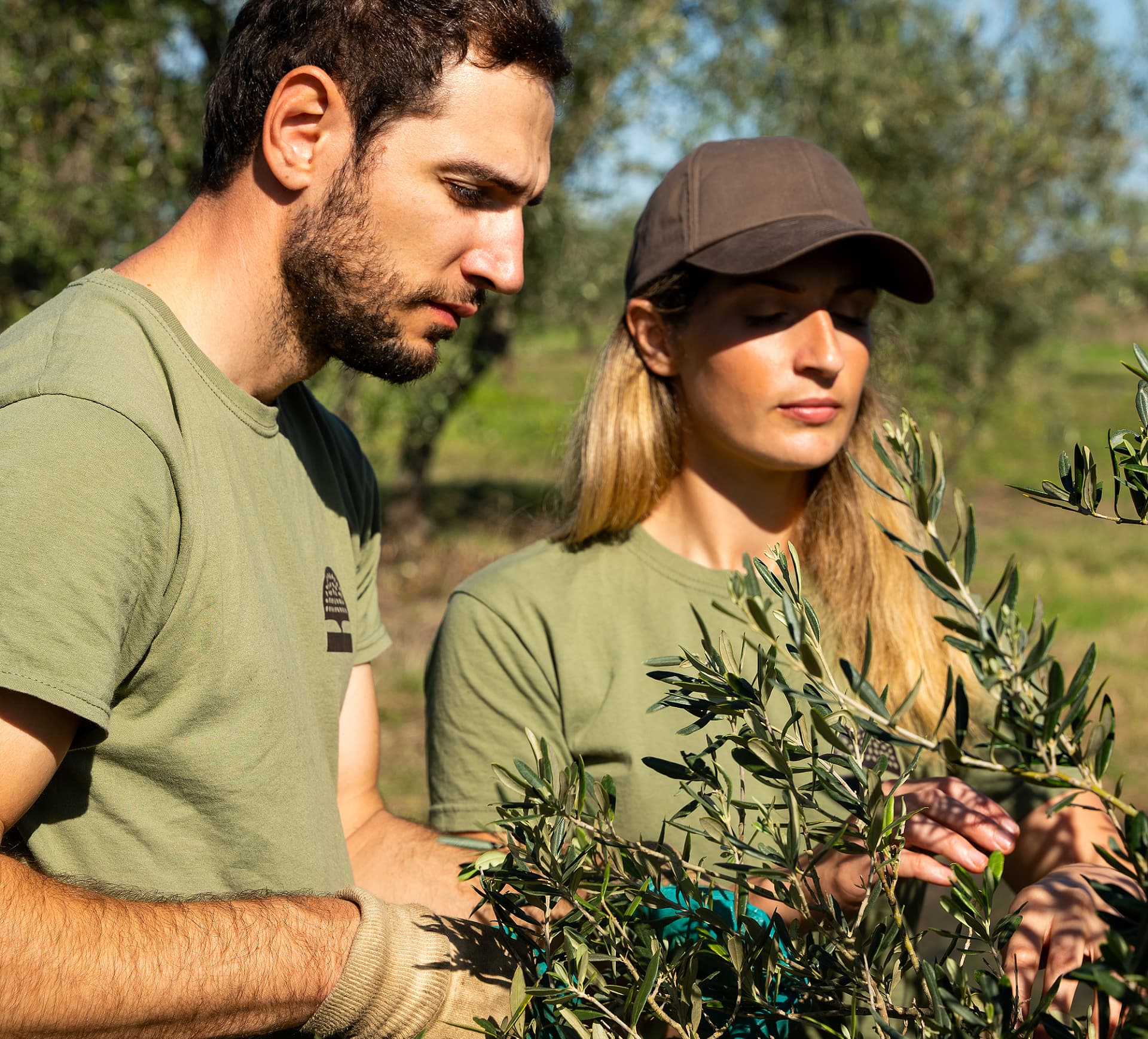
Rosa and Giorgio Bianchini, producers in central Italy, joined the sail-powered olive oil project as an extension of their data-driven, sustainability-focused approach to farming and quality.
Both engineers, the Bianchinis combine traditional farming with data-driven decision-making. They use weather stations and other tools to better interpret conditions in their groves. That same approach led them to introduce a thermochromic label that changes when storage temperatures exceed 20 degrees Celsius, then returns to normal when conditions improve.
Bianchini said the label was designed both to raise awareness and to help consumers preserve olive oil correctly at home.
Production at the estate remains intentionally small, at around 50-60 quintals per year, with a focus on quality rather than scale. Bianchini said sail-powered shipping is unlikely to drive large volumes, but it offers something else: positioning, communication and a way to connect with consumers, especially younger ones, through sustainability.
Beekley said he expects the project to grow to at least ten producer partners by the end of the year. “In the next three months we will introduce two more, one from Portugal and one from Italy,” he said. “If I get to ten suppliers, I think I can have suppliers that I can lean on every year and also have a handful that I know I can pick up every time a sailboat moves.”
Grain de Sail’s fleet crosses the Atlantic from Saint-Malo, in Brittany. The company now operates two purpose-built vessels. Grain de Sail One entered service in 2020, while Grain de Sail Two began operations in 2024 and can carry roughly 350 tons of goods, about ten times the capacity of the first vessel.
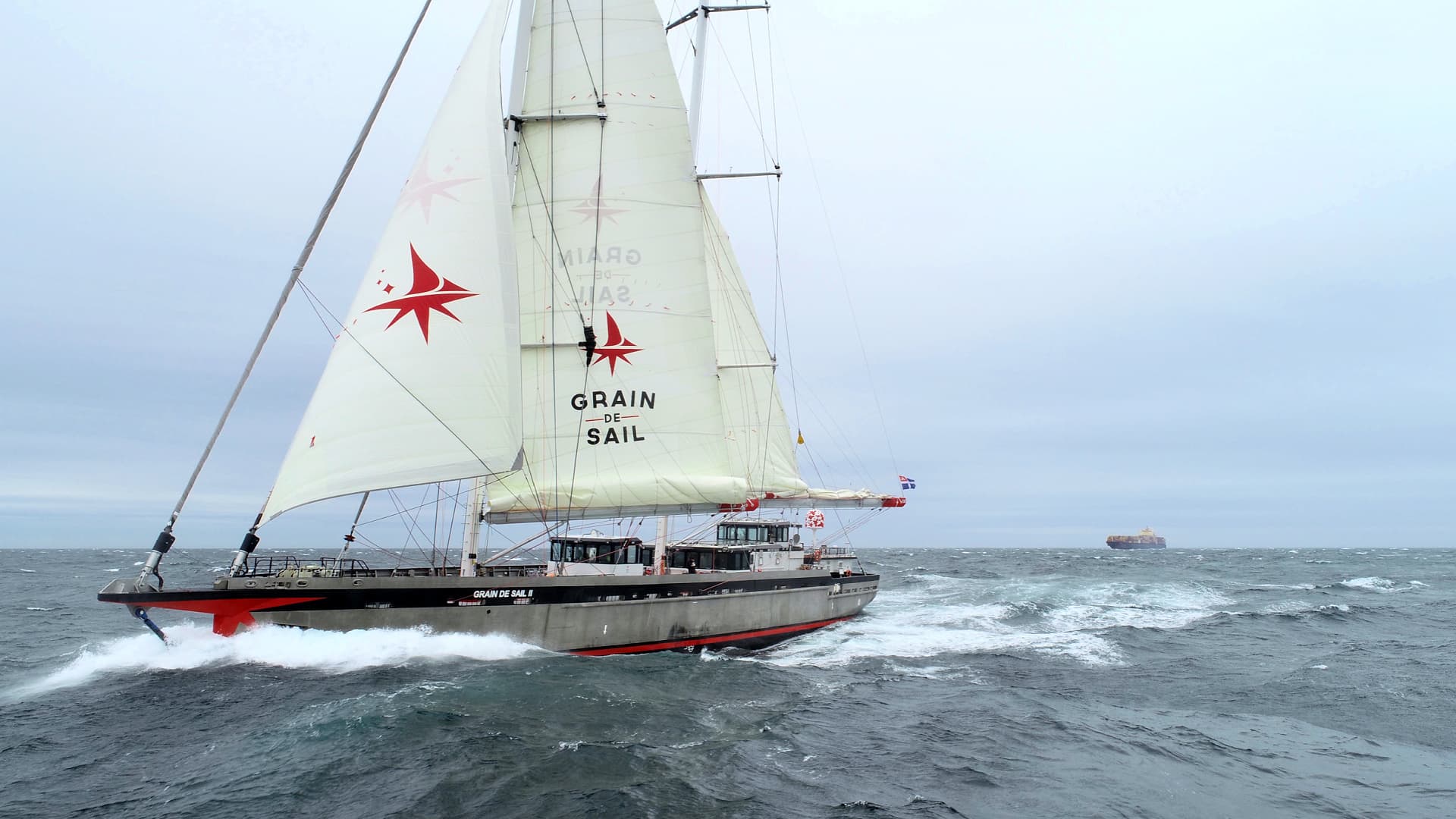
Grain de Sail II, the company’s second purpose-built cargo sailer, is expanding the capacity of trans-Atlantic wind-powered shipping for premium foods, including olive oil. (Photo: Loys Leclercq)
The company is now building a third and much larger sail-powered cargo ship, this time a container vessel, with the aim of reducing transport costs through greater scale.
Passini said the company’s choice of smaller ports is part of the model. Saint-Malo helps avoid congestion at major European hubs such as Le Havre and Rotterdam, while a small port in New Jersey reduces lead time around New York by speeding loading, unloading and local handling.
Weather, often seen as the main obstacle to sail freight, is instead treated as a manageable variable. Passini said the crossing typically takes 20 to 24 days, with average delays of about 2 days per year.
Unlike conventional freighters, which often follow near-straight routes, sailing cargo vessels move according to the logic of wind. Their tracks across the Atlantic can look erratic, but Passini said they are highly precise, tracing a new kind of route between producers and consumers.