The Man Behind China’s Unlikely Gold at NYIOOC
An agronomic engineer from Argentina convinces a Chinese company to improve product quality and strikes gold at the world’s most prestigious olive oil competition.
There were plenty of surprises at the 2017 New York International Olive Oil Competition — but few caused quite as much of a stir as the Gold Award won by a Chinese producer.
You can’t imagine how happy they are. These guys want to leave a mark in the industry.
Olive oil production is still in its infancy in China. And no producer had yet developed a reputation for high quality. Yet this year, a robust Picholine from olives grown in Longnan, Guansu Province beat out some of the best-known brands on earth.
What is the story behind this remarkable victory? It started with an unexpected phone call.
Opportunity calls
“I was running a course at UC Davis,” said Pablo Cesar Canamasas, an agronomic engineer, “when I got a call from some guy who said he was calling from China and that they needed some help with their olives. I didn’t even know there were olives in China, to be honest.”
The caller, however, knew all about Canamasas.
The 44-year old Argentinian has become a well-known name in olive oil circles around the globe. Educated in his native country and in Spain, Canamasas has run production facilities in Australia and consulted companies in Israel, Chile, the United States and elsewhere.
The caller convinced Canamasas that his next tour of duty should be in China.
A short time later, Canamasas arrived to find an olive oil industry quite different from what he was used to.
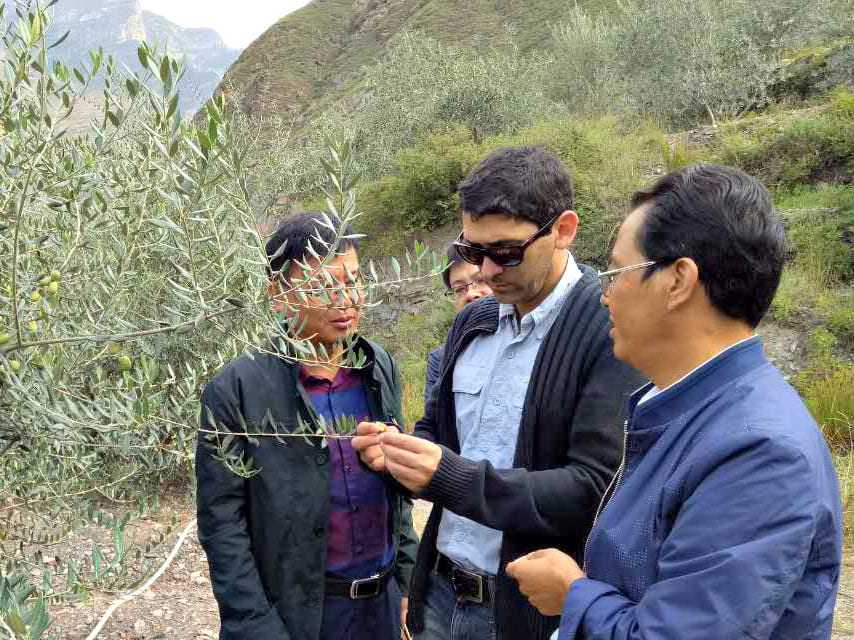
Pablo Cesar Canamasas with colleagues of the Longnan Xiangyu Olives Development Co.
“They picked late in the season. They picked black fruit, processed rotten fruit,” he said. “They wouldn’t recognize a good oil from a bad one.”
Canamasas quickly realized the core problem. Roughly 70 percent of the fruit the company processed was destined for third parties. Quality wasn’t the company’s concern, volume was.
Canamasas became convinced that there was considerable untapped potential for the company if it sought to make better oil, not just more of it. But there were considerable barriers to that approach.
First, there was language. Canamasas doesn’t speak Mandarin. Second, there’s the often opaque structure of the Chinese business.
The privately held company that hired him, Longnan Xiangyu Olives Development Co. Ltd., had multiple levels of management and oversight. “You don’t get to see the real owners,” Canamasas said. “It can be difficult to reach the people who actually make the decisions.”
For the first year, Canamasas put his focus on “simply trying to make a decent oil to start,” while trying to convince senior executives to invest in quality. “It was a hard sell,” he said.
Roads paved with gold
If high-quality, award-winning oils are your goal, you could do a lot worse than working with Canamasas.
In his roughly two decades in the industry, he’s worked with a slew of the best-known brands in the world, including Boundary Bend and California Olive Ranch. The Australian government has funded his research into extraction and processing techniques, and he’s lectured in Japan, Italy, Australia, New Zealand and elsewhere.
Perhaps it was that level of experience that finally convinced the Chinese investors to make a push for quality. But whatever the reason, when they decided to push, they pushed hard.
“The second year I went to China, I found they had built this monstrous processing plant in just six months,” Canamasas said. The plant was filled with top-line equipment from Italy and Germany. Everything was new, “It was beautiful,” he said.
The company continued to pour resources into the business. Adding a bottling line and a state-of-the-art laboratory. “They’ve probably invested “$50 million in the past year alone,” Canamasas said.
But the crucial moment came last September after the company and Canamasas committed to producing the best oil possible and entering it in the New York competition.
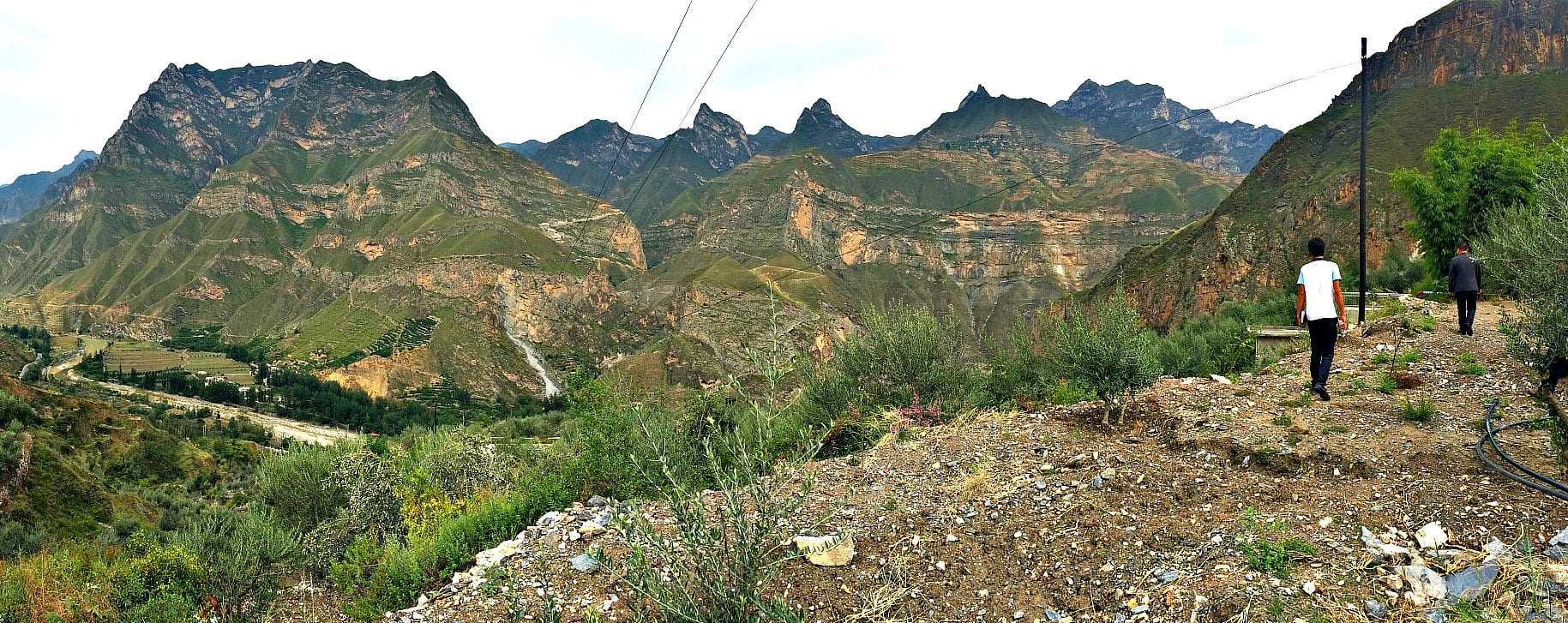
Canamasas and his team spent a full day in the mountains checking for olive groves with fruit that had the potential to make high-quality oil. They selected ten different varieties to be picked and then processed within the two weeks.
Workers at the plant processed the fruit as soon as it arrived, using low temperatures for malaxation and keeping the oil in the tanks for two days under nitrogen.
The win
In April, the Picholine that began its life on that mountain in Longnan won Gold at the New York International Olive Oil Competition. It was a first for Xiangyu and all of China.
“You can’t imagine how happy they are,” Canamasas said.
The question, of course, is what’s next for Xiangyu and the Chinese olive oil industry. “They’re hungry about learning,” Canamasas said. “That’s what impresses me the most about them.”
The industry in China is new and filled with young, entrepreneurial companies. There’s still not enough olive oil produced in China even to stock the local markets, but Canamasas is optimistic.
“These guys want to leave a mark in the industry. They have the drive,” he said. “That’s what got me hooked.”