Meet the Man Trying to Transform the Olive Sector in France
Yannick Masmondet is working with farmers to plant 50,000 hectares of olive groves on unused agricultural land, expanding national production while diversifying farmer portfolios.
Yannick Masmondet is on a mission to diversify farmers’ incomes by planting new olive groves in France, and farmers have been receptive.
Masmondet’s team hosts meetings with farmers looking to diversify and adapt to market conditions and climate change. His project, Oil’ive Green is active in every department in southern France.
The idea is not to replace huge areas of already cultivated land with olive groves, but to gradually plant in small areas of land, making the most of the farmland.
A former winemaker from Bordeaux, Masmondet moved to Morocco, where he discovered olive oil. Ten years later, he returned to France during the Covid-19 pandemic and launched the Oil’ive Green Project.
“When Covid-19 arrived, I had to start everything from scratch. I responded to a request to take over the management of a wine estate in Carcassonne to restructure the vineyard area,” Masmondet told Olive Oil Times.
See Also: Production Rebound Still Expected in France After Mixed Harvest“That’s when I realized that in France there was no industrial olive sector like in Morocco or Spain,” he added. “At first, I considered starting in the wine sector in Carcassonne, but quickly realized that although France had some artisanal olive oil production, there was no industrial olive oil sector.”
The project has already made a sizeable impact, although it is relatively new.
“The project was launched in March 2023 and has grown quickly because we could see a huge agricultural crisis in France, where the farmers are trying to diversify but have few options to do so,” Masmondet said. “There is a problem with winemakers trying to diversify also.”
“The aim was to create a new agricultural model,” he added. “We want to provide farmers with a diversification solution with a secure model. Faced with unpredictability, we realized that diversifying the cultivation on farming properties could bring income to farmers.”
With the reversal of the market in the cognac sector and growing difficulties in most agricultural sectors, French farmers are looking for new production routes to strengthen their bottom line.
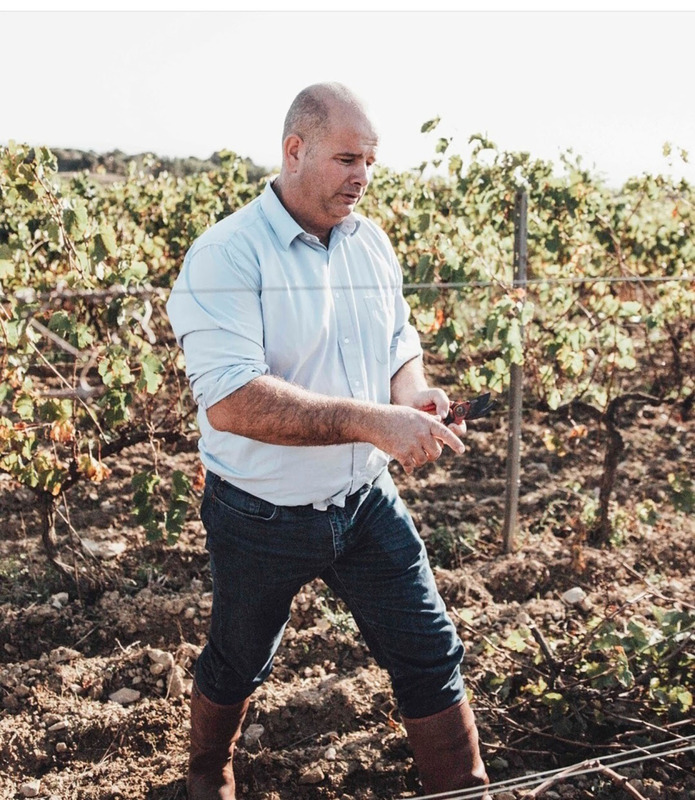
Former winemaker Yannick Masmondet wants to turn France into a major olive oil producer.
Only last month, in Charente, in the southwest of France, Masmondet’s Oil’ive Green Project presented a meeting to farmers on crop diversification. Laëtitia Plumat, was one of them. A winemaker with 54 hectares, is also eyeing the possibility of olive oil production to diversify her income.
“The Oil’ive Green Project signs a contract with farmers, then works with them to plant olive trees,” Masmondet said. “We also support them with marketing and the harvest. Farmers keep ownership of their land, but we guarantee them a profit from olive oil production every year.”
“In other words, we are linked to the farms through a basic contract and do not own equity investments, nor do we operate via a cooperative model,” he added. “Farmers have control over their farms, while we support them with the commercial and advisory aspects. Because we partner with farmers and work on their land, this reduces that immediate overhead cost, making our project economically viable.”
See Also: Climate Change Leads Some Bordeaux Wine Producers to Plant Olives“The idea is not to replace huge areas of already cultivated land with olive groves, but to gradually plant in small areas of land, making the most of the farmland,” Masmondet continued. “Our goal is to bring farmers towards greater autonomy. To do this, we support them throughout the year.”
According to Masmondet, the Oil’ive Green Project has signed with more than 100 farmers in different sectors, including grains, wine and fruit. However, the project faces challenges.
“We get our olive trees from nurseries in Spain and Morocco, but it is becoming more and more difficult to obtain these plants due to scarcity due to drought,” he said. “Buying the plants in France would be too expensive. It costs €1.60 to €2.50 per plant from Spain or Morocco, but in France, it costs €7.”
Along with planting trees, Masmondet and Oil’ive Green Project are also building two mills in Carcassonne and Bordeaux in preparation for the 2026 harvest.
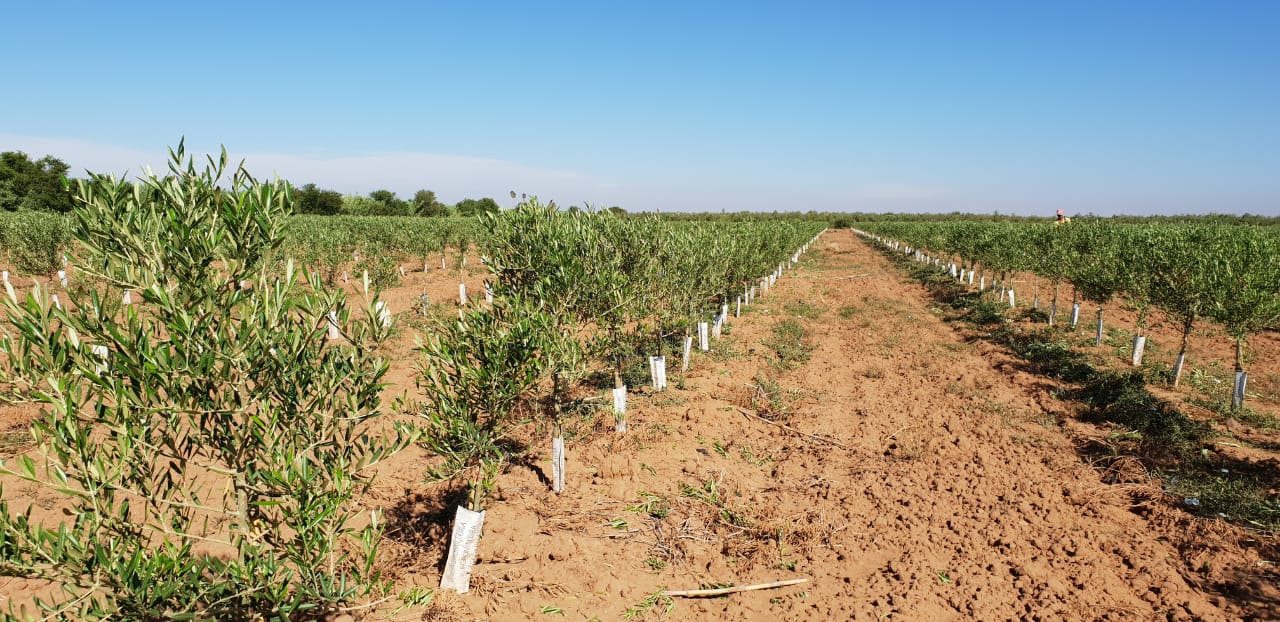
Advocates of the program believe France could produce significantly more olive oil with intensive plantings.
“We are also acquiring two pieces of land with the help of a joint venture with a Spanish green energy group called Iberdrola,” he said. “Together, we aim to cultivate 50,000 new hectares of olive trees by the end of the decade by installing agrivoltaic power plants.”
“This type of power will protect the olive groves and reduce the need for irrigation since it saves the plants from excessive heat through sun exposure against drought,” he added.
“I am very optimistic about the market, which has the potential for 90 million liters for global and domestic sale at €15 to €17 per liter,” Masmondet concluded. “We have a significant market in France, which imports 95 percent of its olive consumption.”