Olive Growing Returns to Italy’s Smallest Region
Olive cultivation is slowly expanding in Valle d’Aosta as growers reclaim abandoned terraces, adapt to milder conditions and plan for the area’s first mill.
Tucked into the northwestern tip of Italy and surrounded by the Alps, Valle d’Aosta is the country’s smallest region and also the one with the smallest olive-growing area.
We are rediscovering the olive tree, which was already cultivated here in ancient times.
According to the latest ISTAT Agriculture Census, the region counted just over 70 olive farms in 2020. By comparison, Puglia, the country’s leading olive-growing region, had 161,009. Land devoted to olives in Valle d’Aosta also remained extremely limited.
In recent years, however, both the number of growers and the surface area dedicated to olives have begun to rise.
A survey by the Associazione Valdostana Olivicoltori (AVO) indicates that plantings have increased from 3,000 olive trees in 2021 to 5,000 today.
The renewed interest in olive cultivation has been driven by a combination of factors, including shifting climate conditions and the need to protect land left abandoned as generational turnover declines.
Valle d’Aosta’s olive tradition has ancient roots, much like in the other northern Italian regions. Historical documents attest to the presence of olive groves in the area as early as 515. In 1635, historian Francesco Agostino Della Chiesa described olive trees thriving “in many parts” of the region thanks to its favorable southern exposure. Archives of the Collegiate Church of Saint-Gilles in Verrès also record olive harvests in the 1770s.
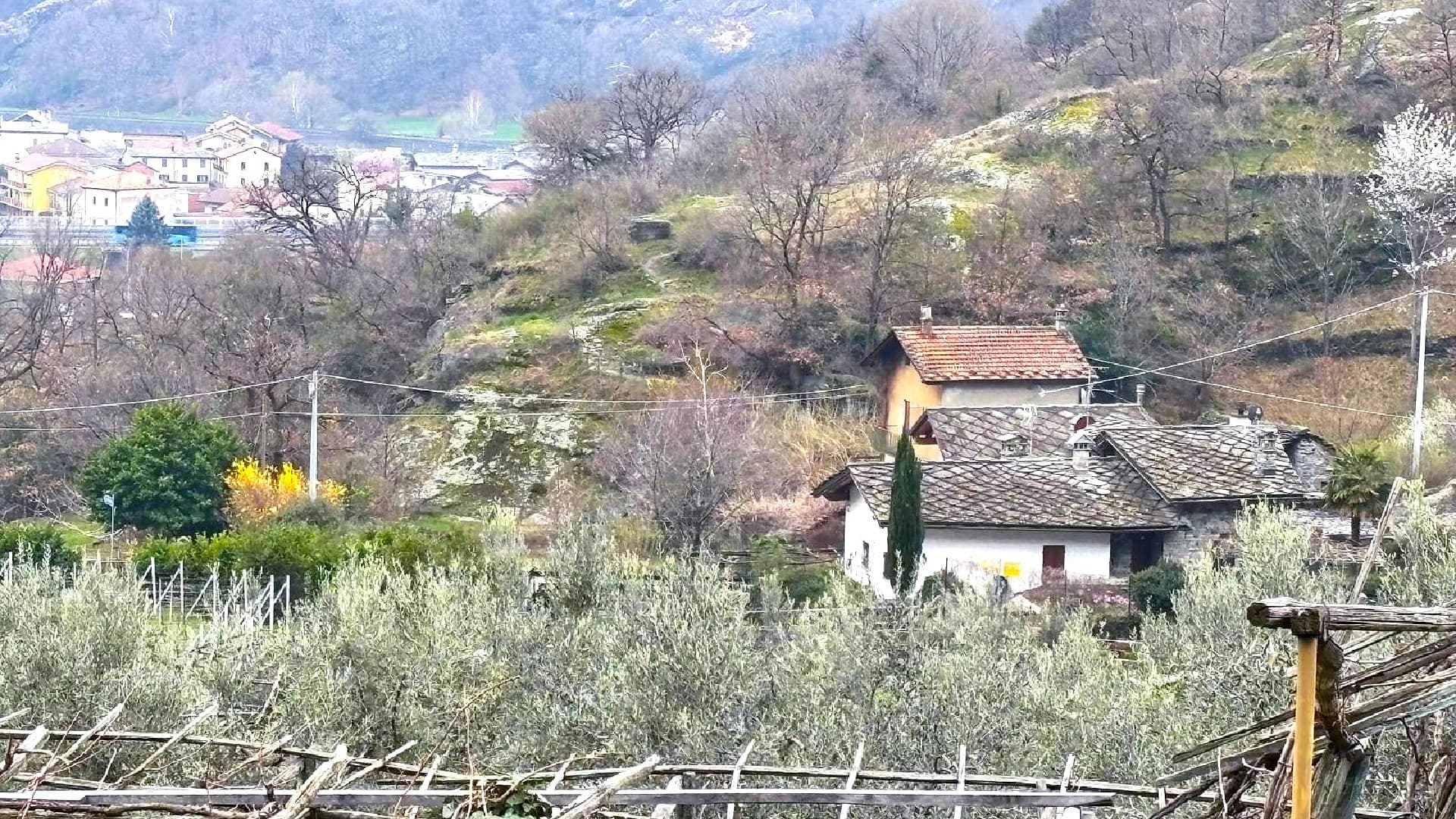
A survey of the Associazione Valdostana Olivicoltori says that plantings in the region increased from 3,000 olive trees in 2021 to 5,000 today. (Photo by Silvia Nicco)
Over the last century, olive trees were gradually set aside in favor of more profitable crops such as vines. Today, though, the lack of generational turnover has left many plots at risk of abandonment, especially on rugged terrain where mechanical equipment cannot be used.
That has led many farmers to return to olives, which can be tended without heavy machinery and also help stabilize terraced land.
“I planted the very first olive trees in the mid-1980s, but we managed to expand production and make our first oil in the late 1990s,” said Dario Martinelli, whom Olive Oil Times contacted for a follow-up to a 2018 interview.
He was among the founders of the first producers’ association for Piedmont and Valle d’Aosta in 2003. Later, in 2021, he co-founded AVO and became its first president.
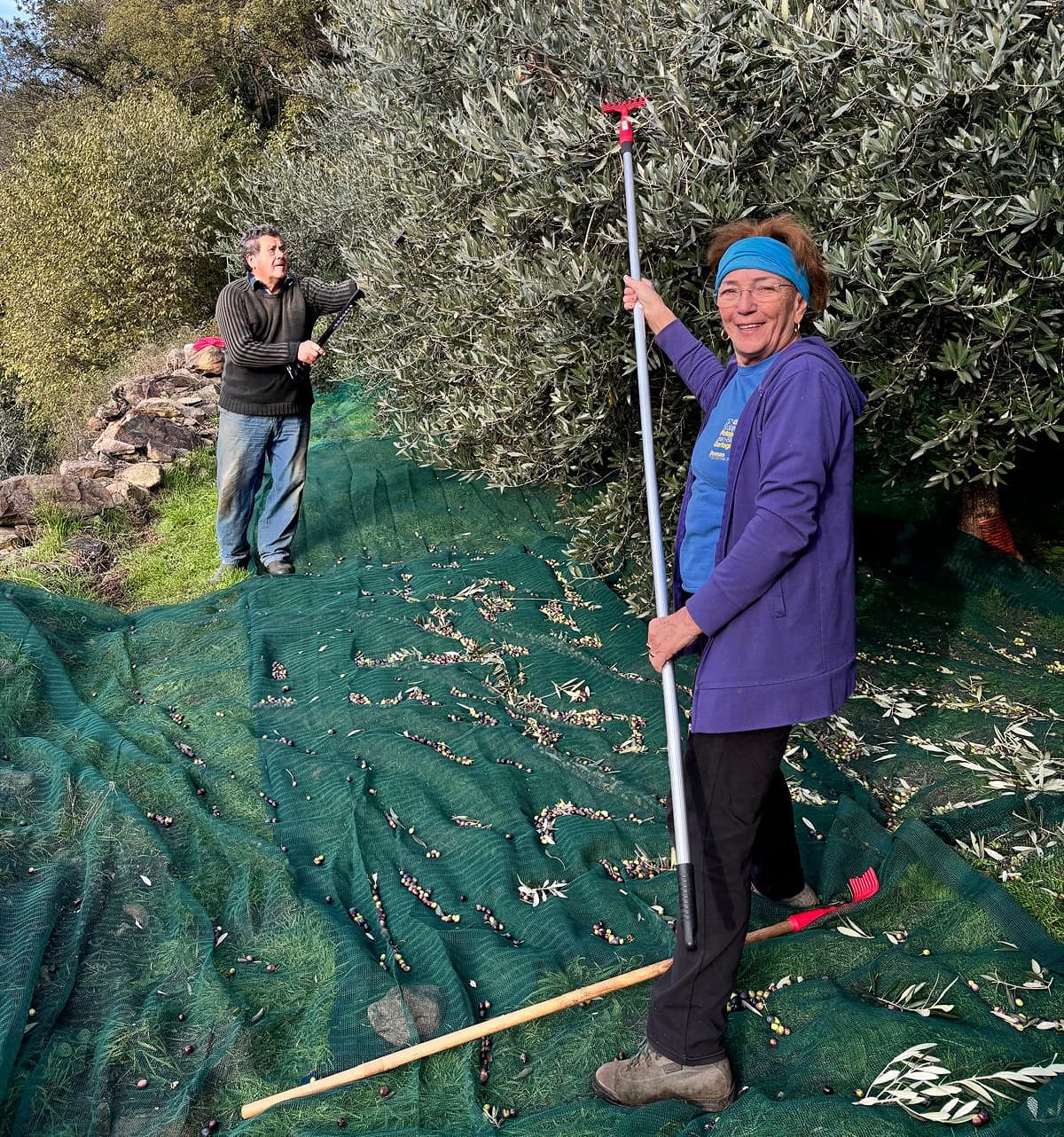
Silvia Nicco, president of the Associazione Valdostana Olivicoltori carries out harvest at her olive grove in Donnas.
“I planted Leccino, which at the time was the variety best suited to these pedoclimatic conditions, and later I added Frantoio, which ripens slightly later and allows for better harvest management,” Martinelli said. “Now, the orchard contains 180 trees. Forming large plots in this region is difficult, because land is rarely available and, when it is, it is usually sold in small parcels.”
Martinelli recalled that the first harvests had to be scheduled between one snowfall and the next. In recent years, by contrast, olives have usually been picked in much milder weather. His observation appears to align with the climate shift scientists are documenting, including in Olive Oil Times’ report on the shift in global temperatures.
Through their first association, growers in Valle d’Aosta organized milling operations in neighboring Piedmont, where they still usually bring their olives to be crushed.
“At its foundation, one of AVO’s main goals was to eventually bring a mill to Valle d’Aosta,” Martinelli said. “Now, an initial round of regional funding has enabled us to take the first step toward making that possible.”
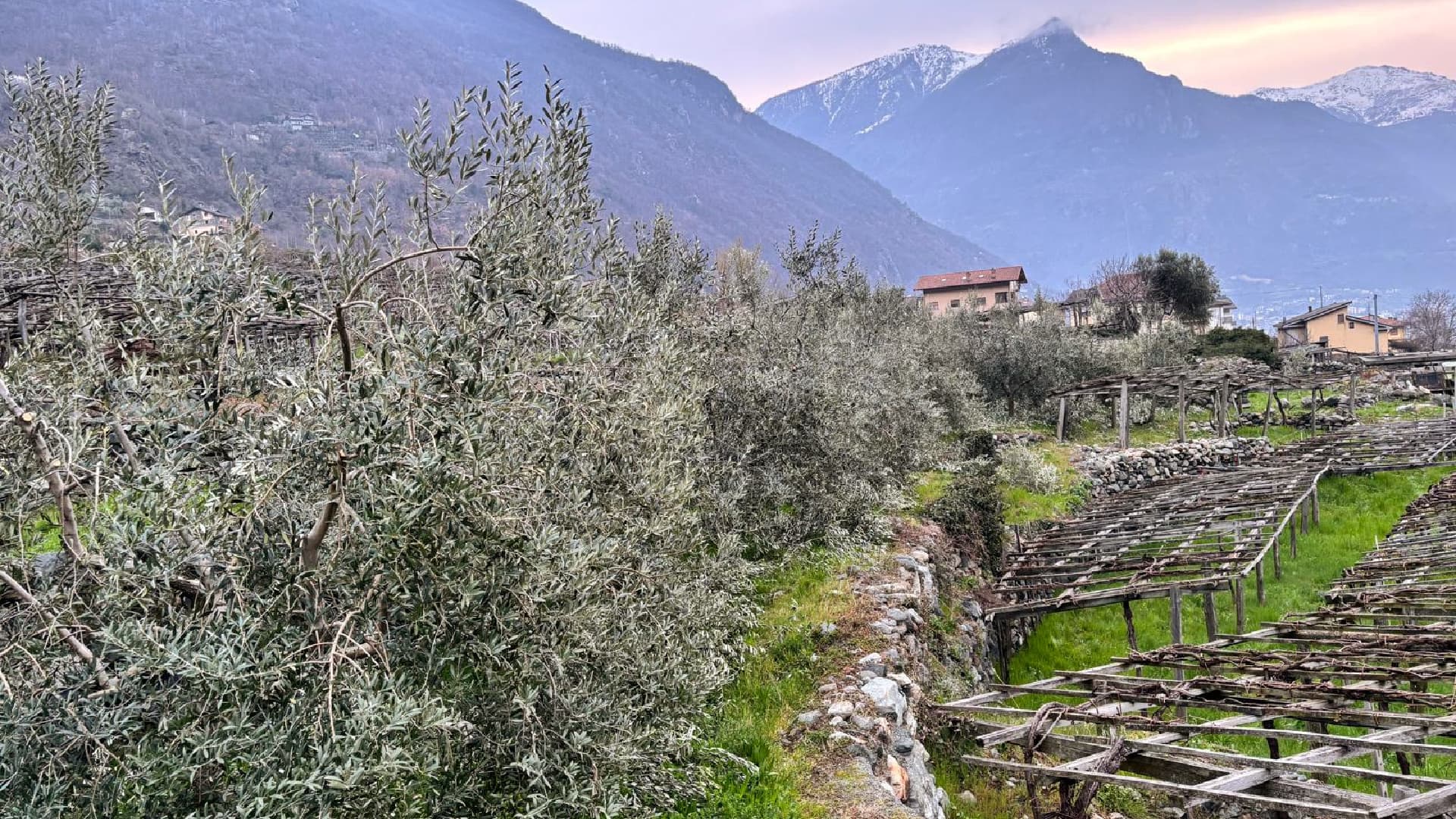
The revival of olive cultivation in Valle d’Aosta has been driven by various factors, including shifting climate and the need to safeguard land left abandoned amid declining generational turnover. (Photo by Silvia Nicco)
The economic feasibility study for the mill will be presented at the next AVO members’ assembly.
“There are two possible sites, in the villages of Donnas and Hône, and we are evaluating where the facility could be established, either by building a new structure or restoring an old one,” said Silvia Nicco, who became AVO’s president in 2024.
Nicco said she became a grower after reclaiming land where her father once cultivated a vineyard. Today, she produces oil from about 90 trees for household use, like most AVO members.
The association now brings together 80 olive growers and provides information on organic grove management, with support from agronomists and agrotechnicians.
“These are difficult lands, characterized by challenging terraces that cannot be accessed by mechanical equipment,” Nicco said. “We believe that most new orchards are being established on land formerly used for wine production that had been left uncultivated because of diminishing generational succession. Because of the terrain’s morphology, the largest orchards contain no more than 300 trees.”
“However, it is important to note that olive growing does not compete with vines,” she added. “Rather, it reclaims areas that would otherwise be abandoned. Olive trees require a different agricultural approach and can be cultivated without mechanical means, which has helped facilitate their return. This is not something new. We are rediscovering the olive tree, which was already cultivated here in ancient times.”
Nicco said one AVO member recently created a label, while others are working on projects to bring their extra virgin olive oil to market and expand production. Each year, AVO growers collectively purchase and plant 400 to 500 new trees, aiming to double production over the next decade.
“These lands are steep and terraced, characterized by traditional dry stone walls that support them,” said Antonino De Maria, an agronomist specializing in olive growing in Piedmont and Valle d’Aosta. “This morphology makes cultivation extremely challenging. The impossibility of using mechanical equipment had made grape growing very costly. To avoid leaving plots uncultivated, many farmers introduced the olive tree as a hardy and easier-to-grow plant. In addition, it helps maintain the land’s structural integrity, protecting it from hydrogeological risks.”
Most olive groves are located in the southern part of the region, particularly around Donnas near the border with Piedmont. Farmers from the two regions have often joined forces to make collective purchases of saplings to reduce costs.
“Initially, the most popular varieties were Leccino, Frantoio and Pendolino,” De Maria said. “In recent years, some orchards have also been planted with Leccio del Corno and Biancheria, a variety native to the Trieste area.”
From an agronomic standpoint, he added, olive trees in the region appear to be less affected by fungal diseases thanks to good ventilation, which helps prevent these phytopathologies.
“The particularly demanding working conditions, which have led many to describe it as ‘heroic agriculture,’ still drive production costs higher than in other areas,” De Maria said. “Yet this has not discouraged farmers, whose commitment is helping preserve both the beauty of the landscape and its hydrogeological balance.”