On Etna’s Volcanic Slopes, Sikulus Revives a Family Olive Oil Legacy
At Sikulus, centuries-old Nocellara Etnea trees, volcanic soils and an early-harvest strategy define a quality-focused approach that has helped carry Sicilian olive oil to markets around the world.
On the southwestern slope of Mount Etna, Europe’s highest active volcano, the Sikulus olive groves are rooted in land once known as a “sciara,” the Sicilian term for terrain marked by a lava flow. The word draws from Arabic and Latin origins associated with uncultivated and burned land, reflecting the harsh beauty of this corner of Sicily.
Something sparked within me, fueled by my strong bond with Sicily, and I said to myself, ‘I need to return and build something on my own land.’
The orchard stretches from 400 to 950 meters above sea level, where centuries-old Nocellara Etnea trees thrive in fertile ground enriched by the slow weathering of volcanic debris. The groves are part of a landscape shaped by fire, altitude and time.
“I represent the fifth generation of my family company, whose first olive oil production dates back to 1875, according to my grandfather Giuseppe, who preserves our historical memory,” Sergio Pappalardo told Olive Oil Times. “We still have the old press with its millstones that remained in use until after World War II.”
Don Peppino, as his grandfather is affectionately known, is the name Pappalardo chose for the first extra virgin olive oil produced by Sikulus, which was established in 2018. From Santa Maria di Licodia, near Catania, the company now sends most of its production to international markets, including the United States, Singapore, Japan, Australia and Sweden.
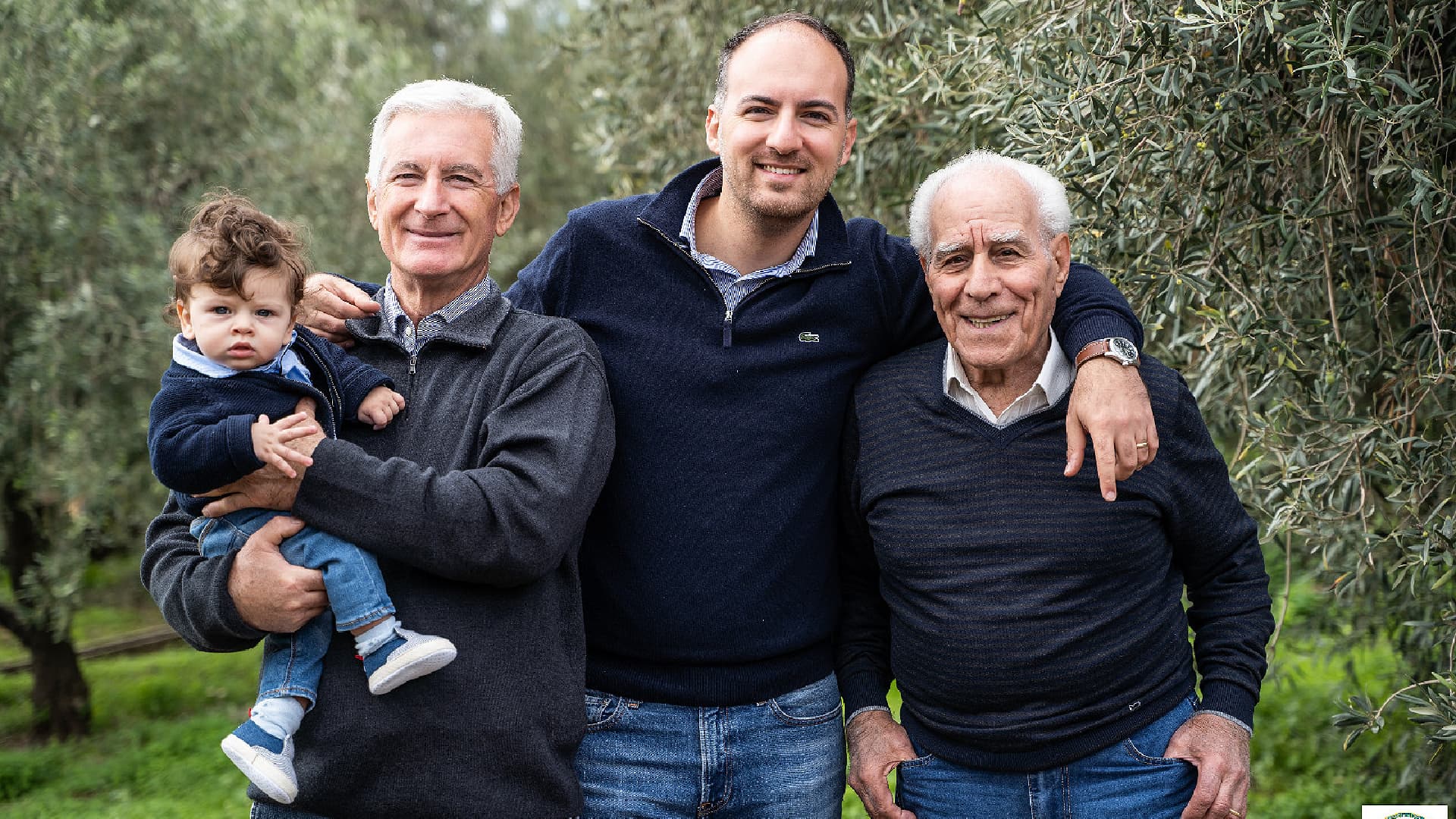
Sergio Pappalardo with his grandfather Giuseppe known as ‘Peppino’ (right), his father Giuseppe know as ‘Pippo’ and his son Lorenzo at the Sikulus farm.
“I called my project Sikulus to evoke the spirit of Sicily, driven by the desire to bring my island and my homeland, Etna, to the world,” Pappalardo said. “When it came to packaging, I opted for square bottles in bright colors, distinct from more classic vessels. Paying attention to these details was an instinctive choice, shaped by my background.”
Until shortly before launching the venture, Pappalardo was on a very different professional path. After earning a degree in economics and completing a master’s in business management and marketing, he built a strong career in Rome.
“I was fully immersed in that work when I began to feel the call of the land,” he said. “Something sparked within me, fueled by my strong bond with Sicily, and I said to myself, ‘I need to return and build something on my own land.’ This is how Sikulus was born. I decided to take the reins of the family business, relaunch it and open it to the world.”
Pronio’s Monte Etna DOP is the extra virgin producede by Sikulus to highlights the company’s connection with the U.S. market.
Pappalardo said many people questioned the decision. Even his parents were puzzled after years of study in another field and a successful job in the capital.
Back in Sicily, he began formal training in the olive oil sector and took over management of the family company. During that period, he also became an olive oil sommelier and now teaches advanced management courses for the industry.
“My first move was to start harvest earlier than usual. By tradition, growers in this area began harvesting on the feast of the Immaculate Conception, December 8,” Pappalardo said. “I remember some elderly people saying to my father, ‘Your son is crazy,’ because the idea of harvesting olives in October, when they were still completely green at an altitude where they ripen even later, was unthinkable.”
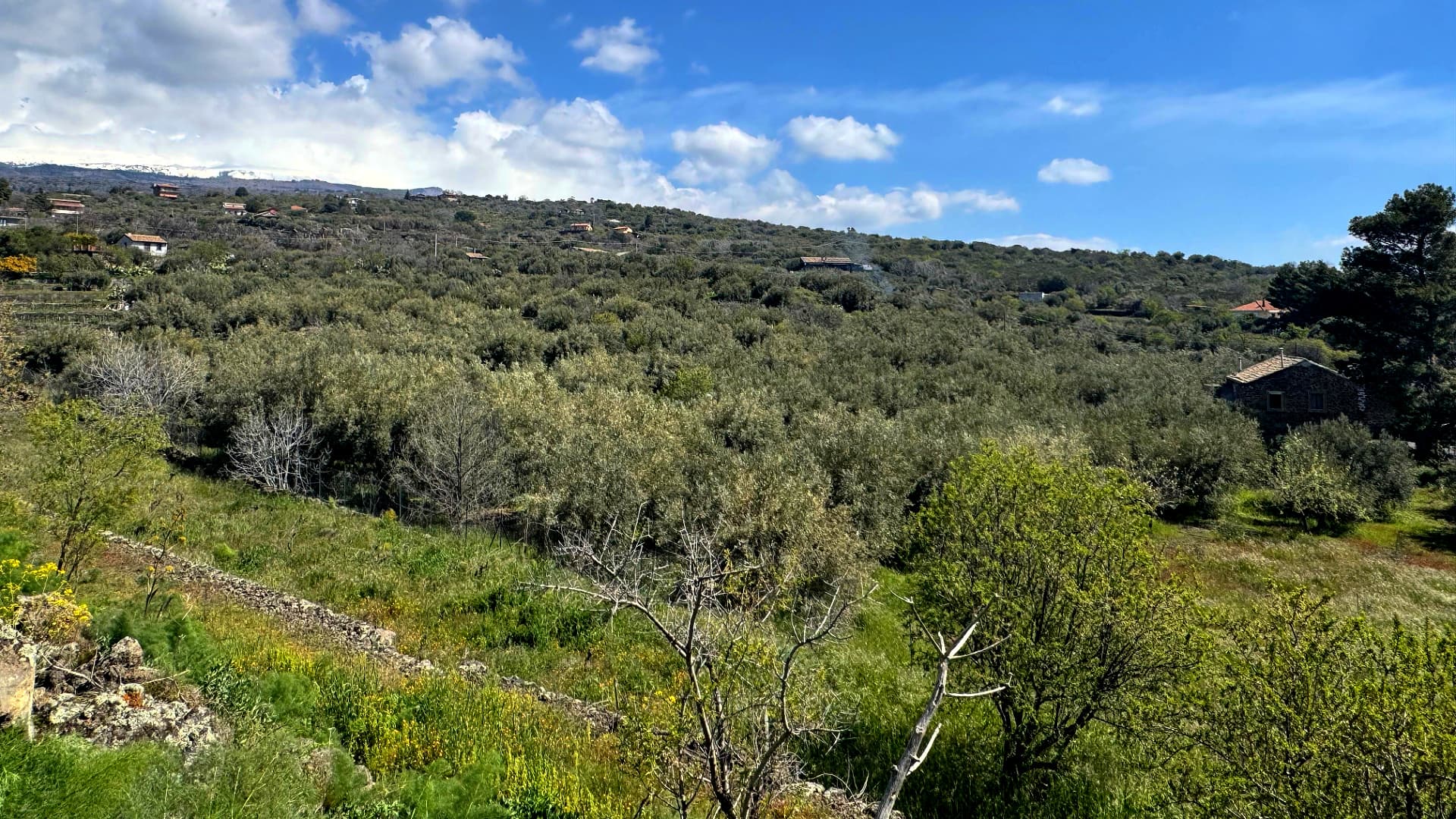
Sikulus was founded in 2018 in Santa Maria di Licodia, one of the villages located on the slopes of Mount Etna, near Catania, in eastern Sicily.
Over time, he said, that decision proved essential to achieving quality, and some neighboring growers eventually followed suit.
The centuries-old grove, which has earned Slow Food Presidium recognition, stands on land reshaped by volcanic eruptions and reclaimed in ancient times. Terraces supported by dry-stone walls alternate with embankments and sloping sections. Because of the rugged landscape, the 14-hectare property includes only about nine hectares of cultivable land.
“One hectare of these plots contains fewer trees than would fit in a regular-pattern orchard,” Pappalardo said. “It is demanding work, and we can truly call it heroic olive farming.”
He explained that the plots are inaccessible to mechanical equipment. Even electric harvesters are impractical because they scatter fruit in all directions, making collection too difficult on the steep and irregular terrain. As a result, harvesting is done entirely by hand with manual rakes.
When the olives reach the optimal stage of ripeness, a team of about two dozen workers harvests the fruit and ensures it is delivered to the mill within hours.
In recent years, to prevent the olives from overheating during periods of extreme heat, the company introduced refrigerated trucks for transport, an adaptation to increasingly difficult harvest conditions.
As a milling technician, Pappalardo personally oversees processing at a nearby facility equipped with a latest-generation Pieralisi system.
“Pronio’s Monte Etna PDO, which won a Gold Award at the NYIOOC, is named after the Pronio family, our importers in the U.S.,” he said. “We crafted this oil to strengthen the connection between Sikulus and the U.S. market. With notes of grass, artichoke and tomato leaf, along with hints of green apple and pepper, it embodies the essence of our flagship variety, Nocellara Etnea.”
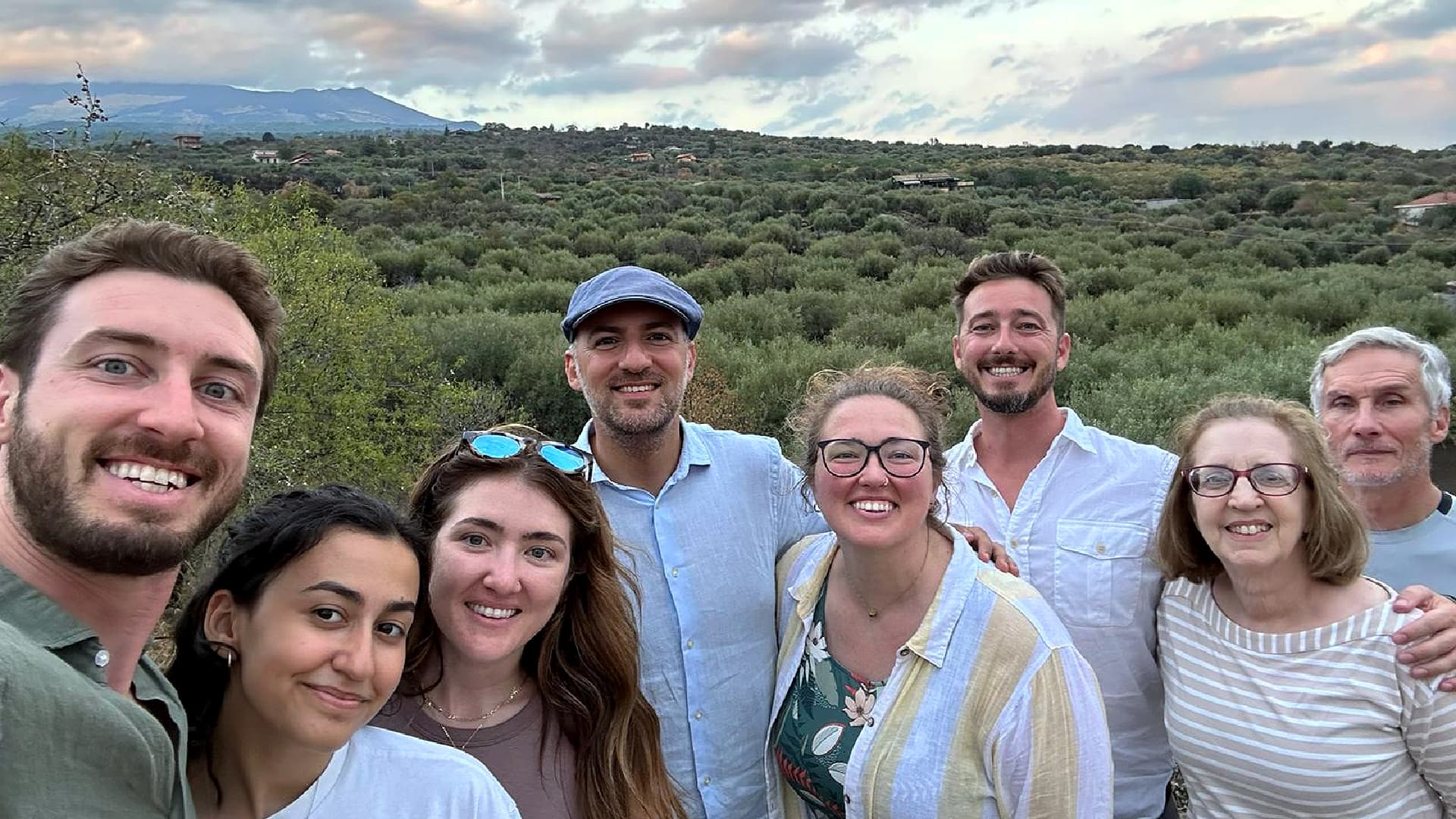
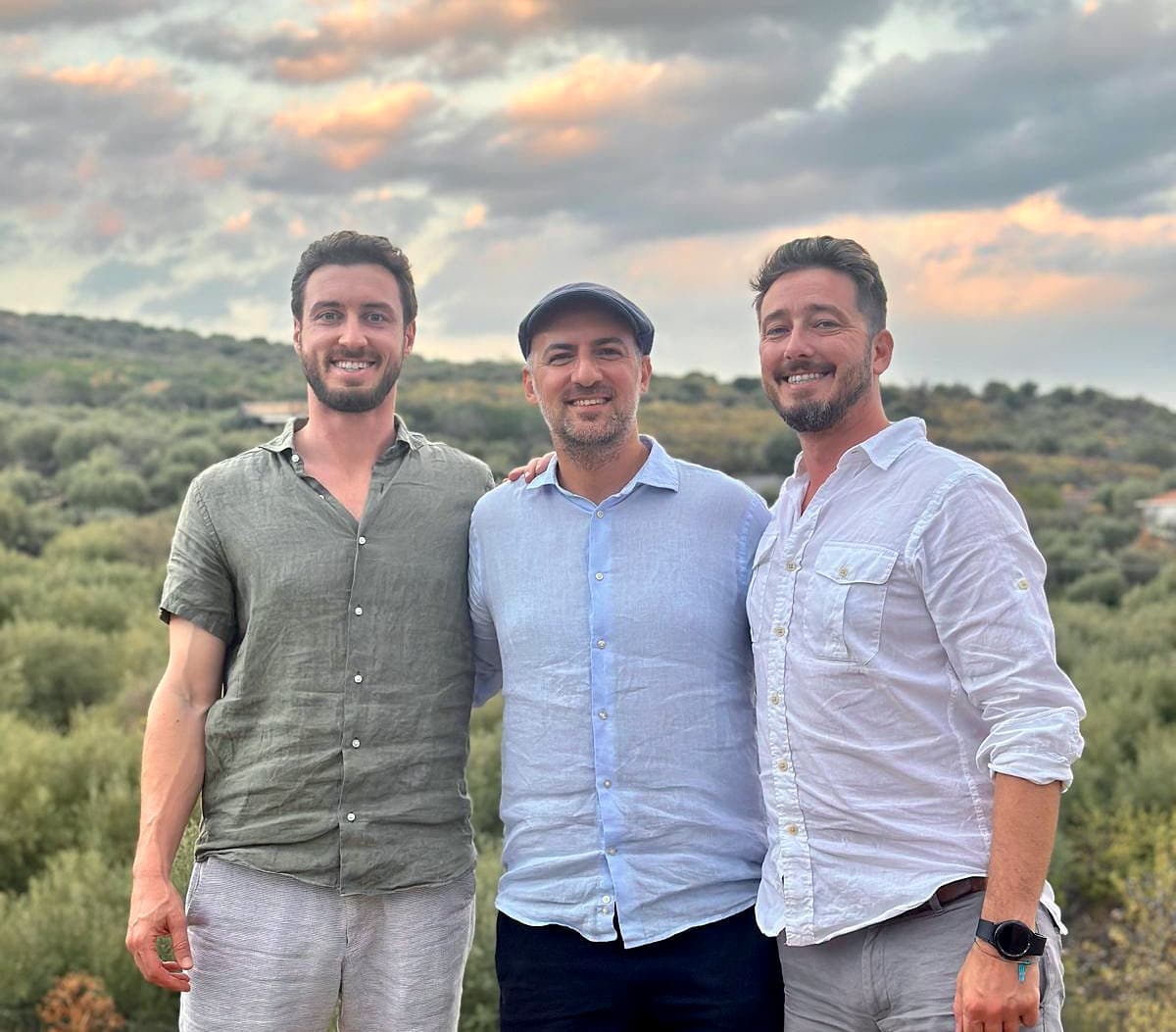
Sergio Pappalardo (center) with the Pronio family, importers of Sikulus in the U.S., at his farm on Mount Etna
Pappalardo said Etna’s ongoing eruptive activity can make work in the groves especially dramatic. At times, he and his collaborators return home after a day in the orchard with their clothes blackened by volcanic ash.
“The active volcano makes this a unique land that feels truly vibrant,” he said. “One positive aspect is the fertility of the soil, but the work is demanding, and only great passion and love for what I do drive me to continue year after year. Despite many challenges and stressful moments, the satisfaction this work brings in return is immense.”
He said olive oil has also become a way to connect with people across cultures and backgrounds. “These human connections are invaluable,” Pappalardo said. “As a small producer, I end up forming special relationships with my customers, wonderful synergies that often evolve into friendships.”
Pappalardo said he hopes one day his son Lorenzo and daughter Lara will embrace the family’s olive oil tradition with the same passion. Above all, he wants them to safeguard the heritage represented by the family land and its ancient trees. For now, at 5 and 7, they already enjoy the oil and know how to “strippare,” or slurp, when tasting it.
Music also plays an important role in family life. Their mother, Loriana Mazzarino, is a classical flutist, and that world inspired one of the company’s latest projects.
“Living in a musical environment, with my wife and our many friends in the sector, it felt natural for me to view music, with its sensory dimension, as a language capable of expressing the experience of olive oil and expanding the meaning of my journey,” Pappalardo said.
To turn that idea into music, he commissioned the contemporary symphonic piece Sikulus. Composed by Maestro Yuri Furnari, the work premiered last September at the Teatro Massimo Bellini in Catania, performed by the resident orchestra under Maestro Francesco di Mauro, and is now available to stream and download.
“This musical composition tells the story of my territory and my oil, with the power of Etna, the energy of the sun, the beauty of the sea and the courage of those who remain and make the best of their land,” Pappalardo said. “It is dedicated to all the farmers who carry this work forward with passion and tenacity, and to everyone who values our extra virgin olive oil and motivates us to pursue our mission of quality.”