Climate Change Shifts Olive Fruit Fly Risk Across Tuscany
Milder winters, earlier ripening and shifting infestation patterns are changing how Tuscan olive growers monitor and control the olive fruit fly.
The Tuscany Region Phytosanitary Service launched its olive fruit fly monitoring system in 2001. It has since become an important tool for growers planning defense strategies against Bactrocera oleae, one of the olive sector’s most damaging pests.
Today, olive fruit fly control requires greater attention, timely action and an integrated interpretation of field data and weather conditions.
Co-funded by the European Agricultural Fund for Rural Development, the monitoring system also covers grapevines and wheat. It operates through the regional AgroAmbiente platform, where collected data are made available and translated into timely guidance for growers.
The guidance is published in weekly bulletins that support integrated and organic growers in protecting their crops, avoiding unnecessary treatments and adapting to increasingly variable climatic and agronomic conditions.
The bulletins are issued each Thursday, allowing farmers time to obtain necessary products before weekend retailer closures. They are also distributed via email, SMS, instant messaging services, including WhatsApp, and a dedicated app.
The platform is operated with scientific support from a group led by Angelo Canale at the University of Pisa’s Department of Agricultural Sciences.
It also incorporates predictive models developed by Aedit, a spin-off of the Scuola Superiore Sant’Anna specializing in information and communication technology for agro-environmental monitoring networks.
The system has evolved alongside a rapidly changing phytosanitary landscape. The threat examined in The Olive Fruit Fly: A Persistent Pest in a Changing Climate has intensified as climate change alters pest behavior and the availability of approved active ingredients declines.
The resulting dataset now provides a substantial basis for identifying trends with relevance beyond the region.
“The monitoring system relies on a field-based network composed of technicians, producer associations, professional organizations, mills and cooperatives,” Massimo Gragnani, an agronomist with the Tuscany Region Phytosanitary Service, told Olive Oil Times.
“They oversee more than 200 monitoring points across Tuscany’s ten provinces, rising to 300 or even 400 in some seasons,” he added.
“A prevention-oriented approach is now fundamental to pest management,” Gragnani said. “With the growing effects of climate change, a calendar-driven strategy is no longer sufficient to cope with pests.”
“Our aim is to offer a practical, rapid and widely accessible tool that provides farmers with timely advice to effectively control olive fruit fly attacks,” he added.
Monitoring begins at slightly different times depending on conditions in each province, with coastal areas generally starting first.
From mid-June, pheromone traps and food attractants are used to track adult flights. Fruit sampling usually begins in early or mid-July.
Technicians collect representative samples, generally totaling about 100 olives from each homogeneous plot, taking a small number from individual trees.
The olives are sectioned and examined under a binocular microscope to determine the level and stage of infestation. Technicians look for viable and nonviable eggs, first- and second-instar larvae, pupae and adult exit holes.
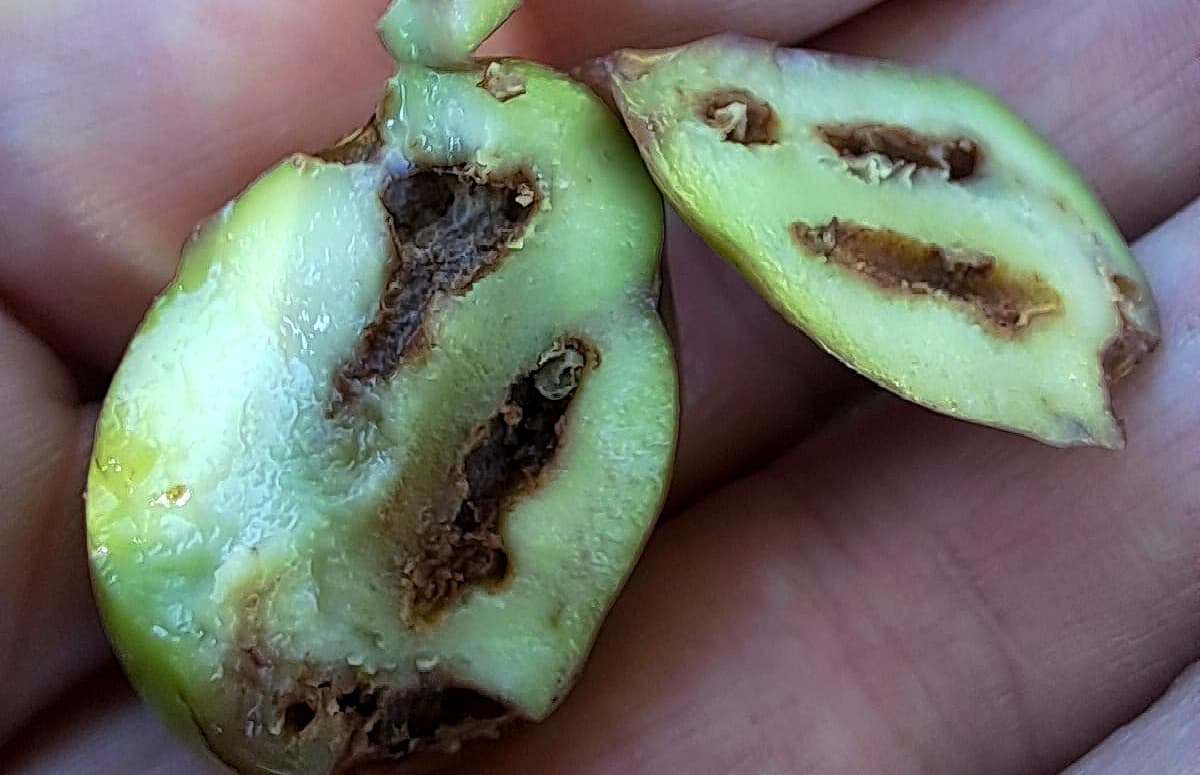
Olive showing damage caused by Bactrocera Oleae larvae. (Photo by Angelo Bo)
The findings help determine whether and when an ovo-larvicidal strategy should be initiated.
“One of the first changes we have noted in recent years is the growing share of integrated-agriculture farmers adopting adulticidal strategies, which were once used almost exclusively in organic farming,” Gragnani said.
“Control strategies have evolved significantly, especially after the withdrawal of dimethoate, which had long been a benchmark for fly control,” he added.
In the past, control focused mainly on ovicidal-larvicidal treatments targeting eggs and larvae already developing inside the olive. Adulticidal strategies, by contrast, must be applied early, when the first summer flights begin.
These strategies include products ranging from anti-oviposition repellents to devices and agents designed to reduce the adult population.
Preventive methods are also used to reduce the need for insecticide applications. Adulticidal and ovo-larvicidal approaches are not mutually exclusive and may be combined during the same season.
Some growers begin by controlling adult flies preventively. If that approach proves insufficient as the harvest approaches, they may shift to treatments targeting eggs and larvae.
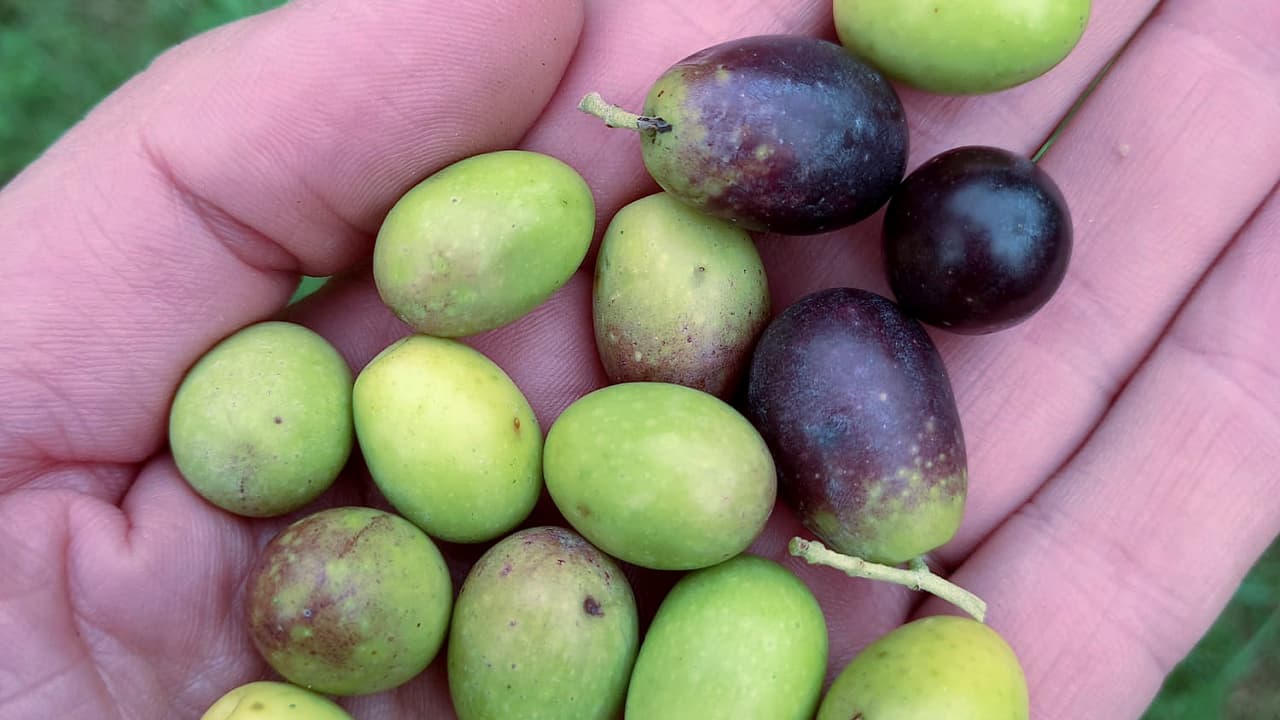
Olive residues where overwintering females of Bactrocere Oleae can lay eggs, increasing the population that will form the first summer generation. (Photo by Angelo Bo)
Intervention thresholds have also changed. Treatments may now begin when infestation reaches a guideline range of four to ten percent, depending on the strategy, whereas the threshold was previously set at ten percent.
Timely intervention is particularly important because currently authorized treatments have less cytotropic capacity — the ability to penetrate plant tissue — than dimethoate.
Traps are useful for tracking flight patterns, observing increases or declines in the adult population and correctly implementing adulticidal strategies.
However, actual infestation must be verified through fruit sampling. Analysis of eggs and larvae remains essential for determining when to begin ovo-larvicidal treatments and assessing whether adulticidal strategies have been effective.
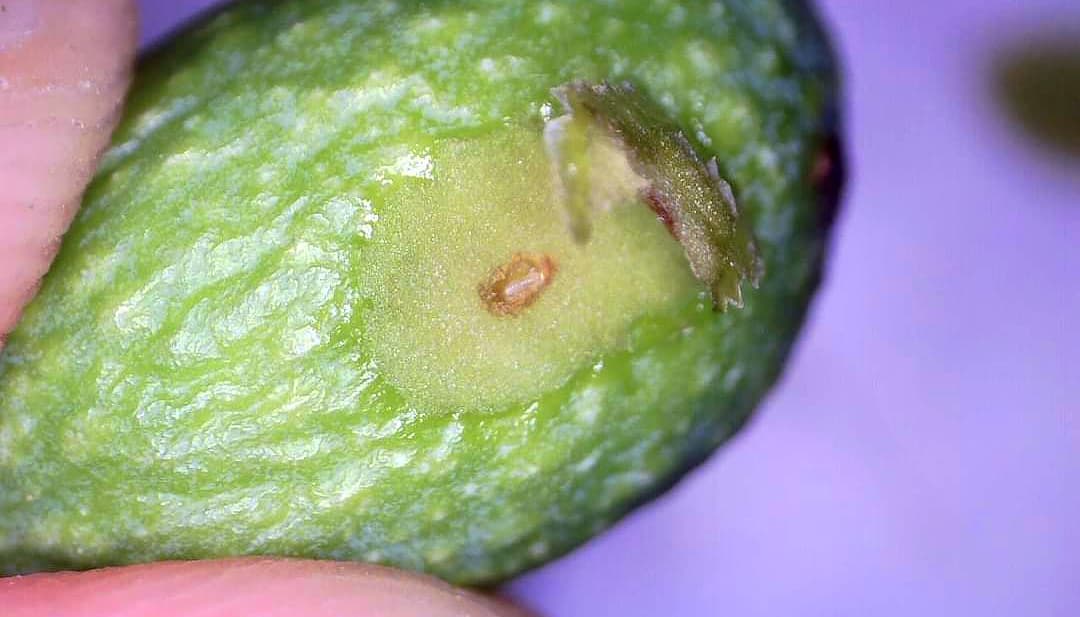
Egg of Bactrocera Oleae revealed inside a dissected olive (Photo by Angelo Bo)
If adult control proves insufficient, growers may need to intervene at earlier stages of the fly’s life cycle.
The regional system also records treatments carried out by growers, providing a basis for tracking how control practices change over time.
Winter and spring flight monitoring has become increasingly important. Over the past decade, experts at the Tuscany Region Phytosanitary Service have begun tracking adult flights from late winter to early spring, thereby extending the overall monitoring period.
Using the platform’s historical dataset, a predictive model compares winter fly populations with climate data to estimate the risk posed by the first summer generation. The results also help technicians and farmers prepare for the fruit-sampling period.
“Climate change is reshaping the dynamics of the olive fruit fly,” said agronomist Angelo Bo, who oversees data analysis and technical coordination of the monitoring system.
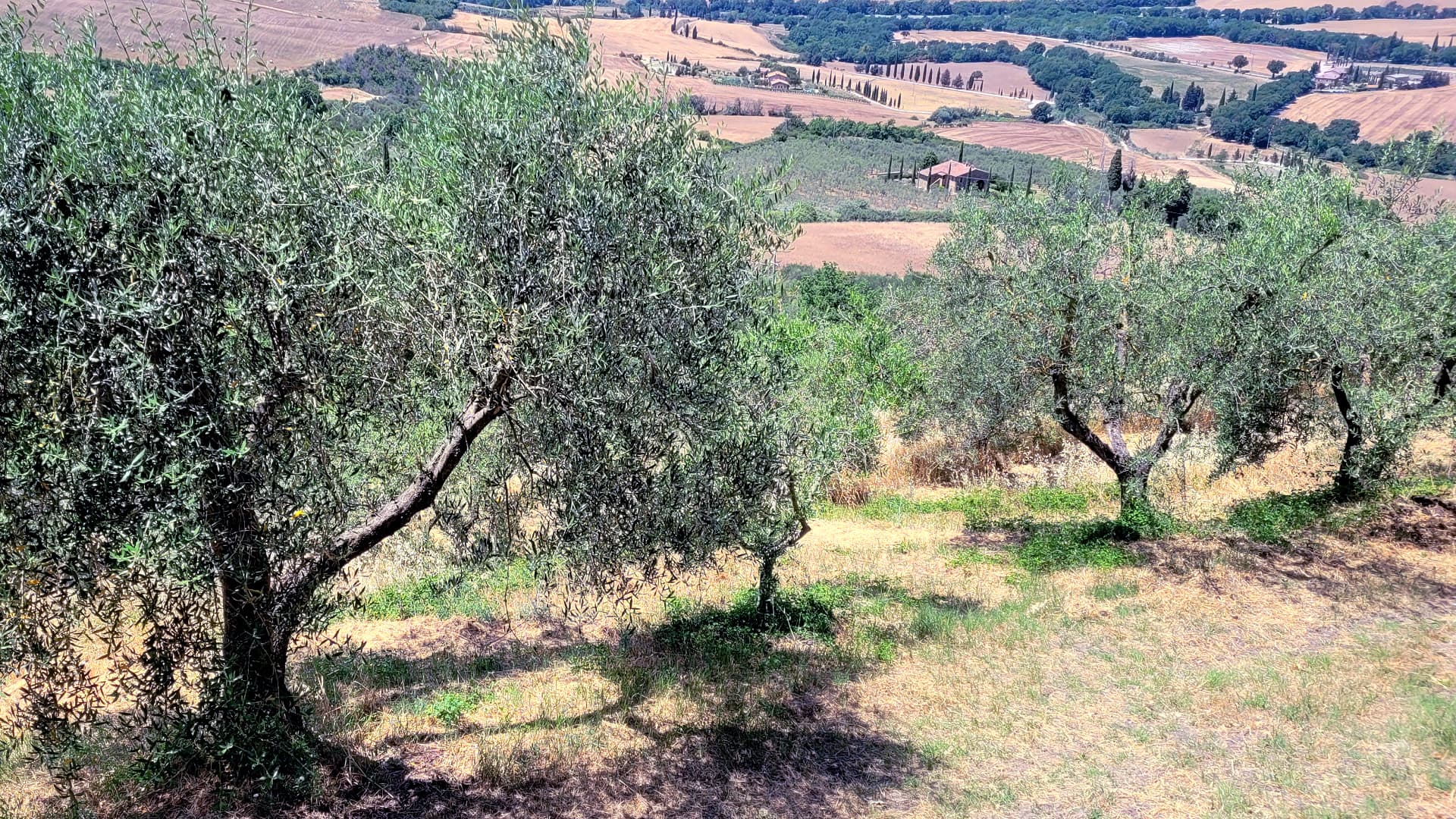
Olive grove in the province of Siena, Tuscany (Photo by Ylenia Granitto)
“Milder winters reduce the natural mortality of overwintering stages, leading to higher initial populations,” he said. “At the same time, the earlier phenological development of the olive tree is causing fruit to ripen sooner than in the past.”
As a result, the fly is appearing earlier in the season in many areas. However, Bo said high summer temperatures may have the opposite effect.
When temperatures remain above 30-32 ºC for prolonged periods, particularly under low-humidity conditions, mortality among eggs and young larvae increases.
“This is what happened, for example, in the summers of 2017 and 2024, when intense heat and drought helped limit summer populations,” Bo said.
Along with the winter risk model, the platform provides a summer mortality model that translates temperature trends into a fly mortality index. The index helps farmers determine whether an intervention can be postponed or avoided.
The portal also provides models related to the phenology of the fly and the olive tree. These forecasting tools use temperature thresholds and other parameters to estimate the timing of key biological events.
“The wealth of data accumulated over 25 years represents a particularly valuable resource,” Bo said. “The database includes agro-meteorological information and field data on total, active and damaging infestations.”
The information is also being used to refine a predictive model for egg-laying risk developed by Aedit.
“It uses machine learning, a form of artificial intelligence, to process large amounts of data quickly and identify relationships among climatic, phenological and demographic parameters that would otherwise be difficult to interpret manually,” Bo said.
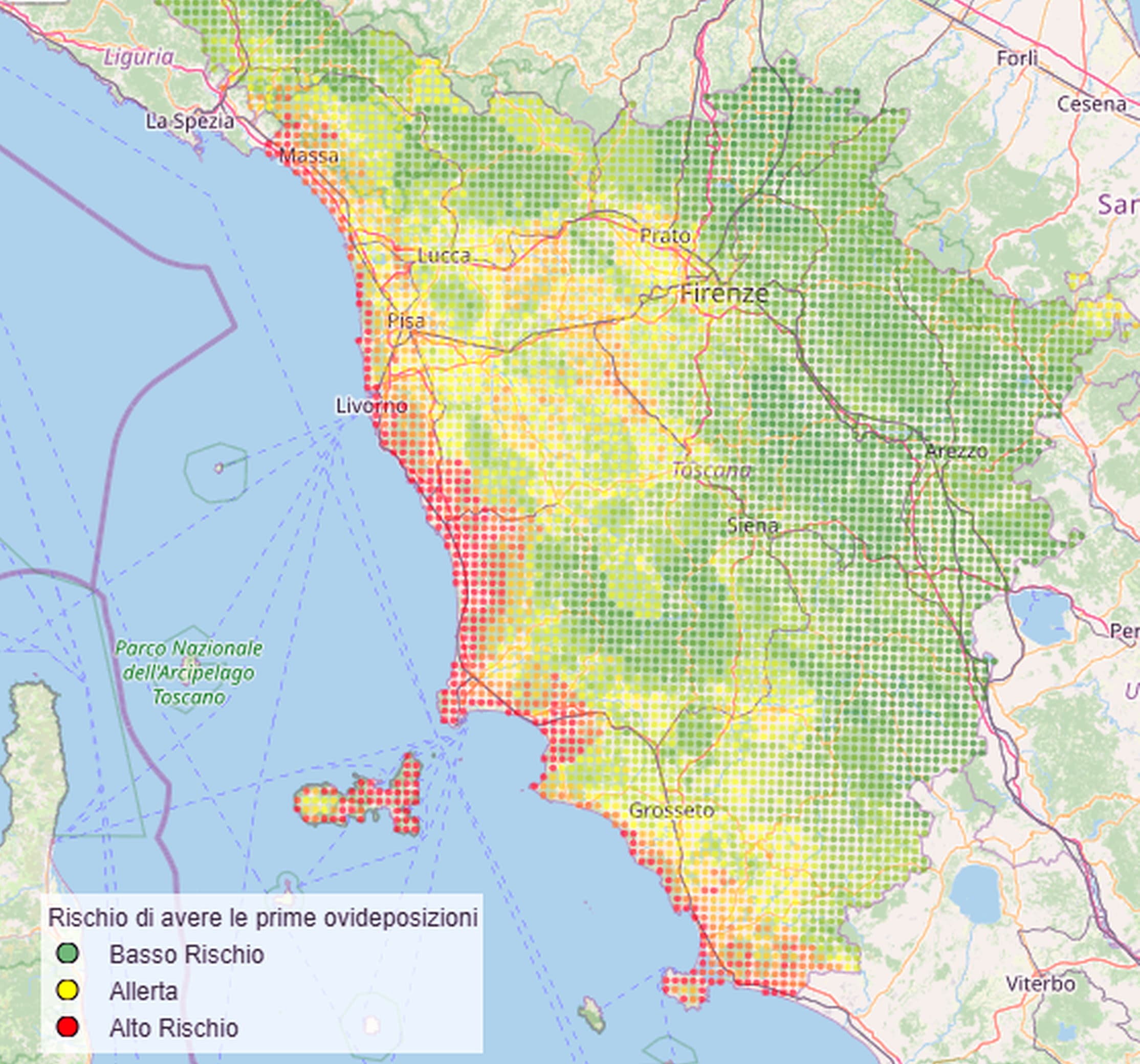
Predictive model generated through the monitoring system of the Tuscany Region Phytosanitary Service
“In 2024, for example, the model correctly identified the risk of very early infestations along the coast, which were subsequently observed between June 20 and 25,” he added.
The data also show a significant shift in the geographic distribution of risk. Coastal areas were historically the most exposed, but some inland areas once considered less vulnerable have begun experiencing early and substantial infestations.
Growers who previously treated rarely, or only in September, must now consider interventions in July as well.
The trend appears to have intensified between 2016 and 2018. Since 2020, early attacks in inland areas have become increasingly frequent.
In 2025, favorable weather following a particularly hot June created conditions in which large fly populations coincided with temperatures suitable for egg-laying.
“Warmer autumns also extend the fly’s favorable period, allowing the insect to remain active longer and increasing the risk of late attacks for growers who do not harvest promptly,” Bo said.
“At the same time, rising autumn temperatures tend to accelerate olive ripening, prompting farmers to bring the harvest forward,” he added.
“Overall, the window for the fly’s development has expanded, especially in inland areas,” Bo concluded. “Today, olive fruit fly control requires greater attention, timely action and an integrated interpretation of field data and weather conditions.”