From Germany to Herzegovina, Producer Turns Family Roots Into NYIOOC Gold
Marijo Maka Primorac, a construction entrepreneur based in Germany, returned to his family land in Hercegovina to plant olive groves that have now earned international recognition.
Marijo Maka Primorac, a construction entrepreneur based in Essen, Germany, has earned a Gold Award at the 2026 NYIOOC for an extra virgin olive oil produced from family land in Radišići, a village near Ljubuški in Bosnia and Herzegovina.
Everything is possible when you love your homeland, when you do what you love and love what you do.
Primorac’s Filsoni Radišići blend, made from Istarska Bjelica, Leccino and Frantoio olives, marked his first entry in the competition.
“The first time, and a Gold Award,” Primorac said. “It is an additional incentive to strengthen my connection with my homeland and take olive growing even more seriously.”
Born and raised in Essen, where he owns Bauunternehmung Primorac GmbH, Primorac has built a career in construction, including residential, commercial and renovation projects in Germany and Austria.
Over the past decade, he has invested earnings from his construction business in olive farming in Herzegovina, planting his first trees with help from his father, Nedjeljko, and his uncles, Ante and Mate.
He later added 1,200 trees on stony hills above the Primorci-Rukčevina hamlet. The groves sit on sunny, rocky terrain, conditions local growers say contribute to oils with pronounced aromas and high polyphenol content.
The olives are hand-harvested and milled shortly after picking. Primorac said he applies the same discipline and standards to the groves as he does to his construction work in Germany.
“I spend almost every weekend in Radišići,” he said. “Everything is done according to professional standards.”
The Filsoni name comes from a family nickname with an unusual American connection. Primorac said his great-grandfather left Radišići for the United States before World War I, during the presidency of Woodrow Wilson.
After returning home, he often spoke about Wilson, pronouncing the name as “Filson.” Over time, the nickname Filsonići was applied to his descendants and became associated with the family hamlet in Radišići.
Although generations of the family left Herzegovina for work abroad, Primorac said they kept returning. His father also built a business in Germany before retiring with his wife, Dragica, to Radišići.
Primorac said that connection remains central to his own family. His wife, Ivana, is from Ljubuški, and their four children often ask when the family will return to Radišići.
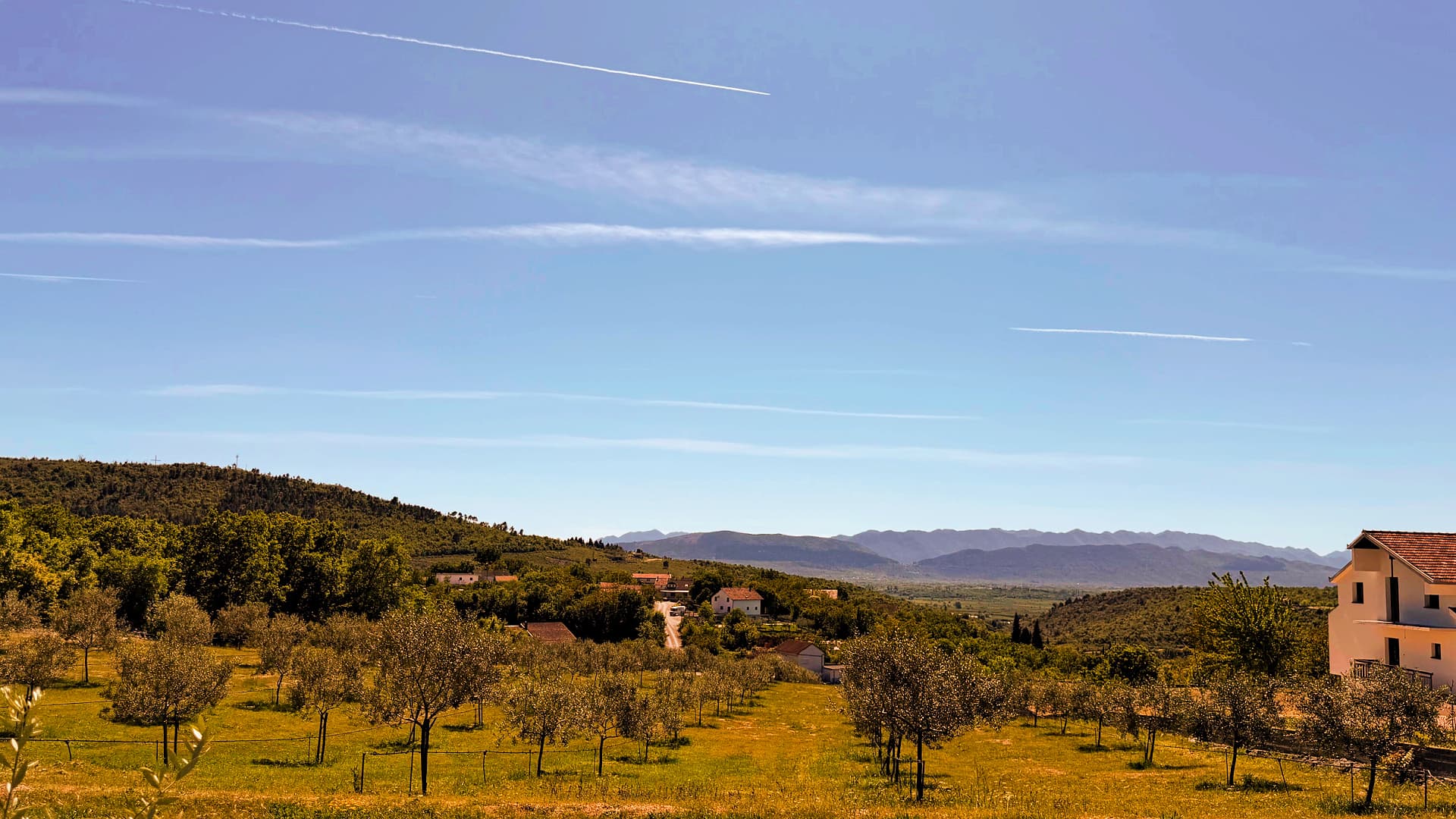
Olive groves stretch across the rocky hills of Radišići near Ljubuški, where a new generation of producers is turning rugged terrain into award-winning olive oil.
“I have traveled the world, but Radišići and Ljubuški are the most beautiful pieces of land for me,” he said. “Everything is possible when you love your homeland, when you do what you love and love what you do.”
Radišići has become one of the standout villages in Bosnia and Herzegovina’s recent rise in international olive oil competitions. Along with Primorac, Mirko Škegro, producer of Krš, and OPG Risto, owned by Nikola Medić’s family, also earned Gold Awards at the 2026 NYIOOC.
Producers from the Ljubuški area earned six awards in total, including Gold Awards for OPG Murić’s Bošnjak brand and the Rašić family’s Dole brand, as well as a Silver Award for Slavko Ramljak.
Across Bosnia and Herzegovina, producers won 16 awards at the 2026 NYIOOC, including 15 Gold Awards and one Silver Award, confirming the country’s growing reputation for high-quality extra virgin olive oil.
In Ljubuški, olive groves now cover about 220 hectares and include more than 70,000 trees. Nearby, entrepreneur Dragan Mikulić has developed one of the region’s largest groves, with 45 hectares of olives planted on formerly barren, rocky land.
Mikulić, who also operates a modern milling facility with a decanter and separator, said he plans to join the country’s producers at the next competition in New York.
For Primorac, the Gold Award is both a personal milestone and part of a broader story unfolding in Herzegovina, where families are turning difficult terrain into productive groves and building a new identity around extra virgin olive oil.