Herzegovina’s Olive Growers Celebrate Year of Triumphs
Farmers and officials commended Bosnia and Herzegovina’s ascension to the International Olive Council, a national approval for a new PDO and a record harvest.
Olive growers in Herzegovina, the southern region of Bosnia and Herzegovina, will remember 2024 for its exceptional achievements.
“We can even say it was historic for our olive and olive oil production,” said Marko Ivanković, the Federal Agro-Mediterranean Institute (FZP) director in Mostar, Herzegovina’s largest city.
Producers and officials in Herzegovina hailed several significant achievements, including establishing the Zlatne Kapi Protected Designation of Origin by the country’s Institute of Intellectual Property and Food Safety Agency.
See Also: Iraq Announces Plans to Rejoin Olive CouncilOn November 20th, the day before World Olive Day, the country was also welcomed as the 21st International Olive Council (IOC) member.
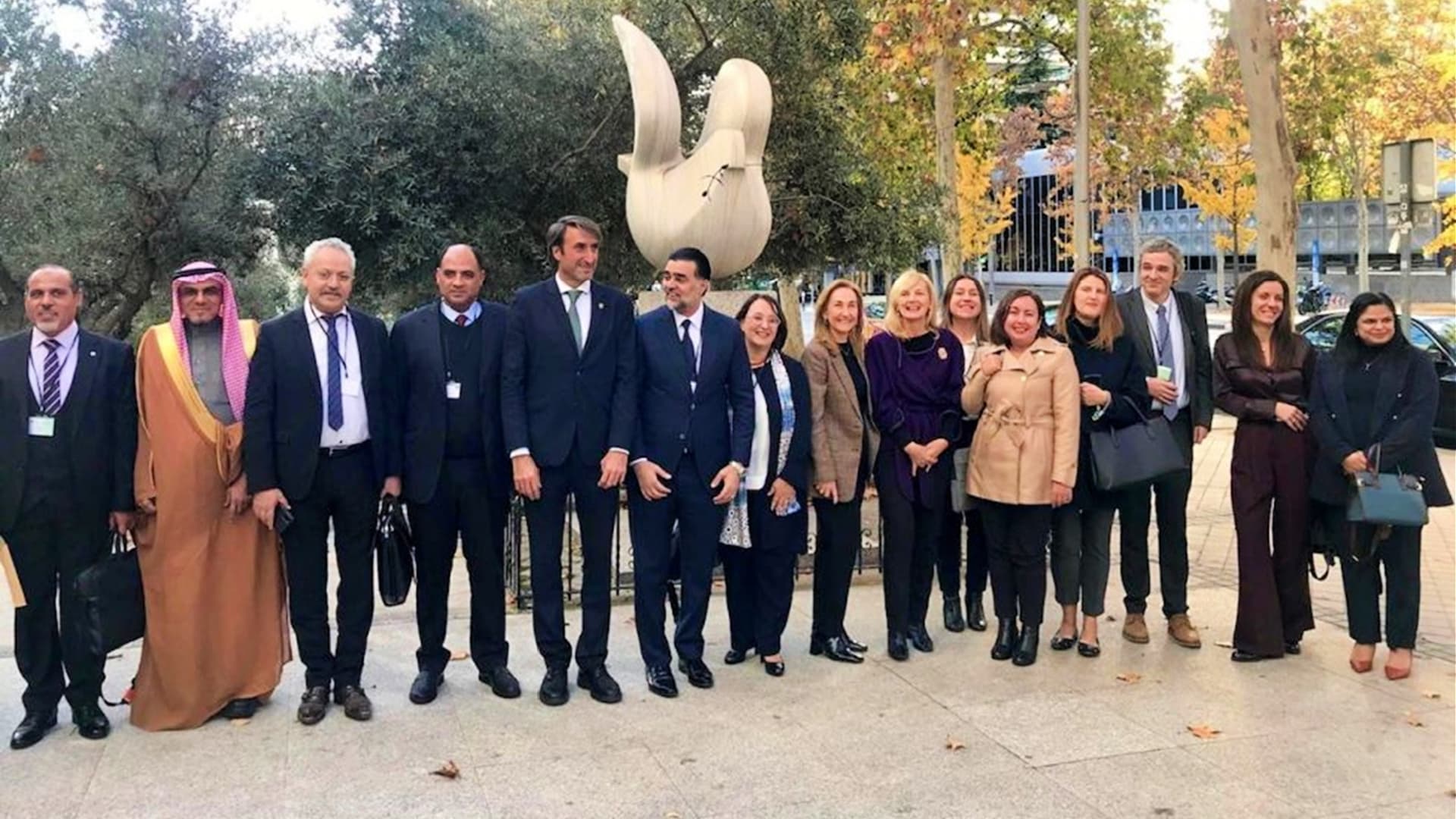
Bosnia and Herzegovina is a new member of the International Olive Council
“For Bosnia and Herzegovina, as a candidate country for accession to the European Union, membership in the IOC implies harmonization of domestic regulations with the E.U. acquis [total body of law] in this area, which will benefit both producers and consumers of olive oil,” said Vesna Andree Zaimović, ambassador of Bosnia and Herzegovina to Spain.
“As an important step in the development of sustainable and responsible olive growing, joining the IOC means encouraging producers with the possibility of expert support, access to grants, better networking and access to a wider market,” she added.
Zaimović also participated in the flag-raising ceremony of Bosnia and Herzegovina as a new member at the IOC’s Madrid headquarters.
The ceremony was held as part of the council’s 120th plenary session, hosted by IOC executive director Jaime Lillo and supervised by the leadership of this organization, heads of attachés of member countries and other participants of the plenary session, and diplomatic staff from the embassy of Bosnia and Herzegovina in Madrid.
Zaimović also participated in the session, delivering a speech in which she emphasized the numerous advantages the IOC membership will bring to Bosnia and Herzegovina’s producers and consumers.
She said the country is proud of its diversity, multiculturalism, and centuries-long coexistence between different peoples (Croats, Serbs and Bosniaks) and religions (Catholicism, Orthodoxy and Islam).
She also emphasized that the country is characterized by natural resources and biodiversity conducive to cultivating various crops.
“What we are particularly proud of are the people, widely known for their hospitality and open doors to everyone,” Zaimović said. “That is why we are very pleased to celebrate our entry into the world family of olive growers and the popularization of the olive tree, which, among other things, also carries the symbolism of peace.”
Along with the national approval of the PDO certification and the Olive Council’s ascension, Herzegovina producers will remember 2024 for the record olive harvest and high olive oil quality.
“The olive trees have produced well this year, but the oil yields are slightly lower than in previous years due to the drought in July and August and the rains in September and October, amounting to ten to 12 percent,” said Ivanković.
Production is estimated at around 400,000 liters, and producers are also pleased with the quality, as confirmed by the FZP’s chemical analyses and the organoleptic evaluation panel.
Sixty percent of the 243 samples analyzed had at least 250 milligrams of polyphenols per liter, which means they meet E.U. Regulation 432/2012 on medicinal claims for olive oils.
E.U. Regulation 432/2012 
E.U. Regulation 432/2012 permits olive oil producers to claim that polyphenols help protect blood lipids from oxidative stress, provided the oil contains at least five milligrams of hydroxytyrosol and its derivatives per 20 grams.
“Oils with more polyphenols also have more health properties,” Ivanković said.
He explained how the rise of Herzegovina’s olive growing took place. The tradition dates back to Roman times, as evidenced by the remains of an ancient mill in the Villa Rustica Mogorjelo near the town of Čapljina.
Toponyms (names derived from places) also testify to the presence of olives, such as the settlement of Masline, also the Croat word for olive. Still, organized cultivation only began about 15 years ago.
Since then, 140,000 olive trees have been planted on 520 hectares, greatly expanding the country’s 6,000 olive trees.
Herzegovina now has seven mills. In addition to constantly improving olive oil quality, one of the strategic goals is to plant 1,000 hectares of olive trees and produce one million liters of extra virgin olive oil.
For its part, the FZP has helped organize olive farmers. Ivanković helped establish the Herzegovina Association of Oil and Olive Growers (HUUM) four years ago, with more than 95 members.
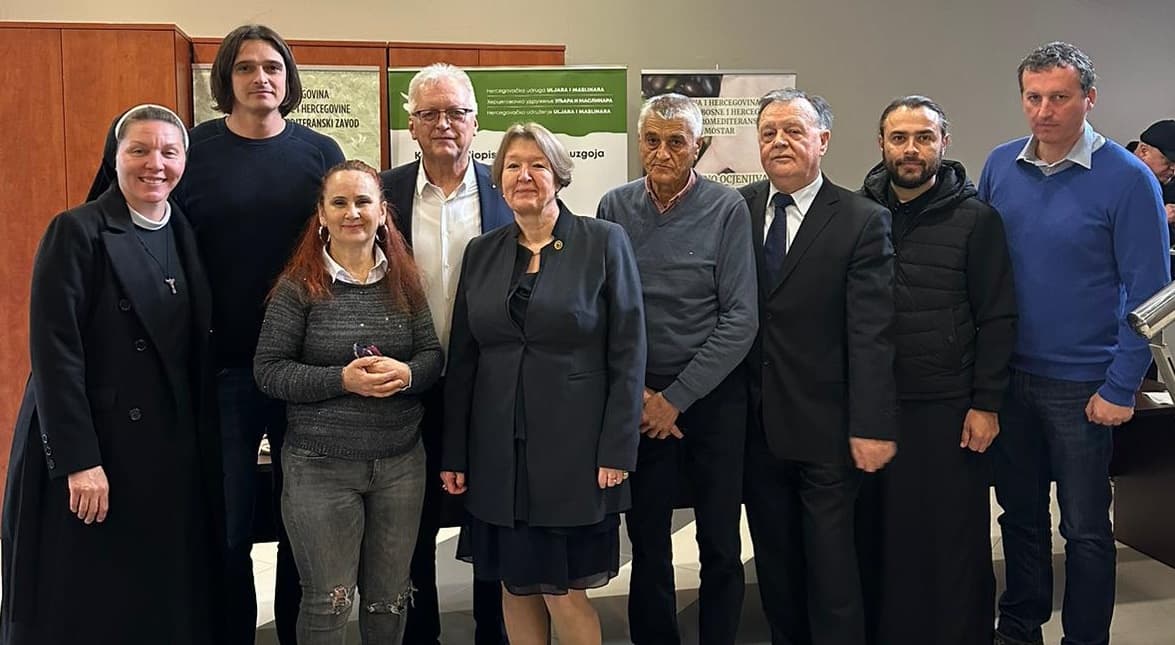
Board of directors of the Herzegovinian Association of Oil Growers
The FZP also helped organize local events about olives and olive oil to educate consumers about the Mediterranean diet and olive oil’s health benefits.
“The successes mentioned in the past year mark the completion of a major stage in the overall development of this branch of the economy,” Ivanković said.
Ivanković said the E.U. application for the Zlatne Kapi PDO will be presented to Brussels in 2025.
“I am very proud to point out that Herzegovina’s extra virgin olive oil has received the Protected Designation of Origin, representing a historic moment for our region and olive growing,” said Dajana Dujmović, a member of HUUM’s board of directors. “We are especially proud of the Zlatne Kapi PDO quality stamp, which further confirms the quality and authenticity of our product.”
“Whoever receives a stamp branded as Zlatne Kapi PDO this year will have proof to all consumers and buyers that they are receiving healthy olive oil in Herzegovina,” added Ramiz Zajmović, a member of the board of directors and co-owner of Agroherc Organic Agriculture.
“There are virgin, extra virgin and Herzegovina oil, with Herzegovina olive oil being the highest level the product can reach,” he joked.
HUUM is also developing plans for an olive oil road project designed as a direct sales channel for olive oils and other local products.
Ivanković added that the sector must promote olive oil quality to increase consumption, which currently stands at 0.40 liters per capita.
He argued that this could be done by quadrupling the amount of land dedicated to olive growing and supporting young farmers to encourage them to invest in agricultural businesses.
Many of the country’s leading olive growers announced they would participate in the 2025 NYIOOC World Olive Oil Competition.
In 2023, Herzegovina producers received a record four awards from five entries to the competition. Last year, only one producer submitted a sample and earned an award. Since 2018, Herzegovnian producers have combined to earn 11 awards from 12 entries.