Amid the Hum of Olive Mills, Afrin Farmers Work Under Threat
In Afrin, the hum of olive presses returns, but unease lingers as Turkey-backed factions continue to influence Syria’s main olive-growing region.
In Afrin, northwestern Syria, the hum of olive presses once again fills the autumn air. The scent of crushed fruit mingles with diesel and dust in presser courtyards where tractors unload their heavy sacks. Across the hills, under trees that have stood for centuries, families climb ladders and stretch tarps as the harvest begins.
I’ll have to press them and give the oil back to the men who rob and threaten us. We have no choice.
This is Syria’s olive heartland, a region home to more than 15 million trees where nearly every household depends on the crop.
Yet behind the familiar rhythm of the picking season lies growing unease. For the farmers of Afrin, the joy of harvest has been overshadowed by fear since 2018, when the Kurdish-majority stronghold was captured by Syrian factions backed by Turkey — today known as the Syrian National Army (SNA).
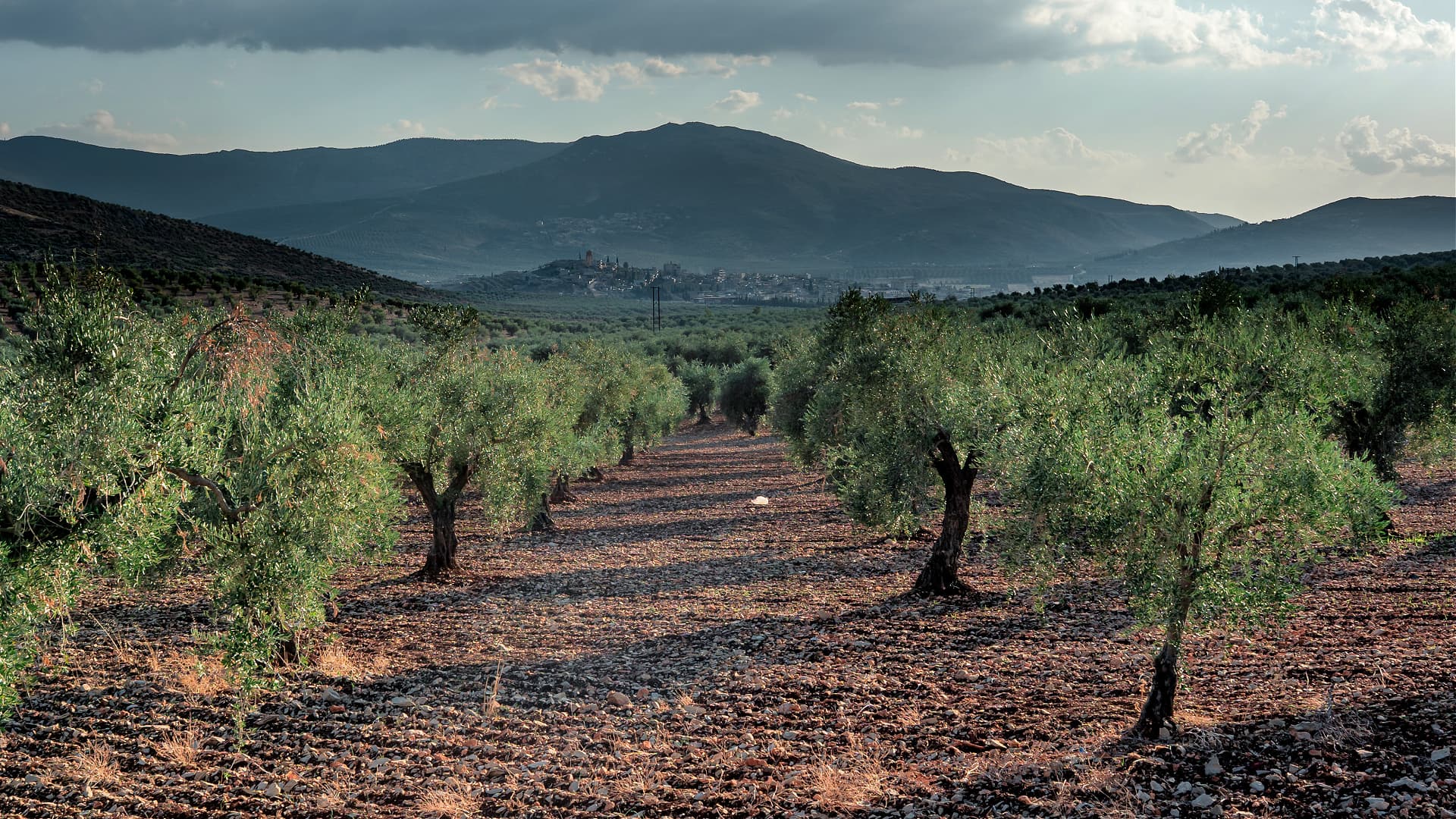
View of an olive grove near the town of Rajo, Afrin district, October 2025
Since then, olives and their oil have become lucrative assets in a contested landscape.
The Art of the Presser
Each morning, as the mist lifts over the groves of Sharran and Rajo, farmers gather with baskets, ladders and wooden combs. They pull olives from high branches, letting the fruit fall onto sheets spread beneath the trees.
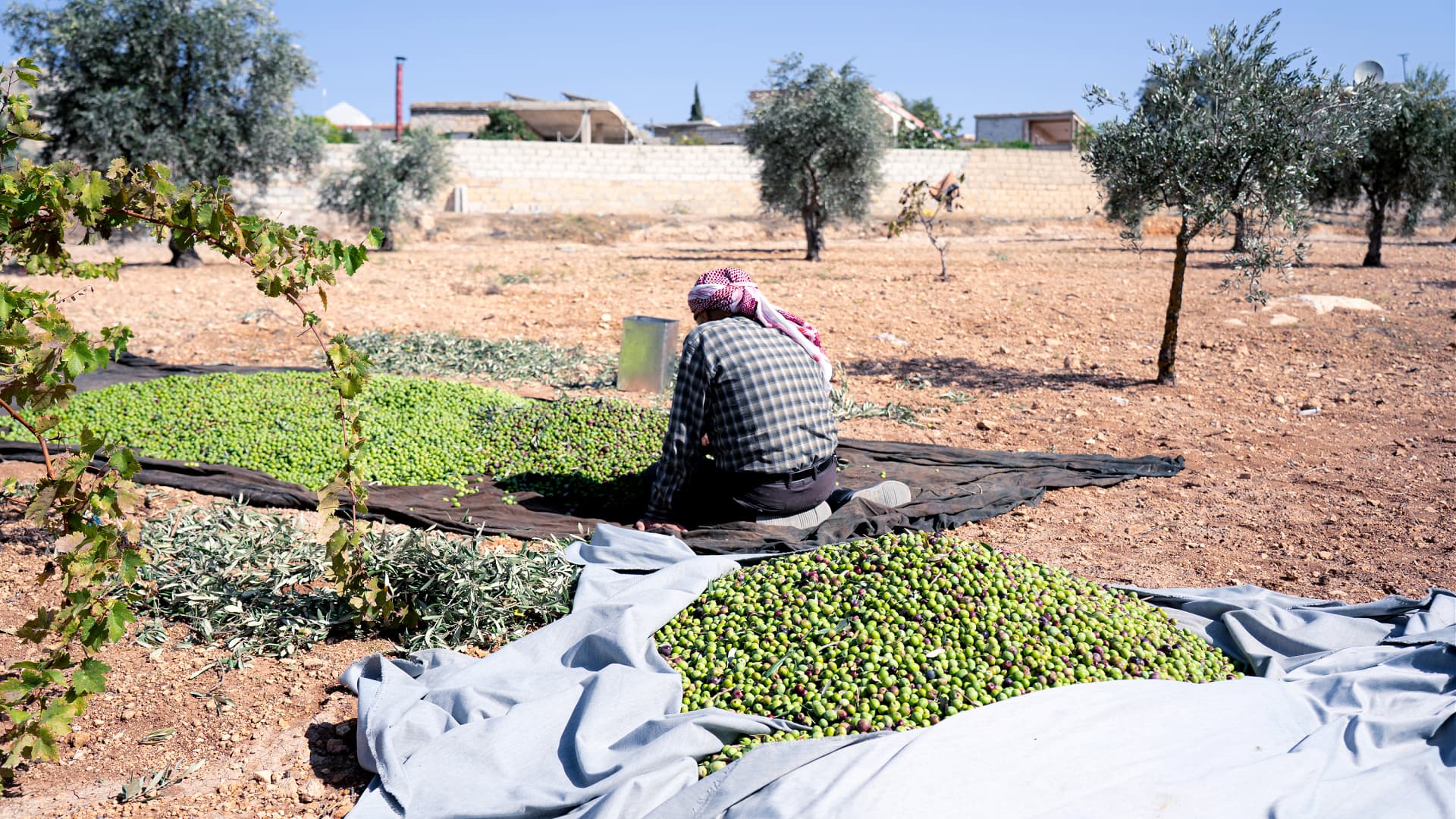
A Kurdish farmer in his fileds during the harvesting season, near the village of Metina (SYRIA, Afrin district, October 2025)
Children dart across the tarps collecting olives while women sort leaves and twigs nearby. By midmorning, laughter mixes with the clatter of wooden rakes and the rustle of branches. Despite the pressure of armed groups, the age-old rhythm continues.
At the Sharran olive press, director Hassan Jamal Kharbash moves among the machines with practiced calm. The process mirrors presses across the Mediterranean: olives are washed, milled into a thick green paste and spun in a centrifuge to separate oil, water and pulp. The first shimmering oil, valued for its purity, is collected in steel basins.
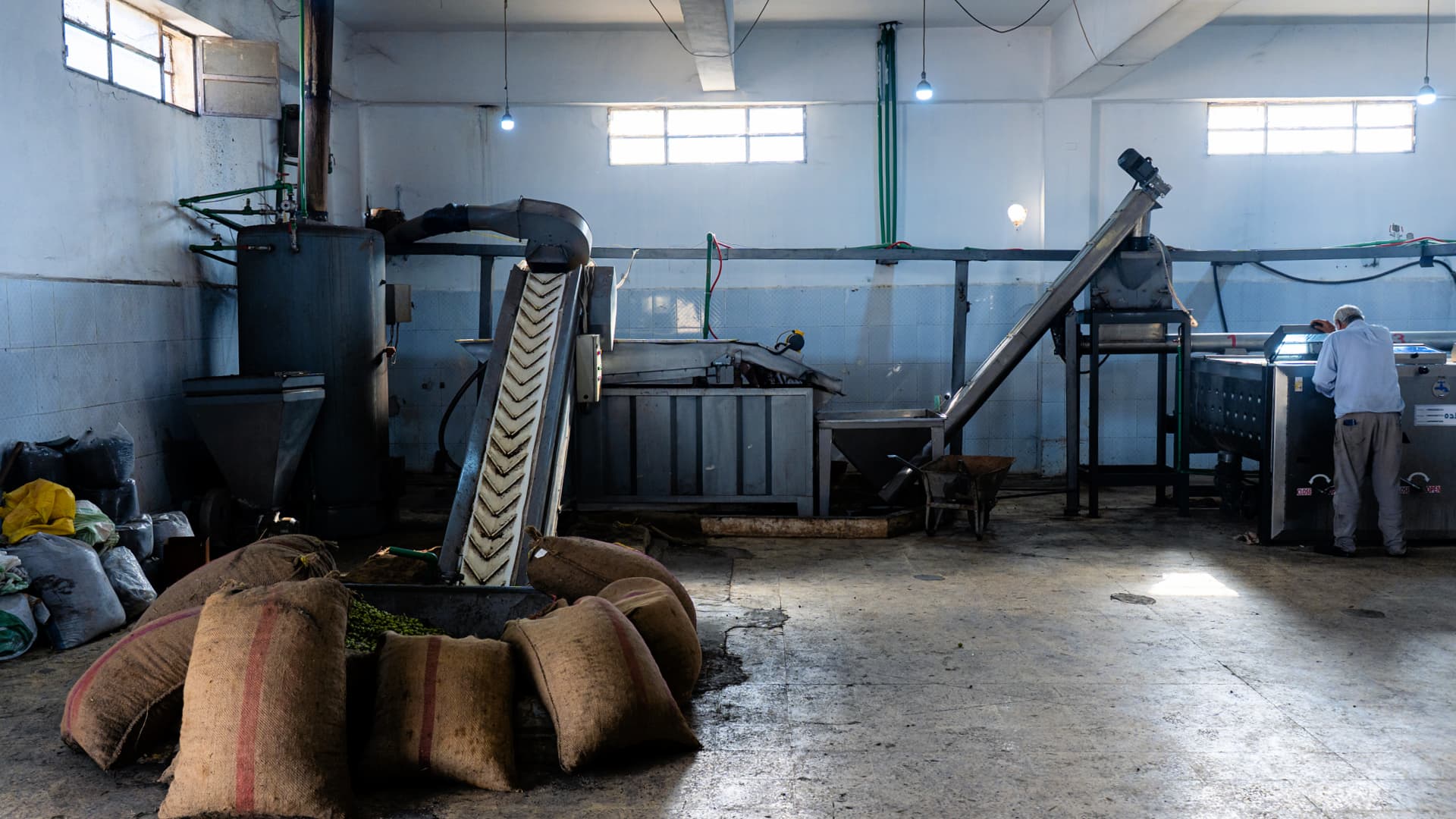
Inside the olive oil press of Ain Hajar, on the road between Afrin and Rajo (SYRIA, Afrin district, October 2025)
Nothing is wasted. The remaining residue becomes lower-grade oil used for soap-making, including the famed Aleppo soap that has carried Syrian craftsmanship worldwide.
The Weight of Factions
Beyond the groves, uncertainty continues to shape the season. Many farmers say they must pay “fees” to armed men for access to their land or safe passage to presses. Others have been displaced, leaving their trees in the hands of strangers.
Afrin’s growers face more than drought. The remnants of factional control—groups once tied to Turkey—still weigh heavily on livelihoods.
Since Damascus reasserted control after the fall of Bashar al-Assad, a new local body, the Economic Council, has overseen property and farmland. The council officially manages the restitution of assets to displaced Kurdish owners. In practice, says Azad Osman, a member of the local council and the Association of Independent Syrian Kurds, “they’ve institutionalized the racket.”
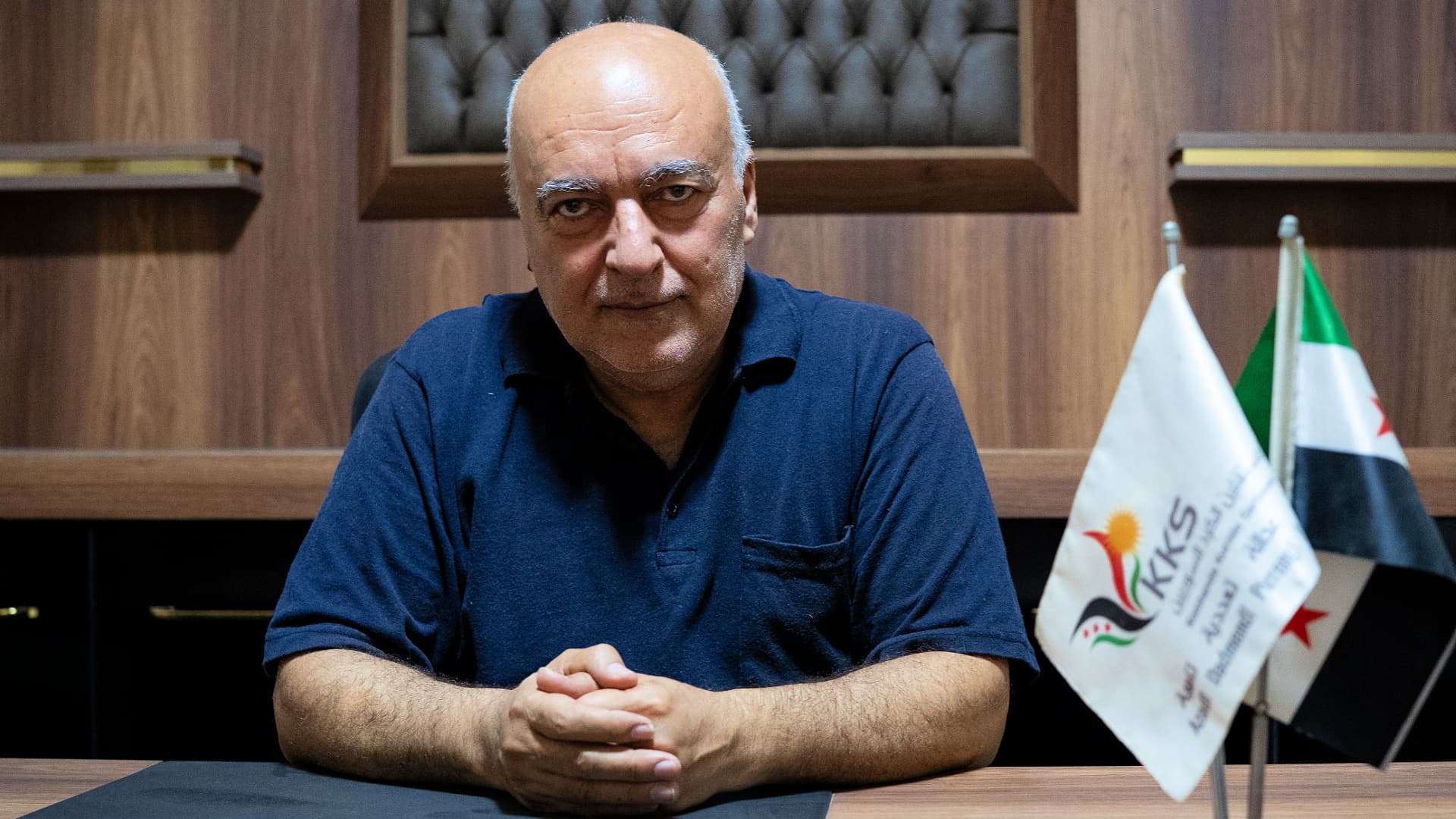
Azad Osman, a Syrian-Kurdish politician based in Afrin, where he is a member of the KKS party, an independent Syrian-Kurdish party (SYRIA, Afrin district, June 2025)
Osman says the council takes half the harvest from displaced owners who have local representatives. If no representative is present, the entire yield is seized. Officials describe this as a management fee; Osman refers to it by a different name. “We’re colonized again,” he says. “Only this time by the State.”
Years of drought have deepened the hardship. Rainfall is at its lowest in years, leaving many groves producing only half their usual crop. “The ones who still have olives left,” Osman says, “are the ones who face the most trouble.”
A Trade in the Shadows
Once harvested, olives must reach market—legally or not. Osman says much of the illicit trade runs through Azaz, a town that was never a traditional olive center. The shift, he argues, indicates that stolen olives are being funneled there before being moved north.
From Azaz, the oil reportedly crosses into Turkey, is relabeled as Turkish and exported abroad, sometimes ending up on European shelves.

Hanan Jamal Kharbash, head of the Kharbash oil press (SYRIA, Afrin district, October 2025)
At the press in Ceqmaqe Bicuk, stories of militia interference are familiar. Director Riad Muhammed says, “Since the fall, it’s been chaos. Some farmers have lost half their harvest. They have weapons, and we have no means to defend ourselves.”
He gestures toward sacks left days earlier by members of the Failak al-Sham faction. They expect their olives to be pressed. “I’ll have to press them and give the oil back to the men who rob and threaten us,” he says. “We have no choice.”
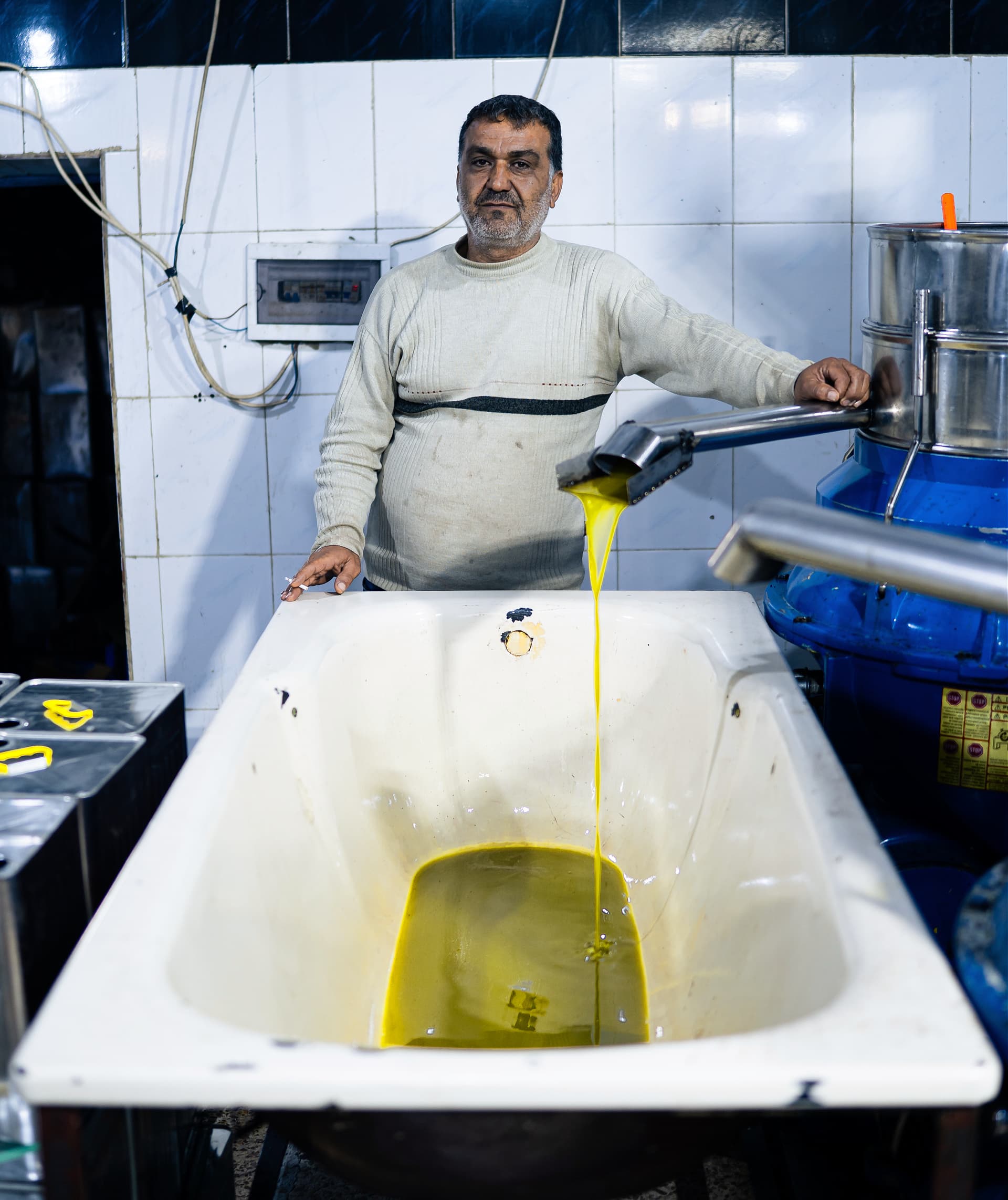
A worker inside the local Ceqmaqe Bicuk olive press (SYRIA, Afrin district, October 2025)
Still, not every story is bleak. In the village of Derswane near the Turkish border, a family recently returned after years of displacement. On their terrace, they prepare jars of pickled olives. Their home once stood beside a militia base; today, it overlooks quiet hills where the groves shimmer in the afternoon light.