Monte Rosso: A Family Dream Reborn on Istria’s Red Hill
On Istria’s Red Hill, Davor Duboković and his partners turned abandoned land into one of Croatia’s most advanced olive estates.
On the picturesque Monte Rosso estate, in the far west of Croatia’s Istrian peninsula near the Slovenian border, the harvest season lasts more than half the year. It begins in May with cherries, continues through summer with figs, almonds in August, grapes in September, and finally, olives.
“We started harvesting olives on September 20 and expect to finish by mid-November,” says Davor Duboković, co-owner and manager of the estate.
A Modern Istrian Success Story
The estate covers 62 hectares, 40 of which are planted with olives—making it one of the ten largest and most productive groves in Croatia. “We expect about 300 tons of olives this year and roughly 33,000 liters of extra virgin olive oil,” Duboković says.
His family’s story stretches back more than a century to the island of Hvar, from where his grandfather Petar migrated to Slovenia after the fall of the Austro-Hungarian Empire. Facing land reforms that stripped extensive holdings, Petar traded his family’s property on Hvar for a modest life in Ljubljana, where he sold wine and olive oil and opened a tavern called Gostilna Dalmacija.
Following the breakup of another Yugoslavia decades later, Davor returned to his roots—cultivating olives, vines, almonds, figs, and other Mediterranean crops.
Together with partner Uroš Gorjanc, Duboković runs Olma, a successful Ljubljana-based company. “Two decades ago, Istria turned toward gastronomy, sport, and sustainable tourism beyond just beaches and sunshine—and that produced great results,” he says.
Transforming the Land
Above Savudrija, on the scenic Crveni Vrh (Red Hill), the partners reclaimed 62 hectares of abandoned state land. “It took years of paperwork, investment, and fieldwork,” Duboković recalls. The land, once overgrown and littered, proved fertile after testing.

Red Hill’s breezy microclimate and mineral-rich red soils proved ideal.
Consulting experts from Croatia, Slovenia, and Italy, they planted 14,000 olive trees, 50,000 vines, 2,000 cherry trees, 600 almonds, and 600 fig trees. The breezy microclimate at 50 meters in altitude, with calcareous, mineral-rich red soils, proved ideal.
“All these conditions—plus expert care—yield healthy fruit and premium oils,” Duboković explains.
Healthy Olives, High Polyphenols
Unlike many growers in Istria who battled olive fruit fly and other pests, Monte Rosso was spared. “We used pheromone traps and confusion methods instead of standard yellow panels. It worked perfectly,” he says.
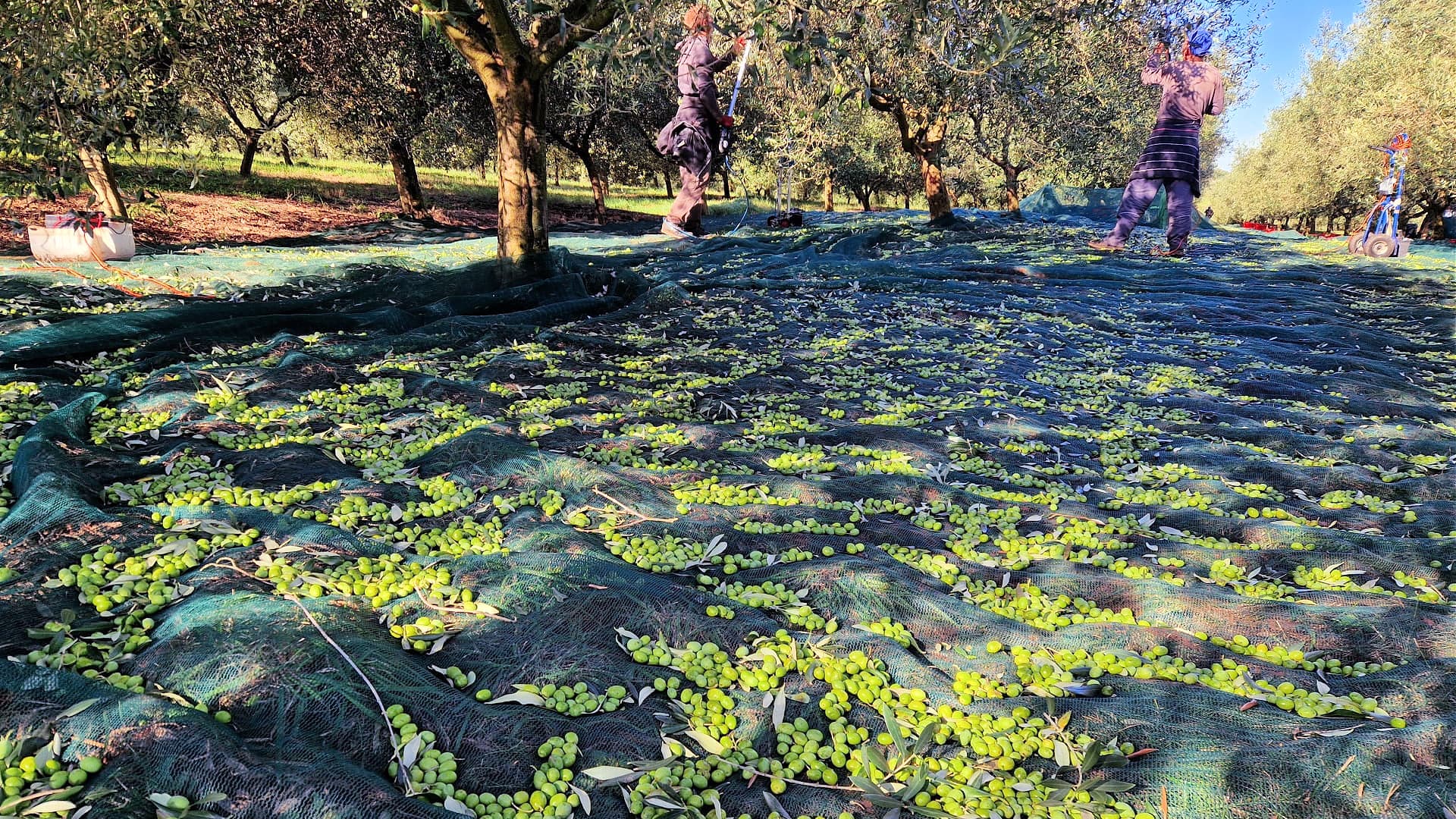
(Photo: Monte Rosso)
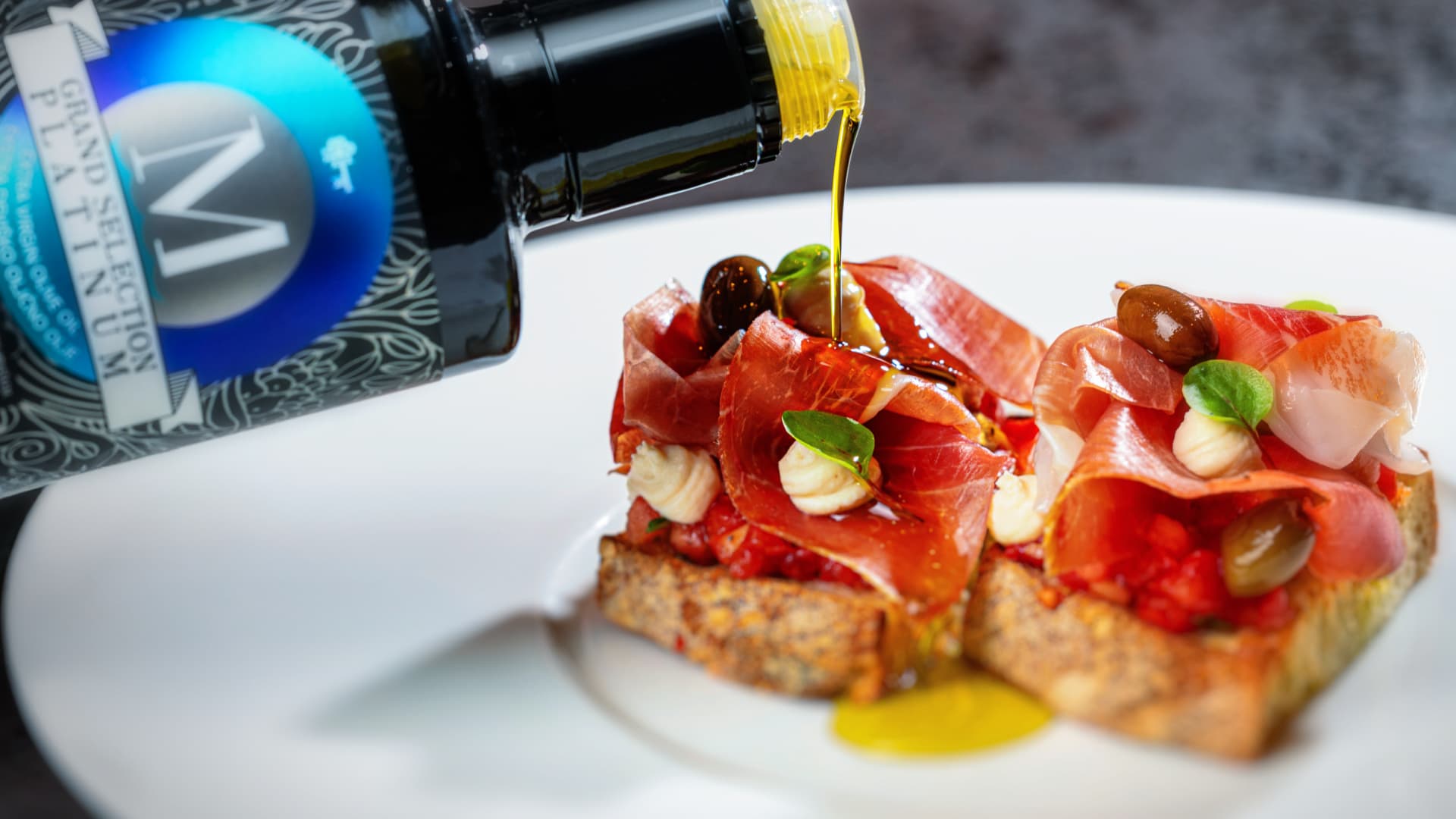
Their leading oil, Grand Selection, produced from early-harvest Leccino and Istarska Bjelica, is known for its grassy aroma and high polyphenol content—over 250 mg per liter, meeting the EU standard for health claims. The oil was awarded at the NYIOOC World Olive Oil Competition in New York.
Harvesting is semi-mechanized with a Baggy shaker that collects 8–10 tons of fruit per day. Olives are processed immediately at mills in both Croatian and Slovenian Istria to ensure freshness.
“This season is our best so far,” says Duboković. “The fruit is healthy, the yields good, and the oils intense and balanced.”
A Destination for Visitors
Monte Rosso has built a loyal following. “We sell to individuals, companies, distributors, and clients from Japan to Dubai,” Duboković says. “Most of our sales are through specialty shops, wine bars, and our own estate store—never supermarkets.”
Visitors are central to the brand’s success. “Guests who come here see where the oil comes from. They become our best ambassadors,” he adds.
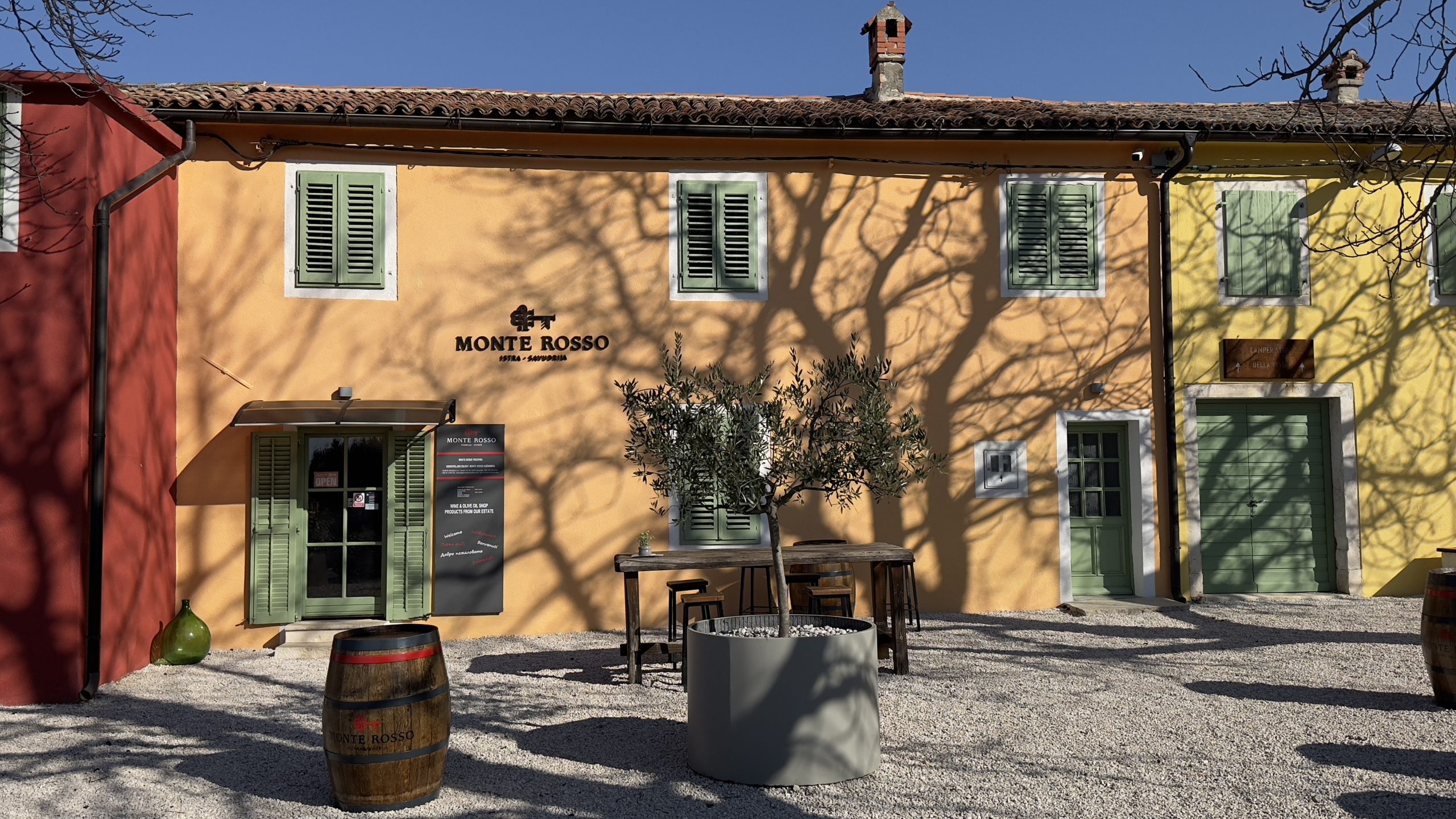
A tasting square next to the estate welcomes individual visitors and groups for guided tastings and pairing experiences. The estate’s proximity to the Kempinski and Petram Resort hotels brings a steady stream of international guests eager for authentic local products.
Asked whether Croatian and Slovenian extra virgin olive oils are too expensive, Duboković is firm: “High-quality oils, especially those rich in polyphenols, cannot be cheap. Late-harvest and blended oils are different products entirely, often poorly labeled.”
He warns that shelves remain full of adulterated oils mixed with refined seed oils. “In the EU, refined olive oils and pomace oils are banned as standalone categories, but not as blends. That confuses consumers and harms honest producers,” he says.
Monte Rosso focuses exclusively on premium finishing oils—those meant to enhance dishes rather than cook with. “These are the oils that deliver measurable health benefits,” Duboković emphasizes.
Looking Ahead
He believes Croatia and Slovenia have a bright future in olive oil. “Strong national and regional marketing is essential. Croatia is already doing well positioning itself as a food and wine destination,” he says. “Restaurants and hotels should feature domestic oils proudly.”
Walking through his groves on Crveni Vrh, Duboković says the work still fills him with energy. “We built a sustainable, long-term estate. As our late advisor, Professor Ivo Miljković, told me, you’ll only know in 15 years if you did everything right—by then, it might be too late to change. I think we did.”
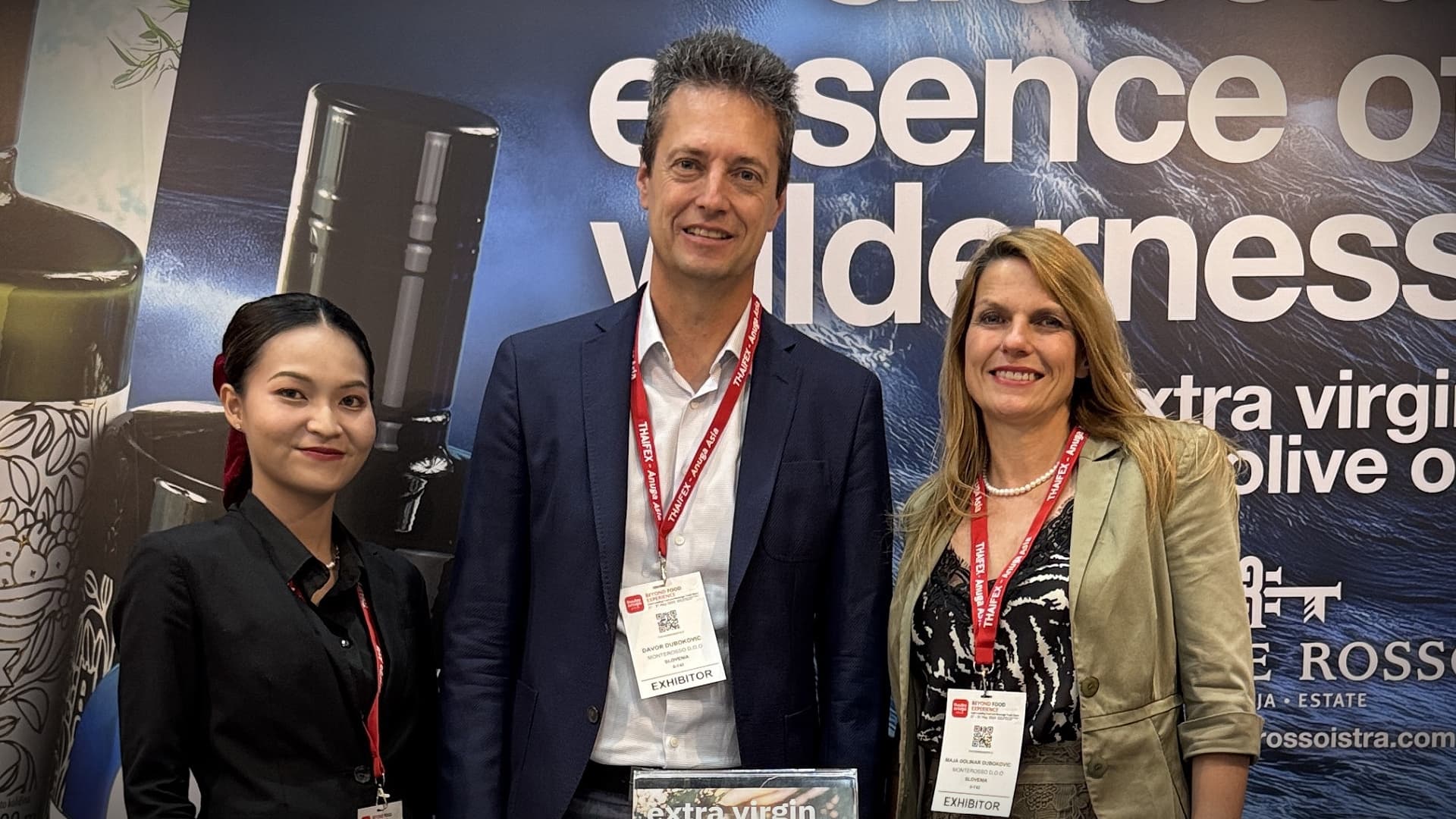
Davor Duboković with his wife Maja (right) at the Thaifex trade fair in Bangkok, 2025.
Monte Rosso, he adds, symbolizes the shared heritage of Croatia, Slovenia, and Italy—three nations linked by land, culture, and the pursuit of excellence.
Would he start all over again today? “Maybe not with the same youthful courage,” he laughs. “But without Monte Rosso, life would be far less interesting.”