Postira, Croatia Hosts International Olive Oil Symposium Highlighting Regional Excellence
Olive Oil Times founder Curtis Cord hailed the region’s rise in quality and urged producers to build on their reputation.
POSTIRA, Croatia — The International Symposium on Olive Oil of Croatia and the Adriatic Coast opened last night at the Grand Hotel View on the island of Brač.
“The goal is to place Croatian olive growing firmly on the global map of excellence,” said Curtis Cord, founder of Olive Oil Times and president of the NYIOOC World Olive Oil Competition, the world’s largest olive oil quality contest.
The symposium welcomed representatives from Slovenia, Bosnia and Herzegovina, and Montenegro, as well as one hundred attendees from at least 15 countries.
Cord joined Ivana Jeličić, Director of the Postira Tourist Board, Vicko Haladić, representative of Split-Dalmatia County, and Toni Glavinić, Mayor of Postira, in greeting the participants.
“It is an honor and a privilege to host a symposium of this scale,” Jeličić said. She recalled the collaboration with Olive Oil Times that began in 2017 with the World Olive Picking Championship. The pandemic later delayed plans for an olive oil sommelier course.

Brač tour director and olive oil producer Eti Ljubetic with Ivana Jeličić, director of the Postira Tourism Board
“Now is the right time to continue our cooperation through this symposium, which is important not only for Postira, Brač, and Croatia, but for the entire Adriatic coast,” she added, thanking Cord for accepting the invitation.
“It is a great privilege to be here on Brač, where I finally have the opportunity to meet distinguished producers I have read so much about, together with advisors, researchers, agronomists, and enthusiasts who support the renowned quality of this region’s products,” Cord said.
He thanked the sponsors, particularly the Postira Tourist Board, before looking ahead. “Over the next few days, we will learn from one another, explore new ideas for advancing our industry, and celebrate the heritage and unique qualities of olive oils from this region.”
Cord noted that producers in Spain, Italy and other major production areas had revolutionized practices to preserve nutritional and sensory qualities and build strong brands. But he reserved his highest praise for the Adriatic.

Curtis Cord addressed one hundred attendees at the International Symposium on Olive Oils of Croatia and the Adriatic Coast
“We have never seen such a dramatic rise in quality on the world stage as we have witnessed here,” Cord said. “People everywhere are discovering that the Balkan peninsula has some of the world’s finest olive oils.”
Cord emphasized that excellence in the Adriatic is not only about terroir. “The same terroir can give very different results,” he said. “Here, it is about the dedication of talented people whose efforts have earned worldwide recognition.”
He emphasized the role of olive oil in human health and sustainability. “Extra virgin olive oil helps people live longer, healthier lives. That is not a marketing claim — it is proven by centuries of research from the world’s leading scientists.”
Olive oil production, he added, is carbon-negative, removing more carbon than it emits, while also strengthening rural communities and preserving traditions.
“Today, it is easy to be cynical,” Cord said. “But you here are making the world better — producing something essential, safeguarding traditions, and offering a product that connects people everywhere.”
Cord’s remarks drew a standing ovation.
The symposium continued today with tasting courses led by internationally recognized instructors, including a certificate program in sensory evaluation.
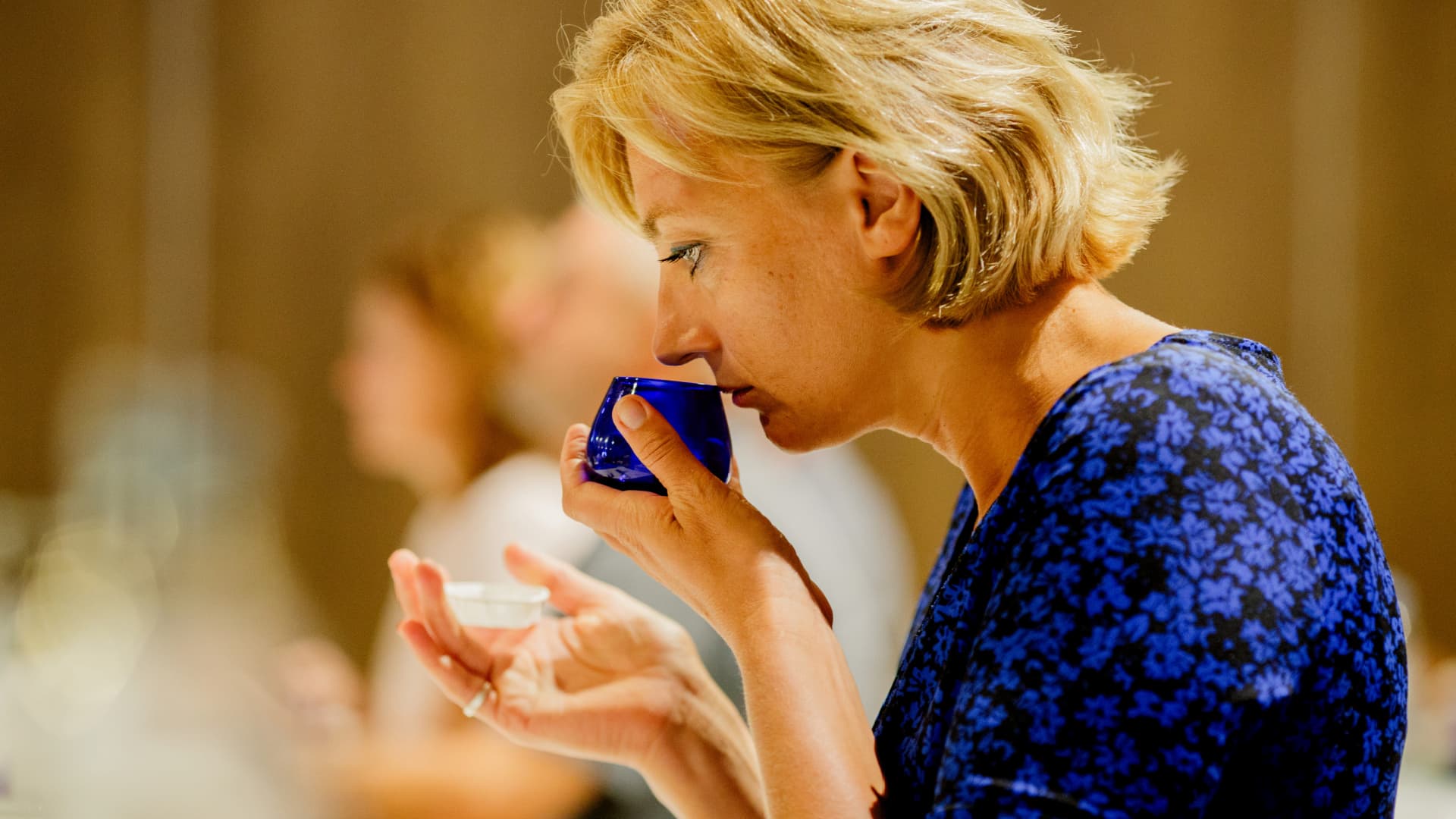
The three-day event included a certificate program in sensory evaluation.
Marketing strategies for olive oil brands drew particular attention, with young Croatian scientist Mira Lepur joining Cord in a workshop.
Participants also visited the ethno-eco village of Dol, where they saw traditional stone beehives and explored the Brač olive landscape, before touring the Postira Agricultural Cooperative.
The cooperative, with 83 members, processed 1.7 million kilograms of olives last season and marketed 43 tons of olive oil. Its products are sold in Postira shops and in major retailers across Croatia.
The program continues through Thursday, September 18, culminating in a closing ceremony that honors outstanding producers and the Adriatic region’s growing importance in the world of extra-virgin olive oil.
Organizers announced the Olive Oil Times Champion of Excellence Awards, which will recognize individuals whose dedication, leadership, and vision have significantly advanced the high-quality olive oil sector.