A Xylella-Hit Farm Becomes a Hub for Biodiversity, Education, Art and Solidarity
After Xylella fastidiosa devastated olive groves across southern Italy, an organic farm in Puglia launched a broad regeneration project focused on biodiversity, education and long-term environmental resilience.
In Puglia, a farm responded to the Xylella fastidiosa outbreak with a far-reaching landscape regeneration project that has since expanded into a broader mission of environmental stewardship, community engagement, educational programs and solidarity initiatives.
In a world that tends to simplify everything, from agricultural systems to the way people judge others, we want to highlight the beauty and richness that complexity brings.
The Columella organic farm cultivates olive trees in Ostuni and within the Torre Guaceto Nature Reserve in Upper Salento.
“Every time I passed by, I was enchanted by the beauty of this place. So around twenty years ago, as an act of love, I decided to purchase these olive groves,” said founder Gianfranco Ciola, an agronomist specializing in organic farming.
He named the farm after Lucius Junius Moderatus Columella (4 A.D.–70 A.D.), the author of “De re rustica (On Agriculture),” one of antiquity’s most influential agronomic works, which includes references to olive groves in the region.
Since its inception, the company has embraced sustainable farming practices. Recognized as High Natural Value Farmland, its monumental olive trees within the Torre Guaceto Reserve were included in the E.U.-funded Life+ Cent.Oli.Med project, aimed at protecting biodiversity.
The property’s first environmental regeneration effort began with the creation of a forest on a reclaimed field that had previously been left fallow and filled with abandoned waste. The plot now contains 1,500 trees, Mediterranean scrubland plants and a pond and is listed in the regional educational forests register.
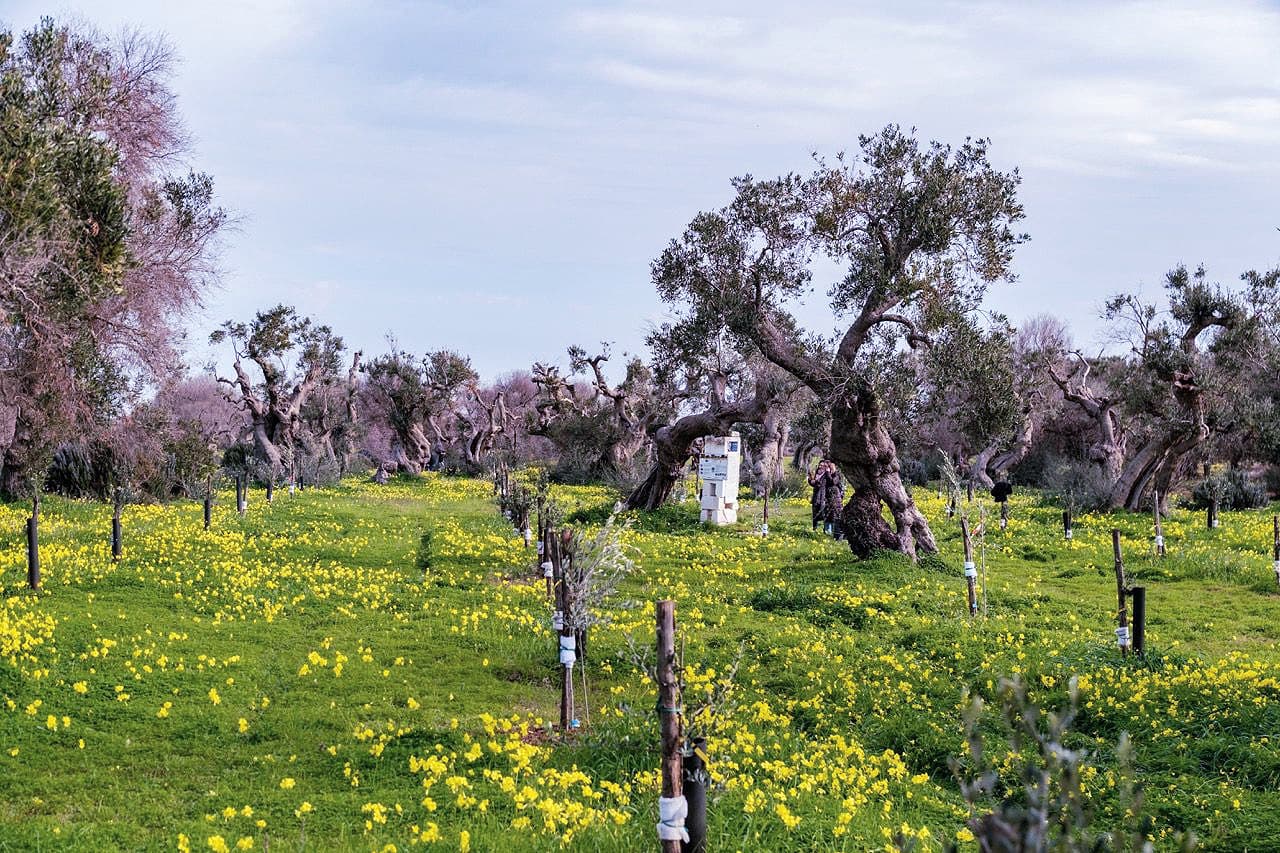
Through an initiative that involved the local community and farmers, the Columella farm planted 600 new olive trees and 400 Mediterranean shrubland plants, restored dry-stone walls and rebuilt the vegetative ground cover.
The farm uses the area for environmental education projects and collaborates with local organizations on wildlife monitoring and species reintroduction programs.
“The Xylella plague arrived and my olive trees began showing the first symptoms about five years ago,” Ciola recalled. “A sort of desert spread all around, degrading this beautiful landscape.”
“We did not give up, and with no real solution emerging despite many interventions and research, we decided to step in to preserve this precious environment,” he added. “I believe that all major changes can represent an opportunity to rethink and redesign landscapes. Our goal, then, was to recreate the agroecosystem.”
Ciola said Xylella causes profound changes to the agroecosystem. As tree canopies decline, solar radiation intensifies and the soil overheats, altering microbial composition and accelerating the loss of organic matter and water retention capacity.
Based on the ecological role of centuries-old olive groves as habitats for wildlife species, including birds, reptiles, insects and small mammals, the farm removed dried sections of affected trees while preserving healthy portions.
A survey documented wildlife living in the groves along with edible herbaceous species and plants that host beneficial insects capable of counteracting olive pests. The findings revealed a rich ecosystem now presented on dedicated information panels throughout the property.
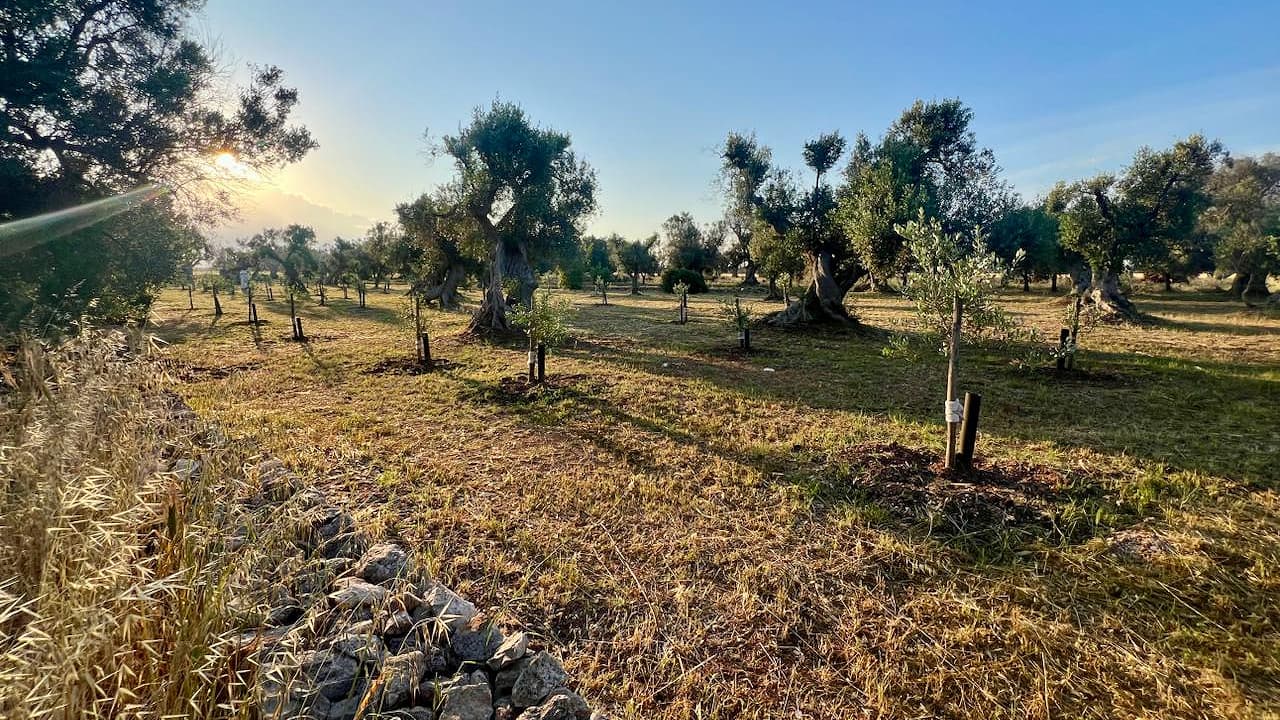
A survey was conducted to document the fauna and flora inhabiting in the Columella groves, revealing a remarkable biodiversity. These findings now serve as a key resource in the farm’s educational activities.
The company later planted 600 Favolosa olive trees, a variety considered tolerant to Xylella. The initiative also involved local farmers and residents.
For each olive tree planted, two Mediterranean plants, including mastic, myrtle, strawberry tree and buckthorn, were added to create a more diverse and resilient agroecosystem. In total, 400 Mediterranean plants were introduced, while dry stone walls were restored and ground cover was gradually rebuilt.
“The centuries-old and young olive trees, along with the Mediterranean plants, allow nature to reclaim its space and find a balance with agriculture, recreating a complex and resilient agroecosystem,” Ciola said.
“Today, thanks to good agricultural practices, we hope that the shoots emerging on the monumental trunks can once again grow into strong, healthy branches,” he added.
Ciola said restoring vegetative ground cover became another urgent priority. The farm adopted a no-tillage approach with controlled grassing and periodic mowing of herbaceous vegetation.
“Now the vegetative cover protects the soil from solar radiation, helps retain organic matter and improves water-holding capacity,” he said. “It also facilitates vehicle access to the fields even after rainfall.”
The farm has since launched a wide range of educational activities in its orchards, from environmental and food-education programs to landscape-regeneration workshops developed in partnership with public and private institutions.
Many initiatives are designed for local schoolchildren and include tastings featuring the farm’s olive oil alongside products from other local producers.
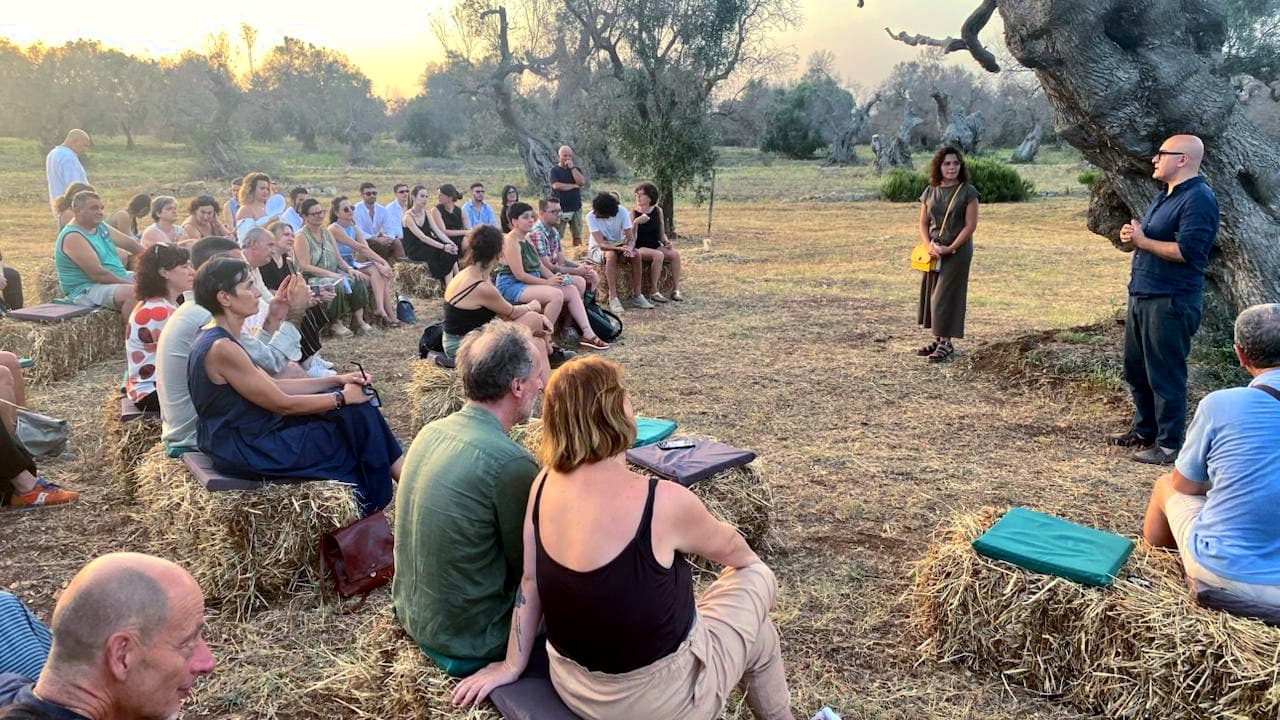
The Columella farm expanded into oleotourism and participates in a network that connects historical and natural sites with organic farms along the ancient Roman Via Traiana.
The groves have also hosted artistic projects, including the “Ri-costruire innesti” initiative organized in collaboration with the Naples Academy of Fine Arts in 2023. The project used clay prostheses grafted onto olive branches as a symbolic gesture intended to encourage discussion about possible responses to the Xylella crisis.
The company has also expanded into oleotourism and joined the Bio Itinerario network, which links historical and natural sites with organic farms along the ancient Roman Via Traiana.
For its environmental and tourism initiatives, the company received top recognition at the 2022 national oleotourism competition organized by the Città dell’Olio association and earned the Ecotourism Award at the TTG Rimini Tourism Fair in 2023.
The Columella farm’s landscape management model has since been shared with the Torre Guaceto Reserve and is now considered a reference point for the regeneration of Xylella-affected farms and marginal rural areas.
In May 2025, the olive grove within the reserve hosted a technical visit as part of an international conference on plant health strategy in the Near East and North Africa. FAO director general Qu Dongyu, agriculture ministers and delegates toured the orchards and exchanged views with farmers and experts on strategies to address the Xylella emergency.
“Alongside ecological and environmental goals, we must ensure economic sustainability, which is essential to keep all this moving forward,” Ciola said.
“In addition to producing our own extra virgin olive oil, we are part of the community of organic farmers of the Torre Guaceto Reserve,” he added. “United by our commitment to protecting the monumental olive-growing landscape, we jointly produce an olive oil line distributed by a major organic retailer.”
Ciola also linked the farm’s environmental mission to broader humanitarian concerns.
“I believe that we farmers have an ethical responsibility that transcends borders,” he said. “The loss of our olive trees by Xylella echoes the destruction of olive trees in lands scarred by war, where oppression can uproot entire populations.”
“But the olive tree binds Mediterranean peoples together as a symbol of peace,” he added. “In this spirit, we carry out solidarity initiatives in support of other olive-growing communities, such as Palestinians and others affected by conflicts.”
The company participated in a charity project organized by the humanitarian organization Emergency and is part of Terra Non Guerra, a network of agro-ecological farmers opposing all forms of war. Together, they produce an olive oil line whose proceeds support olive growers in the West Bank.
“Especially in our initiatives with children, we seek to cultivate an understanding of the world’s complexity,” Ciola explained. “In a world that tends to simplify everything, from agricultural systems to the way people judge others, we want to highlight the beauty and richness that complexity brings.”
“We are not here to show how beautiful this place is, but to create models,” he concluded. “Our goal is to generate approaches that can be transferred and shared, so that the values that inspired this regeneration project can spread and take root elsewhere.”