Fruit Drop Raises Uncertainty Ahead of Slovenian Istria’s Olive Harvest
Heat stress, dry weather, pests and orchard management are being examined as growers assess premature fruit drop ahead of the harvest.
Olive growers in Slovenian Istria are reporting premature fruit drop following a period of intense heat and dry weather, raising concerns about the region’s forthcoming harvest.
Thousands of small green olives have fallen from trees on the terraced hills behind Koper and Izola. Researchers and growers said the losses were likely caused by a combination of heat stress, drought, pest damage and orchard management practices rather than a newly emerging disease.
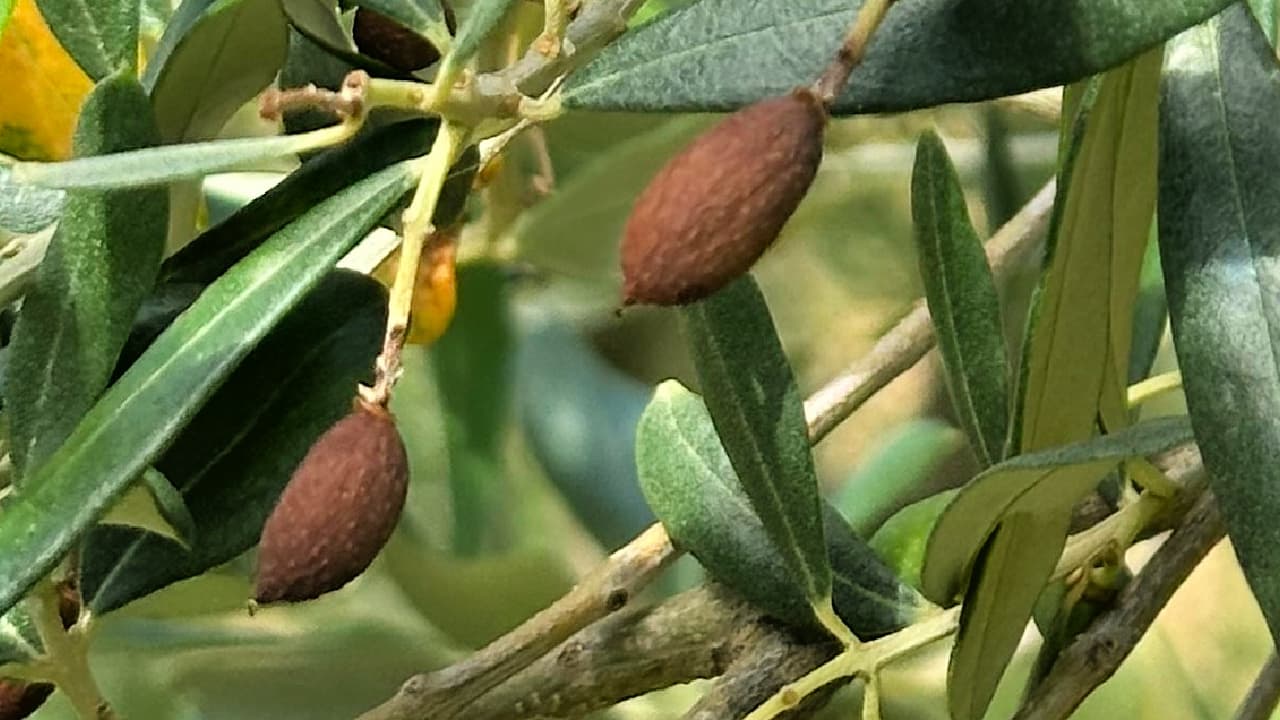
Olives affected by fruit drop darken and begin to shrivel before falling from the tree.
“It also works in our favor that olive trees are gradually adapting to the climatic changes that began here several years ago,” Maja Podgornik, head of the Institute for Olive Growing at the Science and Research Center Koper, told Olive Oil Times.
Heat, drought and pest pressure
Podgornik said the widespread fruit drop was associated with a combination of extreme heat and drought that began in June.
Heat and water stress can weaken trees, making them more vulnerable to opportunistic fungal infections and pests, including the brown marmorated stink bug.
Although specialists recommend measures such as carefully managed irrigation, growers in Slovenian Istria face limited public water infrastructure, high costs for transporting water by tanker and lengthy procedures for obtaining water permits.
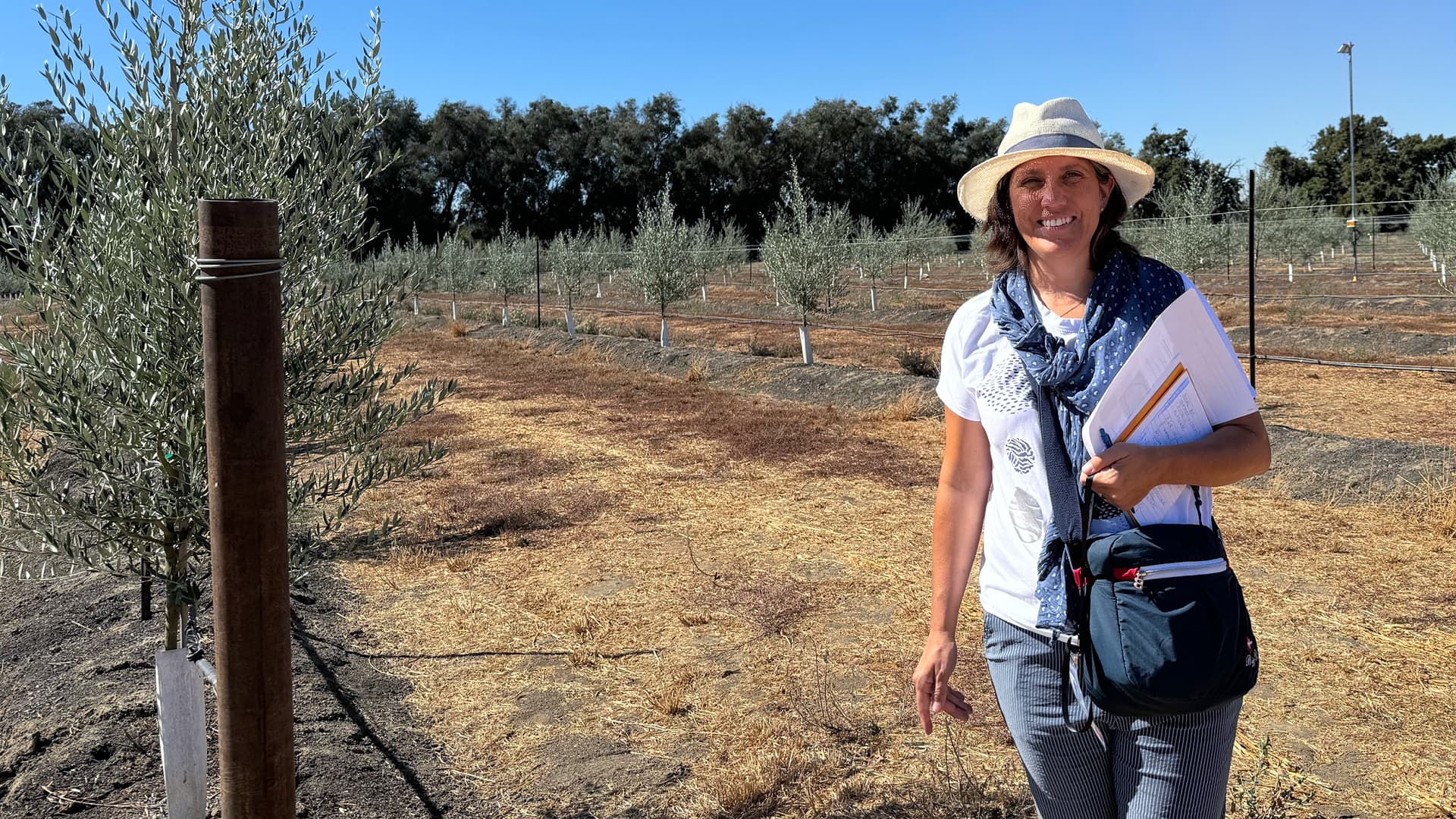
Maja Podgornik, head of the Institute for Olive Growing at the Science and Research Centre Koper, visits an olive grove.
Rok Babič, a researcher at the institute, confirmed that fruit was falling rapidly in some orchards but said local conditions varied considerably.
“We have farmers experiencing this who are very vocal, while those with plenty of fruit are not complaining and remain quiet,” he said.
Babič argued that drought alone did not explain the losses because olive trees are generally well adapted to dry conditions. He said delayed pruning and insufficient preventive treatment may have contributed to the problem in some orchards.
Fruit drop
Fruit drop is the premature shedding of developing olives from the tree, often caused by heat, drought, pests, poor pollination or other forms of stress. Some fruit drop is a normal part of the tree’s natural adjustment, but excessive losses can reduce the final harvest.
“Farmers do not take enough care of their olive trees, prune them too late and, apart from treatments against the olive fruit fly, do not treat them at all,” he said.
Babič said feeding damage from stink bugs, including the brown marmorated stink bug, may weaken developing olives, which can subsequently abort during periods of extreme heat.
He added that preventive action about one month before flowering, including treatments based on sulfur or deltamethrin where permitted, could reduce the risk. Growers must follow local regulations and product-label instructions when applying plant-protection products.
Different results among local orchards
The Babič family’s grove in the village of Babiči, near Marezige, has experienced comparatively little fruit loss.
“Our olive grove is doing very well. My father, Sandi, is there every day,” Rok Babič said, estimating fruit drop at about five percent, which he described as a normal biological process.
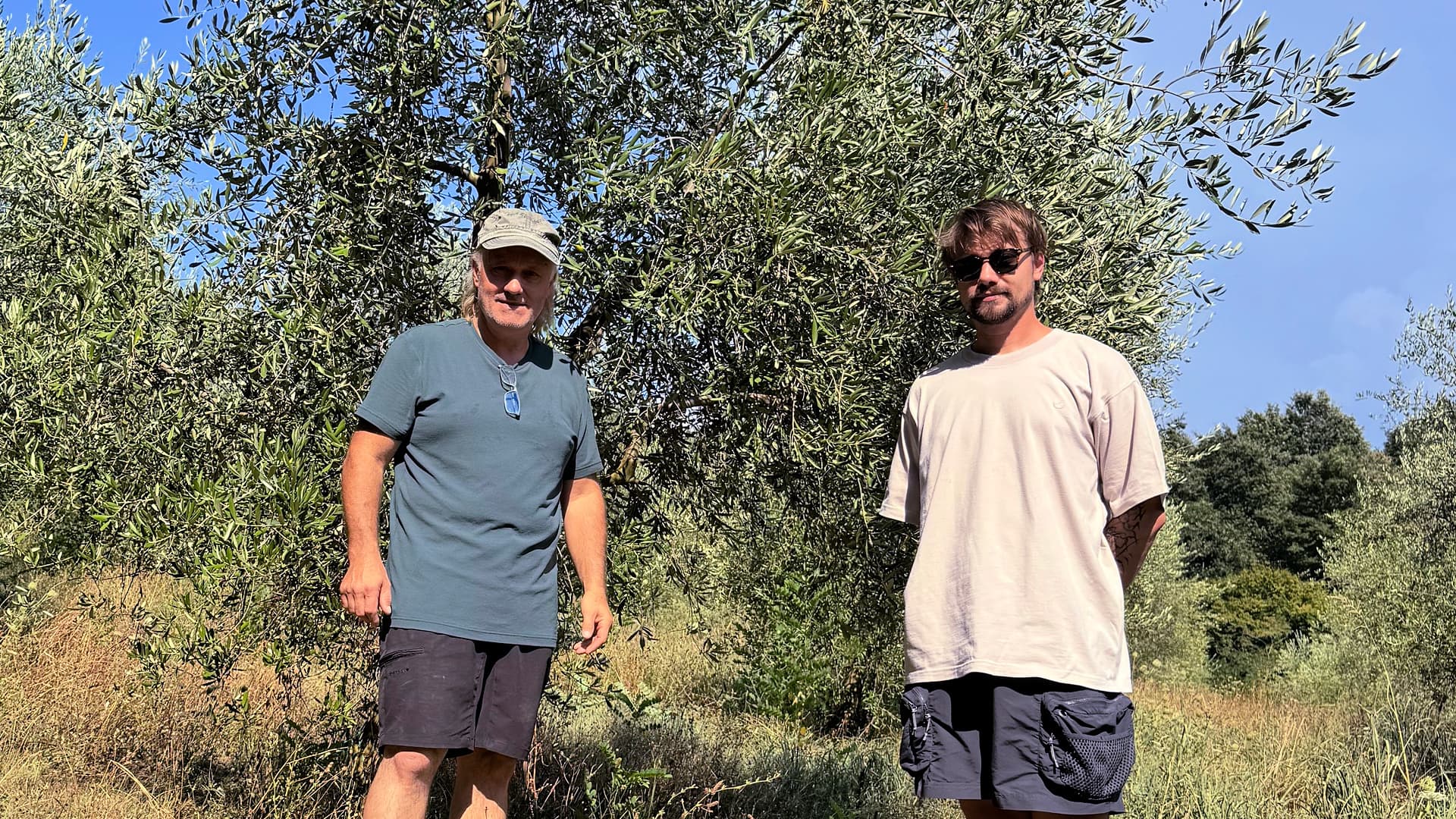
Sandi Babič and his son, Rok, in the family olive grove near Marezige, where careful orchard management has helped limit fruit drop.
Grower and miller Sandi Babič said the olives appeared healthy after a recent inspection, although the trees were showing some signs of water stress.
He attributed the limited losses to carefully timed nutrition and pest-control measures.
“I spray with Decis, which contains deltamethrin, when the fruit is the size of a peppercorn,” he said. “When it reaches the size of a pea, I use Sivanto Prime along with a biostimulant, nitrogen, phosphorus, potassium and amino acids.”
Babič said he applies two kilograms of foliar fertilizer per 1,000 to 1,200 liters of water and supplies micronutrients twice via foliar feeding.
He added that the grove’s location may also provide some protection. It lies near a forest and the Rukava, a tributary of the Dragonja River, where air movement helps moderate periods of extreme summer heat.
Miran Adamič, owner of the organic Ronkaldo farm, reported similarly limited losses in his groves, situated about 100 meters above sea level near Izola.
“I would not say that anything particularly bad is happening in the olive groves,” he said. “Fruit drop in my grove is below five percent.”
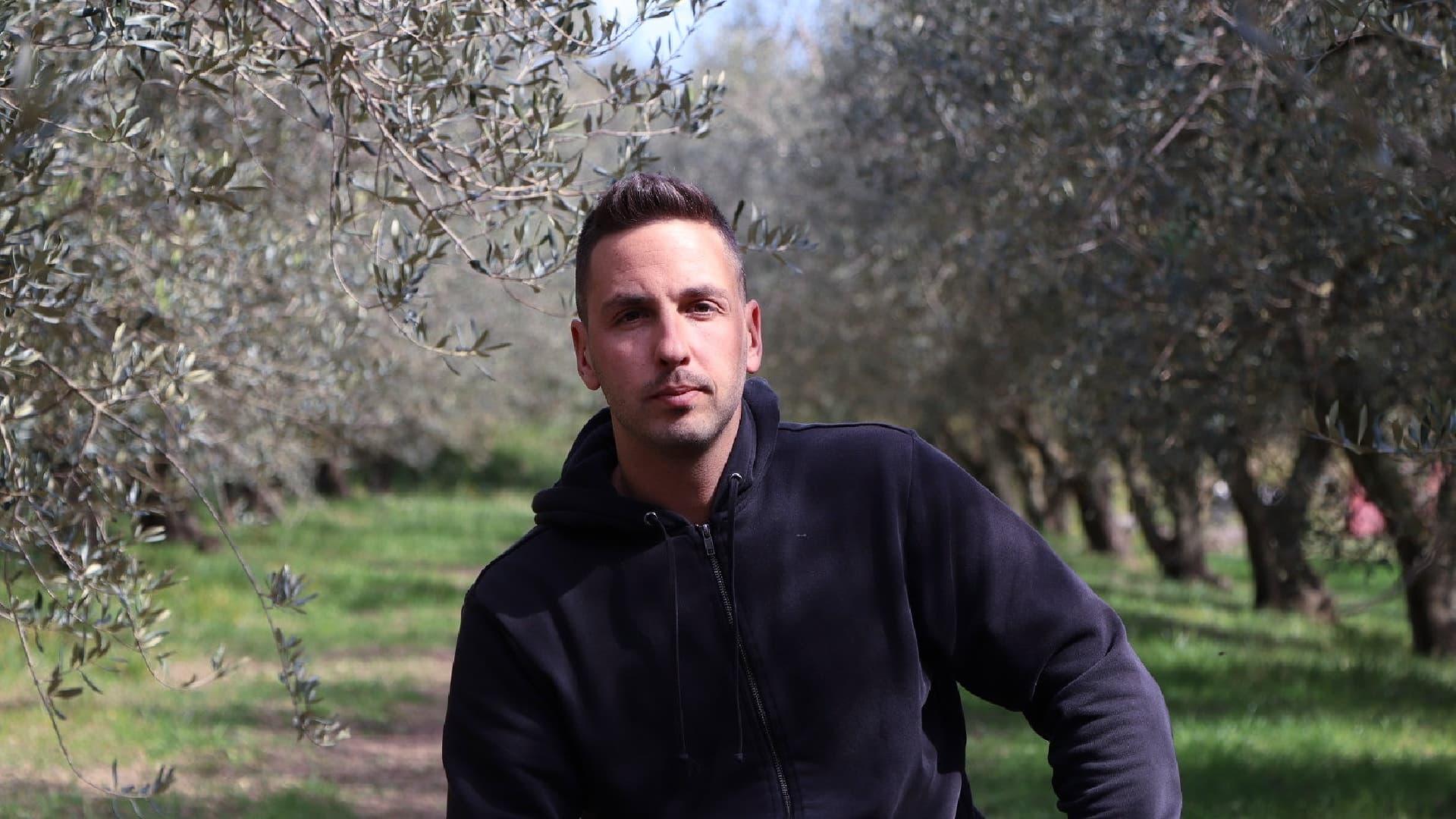
Martin Adamič in the family’s olive grove at Ronkaldo, near Izola. (Photo: Jaka Ivančić)
Unlike some growers, Adamič said he does not use kaolin clay because he has not found it economically or practically effective in his orchard.
“Kaolin protection is expensive and messy,” he said. “Every time it rains, the treatment must be repeated, and after testing it, I did not notice a difference. I also once damaged my sprayer and incurred €150 in repairs.”
Adamič instead relies on insecticides permitted under organic production rules. He and his son, Martin, also operate an olive oil business and develop olive-related tourism activities while closely monitoring production costs, tree nutrition and crop protection.
Harvest outlook remains uncertain
Until recently, growers expected mills in Slovenian Istria to process considerably more olives than last year. Reports of fruit drop have since introduced more uncertainty, although producers cautioned that conditions vary among orchards.
Sandi Babič said the current season appeared broadly similar to the previous one. He uses a simple visual assessment to estimate the prospective crop.
“If you can see 20 to 30 olives at once on one section of the tree, the crop is good,” he said.
Adamič also cautioned against drawing conclusions before the harvest.
“The real results will be seen only at the end of the season, when the olives are harvested and the oil is made,” he said. “Only then can you see what you have actually achieved. Everything else is speculation.”
Meanwhile, the institute is examining new technologies, including autonomous equipment for steep terraces and artificial intelligence models designed to predict heat stress.
Despite the reports of premature fruit drop, growers said the final impact on production would depend on orchard location, pest pressure, rainfall and management during the remainder of the season.