How Rio Grande do Sul Became the Center of Brazil’s Olive Oil Industry
From roadside shops and theme parks to guided harvests and tastings, producers in Rio Grande do Sul are using tourism and diversification to build Brazil’s olive oil industry.
RIO GRANDE DO SUL — Brazil’s southernmost state has a long history of agricultural innovation and food-industry entrepreneurship.
At the end of the 19th century, Italian immigrants arrived in what is now one of the country’s wealthiest and most developed states, carrying vine cuttings in their trunks. Over time, Rio Grande do Sul became the leading producer of Brazilian wine.
Nearly a century later, Jayme Prawer saw similarities between Gramado, about two hours north of Porto Alegre, and the resort city of Bariloche in western Argentina. Though trained as a dentist, he drew inspiration from Bariloche’s chocolatiers in the 1970s and, using domestic cocoa, helped turn Rio Grande do Sul into Brazil’s chocolate capital.
Now, the first generations of Brazilian olive oil producers are following a similar path, transforming Rio Grande do Sul into the epicenter of the country’s olive oil production.
“Our father started this business; we don’t have generations of experience, so we’ve had to learn and adapt as we go along,” said Rafael Sittoni Goelzer, marketing manager at Estância das Oliveiras and one of three brothers involved in the family project.
Part of that adaptation has meant learning to cultivate olives in the hot, humid climate of Rio Grande do Sul, where average winter temperatures fall to about 12 ºC. Olive trees typically require temperatures between 5 ºC and 7 ºC for productive dormancy.
Lucido Goelzer co-founded the business with his wife, Sonia, after presenting a study to local authorities showing that olives could thrive in the region, challenging the prevailing belief that they would not.
Farther west, in the rolling hills of Caçapava do Sul, Brazil’s oldest active olive oil producer has drawn on its family’s experience in the eucalyptus nursery business to introduce new olive varieties across more than 100 hectares of groves and test how they perform in southern Brazil.
Rafael Marchetti, chief executive of Prosperato, has spent the past 15 years studying olive cultivation and olive oil production. That effort has resulted in 20 awards from the NYIOOC World Olive Oil Competition over the past decade.
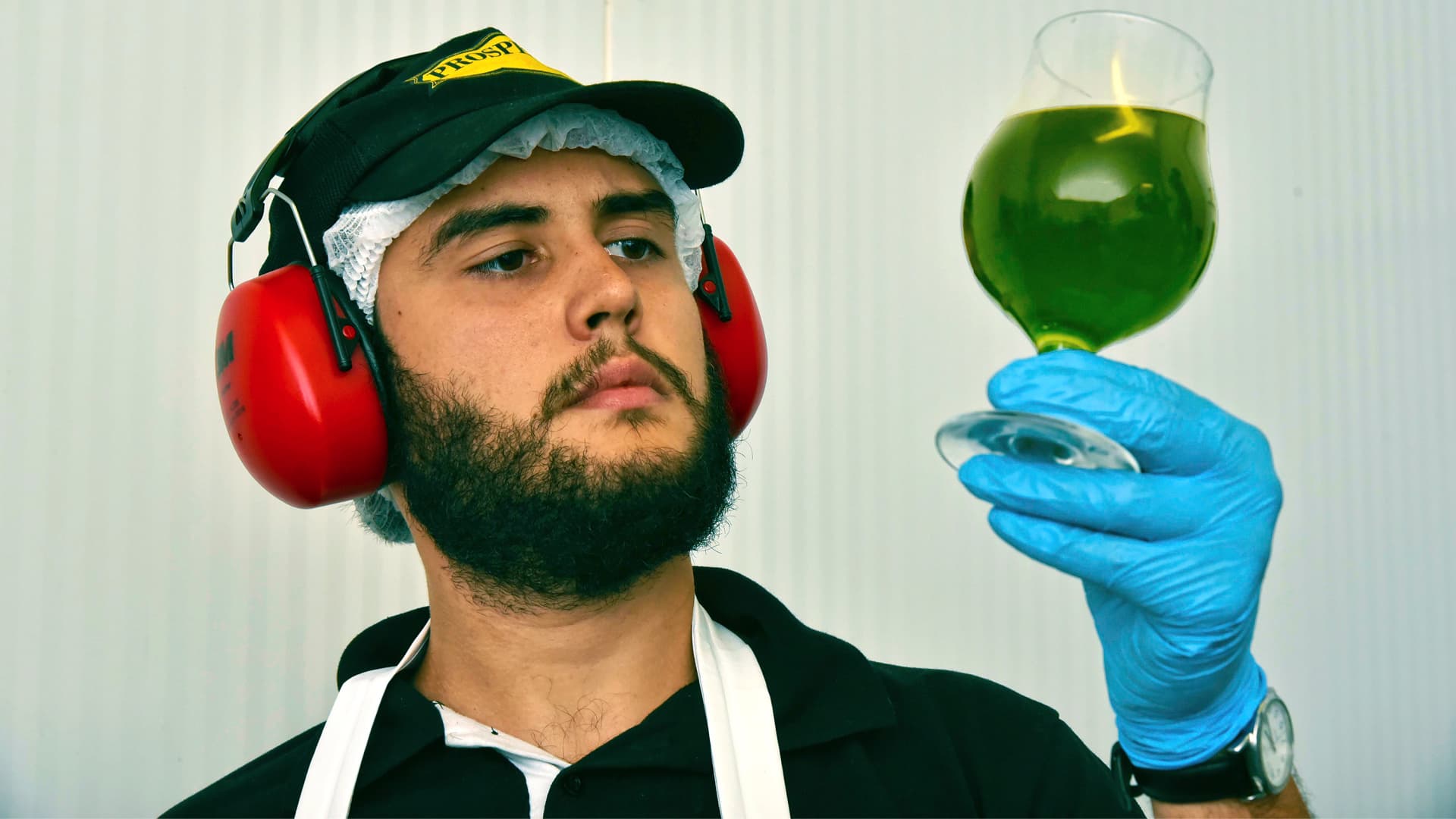
Rafael Marchetti is one of the driving forces behing olive propagation in Rio Grande do Sul, but he still sees the importance of diversification for the sector’s future. (Photo: Prosperato)
Outside the harvest season, he travels through olive-growing regions in Italy, Portugal and elsewhere, comparing soil pH, local climate and flavor profiles to determine which varieties might succeed in southern Brazil. At the moment, he is especially optimistic about Ascolano and Galega.
Still, Marchetti is realistic about the competition Brazilian producers face from South American and Mediterranean rivals. In his view, olive oil alone is not enough.
“You can’t only be an olive oil producer in Brazil,” he said. “You need to have another business plan to complement olive oil.”
Prosperato has used its nursery expertise and experience importing olive trees to supply seedlings to other Brazilian growers.
The company has also capitalized on its location along BR-290, the main route connecting Buenos Aires with the beach resorts of southern Brazil, especially Florianópolis.
During the summer and school holidays, the highway fills with Argentine tourists. With few major settlements along the road, Prosperato was able to build a shop in front of its mill, turning it into a convenient stop for motorists returning from the coast. Billboards along the route announce its approach.
Visitors who stop can see the olive bonsai displayed outside the store. Inside, they are invited to sample the company’s range of extra virgin olive oils.
“But you need to sell more than olive oil” for a roadside shop to succeed, Marchetti said. “When people stop, they also want to buy a coffee and a snack. The store needs to sell other goods.”
Other producers have diversified in other ways, building visitor experiences in which olive oil plays a central role within a broader mix of gastronomy and outdoor activities.
East along BR-290, Porto Alegre is about three hours away. Another 80 kilometers northeast, in the mountainous Serra Gaúcha, sits the resort town of Gramado.
Known for its traditional German architecture, the town of about 40,000 residents has averaged 6.5 million visitors annually over the past two years, according to the recently inaugurated tourism observatory.
Local producer Olivas do Gramado has taken full advantage of that popularity, especially among Brazilian tourists.
Perched atop a hill with sweeping views, the 49-hectare property has been transformed by André Bertolucci, his brothers, and their mother into an olive-oil theme park that welcomes about 250,000 visitors each year.
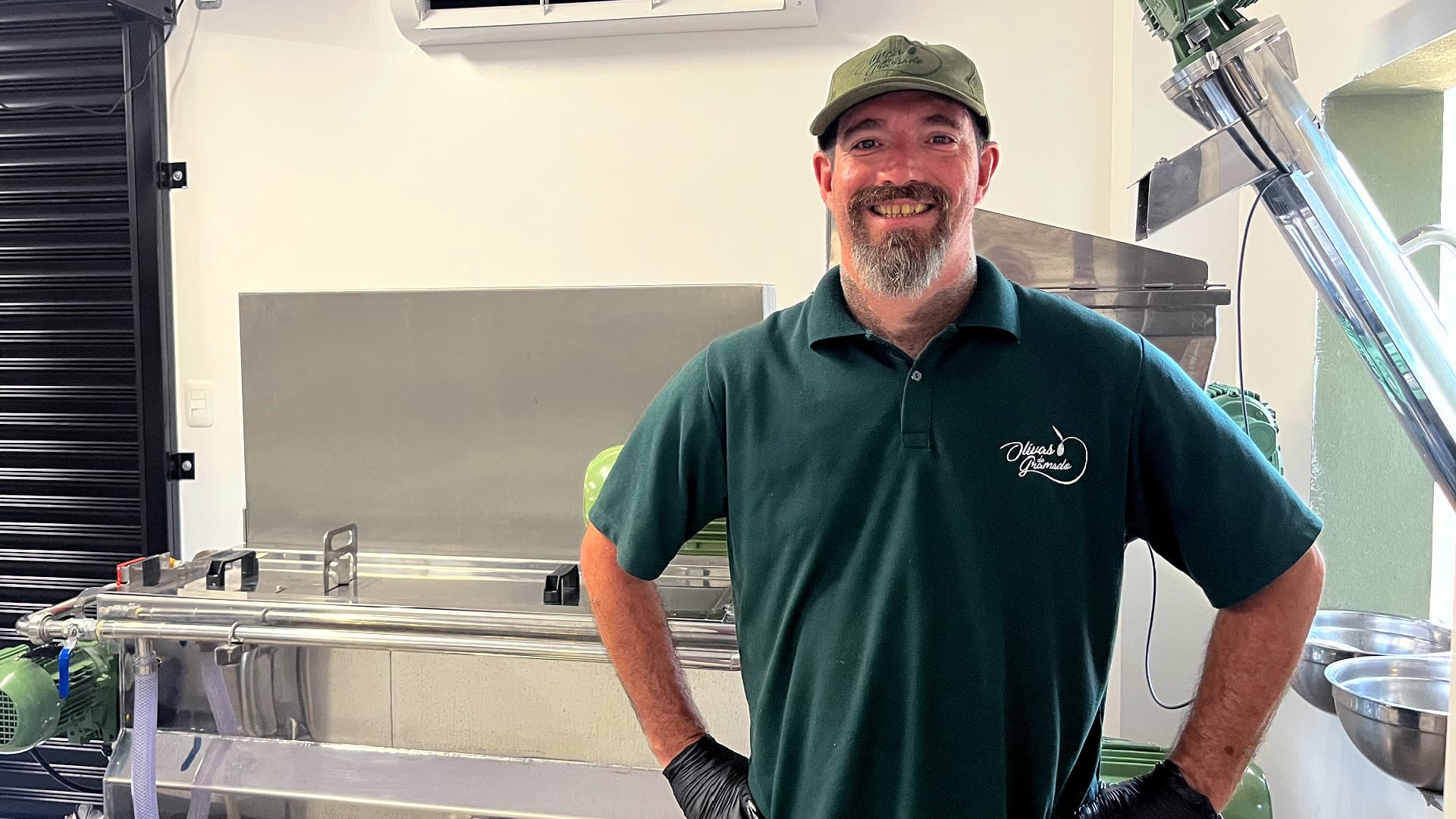
André Bertolucci has embraced Gramado’s eclectic tourist culture and developed a theme park centered around olive growing and olive oil production. (Photo: Daniel Dawson)
Gramado and neighboring Canela are known for their tourist attractions, with parks devoted to space exploration, Ancient Egypt, dinosaurs, trucks, snow and chocolate. Bertolucci said he wanted to create a similar destination centered on olive oil.
After driving up a winding road, visitors pay an entrance fee to access the park, which includes a tasting room, bar and restaurant, hiking and biking trails, a petting zoo and an elevated electric bike track that passes over part of the grove, giving riders a view of the harvest from above.
One of the most popular offerings is a guided tasting led by a certified sommelier. It also gives Olivas do Gramado an opportunity to shape consumers’ understanding of olive oil.
The sommelier explains how to distinguish extra virgin olive oil from other categories and offers pairing advice for the company’s many infused oils.
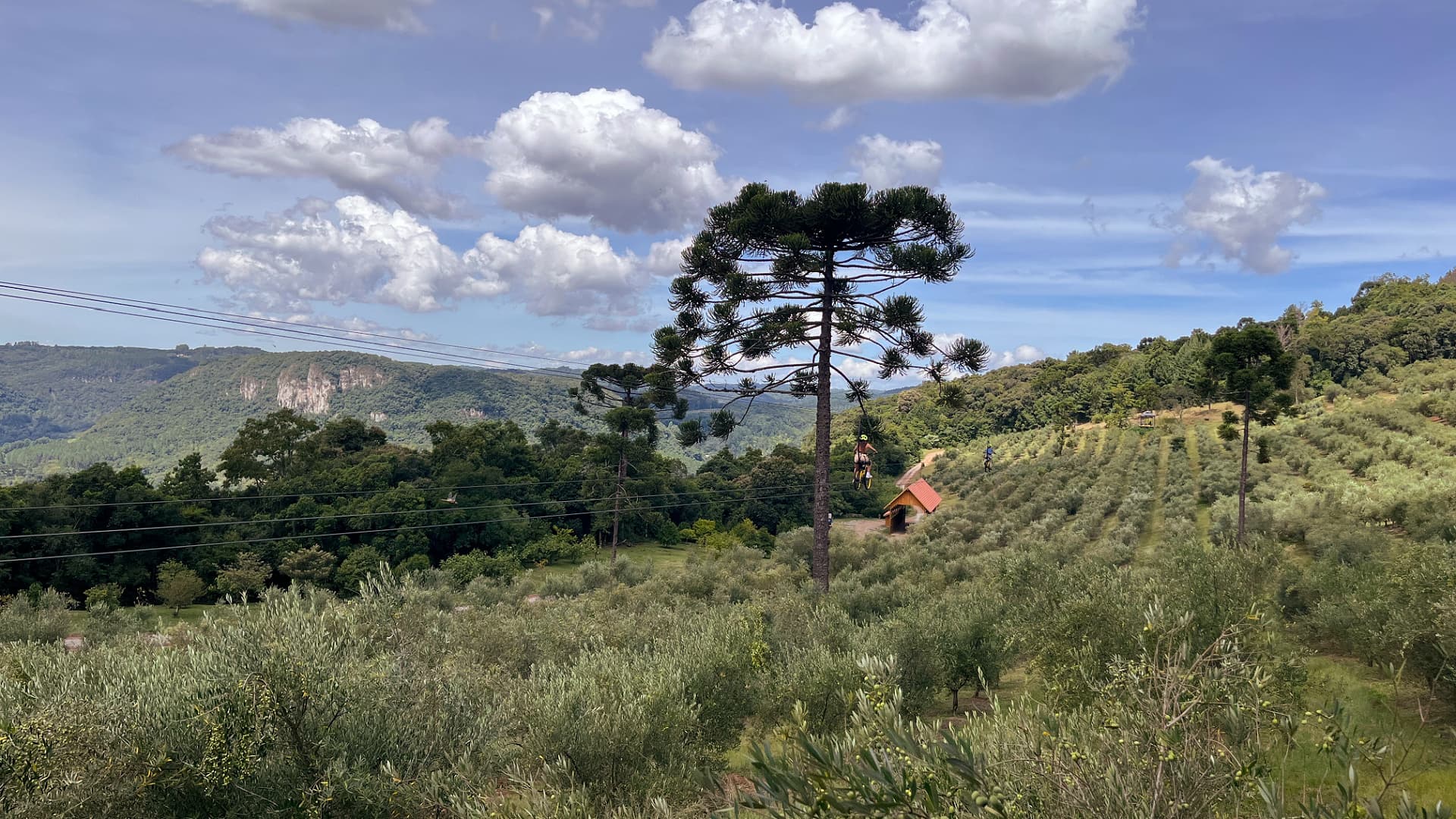
Olivas do Gramado offers visitors the chance to ride electric bicycles on an elevated track above the olive trees and view the harvest from above. (Photo: Daniel Dawson)
The tasting room is separated from the mill by a long glass wall, allowing visitors to watch the production process as they taste.
The company produces a relatively modest volume each year using a small mill built by a Brazilian manufacturer. Its focus, however, is on quality, reflected in multiple awards, including a Gold Award at the 2025 NYIOOC.
While quality drives sales of its extra virgin olive oils, Bertolucci is also known among peers as an “alchemist” for his infused oils, which include smoky, herb, lemon and spicy pepper flavors.
Unlike many larger producers, which use extracts to make flavored olive oils, Bertolucci uses specialized equipment to wash and dry fresh ingredients before infusion.
Small sample bottles are displayed on artisanal racks in the restaurant, allowing diners to try the oils with lunch.
Back in central Gramado, a range of the country’s award-winning extra virgin olive oils, along with selected imported products, is sold at Emporio do Azeite.
Co-founded by Chania Szewczyk Chagas and Rafael Arruda, the shop is located along one of the city’s main tourist streets, just behind its iconic cathedral. It gives visitors from across Brazil a chance to sample local olive oil.
According to Gramado’s tourism observatory, visitors from all 26 Brazilian states travel to the city each year, with the largest shares coming from São Paulo and Rio de Janeiro.
Because more than 99 percent of olive oil consumed in Brazil is imported, Szewczyk Chagas said the store allows Brazilians to compare local products with award-winning oils from elsewhere in South America and the Mediterranean.
She added that many Brazilians are still unaware that the country produces its own olive oil. Once they try it, she said, they are more likely to switch from imported brands and continue ordering online after returning home.
For Szewczyk Chagas, the key is getting consumers through the door, encouraging them to taste and explaining what sets local extra virgin olive oil apart.
About 100 kilometers south of Gramado, the family behind Estância das Oliveiras has also embraced tourism to supplement income from olive oil sales.
The company is located about 30 minutes from downtown Porto Alegre, which is part of a metropolitan area with a population of 4.1 million. Its mill and visitor facilities sit atop a hill with expansive views of the landscape stretching toward the Atlantic coast.
Among its attractions is a full-day experience that allows visitors to participate in the entire harvesting and milling process.
Guests arrive in the morning to pick olives and enjoy a picnic of locally sourced products. After a traditional lunch, the mill begins operating, and visitors are guided through the production process and taught how to taste fresh oil straight from the decanter.
On the other side of the mill is the company store, where award certificates, including three Gold Awards from the 2025 NYIOOC, line the walls, tables and bookshelves. Nearby, the corresponding oils are available for tasting.
“I don’t know why any producer would not invest in entering competitions to win awards,” Sittoni Goelzer said, noting that the company maintains a waiting list for its limited production.
He added that tourism gives visitors a chance to understand how olive oil is made and why it differs from nearly every other edible oil.
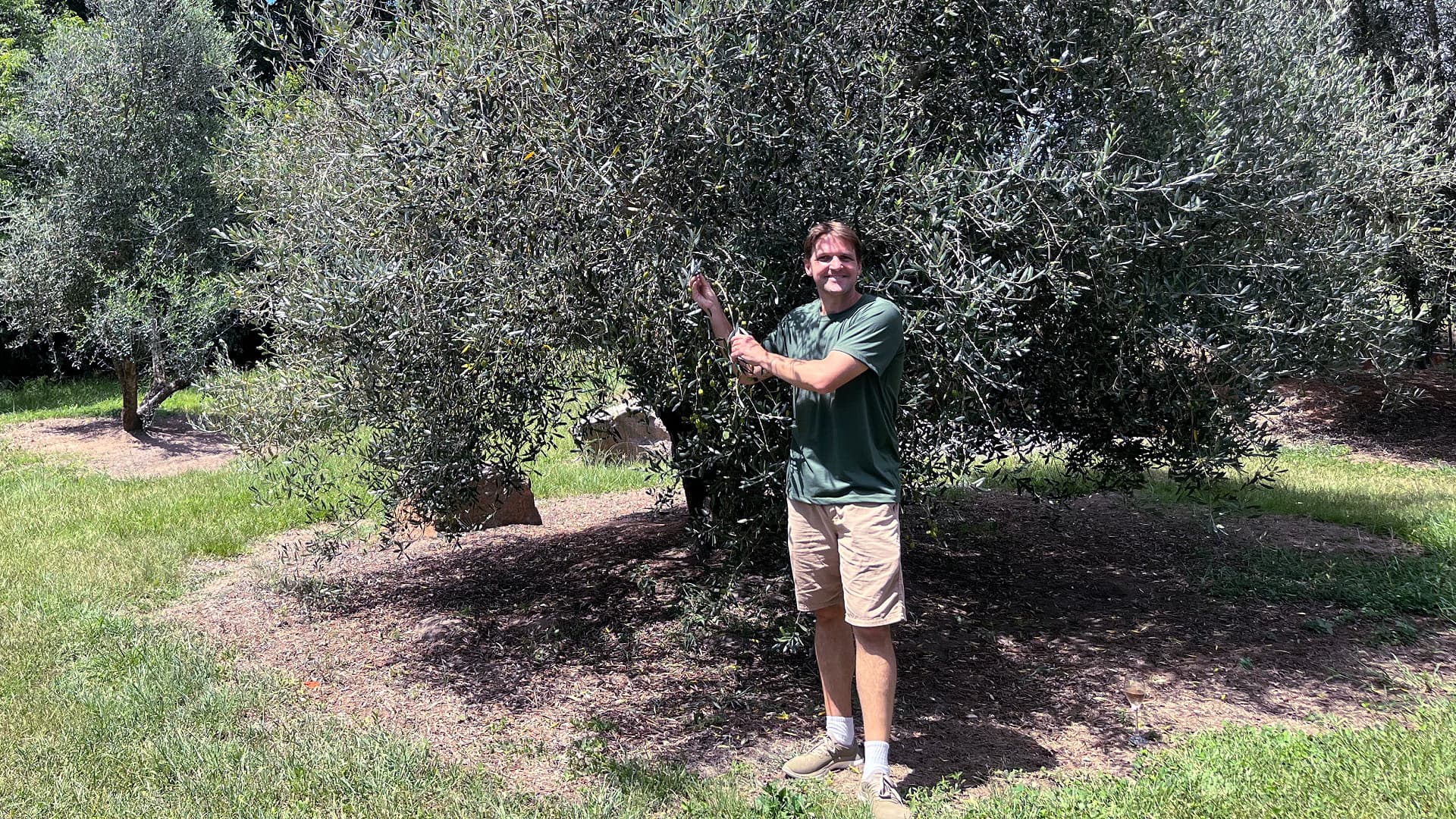
Rafael Sittoni Goelzer said entering oliv eoil competitions and winning awards is a necessary investment to demonstrate quality; show don’t tell. (Photo: Daniel Dawson)
The visit concludes with a sunset concert overlooking the groves, and each visitor leaves with a small bottle of extra virgin olive oil made from the olives harvested that morning.
Rio Grande do Sul accounts for about 80 percent of Brazil’s olive oil production, with the remainder concentrated in Minas Gerais and São Paulo.
More than 100 awards from the NYIOOC over the past decade show that quality remains central to producers’ ambitions. But Brazilian olive oil companies are also clear-eyed about the economics: in a market where lower-priced imports will continue to dominate, success requires more than modern mills and best practices. It also requires creativity, diversification and a compelling reason for consumers to stop, taste and come back.