One-Third of World Olive Oil Competition Entries Organic for the First Time
Organic extra virgin olive oils account for a growing share of submissions in the annual evaluation in New York.
For the first time, organic extra virgin olive oil samples represented more than one-third of the total submissions in the NYIOOC World Olive Oil Competition.
According to Olive Oil Times World Ranking data, 35 percent of extra virgin olive oils submitted in the 2024 edition of the world’s largest olive oil quality evaluation were certified organic, compared with just 22 percent of entries in 2014.
We produce extra virgin olive oil with one thing in mind: to create an oil of the highest quality, with the least possible impact on the environment.
Overall, 330 organic extra virgin olive oils entered the 2024 edition competition, with 207 earning awards.
Italian producers led the way, winning 63 awards from 78 organic submissions. They were followed by producers from Spain with 32 awards from 38 entries, the United States (27 awards from 32 entries), Greece (26 awards from 38 entries) and Croatia (23 awards from 25 entries).
See Also: 2024 NYIOOC CoverageOrganic producers across the olive oil world celebrated their NYIOOC awards, with many pointing to the honors as vindication for their hard work and the many challenges that face organic olive farmers and millers.
“It was not easy to implement organic cultivation in Giovinazzo, which had no other [organic producers],” said Benedette Stallone Desantis, the co-owner of Bari-based Le Due Benedette.
The company earned a Gold Awards for its medium-intensity Coratina and Ogliarola monovarietal.
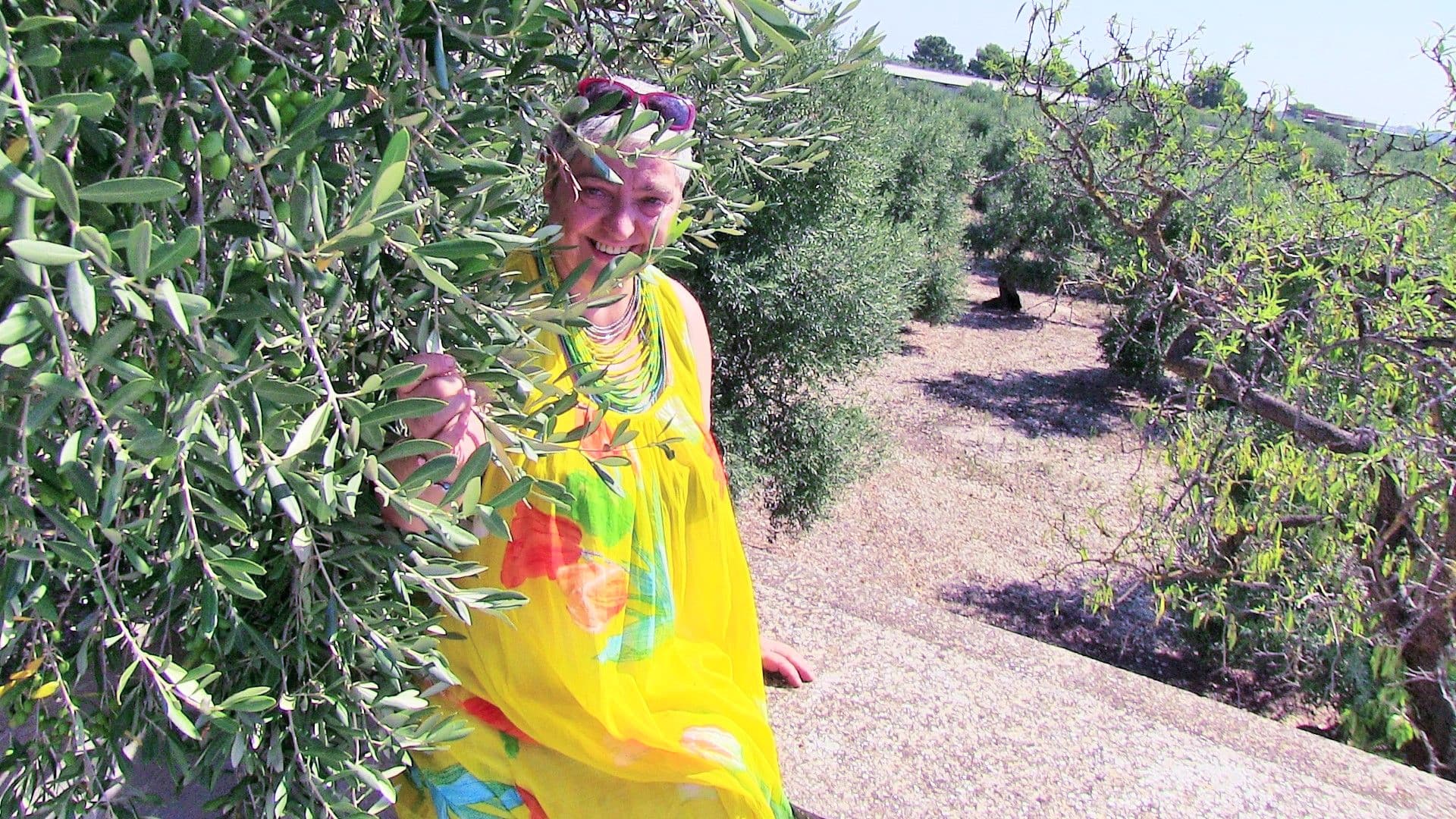
Le Due Benedette harvests early to obtain the highest quality from its native olive varieties. (Photo: Le Due Benedette)
In addition to being certified organic, the olives are harvested while still green in October, weeks before many other producers in the area begin their harvests. Unlike northern and central Italy, Stallone Desantis said the harvest in Puglia was abundant and “without complications.”
“These awards recognize 17 years of hard work,” Stallone Desantis said. “But it is satisfying that the land has returned to having the abundance of wildflowers I remembered seeing in my childhood.”
She added, “The trees are mostly centuries old and have been maintained in the shapes of the impressive Bari vase, and the oil is fragrant and tasty.”
Stallone Desantis said winning the international awards has helped improve her company’s sales and, equally as importantly, validated her organic project and its participants.
While southern Italian producers enjoyed a bumper harvest, producers in northern Spain continued to suffer the devastating consequences of the ongoing drought.
Anna Canal, co-owner of Catalonia-based Oli Cometes, said their latest harvest was immensely challenging, although it finished with a Silver Award for the company’s delicate Arbequina.
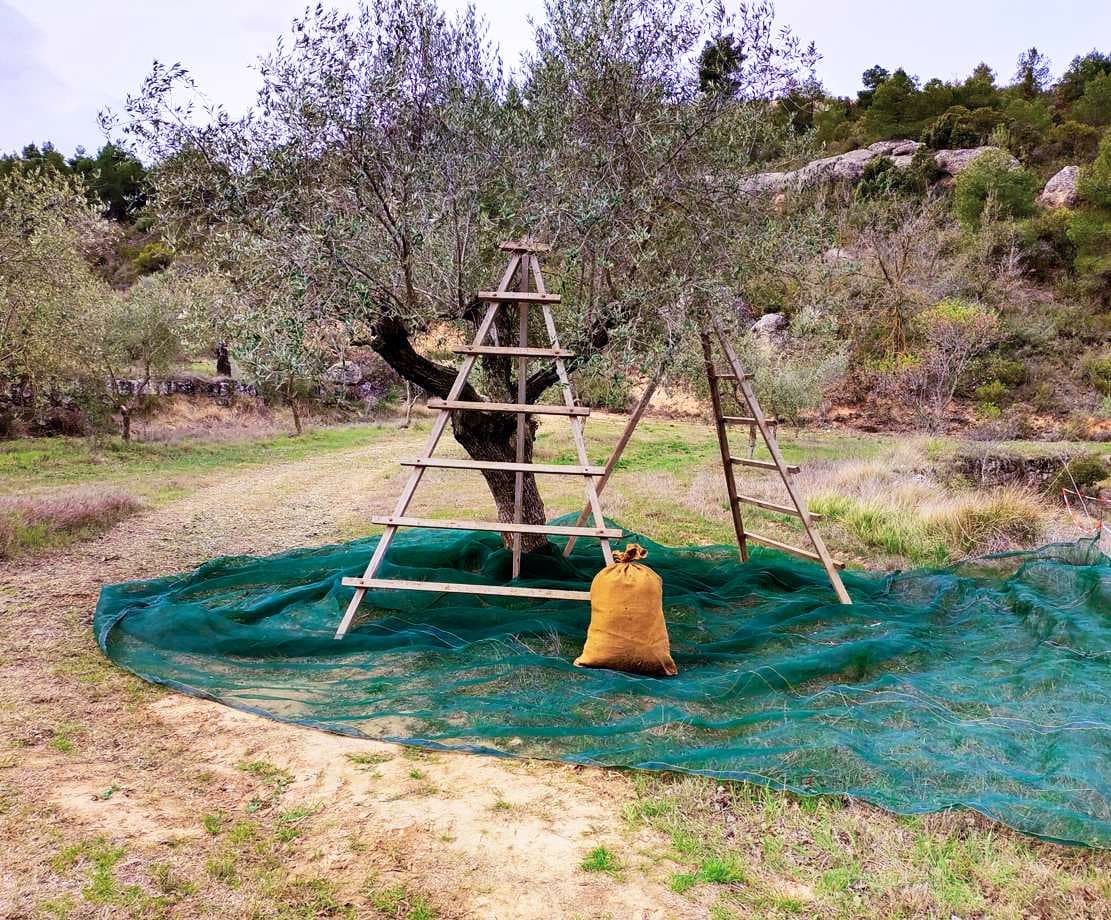
Catalonia-based Oli Cometes overcame the impacts of the ongoing drought to claim a Silver Award for an organic Arbequina at the 2024 NYIOOC. (Photo: Oli Cometes)
“During the last harvest, we experienced several difficulties compared to previous harvests,” Canal said. “The 2023 harvest has been the worst in 40 years in our area due to the extreme drought we have suffered.”
“Our olive grove is dryland; it only receives rainwater, which has been very little or none. We do not have an irrigation system in place,” she added. “The lack of rain has caused the olive trees to produce fewer olives, translating into fewer liters of oil.”
The lack of rain also made it harder to remove the olives from the branches with the tractor-vibrator, which Canal said slowed down the harvest as the olives had to be picked by hand.
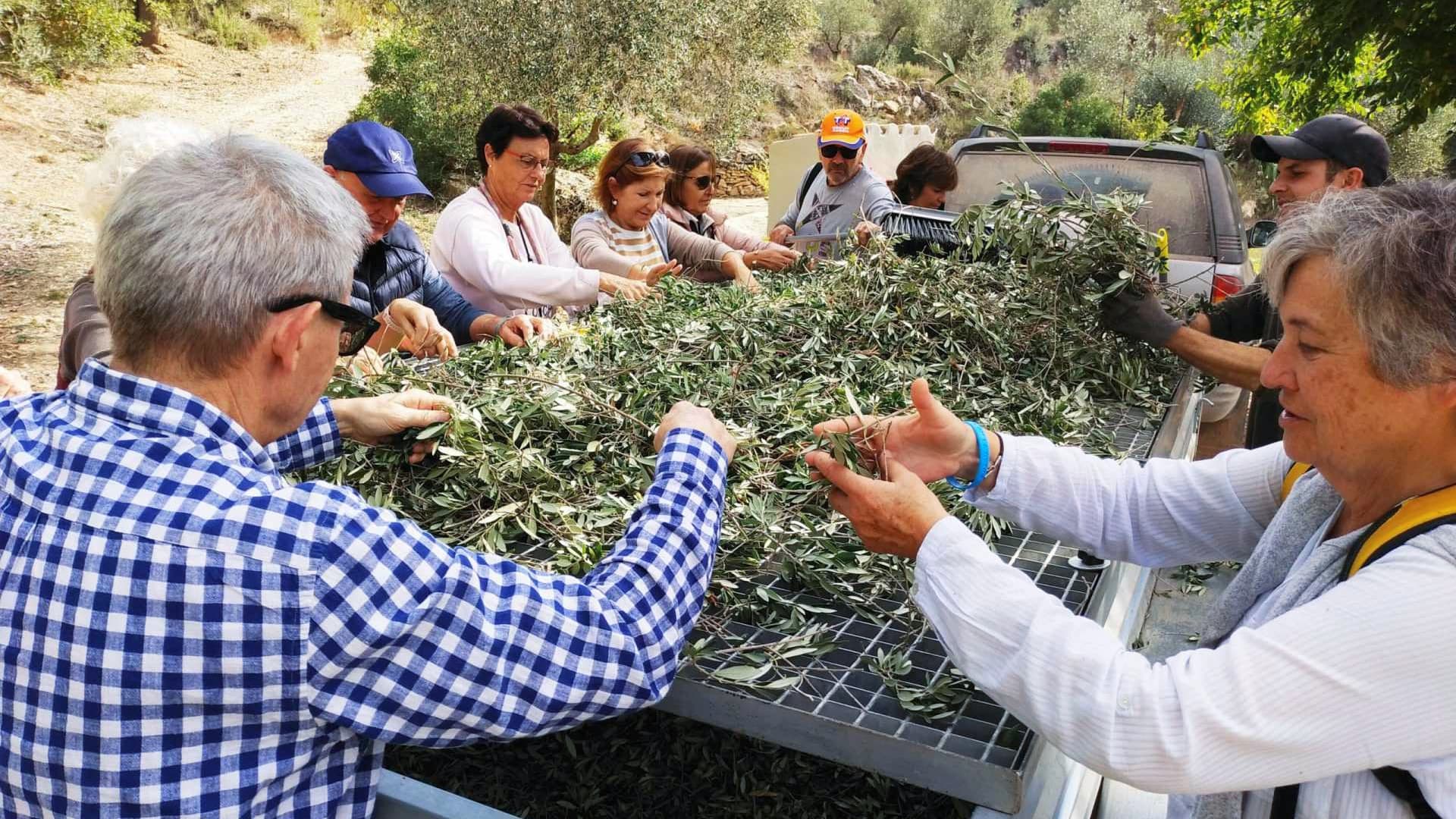
The producers behind Oli Cometes practice biodynamic farming, which goes a step beyond organic farming practices. (Photo: Oli Cometes)
“Even so, we have been able to produce a very high-quality oil, which is reflected in the award obtained,” she said.
Canal added that she is grateful for the award, which validated the hard work it takes to produce organic extra virgin olive oil of award-winning quality, especially during difficult harvests.
Ten years ago, she acquired the farm, home to 1,700 Arbequina olive trees, and started converting it to organic practices.
“We are the only olive oil producers in Catalonia with biodynamic certification,” she said. “In Spain, there are only 15 of us and around 50 producers worldwide. It is a very difficult certification to obtain since it is very restrictive.”
“The term biodynamics comes from the Greek bios (life) and dynamis (force) and means that this method works in accordance with the energies of life, looking for a supposedly correct relationship between man and the earth, trying to ensure the soil and plant health,” Canal added.
While very similar to organic farming, biodynamic farming features some subtle differences. For example, Canal said that manure from corn-fed cows is prohibited since cows cannot naturally digest corn, and the resulting manure contains too much zinc.
See Also: Fustiness, Rancidity Are the Most Common Defects in World Competition Submissions“We get the manure from a farmer who has cattle that graze in the mountains and eat only grass,” she said.
Canal explained that Oli Cometes bases its production on terrestrial and cosmic rhythms. “The strength of the planets affects the crops and the quality of the products that are extracted from them,” she said.
“An example of a cycle we follow is the moon,” Canal added. “If it can move tides, it also greatly influences the olive tree, which is made up of 80 percent water. That’s why we plant olive trees in the waning moon: the tree’s strength is in the roots, and we do less harm to it.”
“On the other hand, if we apply the foliar treatment (to the leaves), we do it during the waxing moon since the force is in the crown of the tree, and the treatment is much more effective,” she explained.
The biodynamic farming philosophy extends beyond the olive groves into the mill and packaging facilities.
“On the other hand, we cannot use plastic for packaging. We only pack with glass bottles and phthalate-free cans,” Canal said. “Phthalates are a derivative of plastic often found in cans used to package food. We get the phthalate-free cans from a national producer, but the cost is triple that of a conventional one.”
On the other side of the Mediterranean, producers from the world’s largest organic olive oil producer combined to win 15 awards for organic extra virgin olive oils. Overall, Tunisian producers earned 26 awards at the 2024 NYIOOC.
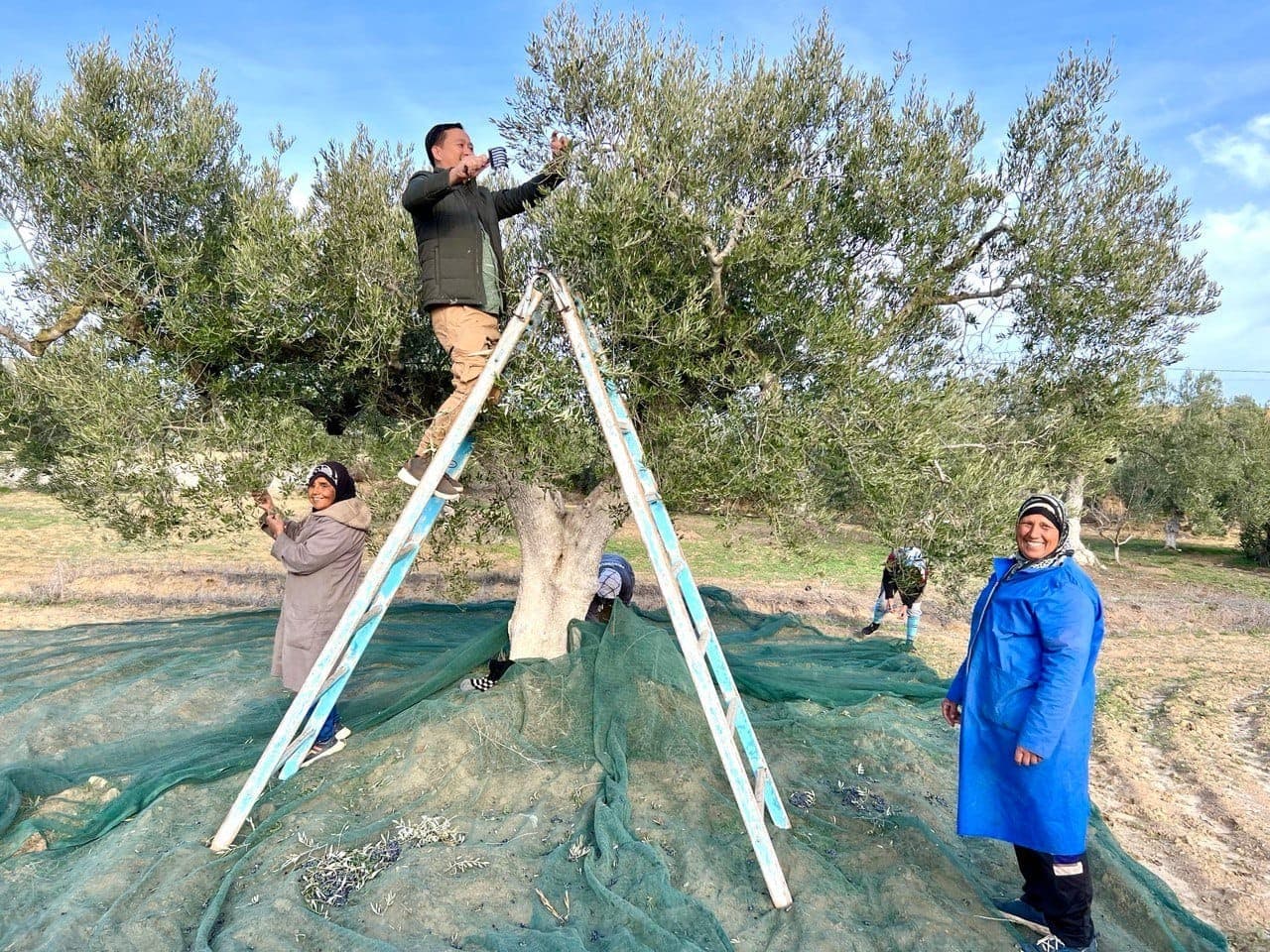
Tiger Kong (on the ladder) believes beign certified organic helps him stand out from competitors in Cambodia’s emerging olive oil market. (Photo: Tiger Power)
Among them was Tiger Power, which exports its products to Cambodia. The company earned two Silver Awards for delicate Chetoui and Chemlali oils under the 1629 brand.
Chief executive Tiger Kong said being organic helps his extra virgin olive oil stand out from his competitors’ oils, attracting repeat customers.
See Also: Quality Places Cambodian Importer on World Stage“After winning the award, my brand continues to shine on the market and maintains the trust of our existing and new customers,” he said.
Similarly to his European counterparts, Kong said climate change is a persistent challenge for organic growers in North Africa. He added that production costs have also increased sharply, and smaller yields have raised the costs of maintaining trees.
Meanwhile, back in Puglia, the owner of Olio Infiore celebrated winning a Gold Award for a medium-intensity Coratina.
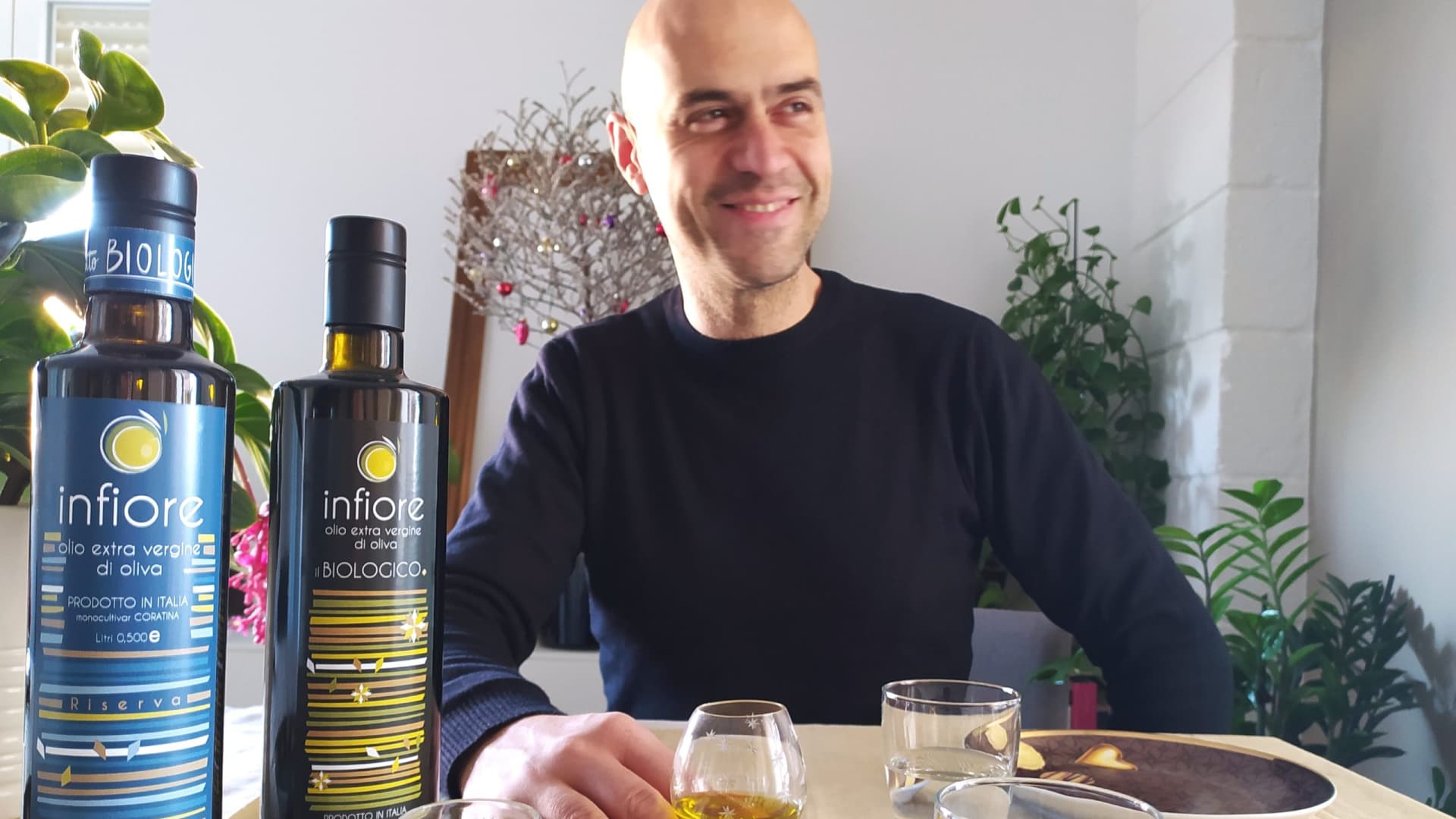
Tommaso Fiore celebrated his debut award at the 2024 NYIOOC for an organic Coratina. (Photo: Olio Infiore)
“We produce extra virgin olive oil with one thing in mind: to create an oil of the highest quality, with the least possible impact on the environment,” Tommaso Fiore said. “Being awarded at the NYIOOC is an immense honor and a great satisfaction.”
Olio Infiore’s owner added that the winning awards at the NYIOOC result from years of dedication to organic techniques and passion for the product.
“To achieve this, we use a combination of tradition and innovation, both in the handling of the land and plants – our company is, after all, an organic farming enterprise – and in the transformation process,” he said. “We believe that nature should be helped and never forced, or even violated, while we firmly believe that technology can help create a perfect product.”
Fiore believes that producing olive oil organically enhances the characteristics provided by the terroir.
However, he warned that organic farming is not for the faint of heart, citing the impacts of climate change, including extreme weather events, the olive fruit fly and the threat of Xylella fastidiosa as challenges faced by organic farmers.
Still, he said that Olio Infiore’s win at the NYIOOC shows that Italy should raise the bar regarding quality and sustainability and move away from the bulk production market.
“We strongly believe the future is in the organic direction,” Fiore said.