Award-Winning Siblings Grateful Father Chose Coratina
After inheriting the family olive farm, brother and sister Tommaso and Angela Fiore continue the family legacy.
Tommaso Fiore, an agronomist and the co-owner of Olio Infiore, celebrated the family farm’s debut award from the 2024 NYIOOC World Olive Oil Competition, calling the recognition a “welcome surprise.”
“This is our first time participating in the NYIOOC, and it couldn’t have gone any better,” Fiore said.
The impact of climate change started to affect our olive oil production… In the last two years, olive farming has been more challenging than in the past.
The Apulian producer earned a Gold Award for an organic medium-intensity Coratina harvested from family groves in Terlizzi, just north of Bari.
“The award gives us a way to measure the quality of our work,” Fiore said.
See Also: Producer ProfilesFiore said the accolade came after a challenging season in which the farmer’s skills were tested to maintain a high-quality product.
“The harvest started very well because, after two years of absence, it finally rained,” Fiore said. “And that is important. After that, the impact of climate change started to affect our olive oil production, as we experienced extreme heat.”
“Fortunately, we have some resources, such as irrigation, which helped us through. And then, it started to rain again in September and October,” he added. “In the last two years, olive farming has been more challenging than in the past.”
Fiore and his team apply a series of techniques in the grove to mitigate the impacts of extreme weather.
“Adopting specific agronomic practices can be beneficial,” he said. “For instance, rock dust helps lower ground temperatures, as its white color reflects sunlight, creating a cooler environment.”
“However, even with such techniques on the field, when it doesn’t rain for two months and the temperatures are close to 45 ºC, well, that is a bit of a struggle,” Fiore added.
While many olive oil producers in Puglia focus on several cultivars, Fiore’s family started with Coratina trees decades ago and continues to focus on the endemic variety today.
“We consider ourselves lucky, as our father had grown all Coratina trees,” he said. “Our whole company is 100 percent Coratina. We started a bit by chance because we are managing the lands that our father left us.”
“Many of our approximately 1,200 trees are between 60 and 150 years old,” Fiore added. “The youngest ones are in their 20s.”

Olio Infiore specializes in cultivating the Coratina olive variety, native to Puglia. (Photo: Olio Infiore)
Coratina, one of the hundreds of olive tree cultivars grown in Italy, is renowned globally for producing medium to robust extra virgin olive oils extremely rich in polyphenols, contributing to their health benefits.
Since the new generation began working on the farm, Fiore’s family has introduced many innovations to the grove and the mill.
“After a short period of assessment, my son, myself, and my sister, Angela, realized we wanted to add value to what our father had done,” Fiore said. “So I focused directly on agronomics while my sister trained as an extra virgin olive oil taster.”
“We tried to get the best out of the fruits of the trees our father had grown,” he added. “We started by experimenting. At first, we relied on the traditional olive mills easily available in the area, which is rich in olive farming tradition.”
“Then we moved on to more modern techniques and innovative means, which meant leaving behind ancient techniques and delivering an excellent product,” Fiore continued.
The new company’s first step was establishing itself as an organic producer. “Besides applying the organic farming protocols, we stopped the most common traditional practices such as plowing the land,” Fiore said. Now, we focus on spontaneous weeding.”
“In short, we are trying to develop a more sustainable approach to agriculture, an approach that respects the tree,” he added. “Above all, such an approach respects the soil, trying to increase the organic matter contained in the soil year after year.”

Rock dust in the olive grove helps reflect sunlight back into the atmosphere, lowering the temperature among the trees. (Photo: Olio Infiore)
Today, most of Fiore’s customers are Italians. “We export very little, as most of the product is consumed within the Italian market,” he said.
“We made some attempts a few years ago to export to the United States, and it went quite well,” Fiore added. “Still, we do not have a distributor there that continuously and structurally takes care of our company’s products.”
While a significant portion of Italy’s and specifically Puglia’s cultural identity is linked with olive oil, Fiore remarked that the prevailing olive oil culture represents a challenge for a high-quality producer today.
“Olive oil has long been seen as the unfortunate cousin of wine,” he said. “While wine has always been super-exalted, as it should be, olive oil has never enjoyed such attention.”
“Maybe that happened because olive oil is considered a condiment, and people have used it just for that purpose for so long,” Fiore added. “Even today, many do not use it for cooking.”
Fiore believes the challenge facing Italian extra virgin olive oil producers is to expand the country’s olive oil culture to all types of cooking, emphasizing the value the product can add to the organoleptic and healthful profile of all kinds of food.
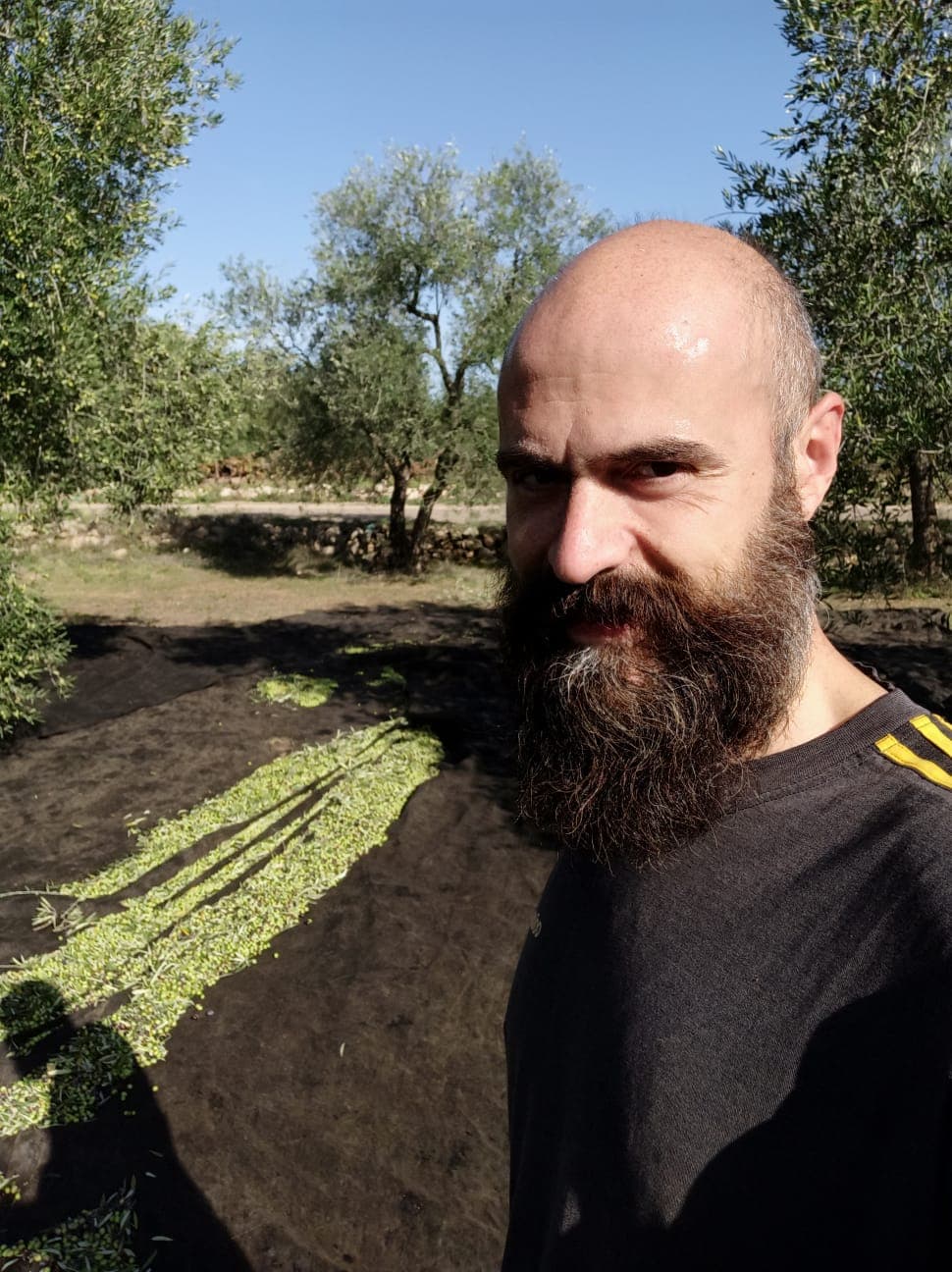
Tommaso Fiore
“Customers need to see that when they buy quality extra virgin olive oil, they are not only choosing a good product – not only a simple condiment,” Fiore said. “They are introducing an ingredient that is good and healthy thanks to its unique contents, such as phenols.”
To help build this new cultural framework for appreciation of extra virgin olive oil, Tommaso Fiore often accompanies his customers to his groves to educate them about a broader approach to olive oil consumption.
“When our customers want to see our olive trees, I am so happy to go with them because it is essential for me to show them where the extra virgin olive oil they consume comes from,” he said.
“Additionally, I discuss our fertile, grassy soil, which I take great pride in,” Fiore added. “Currently, our orchards are vibrant with the scent of blooming marigolds.”