Mediterranean Chrono-Diet Links Food Timing to Metabolic Health
Italian nutrition experts have updated the Mediterranean Diet pyramid to show when different foods may be best consumed, aligning meals with the body’s circadian rhythms.
The Mediterranean chrono-diet is an updated nutritional model developed by the Italian Society of Endocrinology and the Italian Association of Dietetics and Clinical Nutrition. It integrates chronobiological principles into the Mediterranean Diet.
Recently presented in a review published in Current Nutrition Reports, the model combines dietary quality with circadian alignment by adding a temporal dimension to daily nutrition.
Structuring meals at regular times, with a higher energy intake between the morning and early afternoon, promotes harmony between the circadian rhythm and metabolic hormones.
The updated Mediterranean Diet pyramid uses day-and-night indicators and emphasizes the timing of nutrients, with carbohydrates favored earlier in the day and proteins later, as a potential tool for addressing obesity and endocrine-metabolic diseases.
“For the first time, this model emphasizes the importance of the timing of nutrient intake over the 24-hour cycle, in addition to the quantity and quality of food, in line with biological, hormonal and metabolic rhythms,” said Barbara Paolini, director of the Dietetics and Clinical Nutrition Unit at Santa Maria alle Scotte University Hospital in Siena and president of the Italian Association of Dietetics and Clinical Nutrition.
Chrononutrition is a dietary approach that aligns eating patterns with the body’s internal biological clock. It is based on the understanding that human physiology follows circadian rhythms that regulate metabolism, digestion and hormone secretion throughout the day.
Eating in harmony with these rhythms may help prevent metabolic diseases, support weight management and improve overall health.
“The novel chrono-diet model is based on the integration of chronobiology and chronotype-specific factors within the framework of the Mediterranean Diet,” Paolini said.
“Although the Mediterranean Diet is widely recognized for its cardiometabolic and neuroprotective effects, current guidelines have not yet addressed the timing of food intake or the influence of individual chronotype,” she added.
Paolini said chrononutrition and the Mediterranean Diet have independent but complementary effects on metabolic health and sleep regulation.
Observational studies indicate that adherence to the Mediterranean Diet varies by chronotype, an individual’s natural tendency to sleep and wake at particular times. Evening and intermediate types generally show lower adherence than morning types, suggesting that chronotype shapes dietary behavior and may influence the effectiveness of nutritional interventions.
“Integrating the principles of the Mediterranean Diet into chrononutrition frameworks may offer synergistic benefits,” Paolini said.
“On the one hand, the Mediterranean Diet provides a high-quality dietary pattern recognized for its cardiometabolic and neuroprotective properties; on the other, chrononutrition contributes to the temporal alignment needed to optimize metabolic and behavioral outcomes,” she added.
Paolini said adapting Mediterranean Diet recommendations to an individual’s chronotype by adjusting the timing, frequency and distribution of macronutrients could improve adherence, support sleep regulation and strengthen the diet’s protective effects.
According to chrononutrition principles, meal timing helps synchronize metabolic and hormonal rhythms involving insulin, glucagon, cortisol and leptin, with implications for glucose regulation and overall metabolic homeostasis.
Studies in which energy intake was limited to a six- to 10-hour daytime window found benefits for body weight, blood pressure and glycemic control, supporting the inclusion of timing guidance in the Mediterranean Diet.
“Exposure to morning light initiates a cascade that stimulates alertness, body temperature and metabolism, while evening darkness promotes drowsiness and tissue repair,” Paolini said.
“This continuous dialogue between circadian rhythm and hormonal signals regulates the use of energy substrates, hunger threshold, insulin sensitivity and the quality of deep sleep,” she added.
How the body clock affects metabolism
Understanding the chrono-diet requires examining how key metabolic hormones fluctuate over a 24-hour cycle, Paolini said.
Cortisol rises rapidly after waking, promoting alertness, regulating blood sugar and supporting the body’s response to stress. It then declines, reaching its lowest levels at night.
Melatonin increases as daylight fades, helping the body fall asleep, lowering body temperature and promoting deep sleep.
Growth hormone is released in pulses and peaks during the first third of the night, when slow-wave sleep occurs. It supports protein synthesis, tissue repair and musculoskeletal health.
Late dinners, evening alcohol consumption and insufficient sleep may reduce slow-wave sleep and the growth hormone peak, affecting body composition and physical performance.
Insulin sensitivity is generally higher in the morning and declines in the evening. As a result, post-meal blood glucose levels from the same food may be better after breakfast than after dinner.
Late meals, shift work and insufficient sleep can disrupt the internal clocks of the pancreas and liver, contributing to blood sugar spikes and insulin resistance.
Leptin, which promotes satiety, tends to increase at night, while ghrelin, which stimulates hunger, rises before meals. With insufficient sleep, leptin levels fall, and ghrelin levels rise, increasing appetite, particularly for energy-dense foods high in sugar and fat.
“During the day, the body is primed to process food and convert it into energy, while at night it is programmed for rest and cellular repair,” Paolini said.
“Eating late, especially carbohydrates and sugars, stimulates insulin when the metabolism is slow, promoting fat storage and the risk of obesity,” she added.
Paolini said eating dinner or snacking too late may cause blood sugar and insulin spikes that are more difficult for the body to manage, increasing the risk of type 2 diabetes and cardiovascular disease.
She added that irregular or skipped meals disrupt hormones such as ghrelin and leptin, potentially leading people to eat more or choose less nutritious foods as fatigue accumulates.

Barbara Paolini is the director of the Dietetics and Clinical Nutrition Unit at Santa Maria alle Scotte University Hospital in Siena and president of the Italian Association of Dietetics and Clinical Nutrition.
Evidence reviewed by the authors indicates that eating dinner early, ideally three to four hours before bedtime, allows digestion to be completed and may improve sleep quality while reducing nighttime awakenings.
Leaving a 12- to 14-hour interval between dinner and breakfast may also support metabolic flexibility and fat burning. One example would be eating dinner at 8 p.m. and breakfast between 8 and 10 a.m.
“Consolidating a stable sleep-wake rhythm and meal times helps curb evening hunger and facilitate weight management,” Paolini said.
“Structuring meals at regular times, with a higher energy intake between the morning and early afternoon, promotes harmony between the circadian rhythm and metabolic hormones,” she added.
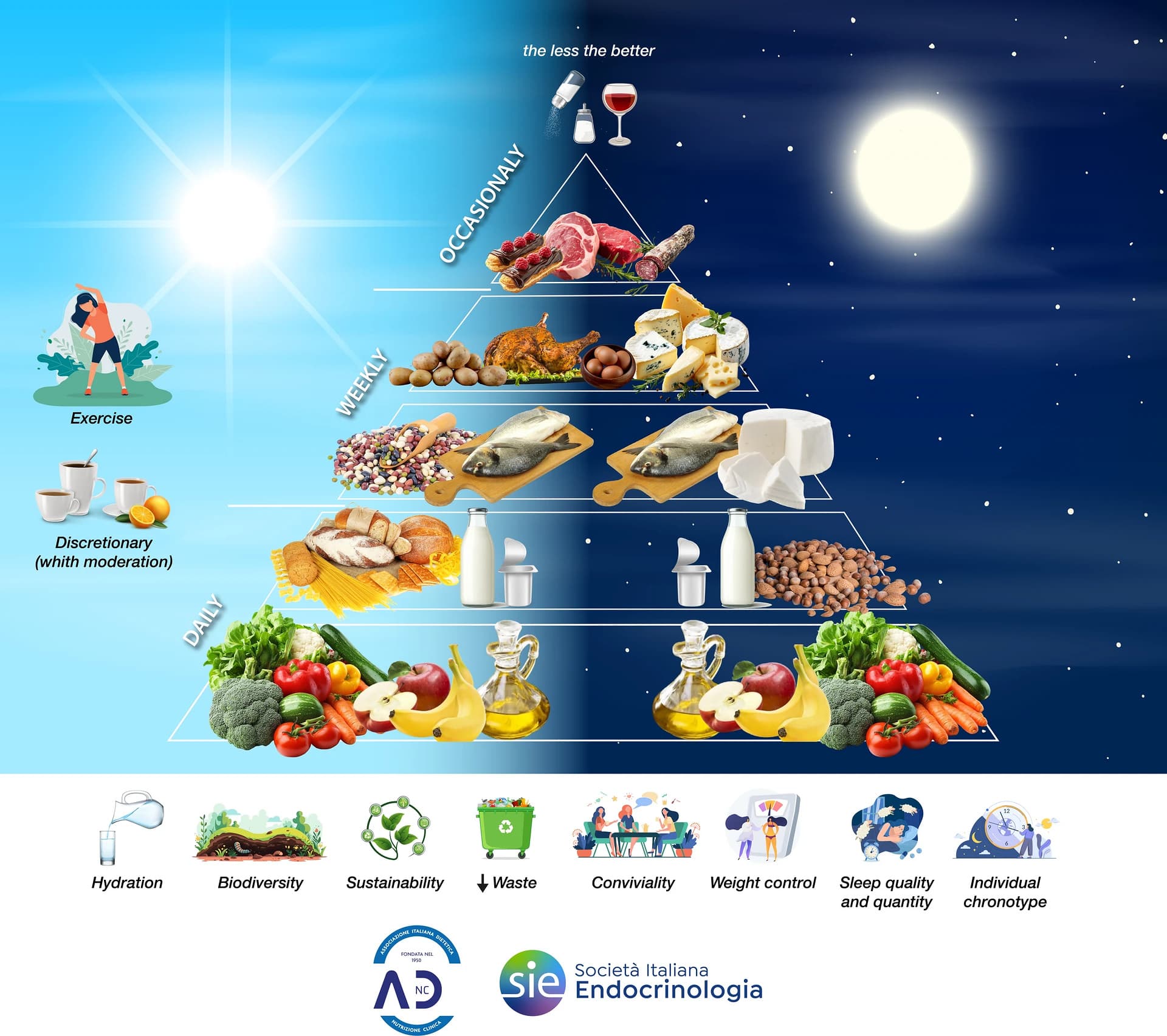
The chronotype-based Mediterranean Diet pyramid was introduced by the Italian Society of Endocrinology and the Italian Society of Dietetics and Clinical Nutrition, integrating nutrient timing into the Mediterranean Diet.
Inside the updated Mediterranean Diet pyramid
Through the review, the Italian Society of Endocrinology and the Italian Association of Dietetics and Clinical Nutrition developed a chronotype-based Mediterranean Diet pyramid.
The graphical model updates the traditional pyramid according to chrononutrition principles, the latest LARN 2024 guidelines and recommendations from the Italian Society of Human Nutrition.
It preserves the traditional hierarchy of foods while incorporating circadian timing cues, represented by sun and moon symbols, to indicate when different foods may be best consumed.
• Extra virgin olive oil: As a primary source of monounsaturated fatty acids and bioactive polyphenols, extra virgin olive oil is recommended for daily consumption. Because of its benefits for endothelial function and inflammation, it can be incorporated flexibly into both morning and evening meals.
• Whole grains, bread and pasta: Because these foods are rich in carbohydrates, the timing of their consumption is important. In line with circadian patterns in glucose tolerance, they are best consumed earlier in the day, when insulin sensitivity is highest. Evening intake should be moderate to avoid late-night glycemic spikes.
• Legumes, fruits and vegetables: Rich in fiber, complex carbohydrates, antioxidants and micronutrients, these foods can be distributed throughout the day. Carbohydrate-rich legumes and fruits are particularly suited to breakfast and lunch.
Vegetables, especially those rich in magnesium, potassium and bioactive compounds, may also be favored at dinner because of their effects on digestion, satiety and cardiometabolic health.
• Fish, lean meats and eggs: These high-quality protein sources can be eaten at lunch or dinner. Evening consumption may be particularly beneficial when combined with moderate amounts of carbohydrates.
Protein-derived tryptophan crosses the blood-brain barrier via an insulin-mediated pathway, promoting serotonin and melatonin production and potentially supporting sleep quality.
• Dairy products, nuts and seeds: As sources of calcium, magnesium, tryptophan and bioactive peptides, these foods may be particularly beneficial in the evening, when they can support the onset and continuity of sleep.
Nuts and seeds also provide melatonin and polyphenols, which may help align circadian rhythms with metabolism.
• Energy-dense foods, including sweets, red meat and alcohol: In line with Mediterranean Diet principles and the LARN 2024 recommendations, these foods should be limited. When consumed, they are preferably eaten earlier in the day, when metabolic efficiency is higher, reducing the risk of nighttime glycemic and lipid disturbances.