Olive Pits Find New Life in Furniture, Flooring and Asphalt
Once used mainly as biomass fuel, olive pits are becoming a sought-after material for sustainable furniture, interior panels, construction products and lower-carbon paving.
An estimated 1.2 million metric tons of crushed olive pits, also known as stones, are generated each year during olive oil milling, supporting a growing range of uses and an evolving supply chain.
According to the Spanish Biomass Association (Avebiom), many of Spain’s largest olive oil mills separate the pits from the rest of the pomace, using them to generate thermal energy for heating mills and water or selling them as fuel for industrial boilers.
About one-third of the pits are cleaned and processed to reduce their moisture content before being sold at a premium over unrefined pits for use as renewable fuel in domestic boilers.
However, a growing number of companies across the olive oil sector are turning pits into construction and design products, responding to demand for sustainable building materials and capitalizing on the material’s distinctive properties.
“Our interest in working with olive mill residues comes from a real need that we, as Uruguayan producers, face because of the relatively low oil content of our fruit,” Martín Robaina, director of Olivos de las Ánimas, told Olive Oil Times.
“That’s why we realized we needed to make better use of all the by-products generated during processing,” he added. “We started looking for ways to add value to these residues by developing different applications for them.”
Three years ago, the Maldonado-based producer purchased a machine to separate the pits from the rest of the pomace, initially intending to use the pits as biofuel and the activated carbon to filter olive mill wastewater.
While exploring other possibilities, Robaina and his business partner, Marcelo Ortega, met someone who worked with resin and recycled wood waste.
“We introduced him to olive pits to see whether he thought they could be used to make useful products,” Robaina said. “That’s how we gradually began developing a range of products.”
“We started with kitchen cutting boards, plates and coasters,” he added. “Now we’re beginning to develop flooring and wall cladding as well.”
Robaina said the company has also experimented with different-colored resins and recently produced an entire table made from ground olive pits bound with resin.
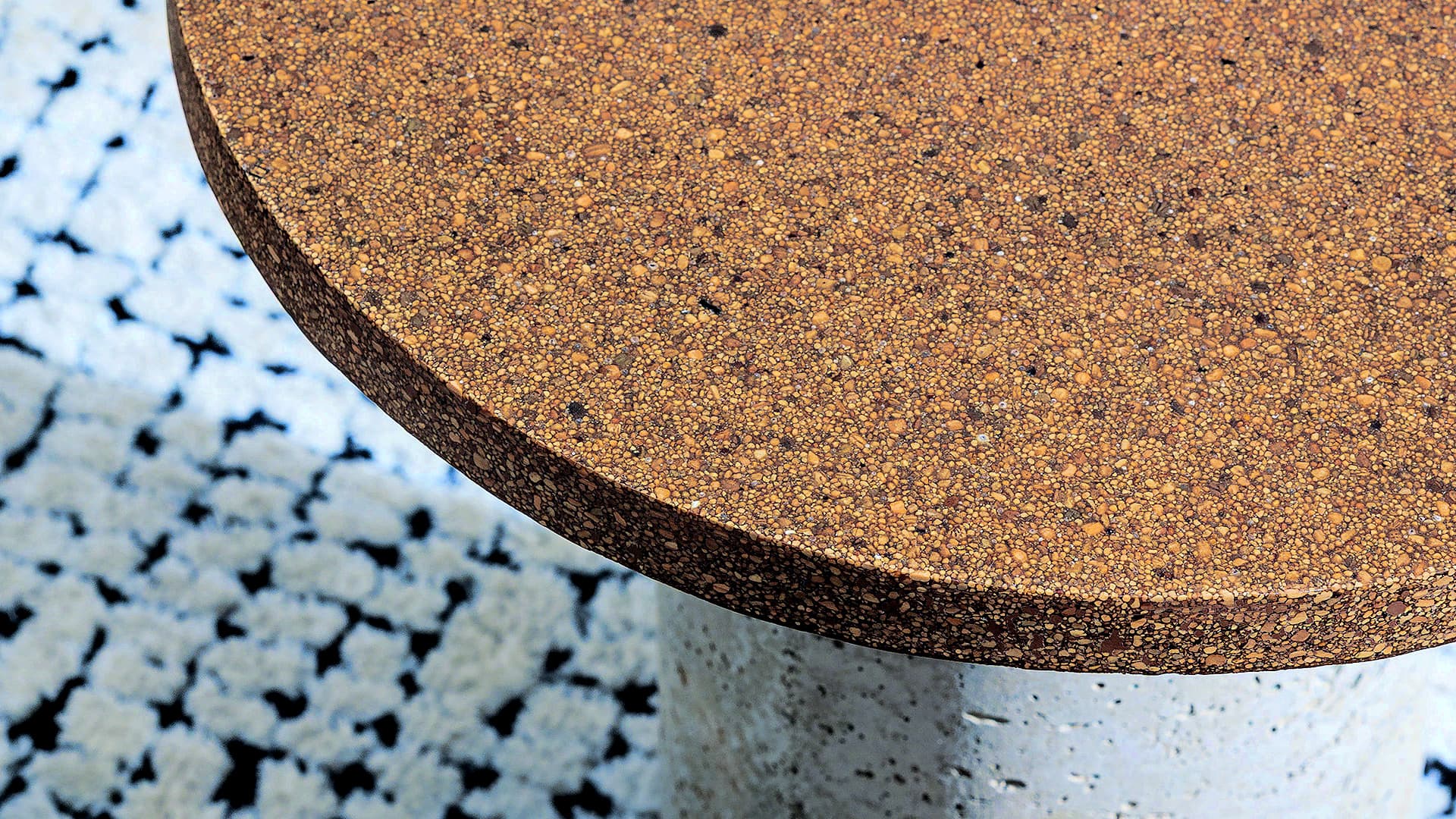
Furniture makers are among the customers for Pit-to-Table’s olive pit panels. (Photo: Pit-to-Table)
“It’s been a very rewarding experience because consumers appreciate seeing agricultural by-products transformed into new products,” he said. “They value the fact that we’re putting our waste to use and embracing a circular economy.”
Olivos de las Ánimas is designing a new boutique space in its olive groves with walls and floors made from olive pit panels.
“We want visitors to experience the material firsthand,” Robaina said.
Nearly 12,000 kilometers away, on the Mediterranean island of Cyprus, design firm Pit-to-Table is also combining olive pits with a binding agent to produce decorative and functional panels.
Co-founder Mustafa Afşaroğlu told Olive Oil Times that his childhood around olive mills in northern Cyprus, his career as an interior designer in London and the Covid-19 pandemic led him to reconsider the olive milling process as a source of sustainable building materials.
“We approached a few farmers in Cyprus to see if they would come on board and supply us with olive pits so we could start testing,” he said.
“We needed more than just a prototype,” Afşaroğlu added. “We also had to understand the economics because we wanted to buy the pits from the farmers rather than simply take them.”
“That way, we could help create a new supply chain and value chain around a waste product they were already accumulating,” he continued.
The founders took olive pomace and separated the skins from the pits by hand to prevent any skin from entering the final product.
“Our goal wasn’t just to achieve the right particle size,” Afşaroğlu said. “We also wanted a very fine, almost powder-like material.”
“We hand-crushed a portion of the pits, mixed everything with a binding agent and made our first small sample,” he added.
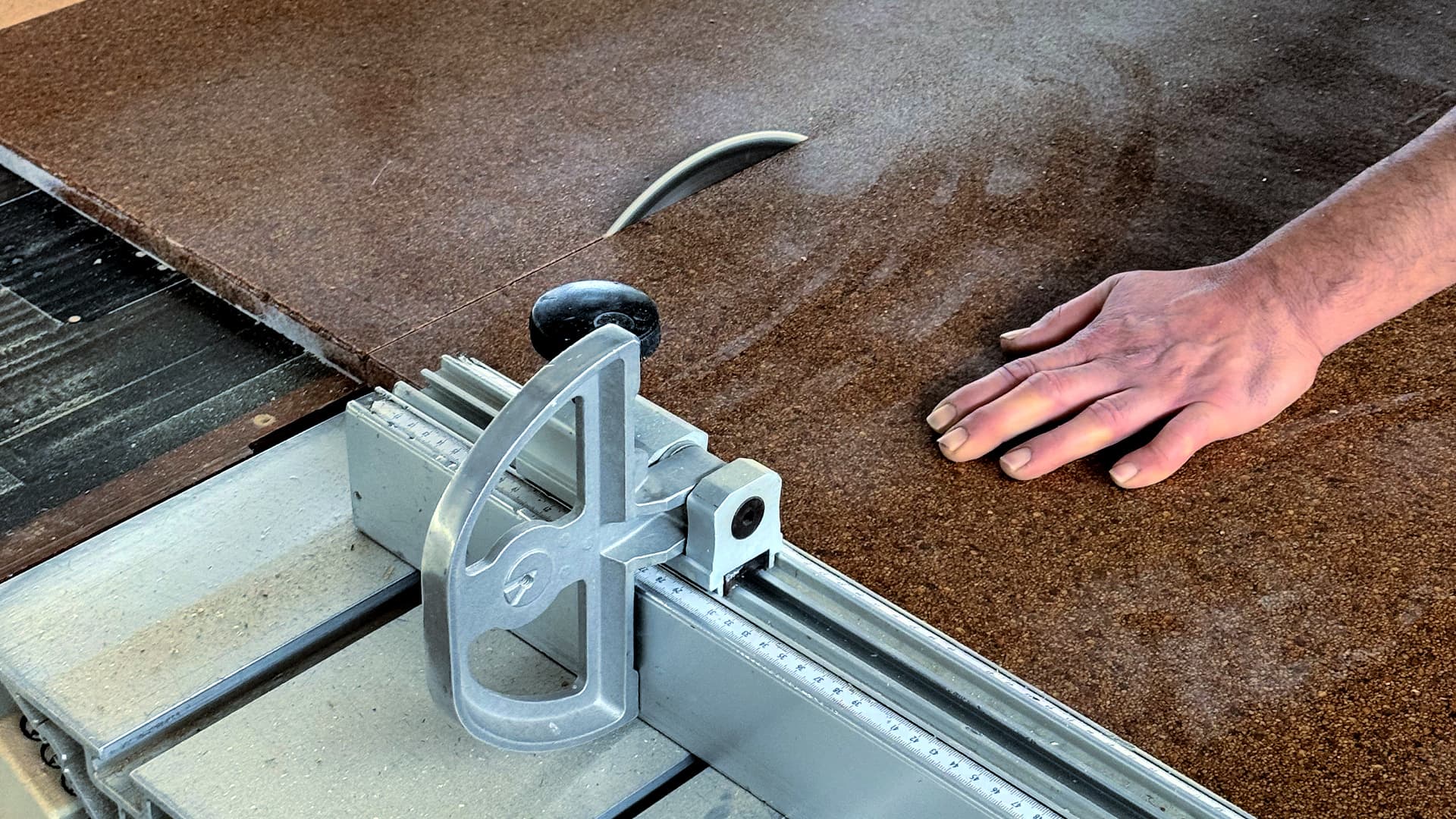
Pit-to-Table is working with local researchers to move beyond panel production to other types of olive-pit-based construction materials. (Photo: Pit-to-Table)
After developing several prototypes, Afşaroğlu and his co-founders settled on a material with a cork-like texture and appearance.
They entered the olive-pit-based panel in a United Nations Development Program sustainable design competition and received a cash prize.
Using the prize money, the founders commissioned a local materials engineering firm to identify the best ratio of olive pits to binding agent. By 2025, they had produced their first panels for sale.
Afşaroğlu and his colleagues began working with two olive farmers, one on each side of the divided island. They pay €250 per metric ton of olive pits and eventually began selling the finished panels for €300 each.
Afşaroğlu said the material appeals to designers because of its water- and stain-resistant qualities, biocomposite structure and distinctive appearance.
“The biggest selling point of our material for designers has been the edge detail,” he said. “With conventional boards such as laminated MDF, you normally apply PVC edge banding to hide the exposed MDF core.”
“With our material, it’s the opposite,” Afşaroğlu added. “When you cut through it, you reveal the olive pits, and we found that creates a very distinctive aesthetic.”
“Instead of covering the edges, we celebrate them,” he continued. “That eliminates the need for additional materials, processing and labor.”
To date, Afşaroğlu said the company’s main customers have been furniture designers and interior decorators prioritizing sustainable materials.
“Furniture manufacturers buy the material from us and use it in products such as laptop tables, coffee tables, dining tables and shelving units, for both horizontal and vertical surfaces,” he said.
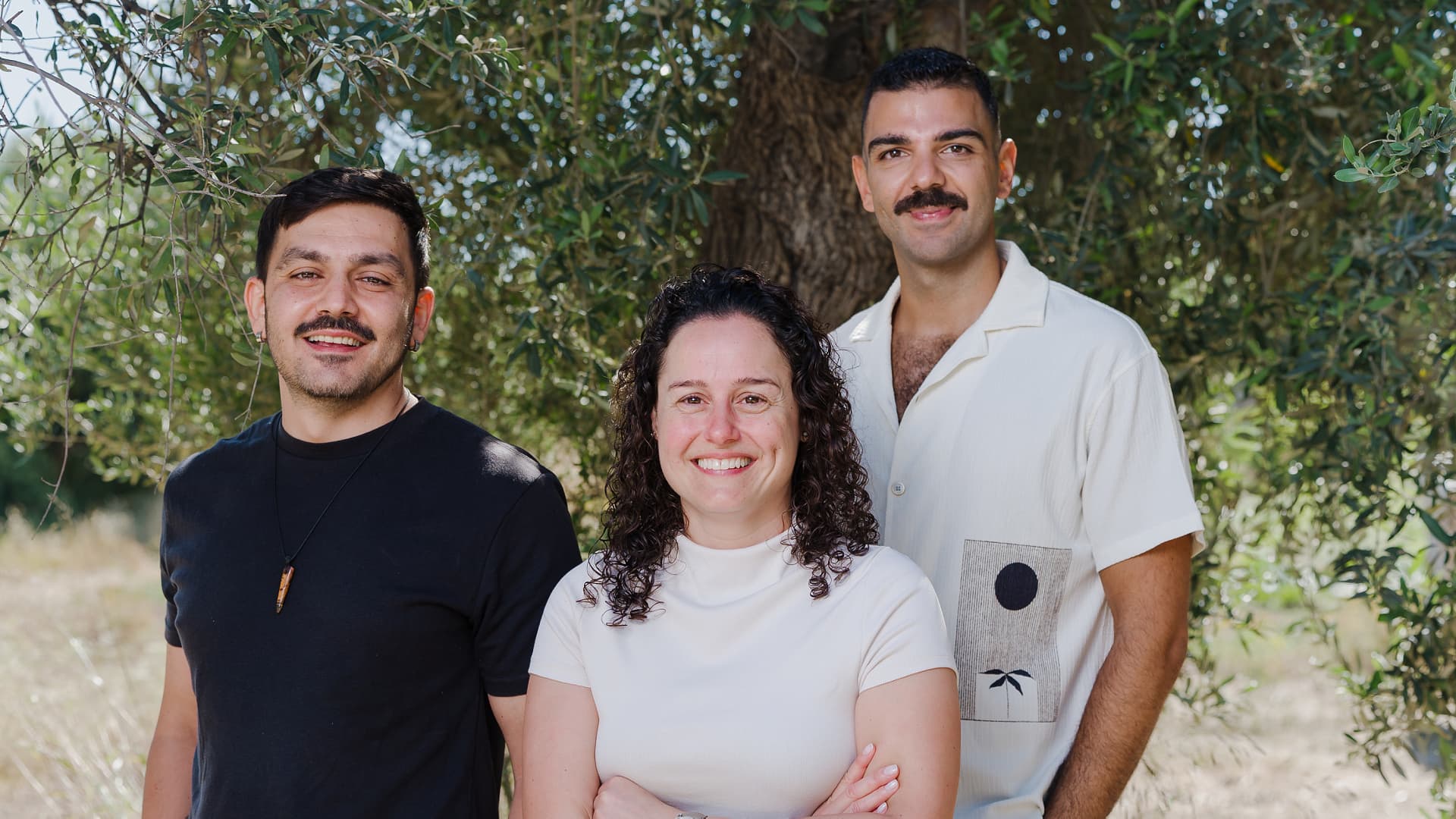
Afşaroğlu (right) co-founded Pit-to-Table shortly after returning to Cyprus during the Covid-19 pandemic. (Photo: Pit-to-Table)
“We already work with several manufacturers in the United Kingdom and across Europe, and we’re continuing to expand that network,” Afşaroğlu added.
Designers, including interior designers, furniture designers and architects, make up the company’s second main customer group.
“For example, one designer is using our board for a reception desk at a law firm in London,” Afşaroğlu said.
Afşaroğlu plans to work with engineers from local universities to follow a path similar to that of Olivos de las Ánimas and explore the potential for olive-pit-based flooring and cladding.
Elsewhere in the Mediterranean, researchers and officials in Barcelona are preparing to repave some of the city’s streets with asphalt containing olive-pit-based biochar.
According to Barcelona’s city council, the lower-impact asphalt will be used in public works projects from October through December 2026.
Authorities will collect data on the asphalt’s performance over the following 12 months before publishing a report in 2028.
If the tests are successful, the city council said the new asphalt formula could reduce emissions from street paving by 75 percent.
Researchers from the Polytechnic University of Catalonia, who were involved in developing the formula, have previously said the material delivers promising mechanical performance and greater resistance to water penetration than conventionally produced asphalt.