In Dalmatia, Olive Oil Waste Finds New Life in Natural Soap
Ana Karabatić, founder of Sapunerija Rustika, turns olive oil sediment, old oil and leaves from Dalmatian groves into natural soaps and cosmetics.
When a question about olive oil sediment came up during a lecture on filtration in Sukošan, near Zadar, Ana Karabatić did not expect to become part of the program.
At the 2026 Dani maslina i ulja Peljuzica, or Peljuzica Olive and Oil Days, event in Sukošan, near Zadar, one attendee asked lecturer Stjepan Dević what producers should do with murga, the thick sediment that remains at the bottom of containers after filtering olive oil.
Someone in the audience said that sediment had once been used to make soap. Dević quickly pointed to Karabatić, founder of Sapunerija Rustika in Gornji Tučepi, beneath the Biokovo mountain massif in Croatia.
“Here we have the person for soaps,” he said.
Karabatić said she was surprised by the public introduction but knew exactly how to answer.
“Soap can certainly be made from sediment, from murga, and I have been making such soaps for a long time,” she told Olive Oil Times. “It is made by cooking in a cauldron, the way our grandmothers did it, using a full-boil method. It is ideal for washing laundry, the best for stains and other household uses.”
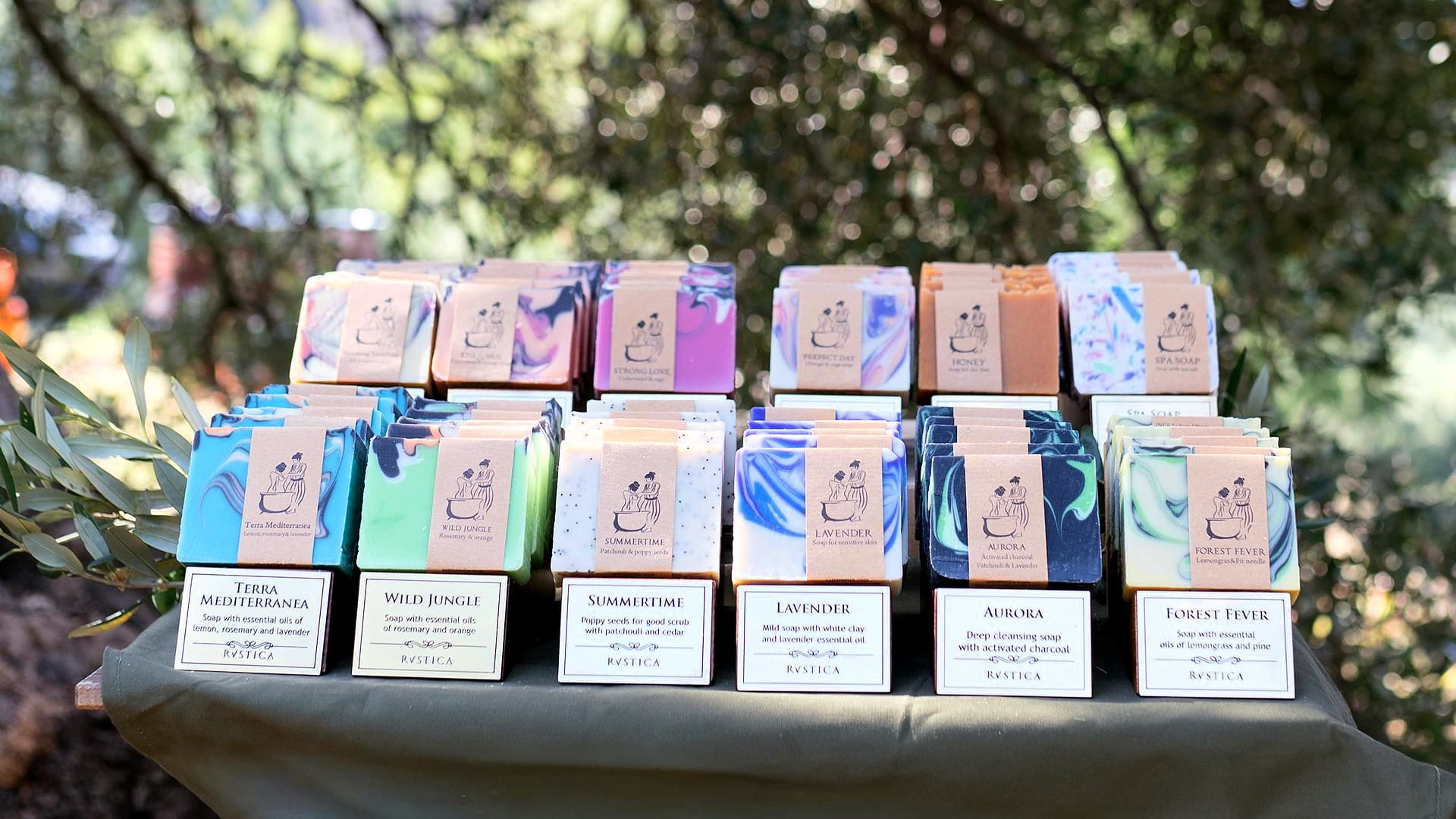
Afterward, Karabatić led a workshop on making natural olive oil soaps, a craft that has become the center of her family’s work in the rocky landscape above the Makarska Riviera.
From a first date to the olive groves
Karabatić, a graphic designer from Split, said her life in olive oil began with a misunderstanding.
“When I met my husband, he asked me on our first date: ‘How are you in the olives?’” she recalled with a laugh. “I assumed it was some romantic invitation for a walk, so I said, ‘Excellent.’ In fact, he had invited me to harvest olives. That is how I sailed into this sea of olives. It is physically hard work, but for the soul it is the best in the world.”
Her husband, Dragan Delić, is an olive grower and mountain enthusiast whose oils have won multiple gold medals at Noćnjak, one of Croatia’s best-known olive oil events. His work in the groves provides the extra virgin olive oil base for many of Karabatić’s products.
Karabatić said she fell quickly for Gornji Tučepi, an old settlement beneath Biokovo where stone houses, dry walls and olive groves shape daily life. While much of the local economy is tied to tourism, she and Delić did not have apartments to rent.
In 2012, she moved into a modest old stone house with a konoba, or cellar, beneath Biokovo. There was no modern bathroom, and the family relied on a wood stove instead of a television. From there, she began making soap.
“Some daughters-in-law landed in apartments, and I landed among olives and dry-stone walls,” Karabatić said. “To this day, I do not know whether I fell more in love with the place or the man. I only know that there I found the heart of Dalmatia, and that my heart had always belonged there.”
A mother’s concern becomes a business
Karabatić said her first motivation for making soap was personal. After giving birth to twin daughters 20 years ago, she began reading product labels to find gentle soaps and shampoos for their skin.
She said she was troubled to find sodium lauryl sulfate, commonly known as SLS, in many products.
“That was a substance my father’s workers used in the company to remove detergent, and they had to wear masks because it was extremely irritating,” Karabatić said. “There was no way I was going to put that on my children. Homemade soaps seemed like the ideal solution, and since my husband had excellent oil, everything looked easier.”
What began as a household project became a serious pursuit. Karabatić used her design background to paint soaps and develop new colors, patterns and forms. She later learned advanced soap-painting techniques from Suzana, a Belgrade-born soap artist based in Strasbourg whom Karabatić credits as one of the world’s leading innovators in the craft.
Ana Karabatić gathers olive leaves in Gornji Tučepi, using them as an antioxidant-rich ingredient in Sapunerija Rustika’s natural cosmetics.
Within a year of her first stand in Tučepi, Karabatić said her soaps were being sold in more than 20 gift shops along the Adriatic coast. Since then, she estimates that her workshop has produced about 400,000 unique soaps.
Tools, molds and an export product
Karabatić’s work soon moved beyond soap itself. Drawing on experience from a former family business that worked with metals, she designed tools, molds and cutters that were not readily available on the market.
One result was a professional stainless-steel soap cutter that she said has become one of the family’s best-selling products, with exports reaching as far as China.
That practical side of the business reflects the same approach Karabatić applies to olive oil byproducts: use what is available, reduce waste and turn traditional knowledge into something durable.
Finding value in olive leaves
The Karabatić-Delić family consumes about 80 liters of olive oil a year, following a traditional Dalmatian diet rich in leafy greens such as chard and raštika, a local collard green.
However, Karabatić said one of the most valuable ingredients for her cosmetics comes from a part of the tree many growers overlook: the olive leaf.
“It is written in the Bible: ‘Let the fruit be your food, and the leaf be your medicine,’” she said. “When I discovered how powerful it could be as an active ingredient in cosmetics, I became obsessed with leaves.”
Karabatić said olive leaf has become the one ingredient she would choose if she had to limit her formulas. She uses it in serums and creams, which she said have become some of her most praised products.
“It is so rich in antioxidants that, for me, it is stronger than vitamin C, green tea and olive oil combined,” she said. “It hydrates the skin, soothes irritation and works as a powerful anti-aging ingredient.”
Reviving an old household craft
The question raised in Sukošan about murga points to one of Karabatić’s main interests: reviving the old practice of cooking soap from olive oil sediment and oil that is no longer suitable for food.
In an olive-growing area, neighbors who knew about her work began bringing her old, oxidized oils. These oils could not be used in fine cold-processed soaps, so Karabatić began studying traditional full-boil soapmaking.
“It was not easy,” she said. “I read many old books and made countless mistakes before I mastered the full-boil method. Some grandmothers still remember the process, but they can only teach what they themselves did, without the theory and fine details hidden in this craft.”
The resulting old-style soap has found a practical audience among owners of family apartments, who struggle to remove stubborn sunscreen stains from sheets and towels during the tourist season.
Karabatić said the soap has become especially popular because it removes stubborn stains without using aggressive detergents.
She has taught the zero-waste method to more than 500 women from across the former Yugoslavia and said more than 1,500 participants have taken her cold-process soapmaking courses.
In addition to workshops in Split, Dubrovnik, Šibenik, Zadar and Zagreb, Karabatić regularly holds courses in front of her stone konoba in Gornji Tučepi, where visitors can see the process firsthand. The workshops have also become part of the area’s growing interest in craft-based agritourism.
For Karabatić, the model closes a local ecological loop. Olive oil sediment and old oils do not end up in nature, fewer harsh detergents are used, and the finished soap breaks down quickly in the environment, she said.
A family business rooted in Biokovo
In Gornji Tučepi, where Biokovo descends toward the Makarska coast, Karabatić and Delić have built a family business around nearly every part of the olive tree.
Fresh extra virgin olive oil is used in skin-care products. Oxidized oil and murga are used to make traditional household soaps. Olive leaves are used in creams and serums. Even olive wood can be used for heating.
Combined with local honey, beeswax and wild Biokovo herbs such as immortelle, lavender and rosemary, the products reflect a broader shift toward sustainability in traditional olive-growing regions.
Karabatić said the work has taught her that value is often found where others see waste.
In the dry-stone walls and olive groves above the Adriatic, she added, the raw materials for a different kind of rural life were already there.