Thirty-Four New Olive Oil Sommeliers Certified in New York
The latest Olive Oil Times Sommelier Program brought together producers, educators, importers and food professionals seeking to deepen their understanding of olive oil quality and sensory evaluation.
Thirty-four participants from across the United States, Europe and beyond completed the Olive Oil Times Sommelier Certification Program in New York this month, joining a global network of professionals trained in sensory evaluation, quality assessment, production methods and the cultural significance of extra virgin olive oil.
This milestone marks the beginning of a deeper journey into the world of olive oil.
The weeklong program combined classroom instruction, guided tastings and practical exercises designed to help participants identify olive oil attributes and defects while gaining a deeper understanding of the factors that influence quality from grove to bottle.
The newest class included producers, importers, educators, chefs, retailers and entrepreneurs, many of whom are already planning to apply their knowledge to projects spanning education, tourism, product development and consumer outreach.
Jason Asimakopoulos of Austin, Texas, who imports Greek food products, said the program will help him better evaluate oils, ask more informed questions of suppliers and guide customers seeking high-quality products. He described leaving the course with “a renewed excitement about olive oil” and said the experience raised as many new questions as it answered.
For Paul Cognata of Southern California, the certification marks the beginning of a deeper exploration of olive oil tasting. Cognata hopes to participate in professional tasting panels and eventually judge competitions. He also plans to incorporate his new knowledge into a forthcoming cookbook focused on Mediterranean cuisine.
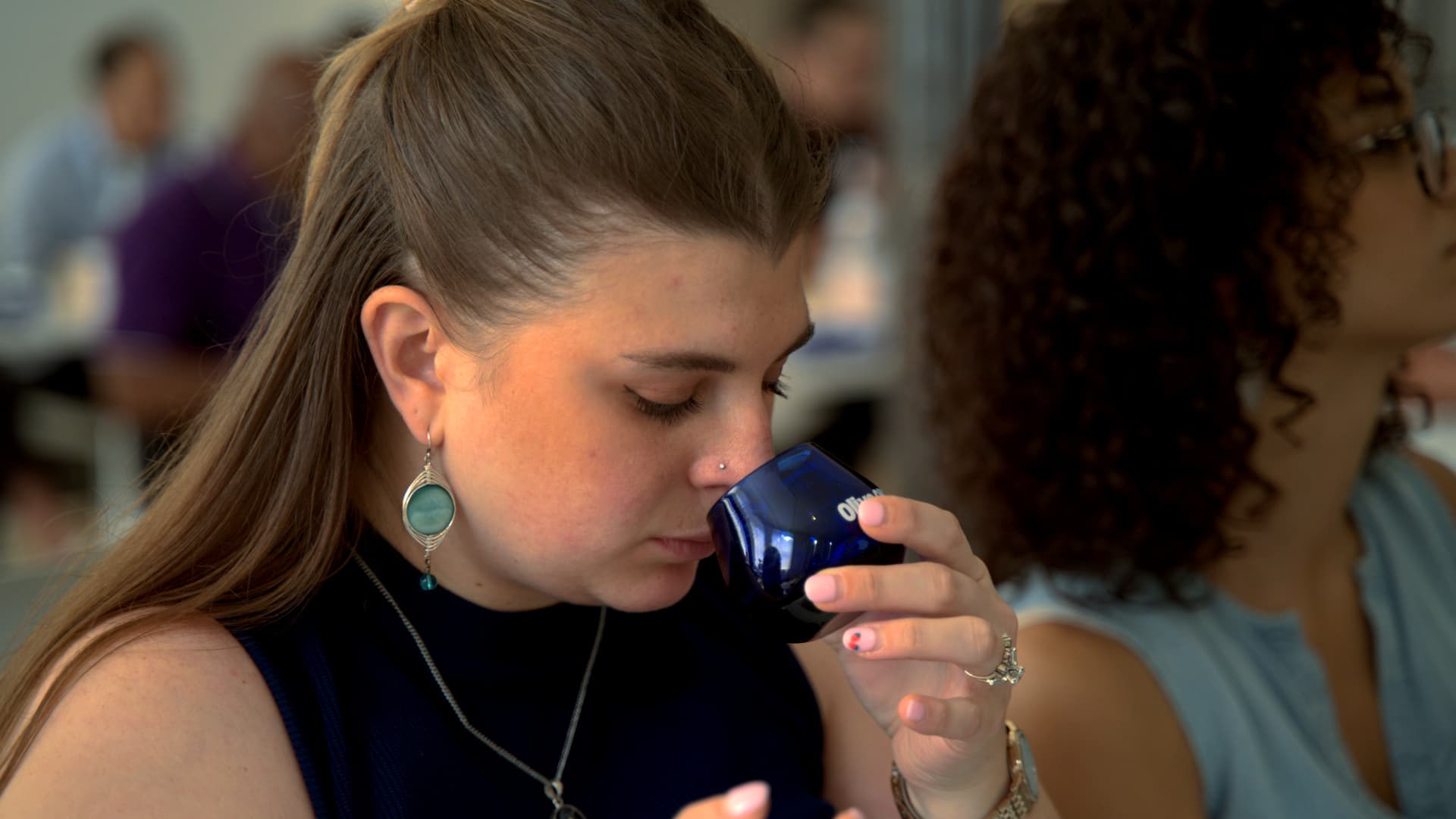
A participant evaluates an olive oil sample during a guided sensory analysis session at the Olive Oil Times Sommelier Certification Program in New York, where students learned to identify aromas, flavors and defects using professional tasting techniques.
Several graduates said they intend to focus on consumer education. Emily Murphy, an advisor to the Mediterranean Diet Roundtable, plans to use the course material to help develop educational content that presents a broader understanding of extra virgin olive oil, emphasizing quality, sourcing, culinary traditions and wellness rather than social media trends.
Others will apply the training directly to agricultural projects. Rebecca Lewandowski of Illinois recently became the owner of an olive grove in Umbria and said the knowledge gained during the course will support her efforts to produce high-quality oil. She also plans to host cooking classes and tasting workshops centered on extra virgin olive oil.
Claudio Guzzo, who lives in Italy, said he is in the early stages of developing a small olive oil tourism venture and expects the course to play an important role in shaping the experience offered to visitors. Interest in olive oil tourism has grown steadily as consumers increasingly seek opportunities to connect with producers and learn more about how olive oil is made.
Throughout the week, participants evaluated dozens of oils from different regions and cultivars while learning about chemistry, production practices, sensory analysis and the factors that influence freshness and quality. The curriculum also explored olive oil’s role in food culture, gastronomy and health.

Participants compare olive oil samples during a sensory evaluation exercise at the Olive Oil Times Sommelier Certification Program in New York, where students learn how production decisions, cultivar characteristics and processing methods influence quality, aroma and flavor.
Organizers said one of the program’s greatest strengths is the diversity of backgrounds represented in each class. By bringing together professionals from different sectors of the olive oil world, the program creates opportunities for collaboration and knowledge sharing that continue long after the final tasting session concludes.
As the newest graduates return home, they carry with them not only a certification but also a shared mission: to promote a deeper understanding of quality olive oil and help consumers make more informed choices. Whether through production, education, tourism, retailing or culinary projects, the program’s impact is expected to extend far beyond the classroom.