Istrian Producer Builds Olive Oil Tourism Around Education and Sustainability
Brist combines grove tours, sensory education and local gastronomy to offer visitors a year-round introduction to olive oil production in southern Istria.
In the hills surrounding Vodnjan, a town in southern Istria with a centuries-old olive-growing tradition, one family farm is changing how visitors connect with extra virgin olive oil.
Combining local history, hospitality and educational tours, Brist has become one of the early participants in the region’s growing oleotourism sector.
When you share the complete story and establish a relationship based on transparency and truth, you gain a customer for life.
Overlooking the Adriatic Sea and Brijuni National Park, the estate offers walks through century-old olive groves, guided sensory tastings, pairings with local foods and accommodations at Villa Santa Margherita.
The Puhar O’Grady family has also built a new multipurpose facility in the olive grove.
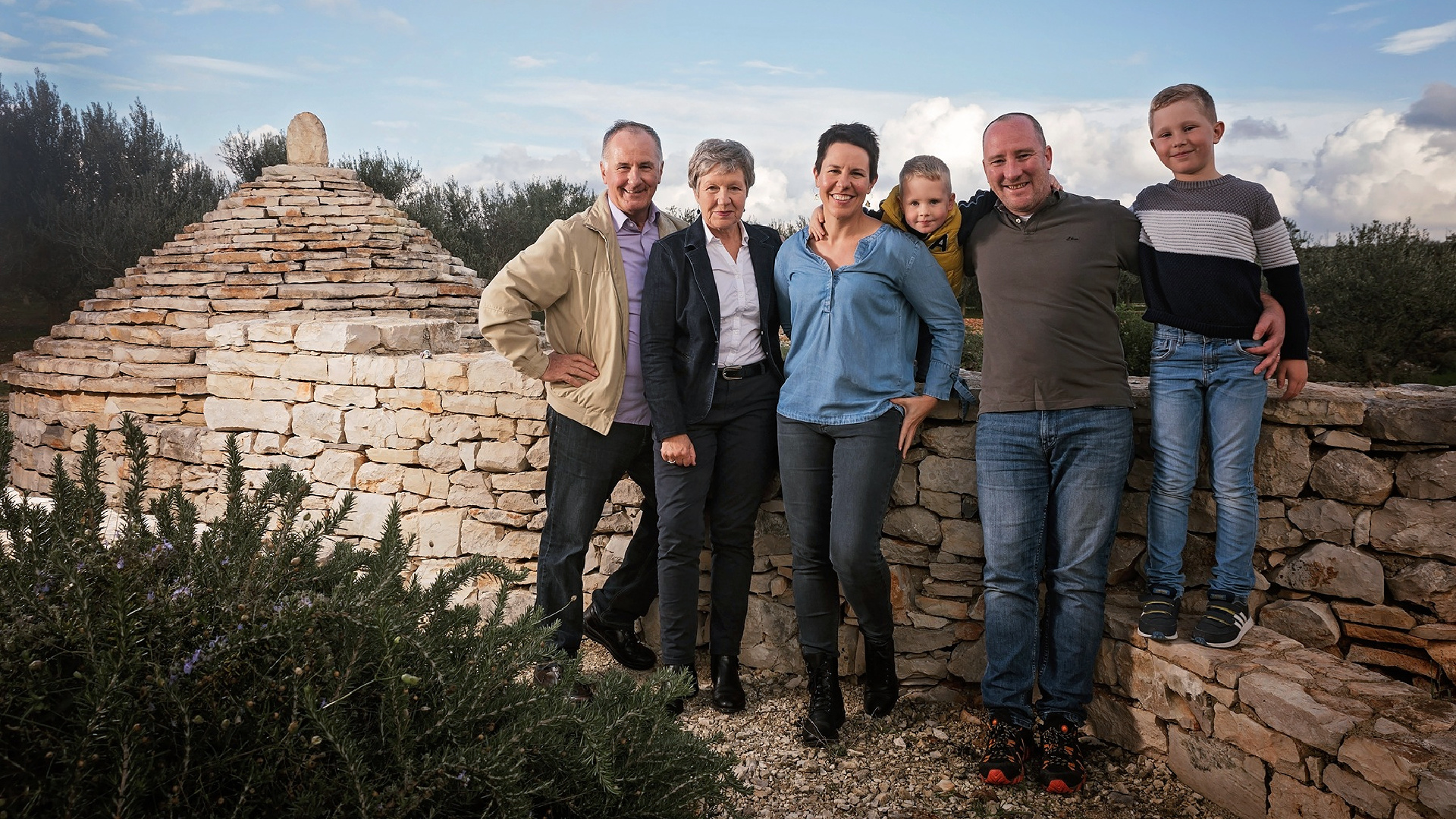
Members of the Puhar O’Grady family at the Brist estate near Vodnjan, in southern Istria, where the producer combines olive cultivation, sensory education and rural hospitality to offer visitors an immersive oleotourism experience. (Photo: Marina Ćosić Trbara)
“The new building will bring together an olive oil cellar and bottling facility, an area for processing local fruit and vegetables, and a modern tasting and retail space,” said Lena Puhar O’Grady, who oversees marketing, tastings and education for the family business.
From an Impromptu Walk to a Year-Round Program
Trained as an archaeologist and art historian, Puhar O’Grady runs the business with her 73-year-old father, Silvano, and her husband, Paul.
The family began offering olive oil tourism experiences about a decade ago, making them among the first producers in Istria to enter the sector. What has since become a structured business began by chance.
“It all started very spontaneously with two tourists from Norway,” Puhar O’Grady said. “After a tasting in our shop, they asked where our trees were actually located.”
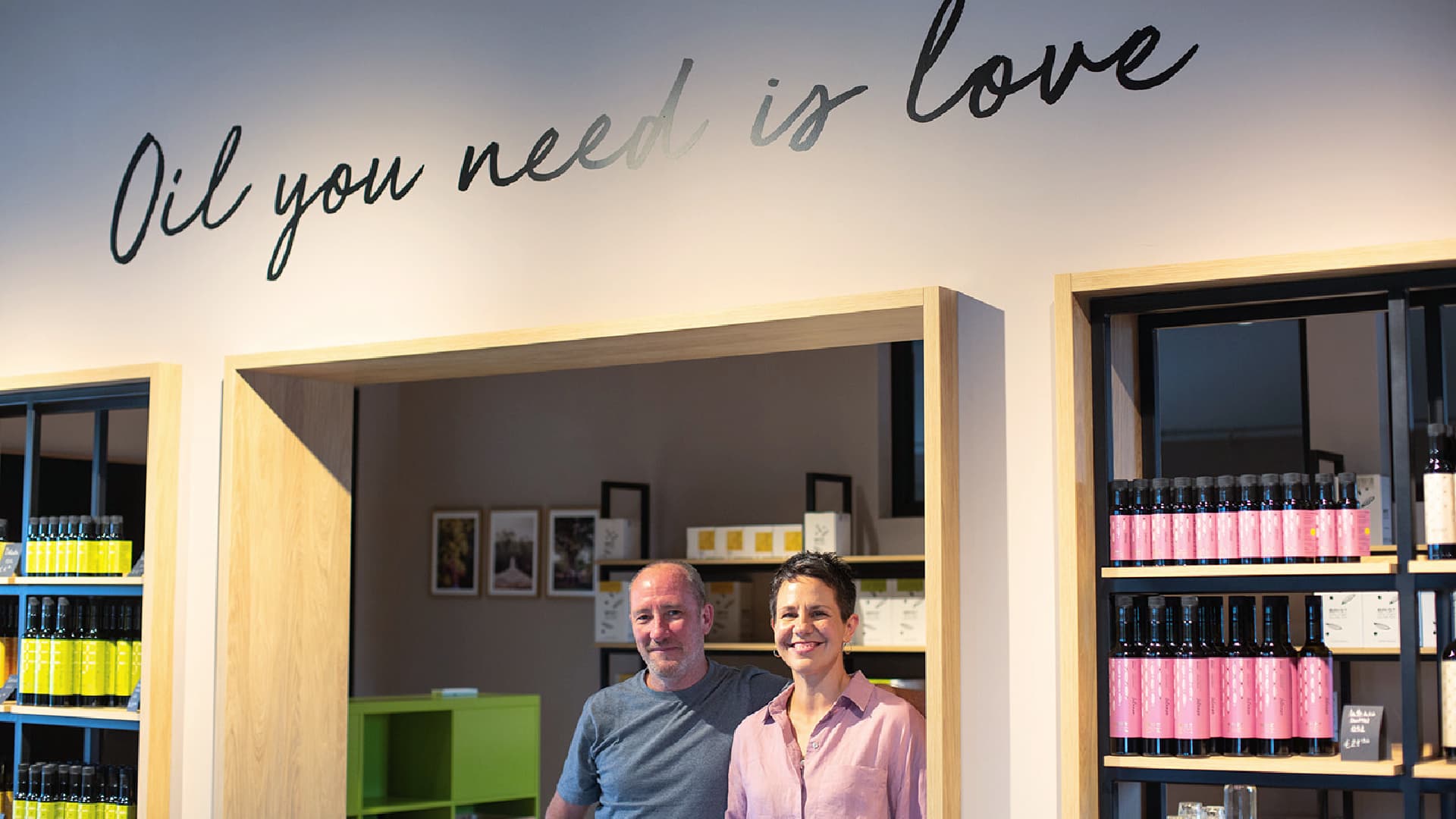
Lena Puhar O’Grady and Paul O’Grady at the Brist shop in Vodnjan, where the family welcomes visitors for guided tastings and introduces them to its award-winning extra virgin olive oils.
“My husband immediately offered to drive them three kilometers uphill to our olive grove, which is 150 meters above sea level and overlooks Brijuni,” she added. “He gave them an improvised tour, telling them about our family history and cultivation methods.”
“They were absolutely delighted, and that was the spark that showed us people were looking for precisely that kind of direct connection,” Puhar O’Grady continued.
The estate now offers programs throughout the year. Its introductory Walk and Taste Experience is available before and after the peak tourism season, including on windy or rainy days.
The tour covers 2,000 years of Istrian olive-growing history, along with cultivation and harvesting methods. It also includes a visit to the 13th-century Church of Saint Margaret, which borders the grove.
The educational walk is followed by a guided sensory analysis at the Brist shop in Vodnjan.
Education by Candlelight
During the peak summer season, from June through September, the estate offers its signature evening program, An Evening Under Olives.
The program begins at dusk with an interactive circular walk through the groves. Visitors learn about agricultural practices ranging from methods used in Roman times to regenerative and sustainable farming.
Restored dry-stone walls and kažuni, traditional stone field shelters, line the paths. Both are prominent symbols of Istrian cultural heritage associated with traditions recognized by UNESCO.
“We try not to push the commercial product aggressively,” Puhar O’Grady said. “Instead, we aim to serve as ambassadors for southern Istria and demonstrate the importance of a small farm where the producer retains complete control over the entire process.”
“We do not want to become an industrial operation,” she added. “Our main goal is to remain small, authentic and sustainable.”
The main event begins as the sun sets over the olive trees. With no artificial lighting in the grove, the area is illuminated entirely by candles.
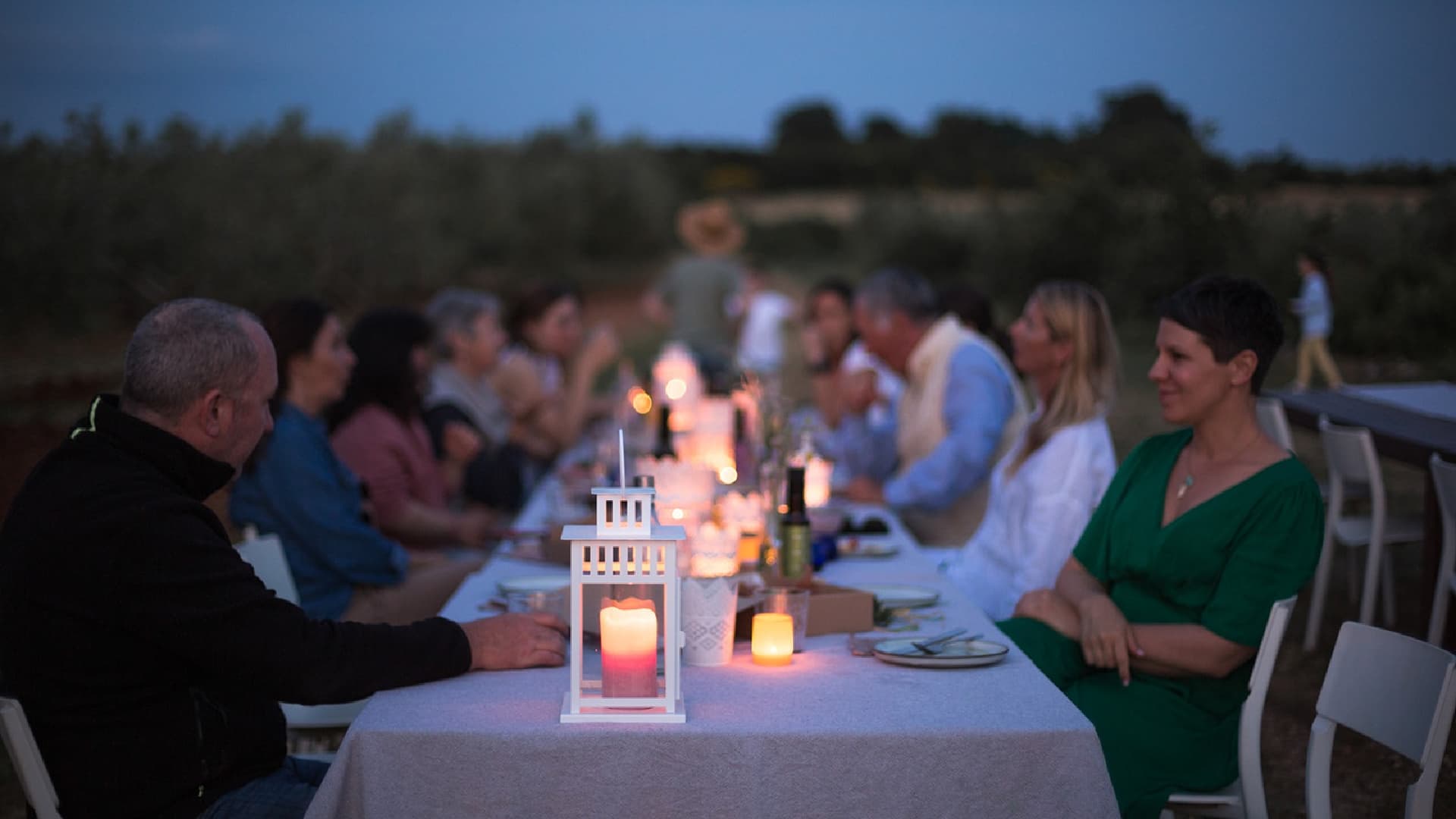
Guests gather for Brist’s candlelit ‘An Evening Under Olives’ program near Vodnjan, where guided tastings, local food pairings and storytelling connect visitors with Istria’s olive-growing traditions. (Photo: Marina Ćosić Trbara)
In this setting, Puhar O’Grady leads a sensory tasting featuring Brist Exclusive Selection, the family’s flagship extra virgin olive oil.
The brand has earned multiple awards, including Gold Awards at the NYIOOC World Olive Oil Competition in New York.
During the workshop, guests learn how to evaluate extra virgin olive oil by identifying positive attributes, including fruitiness, bitterness and pungency.
The tasting is followed by a more informal pairing with foods from nearby family farms, accompanied by sparkling wine produced in Vodnjan.
“When you share the complete story and establish a relationship based on transparency and truth, you gain a customer for life,” Puhar O’Grady said.
“We have international visitors from the United Kingdom, the United States and around the world who return several times,” she added. “Even though they already know the educational material, they tell us the evening remains an absolute highlight of their trip to Istria.”
A Broader Oleotourism Experience
To connect the agricultural business with accommodations, the family opened Villa Santa Margherita.
The holiday home includes a large swimming pool, an outdoor summer kitchen and covered terraces. Inside, contemporary design is combined with traditional elements, including an open-plan living area with a wood-burning fireplace.
The villa also includes a fully equipped kitchen and a private wellness area with a hot tub and sauna.
By combining olive oil production, consumer education and rural hospitality, the Vodnjan producer has developed a diversified business model designed to help a small Mediterranean farm participate in the region’s tourism economy.