Brazil Launches Premium Seal to Differentiate Top-Tier Olive Oils
A new certification program in Brazil sets quality standards well above the extra virgin category as producers seek to build consumer trust and distinguish domestic olive oils from imported competitors.
“Today, much of what comes from abroad can barely qualify as extra virgin olive oil. The idea is to present super-premium extra virgin olive oils to the market and help Brazilian consumers understand what a very high-quality olive oil tastes like,” Flávio Obino, president of Ibraoliva, the Brazilian olive oil producers’ association, told Olive Oil Times.
In Rio Grande do Sul, Brazil‘s leading olive oil-producing state, Ibraoliva has developed the Selo Premium Origem e Qualidade RS, a certification program that treats extra virgin as a baseline while identifying olive oils that meet significantly stricter quality standards.
Now in its second season, the program certifies individual lots of extra virgin olive oil produced from olives grown and milled within the state that satisfy quality parameters exceeding those traditionally required for the category.
Under the program rules, olive mills must be registered with Brazil’s Agriculture Ministry and Produtos Premium, the state program that recognizes high-value-added local products.
The evaluation considers olive origin, physicochemical characteristics and sensory quality. While extra virgin olive oil may have free acidity of up to 0.8 percent, oils seeking the Premium Seal must not exceed 0.3 percent.
Obino also cited stricter ultraviolet absorption parameters, including K232, K270 and ΔK, along with a sensory requirement of zero defects and a median fruitiness score of at least three, whether green or ripe, indicating freshness and consistency with high-quality extra virgin standards.
To apply, producers submit two 250-milliliter bottles from each lot, using Ibraoliva bottles without commercial labels, but identified by brand, lot number and whether the oil is a monovarietal or a blend. One bottle is analyzed, while the other is retained as a counter-sample. Any sensory defect disqualifies the lot.
According to Obino, the program’s defining feature is that the seal is awarded to individual lots rather than producers as a whole.
“This is crucial because individual lots must be identifiable,” Obino said. “There is no miracle of multiplying seals here. I have a specific batch that goes through physicochemical and sensory analysis, and only that lot receives the premium seal. The producer cannot use this seal for other batches or for olive oils that have not been certified. It must be a single, identifiable batch.”
Obino said the approach avoids confusion created when awards are applied broadly across a producer’s entire portfolio. “Sometimes people send their absolute top olive oil to an international contest, win, and then use that medal for any olive oil they produce. In our system, the seal is bound strictly to identifiable batches,” he said.
For Obino, the seal is more than a marketing tool. It is part of a broader effort to build trust in domestic olive oil and educate consumers in a market still dominated by imports. Since Brazilian producers cannot compete with large foreign suppliers on price or volume, he said the sector must differentiate itself through quality, traceability and consumer education.
“Our focus is entirely on the super-premium tier,” Obino said. “For now, our focus is strictly on consumers with higher purchasing power, those who can pay for a differentiated olive oil.”
The strategy has resonated with producers such as Capolivo. Carolina Capoani, the company’s marketing and communication director, said the certification represents “much more than a seal” for producers seeking to distinguish high-quality Brazilian olive oils.
“It is a technical recognition that attests to the excellence of olive oil produced in Rio Grande do Sul, valuing the work carried out from grove management to extraction and bottling,” she told Olive Oil Times.
Capoani said the sensory evaluation process is one of the program’s greatest strengths. “The olive oils undergo analysis by trained specialists, who verify positive attributes such as fruitiness, bitterness and pungency, as well as the absence of defects,” she said. “This offers consumers an additional guarantee that they are purchasing a product that meets rigorous quality criteria.”
She added that the seal could also help change the long-held perception that imported olive oils are inherently superior.
“Although there is still a historical perception that imported olive oils are superior, this view has been changing as Brazilian olive oils gain recognition in international competitions and demonstrate quality comparable to the best in the world,” Capoani said. “Certifications provide credibility, offer a reliable reference for consumers and reinforce confidence in local production.”
Local production remains limited, but the 2026 season is expected to set a record. “We simply do not have any way to produce on a large industrial scale,” Obino said. “However, we are on track to break Brazil’s historical record this year. We should reach around 1.5 million liters throughout Brazil, outperforming our initial forecast of one million.”
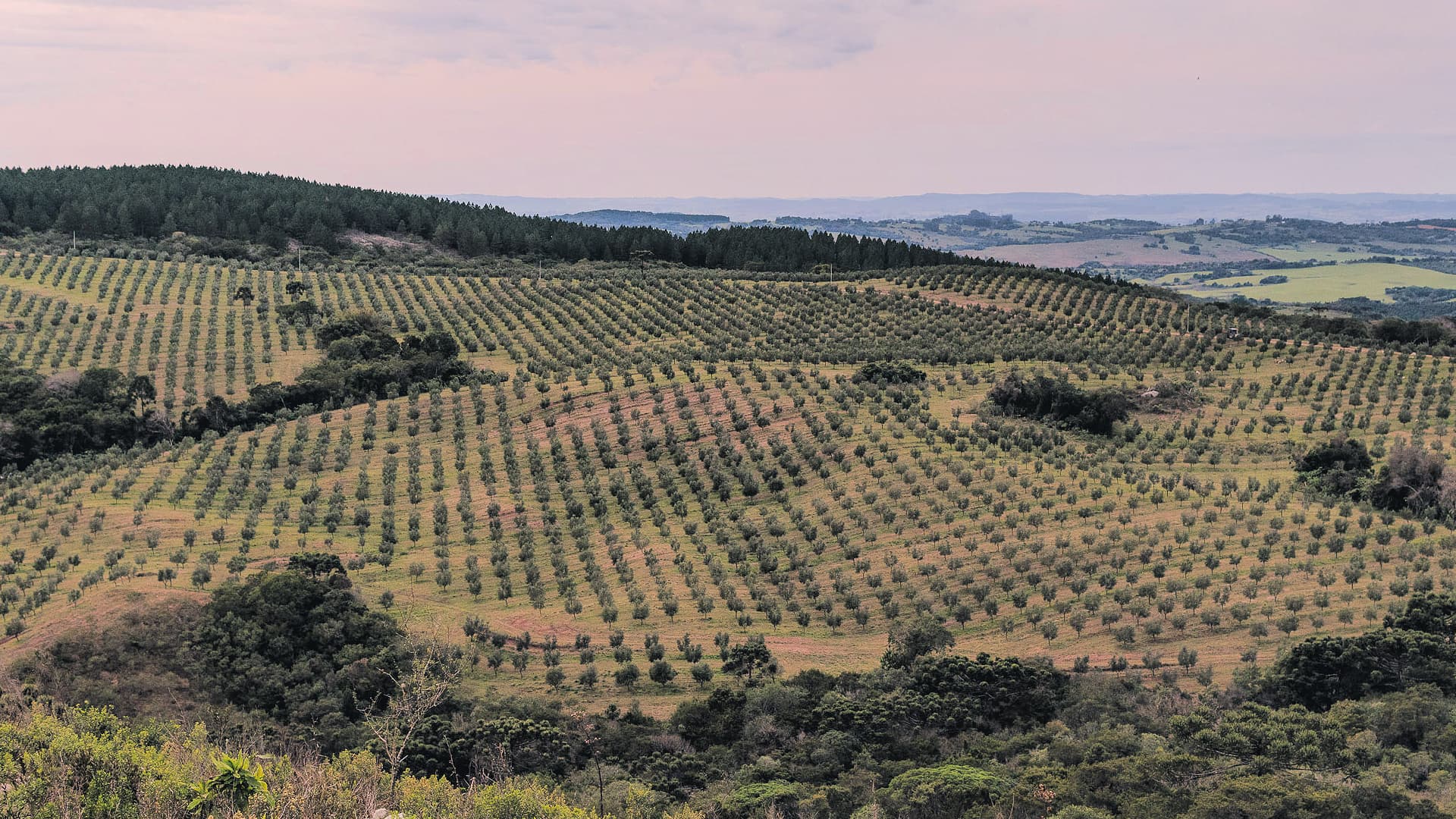
As Brazil’s olive oil production reaches record levels, producers are betting on a new certification program to position domestic oils at the highest end of the market. (Photo: Capolivo)
“For us, this is massive because our previous record was 640,000 liters,” he added. “We are growing by more than 100 percent compared to our previous best, but even so, we will account for a maximum of two percent of the country’s olive oil consumption.”
That limited market share, he argued, reinforces the logic behind the Premium Seal. “If we can reach two percent of the consumption in Brazil for this type of audience, we are perfectly fine leaving the remaining 98 percent to the standard supermarket shelf oils,” Obino said.
He added that consumer response has been encouraging, even if retailers remain focused on volume. “Our assessment shows that consumers respond very positively to the premium seal identification,” he said. “Retailers, however, remain focused on sales volume, which we cannot provide.”
“Fortunately, our consumers are educating themselves, and this shift is a point of no return. Those who taste real, authentic olive oil do not go back to consuming commercial supermarket imports,” Obino said.
Similar debates are underway in Europe, where producers and industry organizations are exploring ways to distinguish super-premium olive oils from the broader extra virgin category.
“Ibraoliva is very interested in getting closer to this movement in Europe for super-premium, high-quality olive oil, to clearly differentiate from the very low-quality olive oils that arrive in Brazil and somehow hinder our local super-premium market,” Obino said.
Obino described climate change as a “massive challenge,” noting that “Brazil has totally adverse conditions for producing olives.”
“In the southern region, where the largest number of producers are concentrated, we have a lot of humidity and a shortage of consistent winter cold,” he said.
Obino said Brazilian producers already perform well at the milling stage, with the greatest challenge being achieving consistent results in the groves under difficult climatic conditions. “When it comes to the second stage, the transformation process, our results are already wonderful,” he said. “Our olives are harvested much earlier than normal; this implies smaller yields of olive oil, but it grants the oil higher stability, durability and chemical quality.”
He also highlighted efforts to strengthen scientific and technical expertise through partnerships with the Uruguayan olive association, support from CAF, the Development Bank of Latin America and the Caribbean, and potential collaboration with researchers from the International Olive Council.
“Our strategy is not to be everything to everyone,” Obino concluded. “It is to show that Brazil can produce super-premium olive oil and that consumers have a way to recognize it.”