Olive Oil Sommelier Program Builds Skills and Community in Northern Europe
After five days of intensive training in the Netherlands, participants in the Olive Oil Times Sommelier Certification Program left with sharper sensory skills and a deeper understanding of olive oil.
“I saw them all close their eyes to delve into the nuances of that magnificent extra virgin olive oil. All 25 of them. It was a perfect moment,” said Christianne Noordermeer Van Loo, executive director of the Olive Oil Academy, recalling the final day of the latest Olive Oil Times Sommelier Certification Program in the Netherlands.
I saw them all close their eyes to delve into the nuances of that magnificent extra virgin olive oil.
After five intensive days exploring the world of olive oil, from cultivation and milling to sensory evaluation, the participants sat quietly that Friday, assessing one final extra virgin olive oil.
“That was the very best olive oil we had to share, the finest,” Noordermeer Van Loo said.
Only a few days earlier, some had struggled to identify familiar aromas, such as tomato, in an olive oil. Now they were assessing fruitiness, aromas and defects, approaching the oil much as members of a tasting panel would in a formal competition.
“That was for me a moment of wow,” Noordermeer Van Loo said. “They really learned a lot.”
“It was such a beautiful olive oil,” said Jan, who completed the five-day program. “An anchor in my memory.”
The second European edition of the Sommelier Certification Program was held in September, following the inaugural European edition in 2025.
Olive Oil Times and the Olive Oil Academy launched the program to expand olive oil knowledge and sensory training in Northern Europe through a curriculum covering sensory assessment, cultivation and milling, health and nutrition, culinary applications and quality control.
This year, Noordermeer Van Loo said instructors were encouraged to connect their subjects more closely. The “Aroma Table,” designed to help students build a sensory vocabulary using familiar ingredients, was among the most highly rated activities.
What struck her most, however, was the class’s diversity. Participants included an information technology consultant, a school teacher, restaurant owners, olive oil producers, medical professionals, and people considering new olive oil-related businesses or careers. One American participant advises a public authority on agricultural issues.
“They connect in a way that in normal participation in society, they never cross each other,” Noordermeer Van Loo said. “Within a couple of hours since we began, it became a group.”
Different participants were drawn to different parts of the course. Renate said the combination of theory and sensory experience produced many of the week’s “aha” moments, particularly as participants learned to recognize defects, nuances and aromas.
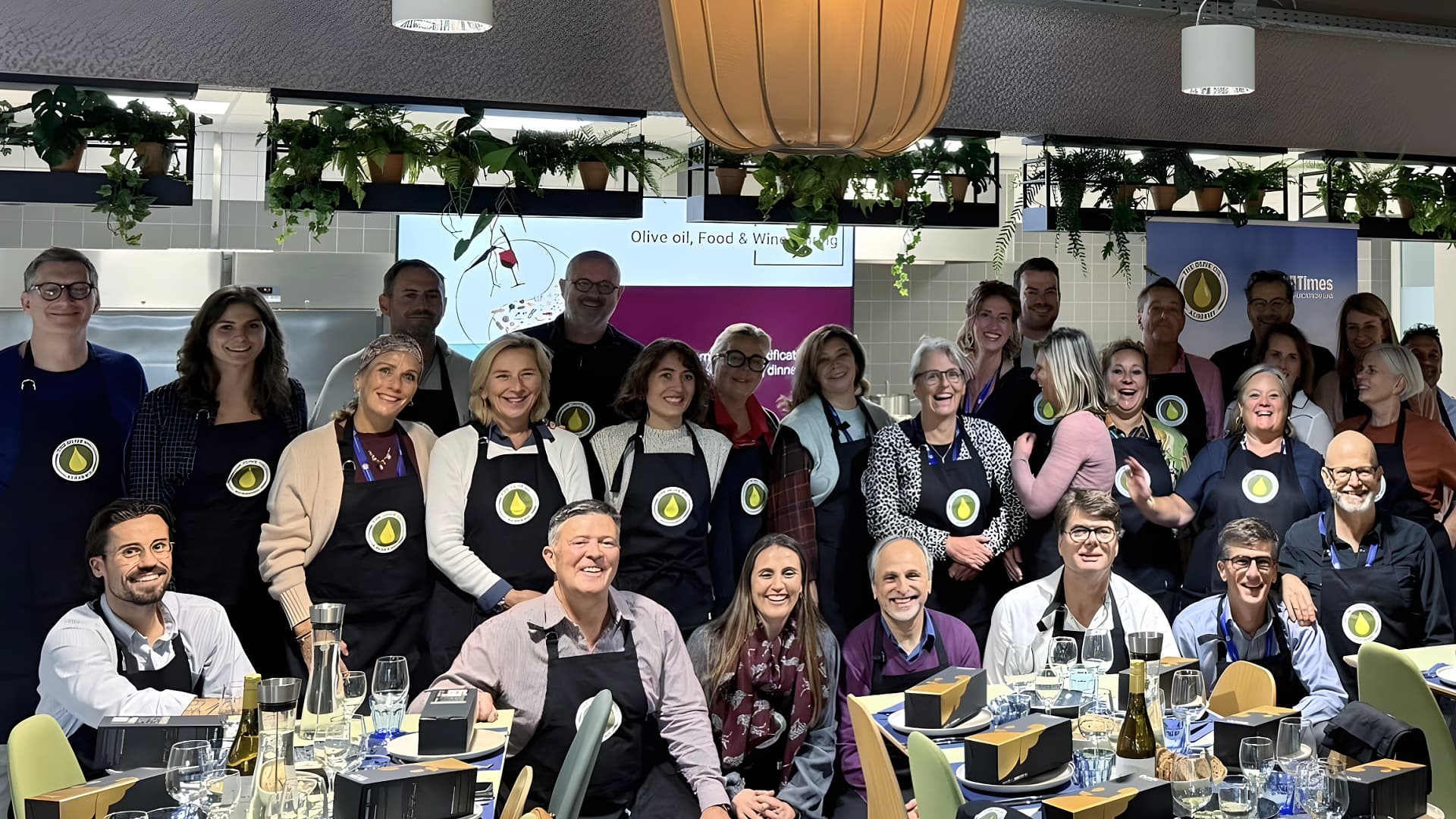
The second European edition of the Olive Oil Times Sommelier Certification Program brought together a diverse group of participants for five days of sensory training, production science, health and olive oil education.
She also highlighted the value of understanding olive oil production as a whole, from cultivation and harvesting through sensory evaluation.
Jan focused on the program’s coverage of the entire value chain, including cultivars, biodiversity, farming, harvesting, milling, sensory assessment, competitions, health and business.
He said the most valuable lesson was understanding what it takes to produce high-quality olive oil, from farming practices through the first stages of production.
For another participant, things clicked when he began matching the descriptors discussed in class with what he could actually smell and taste.
“I could tell which oil was which and which one was defective,” he said. “This is when things started to make sense.”
Noordermeer Van Loo said she watched that realization happen repeatedly throughout the week. At first, participants might question how anyone could smell tomato, artichoke, or other descriptors in an olive oil.
At different moments during the course, she said, each seemed to experience what she described as the “eureka effect,” when experience, aroma recognition and tasting begin to connect.
By Friday, more than 30 percent of the participants completed the tasting examination without a single mistake, she said.
Health and biodiversity stood out for others. Elvira described a session on biodiversity in olive groves as an “eye-opener” and said Simon Poole’s presentation on olive oil and health encouraged her to explore the subject further.
Poole, one of the course instructors, is a U.K.-based physician and author whose work focuses on the health science and dietary applications of extra virgin olive oil and the Mediterranean diet.
David similarly said Poole’s classes helped clarify the role of polyphenols and strengthened his interest in teaching others about extra virgin olive oil and the Mediterranean diet.
Some participants gravitated toward milling, others toward health, sensory analysis or biodiversity, Noordermeer Van Loo said.
For many, the course did not end on Friday.
One participant said he has tasted olive oils daily since completing the program. Another said not a day had passed without tasting oils, incorporating them into meals or reading more about them.
Participants also joined the Academy’s alumni network, and Noordermeer Van Loo said about 70 percent of this year’s class had already enrolled in its Taster’s Club, an initiative that allows members to continue refining their tasting skills.
Members receive tasting boxes containing the same selection of olive oils and take part in online evening sessions, where tasters from different countries compare and discuss their impressions.
Some participants grew anxious while waiting for their certificates. Noordermeer Van Loo said several contacted her, worried they might not have passed before the official results arrived from Olive Oil Times’ offices in New York.
Everyone had passed. Soon afterward, she began seeing certificates appear on participants’ social media accounts.
Noordermeer Van Loo also sees signs of growing interest in olive oil education beyond traditional producing countries. This year’s class included three participants from Germany, compared with none in the previous edition, and she hopes to reach more people in Denmark, Sweden and other northern European countries.
The third European edition of the Sommelier Certification Program is scheduled for September 2027.
“It’s going on and on and on,” Noordermeer Van Loo said. “Our perception is that there is a growing interest in knowledge of olive oil and tasting experience.”