EU Grants PGI Status to Olive Oil from Bologna Hills
Olive oil from the hills around Bologna has received EU geographical protection as growers revive a tradition that nearly disappeared after centuries of climatic and agricultural change.
Extra virgin olive oil produced in the hills around Bologna, in northern Italy’s Emilia-Romagna region, has received Protected Geographical Indication (PGI) status from the European Union under the denomination IGP Olio dei Colli di Bologna (Bologna Hills PGI Oil).
The designated area for olive cultivation, harvesting and oil extraction includes municipalities within the Metropolitan City of Bologna located south of the historic Via Emilia, the region’s main arterial road.
Over the past twenty years, the olive-growing area of the Bologna hills went from a handful of small orchards to over 450 hectares of registered olive groves.
This is the third extra virgin olive oil to earn a geographical indication in Emilia-Romagna, after Brisighella PDO, produced in the province of Ravenna and the Forlì area, and Colline di Romagna PDO, produced in the provinces of Rimini and Forlì-Cesena.
The new PGI logo features stylized representations of the Garisenda and Asinelli towers — renowned Bologna landmarks dating to the early 12th century — enclosed within a circle resting on two olive branches bearing leaves and fruit.
“We are delighted with this achievement, which brings prestige to this agricultural landscape and opens new opportunities for sustainable development, especially following the recent legislation on oleotourism,” said Ermanno Rocca, president of the Rete Olio Extra Vergine di Oliva Colli di Bologna (Bologna Hills Extra Virgin Olive Oil Network), which initiated the PGI application in 2021.
Established in 2017 to promote and strengthen local olive oil production, the Bologna Hills Extra Virgin Olive Oil Network currently includes Azienda Agricola Bonazza, Agrivar, Palazzo di Varignana Food, Azienda Agricola Assirelli, Azienda Agricola Podere Pratale, Frantoio Valsanterno, Azienda Agricola Cà Scarani, Azienda Agricola Torre, Azienda Agricola Sorella Terra, Azienda Agricola Nugareto, Azienda Agricola 1997 and Società Agricola Copaps.
With the new crop year underway and harvesting operations set to begin, each network member is preparing to complete the final step required by the certifying body to obtain PGI certification, a process expected to conclude by November 2026.
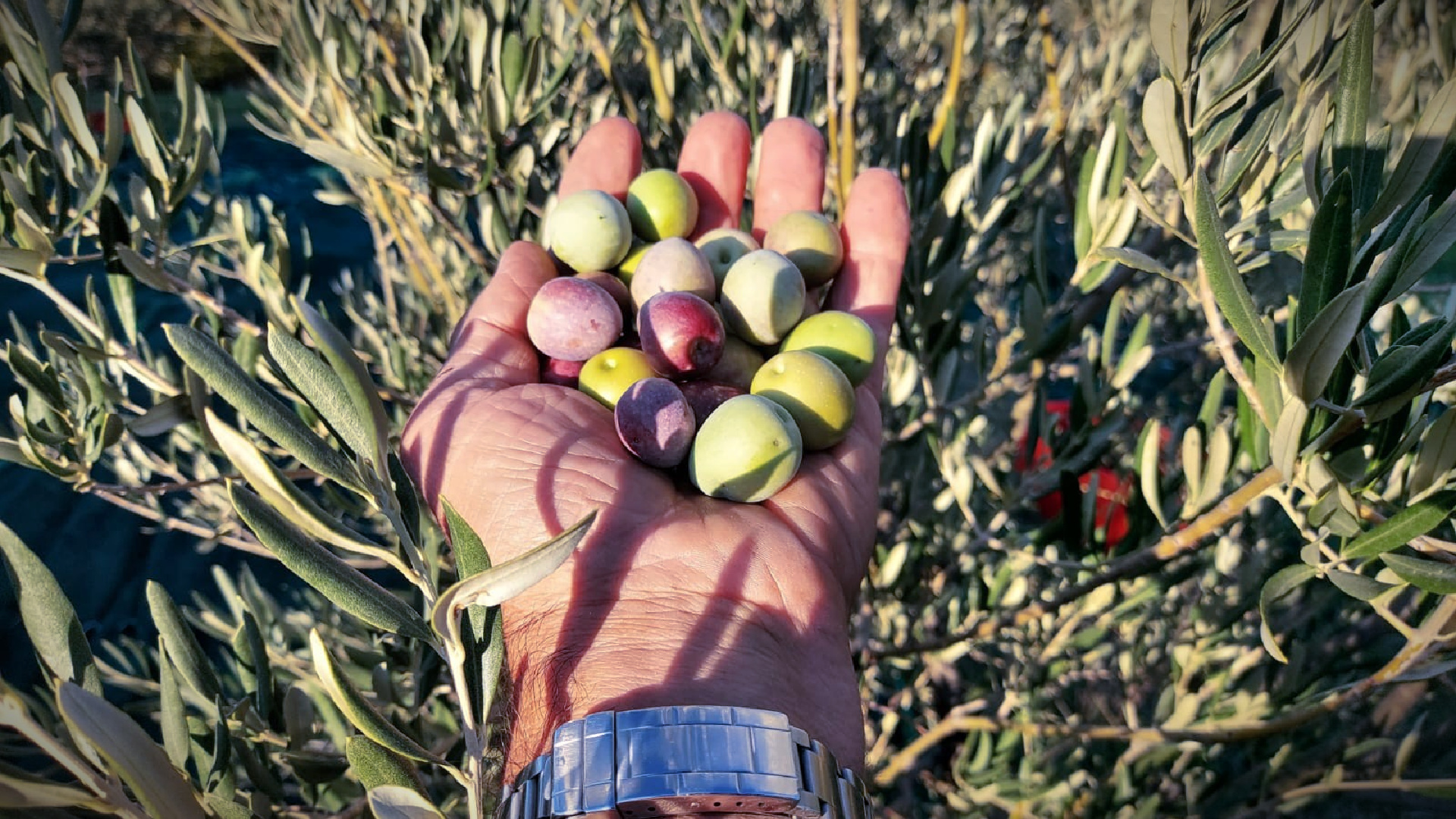
Among the cultivars eligible for Bologna Hills PGI Oil are Correggiolo, Frantoio, Nostrana di Brisighella, Ghiacciolo, Farneto, Montebudello, Montecapra, Montecalvo 2 and Oliveto. (Photo: Rete Olio Extra Vergine di Oliva Colli di Bologna)
Rocca said interest in expanding the production area is growing, adding that the new designation reinforces the community’s connection to the territory and encourages continued agricultural activity.
“The certification will undoubtedly drive quality improvements, and we hope this will stimulate growth in the sector’s investments,” he said. “It is worth noting that over the past twenty years, the olive-growing area of the Bologna hills went from a handful of small orchards tended for amateur purposes to over 450 hectares of registered olive groves.”
The Bologna Hills PGI Oil production specification notes the still limited number of olive mills in the area. However, those mills have developed the capacity to provide advanced services to local growers and are engaged in research and experimentation that has strengthened local expertise and improved oil quality.
According to the specification, olive varieties found in the area include ancient native cultivars selected and preserved from the province of Bologna, including Farneto, Montebudello, Montecapra, Montecalvo 2 and Oliveto. Ghiacciolo and Nostrana di Brisighella are also grown in the hills.
The varieties permitted for PGI monovarietal oils are Correggiolo, Frantoio, Nostrana di Brisighella and its clones, Ghiacciolo and its clones, Farneto, Montebudello, Montecapra, Montecalvo 2 and Oliveto. Olives from these varieties must account for at least 85 percent of the total, while the remaining 15 percent may consist of other cultivars.
For PGI blends, Leccino and Maurino are permitted in addition to the varieties listed above. Two or more eligible cultivars must together account for at least 80 percent of the blend, while the remaining 20 percent may consist of other varieties.
The trees are cultivated at elevations ranging from 150 to 400 meters above sea level in an area characterized by outcropping evaporitic gypsum rocks. Since 2023, the zone has been included on the UNESCO World Heritage List as part of the “Evaporitic Karst and Caves of the Northern Apennines.”
The product specification notes that the thermal inertia of the gypsum outcrops, combined with the south-facing exposure of the cliffs, helps create a microclimate that has supported Mediterranean crops for centuries.
Studies cited in the document indicate that olive trees have been present in the Bologna hills since ancient times, adapting to small ecological niches protected from northern winds and fog and producing a patchwork distribution across the landscape. Centuries-old trees have also survived severe frosts, demonstrating their resistance to low temperatures.
“In the Bologna hills, there are 29 centuries-old olive trees cataloged, some of which are older than 300 years, attesting to the long-standing presence of olive growing in the region, at least since the 1700s, when the practice was widespread,” Rocca said. “Then came a period of extreme cold that historians call the Little Ice Age, which wiped out this crop. Later, when the climate returned to normal, farmers, deterred by the impact of that cold wave, decided not to replant olive trees.”
“Consequently, olive growing remained largely restricted to gardens and small-scale cultivation until the end of the last century and the beginning of the current one, when a new wave of interest began to emerge,” he added. “Today, not only have we returned to cultivating olive trees, but we are also committed to research and development.”
The Bologna Hills PGI Oil Network is collaborating with the Department of Agricultural and Food Science at the University of Bologna and the CNR Institute of BioEconomy on research programs to study and preserve local olive biodiversity.
“Olive growing also plays a crucial role in safeguarding the hills’ environment,” Rocca said. “The tree’s extensive root system stabilizes the soil and mitigates hydrogeological risks, while providing further important ecological benefits by sequestering CO₂ and providing an additional source of genetic diversity. It therefore becomes an asset not only for farmers but for the whole community.”