Italy Establishes Major Olive Germplasm Bank to Safeguard Global Biodiversity
Researchers in Umbria have established one of the world’s largest olive germplasm banks, bringing together hundreds of genetically distinct cultivars and wild olive accessions to support research, conservation and climate resilience.
The Institute of Biosciences and Bioresources (CNR-IBBR) in Perugia has established one of the world’s largest olive germplasm banks in Gubbio, Umbria.
Built on the research center’s extensive expertise in genomics, the new infrastructure aims to conserve global olive biodiversity while supporting scientific innovation and long-term resilience.
The world’s ‘queen’ of synonyms is the Frantoio cultivar, for which we have identified over 20 synonyms in Italy and several others abroad.
The collection, called Domus Olear∑ and registered with the United Nations Food and Agriculture Organization under the code INSTCODE: ITA481, was created following extensive molecular characterization using a unique international database of more than 10,000 olive genotypes from olive-growing countries worldwide.
Researchers identified more than 3,000 unique genotypes from 32 countries. Of these, 454 genetically distinct cultivars representing 27 countries have so far been planted by grafting.
They were joined by more than 400 wild olive genotypes and subspecies from existing collections and seeds preserved in greenhouses and CNR repositories, bringing the total number of genetically unique accessions to more than 800.
The capital Greek letter sigma (∑), used in mathematics to indicate summation, symbolizes the collection’s ambition to represent the sum of olive accessions worldwide.
Extending across roughly 10 hectares, the collection is located in the Montelovesco district of Gubbio at the Di Murro farm, which provides operational management at no cost and ensures compliance with CNR-IBBR protocols.
“Through major research projects conducted over the past four years at our CNR-IBBR laboratories, we have analyzed over 10,000 DNAs using a standardized set of molecular markers,” scientific coordinator Soraya Mousavi told Olive Oil Times.
“We were able to distinguish approximately 3,000 unique genetic profiles, which therefore, based on our current knowledge, represent the olive tree accessions existing worldwide today,” she added.
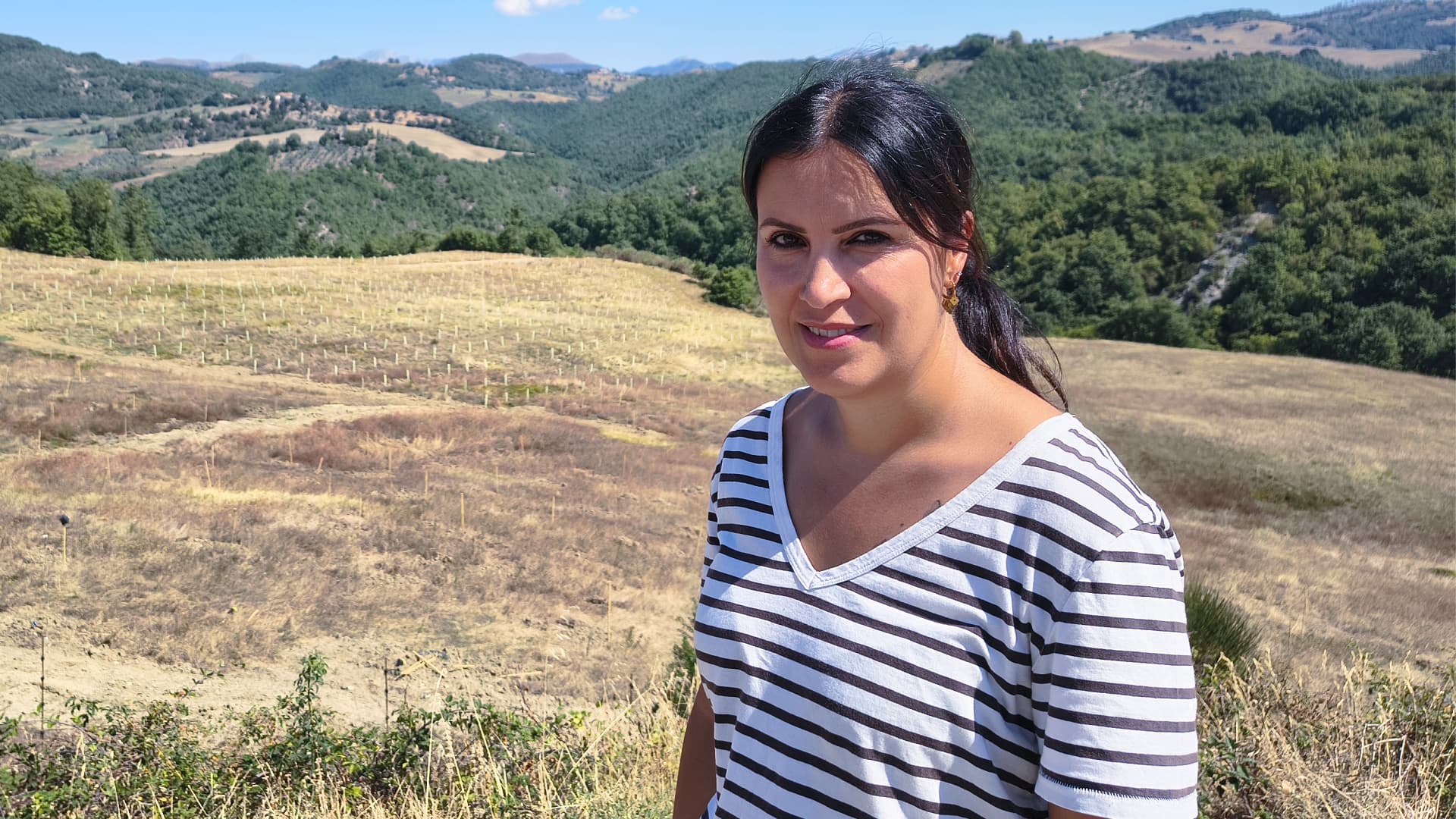
Soraya Mousavi, scientific director of Domus Olear∑ in Gubbio, stands before young olive trees in the collection managed by the Institute of Biosciences and Bioresources (CNR-IBBR).
“We deliberately use the term ‘accession,’ along with ‘cultivar,’ as this concept encompasses the entire spectrum of genetic resources,” Mousavi said. “It includes not only cultivated and registered varieties, but also monumental and unique specimens, such as the patriarchs of Crete, the historic trees of Malta, the pollinators of Algeria and the centuries-old rootstocks of the Eastern Mediterranean and Western Asia.”
Mousavi said wild olive trees (Olea europaea subsp. europaea var. sylvestris) are an invaluable genetic resource within the germplasm bank. Still present in relict populations in several regions, they are increasingly threatened by human alteration of their natural habitats.
The collection also includes five Olea europaea subspecies: guanchica from the Canary Islands; cerasiformis from Portugal, particularly Madeira; maroccana from Morocco; laperrinei from the Saharan mountain ranges; and cuspidata, whose range extends across East Africa, the Arabian Peninsula, Iran, Pakistan and China.
Current phylogenetic research suggests that cuspidata may be the ancestor of the other subspecies, including cultivated forms.
“The accessions planted in the Domus Olear∑ collection are the result of over forty years of work devoted to the procurement, conservation and characterization of germplasm conducted by CNR institutes, often through historic international cooperation projects,” Mousavi said.
“Containing all 3,000 unique genotypes in a single plantation would be an exceptional achievement, but it would be complex from an operational and phytosanitary perspective, as today the regulatory framework governing the cross-border movement of plant material is rightly much more stringent than in the past,” she added.
“Biosecurity protocols and preventive quarantines are essential to prevent the spread of pathogens, but they can make the propagation and establishment of accessions from non-European areas more difficult,” Mousavi said. “Nonetheless, thanks to official agreements with national and international institutions and supported by qualified nursery operators, we have succeeded in establishing a remarkable number of genetically distinct cultivars.”
As part of the Omibreed project, researchers and technicians validated each plant by analyzing the genetic heritage of CNR collections and experimental fields, particularly the CNR-IBE-managed collection at the Santa Paolina experimental farm in Follonica.
Researchers also analyzed hundreds of accessions from the nursery sector.
With support from national and European projects including REACH-XY and Bexyl, along with dozens of collaborations with public and private entities, researchers said the bank will serve as an open-air laboratory.
“A frequently asked question among sector operators and enthusiasts is how many olive tree varieties exist in the world or within a specific country, a topic that has frequently resulted in fragmented or conflicting answers,” technical coordinator Roberto Mariotti said.
“Today, molecular genetics finally provides us with the objective tools to clarify and unequivocally distinguish unique cultivars from synonyms and homonyms,” he added.
Mariotti said a cultivar is considered genetically unique when official, internationally validated molecular markers demonstrate that its genetic profile is distinct from every other known profile. In many cases, DNA analysis reveals that cultivars known locally under different names share the same genetic identity.
“The world’s ‘queen’ of synonyms is the Frantoio cultivar, for which we have identified over 20 synonyms in Italy and several others abroad,” Mariotti said.
“Conversely, many olive trees share the same name, often derived from morphological or traditional traits, such as Rosciola, Tonda, Dolce, Ogliarola, Olivastro, Mission, Chemlali, Abou and Baladi, yet their DNA sequences differ completely,” he added. “With this work, we were able to identify and clarify all such cases.”
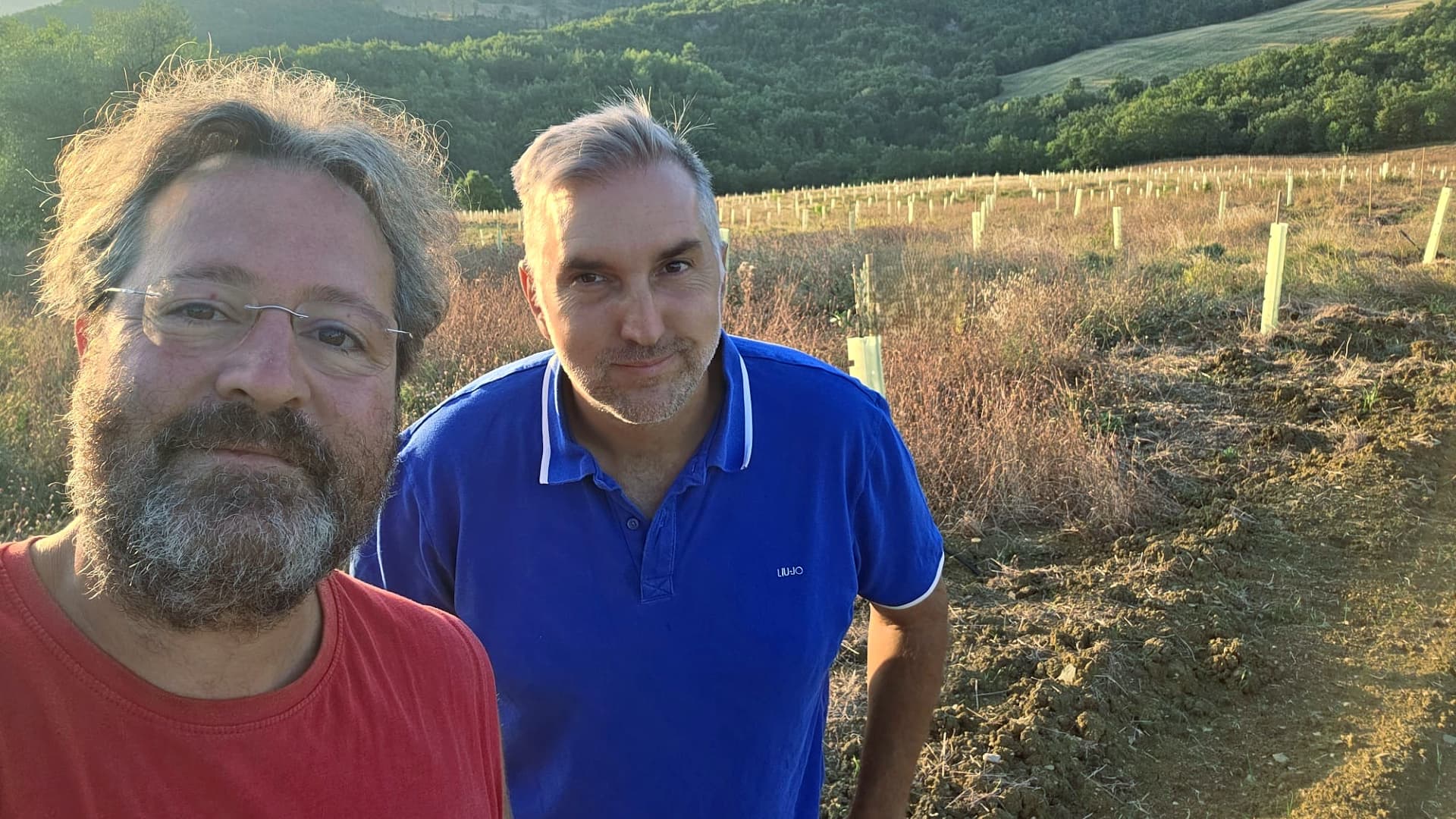
With the young plantings of Domus Olear∑ in the background, technical coordinator Roberto Mariotti (right) and Silvano Di Murro of the Di Murro farm in Gubbio, which hosts the CNR-IBBR-managed collection.
The collection currently includes 316 genetically unique cultivars from Italy, which researchers said has the world’s largest known olive genetic diversity.
Domus Olear∑ allows researchers to observe how different olive varieties behave under the same environmental conditions, improving understanding of their responses to biotic and abiotic stresses.
It also serves as a genetically secure propagation nucleus for future studies involving breeding, genome editing and global olive germplasm enhancement programs.
Each cultivar is planted in three randomized replicates distributed across three separate experimental blocks, in accordance with statistical criteria established for research purposes.
“The first block also serves an educational and demonstration purpose, and it is organized alphabetically by country or region,” Mariotti said.
“An area is dedicated to wild olive trees, and a distinctive element of the collection is the Agora, a circular area housing 12 ‘special’ accessions belonging to the Olea europaea subspecies, as well as several exceptional specimens that will be unveiled during the inauguration on September 18,” he added.
The number of countries represented in the collection may increase as the Coming Next area is established to receive new varieties and accessions.
The section will host plant material submitted by public and private partners from around the world, to be propagated under strict phytosanitary regulations and genetically certified before final planting.
The CNR-IBBR research group has also developed a program around the germplasm bank that combines scientific outreach and technology transfer to support agronomic practices in olive growing.
Educational programs will be offered to schools, universities and industry professionals, focusing on preserving genetic diversity, the species’ evolution and adaptation to climate change.
Educational and multimedia resources will serve as a digital bridge between the collection and research laboratories, highlighting phenotypic, qualitative and quantitative data alongside information about individual accessions supplied by the research group and its partners.
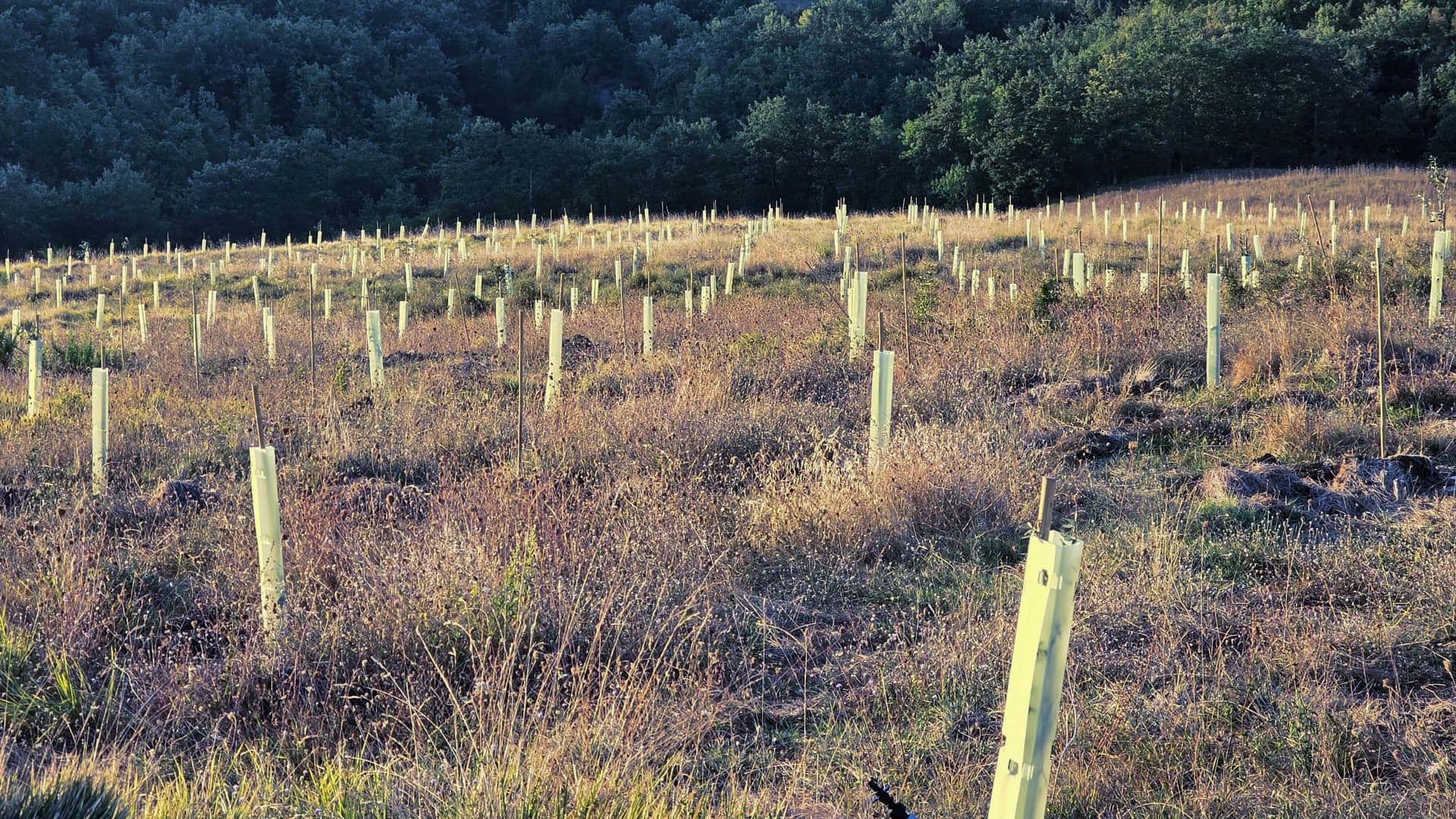
Domus Olear∑ in Gubbio, Umbria, is one of the world’s largest olive germplasm banks. The collection was established using molecular analysis of an international database containing more than 10,000 olive genotypes.
Demonstration activities and outdoor workshops will illustrate the vegetative characteristics and differences among wild subspecies, historic patriarchs and modern commercial varieties.
The collection will also support cultural programming and oleotourism initiatives.
“The Domus Olear∑ scientific collection established at the Di Murro farm was conceived with an open purpose: not as a catalog reserved exclusively for specialists, but as a living infrastructure accessible to scholars, students of all levels, growers from around the world and enthusiasts eager to discover this important source of diversity,” farm manager Silvano Di Murro said.
“In particular, we will develop an educational project to transform a visit to an olive grove into a truly immersive experience, where a stroll among the rows becomes a journey through olive biodiversity, revealing the small and big differences between one accession and another,” he added.
The genetic material in the collection is now available to be shared with major germplasm collections worldwide, including the CNR-IBE Santa Paolina experimental farm; CNR-IBBR and CNR-ISAFOM facilities in Lugnano in Teverina and Assisi; CREA OFA collections in Italy; World Olive Germplasm Banks in Córdoba, Spain; Marrakech, Morocco; and İzmir, Turkey; as well as other collections managed by the International Olive Council.
Researchers said the collection also represents a strategic asset for international cooperation and food security, further strengthening Umbria and Italy’s role in conserving olive genetic resources.
Another goal is to ensure that scientific advances translate into economic benefits for growers and the wider olive sector.
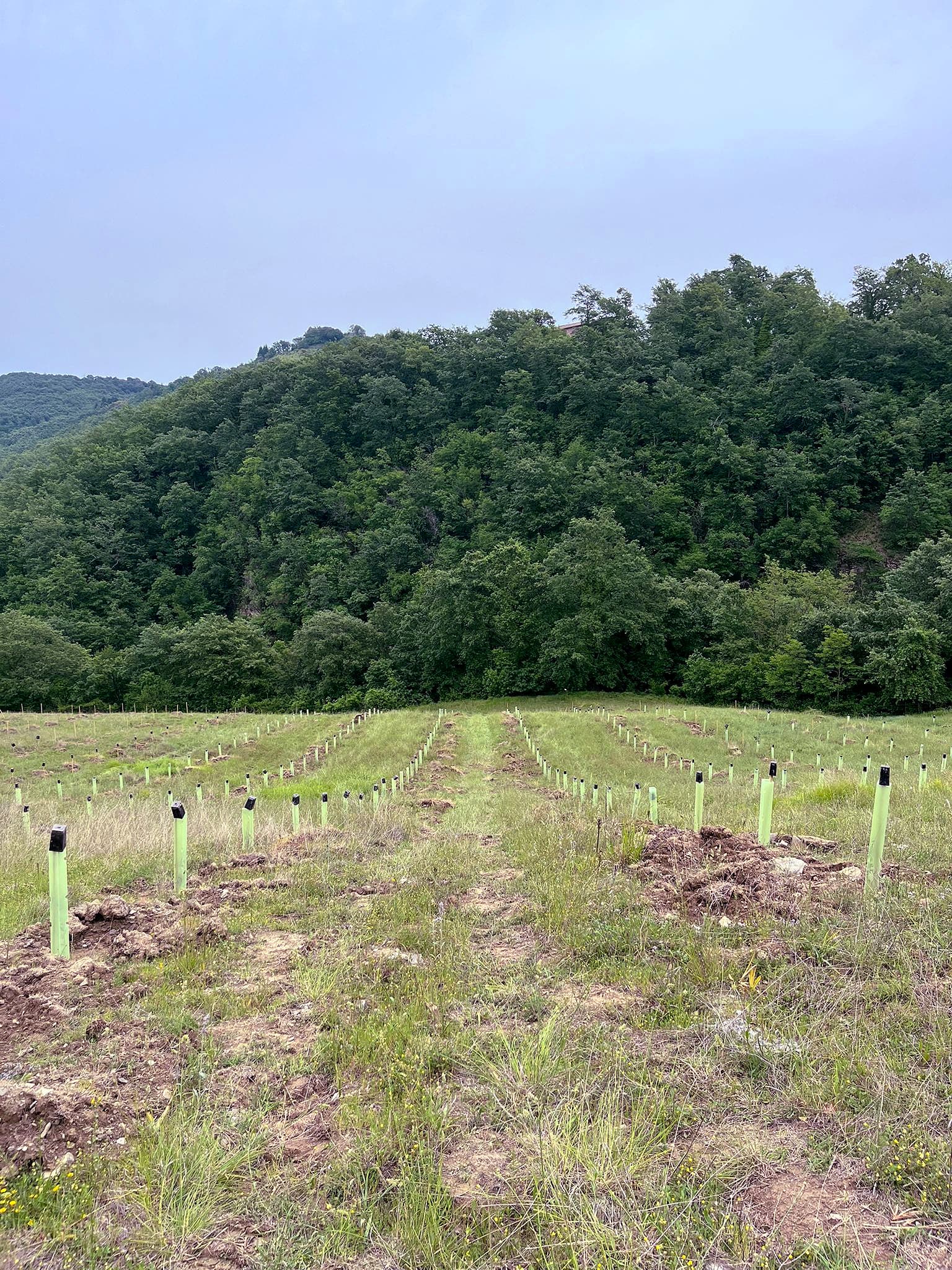
CNR-IBBR researchers identified and isolated over 3,000 unique olive genotypes from 32 countries. Of these, 454 genetically distinct cultivars have been planted in the Domus Olear∑ collection, propagated through grafting.
The working group said identifying resistant and adaptable genotypes could strengthen supply-chain sustainability and protect producer incomes amid changing climatic conditions. Research into secondary metabolites could also support the development of higher-quality olives and oils with greater commercial value.
“We would like to conclude with a heartfelt and profound thank you to all the laboratory staff and field technicians,” Mousavi, Mariotti and Di Murro said.
“The creation of this global collection is the tangible result of an extraordinary synergy, where the rigor of scientific analysis and the dedication to caring for the land have come together,” they added. “Without the passion, expertise and daily commitment of each of them, such a valuable scientific and agronomic achievement for the protection of biodiversity would not have been possible.”