How the Olive Groves of Provence Inspired Van Gogh
During one of the most turbulent periods of his life, Vincent van Gogh turned repeatedly to the olive groves of Provence, creating 15 paintings that rank among his most expressive works.
Among the most renowned figures in Western art, Dutch Post-Impressionist painter Vincent Willem van Gogh (Zundert, March 30, 1853 – Auvers-sur-Oise, July 29, 1890) influenced generations of artists and left an enduring mark on contemporary culture.
Misunderstood and often dismissed during his lifetime, Van Gogh achieved widespread recognition only after his death. Over a career lasting roughly a decade, beginning when he was 27 years old, he produced more than 2,100 artworks, including approximately 860 oil paintings, more than 1,000 drawings and countless sketches.
For Van Gogh, the olive tree was imbued with a deeply personal, consolatory symbolism.
Among his paintings — including the celebrated Sunflowers, The Starry Night, The Bedroom, The Potato Eaters, Wheatfield with Cypresses, Almond Blossom and numerous self-portraits — is a remarkable series devoted to olive trees.
Van Gogh created the works during the final years of his life, an exceptionally prolific phase of his artistic journey, while living in Provence, in southern France.
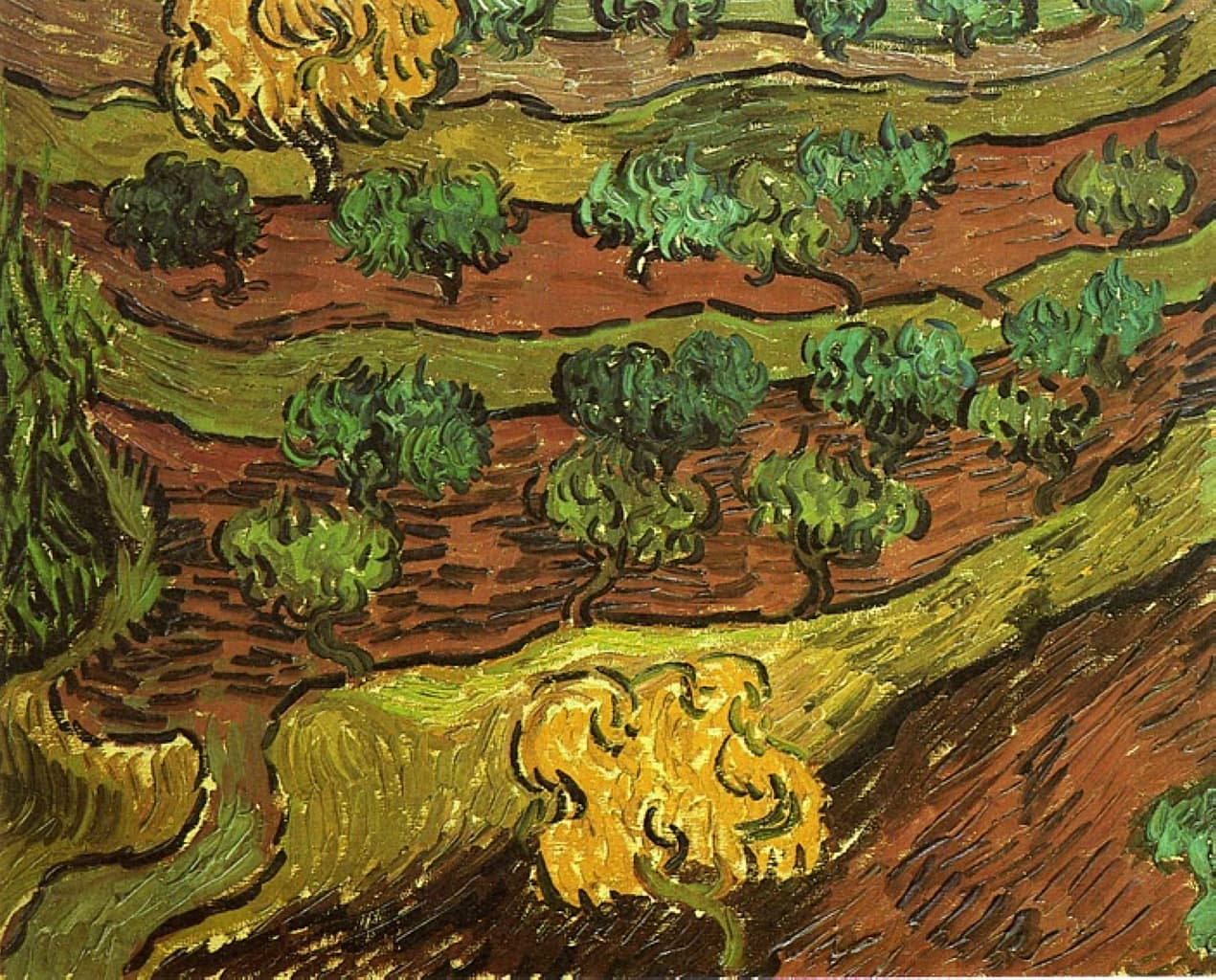
Vincent van Gogh, Olive Trees on a Hillside, 1889, Van Gogh Museum, Amsterdam (Vincent van Gogh Foundation)
In May 1889, after spending 15 months in Arles, Van Gogh voluntarily entered the asylum of Saint-Paul-de-Mausole in Saint-Rémy-de-Provence following a mental health crisis. During his stay, he found inspiration and solace in the surrounding landscape, particularly the region’s widespread olive groves.
Today, the 15 paintings he devoted to the subject are held in major museum collections across Europe and the United States.
Nienke Bakker, curator at the Van Gogh Museum in Amsterdam and a leading expert on the subject, shared her insights into the works with Olive Oil Times.
In 2022, she co-curated the museum’s landmark exhibition, Van Gogh and the Olive Groves, with Nicole R. Myers of the Dallas Museum of Art, reuniting all of Van Gogh’s olive tree paintings in a single exhibition.
“Olive trees are a characteristic feature of the landscape of southern France. Around the mental institution at Saint-Rémy-de-Provence, where Van Gogh stayed for a year, there were numerous olive groves. Fascinated by the whimsical shapes of the olive trees and the effect of the sunlight on the color of the foliage, he painted them in different seasons and at different times of day,” Bakker told Olive Oil Times.
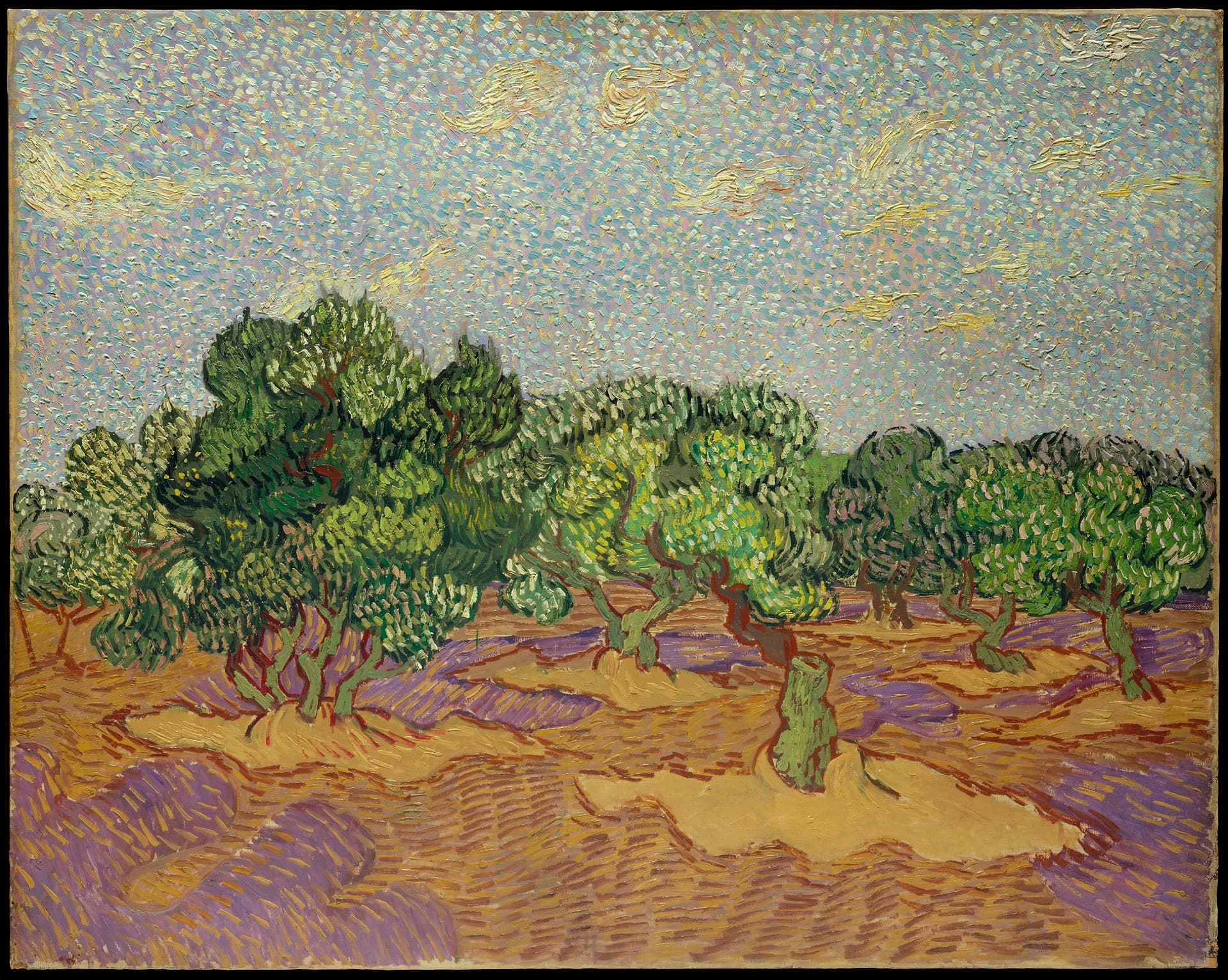
Vincent van Gogh, Olive Trees, 1889, The Metropolitan Museum of Art, New York
“In the fifteen paintings of olive groves that he produced between June and December 1889, he experimented extensively with expressive colors, lines and shapes in order to capture the essence of his subject.”
“Van Gogh’s paintings of olive groves were created during a turbulent period of his life, when he was weighed down by profound psychological suffering, yet despite everything displayed an intense drive to work and managed to steer his style in a new direction,” Bakker said.
“His fragile state of mind and the constraints imposed on him by his new environment had radically altered his life. He painted his first olive groves just over a month after arriving in Saint-Rémy, whilst still harboring hopes of recovery.”
“That hope, however, faded after his first, severely depressive and prolonged crisis in the asylum, after which he returned to the subject and concluded it in late autumn with a coherent series of paintings of olive groves.”
For Van Gogh, Bakker said, the trees carried a meaning that extended far beyond the landscape.
“For Van Gogh, the olive tree was imbued with a deeply personal, consolatory symbolism,” she said. “The significance of his paintings of olive groves, which express the profound sense of eternity and the strong bond between humankind and nature that he experienced in the countryside, cannot be viewed in isolation from his mental state and his situation of solitary confinement in the asylum.”
Much of what is known about Van Gogh’s artistic vision and inner world comes from the hundreds of letters he wrote, most of them addressed to his brother Theo.
“Ah, my dear Theo, if you could see the olive trees at this time of year…” he wrote to him from Arles in April 1889. “The old-silver and silver foliage greening up against the blue. And the orangeish plowed soil.”
“It’s something very different from what one thinks of it in the north – it’s a thing of such delicacy – so refined […] that’s to say the murmur of an olive grove has something very intimate, immensely old about it. It’s too beautiful for me to dare paint it or be able to form an idea of it,” Van Gogh concluded, revealing how deeply he was moved by the trees.
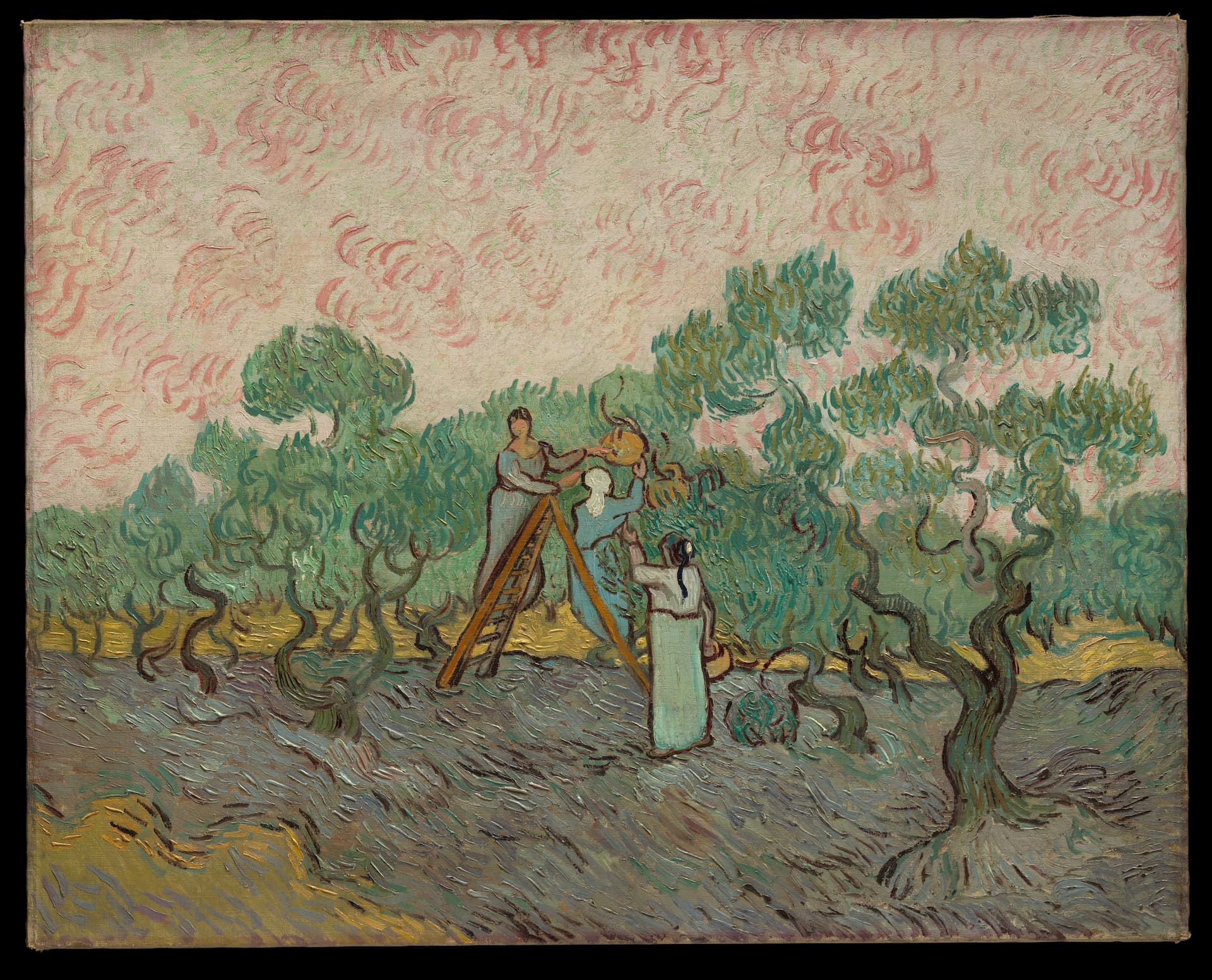
Vincent van Gogh, Women Picking Olives, 1889, The Metropolitan Museum of Art, New York
After moving to Saint-Rémy, he informed his sister Willemien about his work: “I’ve just finished a landscape of an olive grove with grey foliage more or less like that of the willows, their cast shadows violet on the sun-drenched sand.”
He also wrote to his mother, Anna van Gogh-Carbentus, about the “very beautiful fields of olive trees here, which are grey and silvery in leaf like pollard willows.”
Bakker explained that in his olive groves, Van Gogh was striving for “effects of opposition between the changing foliage and the tones of the sky,” as he wrote in a 1890 letter to the artist and critic Joseph Isaäcson.
“Sometimes, too, after a shower, I have seen all the sky coloured in pink and bright orange, which gave an exquisite value and coloration to the silvery greenish greys,” Van Gogh continued. “In there, there were women, also pink, who were picking the fruit.”
The women Van Gogh described inspired three paintings he created in late 1889. With the olive harvest in full swing, he ventured into the groves and set up his easel among the trees, observing laborers as they gathered the fruit.
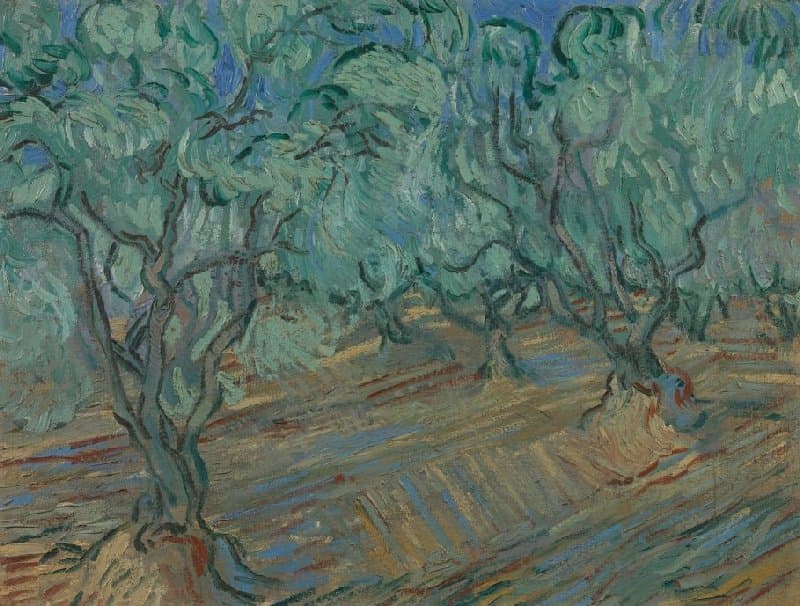
Vincent van Gogh, Olive Grove, 1889, Van Gogh Museum, Amsterdam (Vincent van Gogh Foundation)
Beyond their artistic significance, the paintings offer a glimpse into the agricultural and social realities of the period, documenting the prominent role of women in olive picking. They also depict the size of the trees, which were large enough that ladders were required to reach the upper branches.
“It is this very image of salutary nature and the people who inhabit it that Van Gogh captured in Women Picking Olives,” Bakker said.
“In these three canvases of olive-picking women, Van Gogh sought to evoke a timeless, Arcadian atmosphere, like a ‘vague memory softened by time,’ in which recollections of his youth in the Dutch countryside, his love of the Provençal landscape, and the religious symbolism of the olive tree come together.”
Bakker explained that Van Gogh painted the first version of Women Picking Olives on the spot, in the olive grove. While working on the canvas, he was already considering additional versions of the composition. One was intended for Theo, while another was meant for their mother and sister.
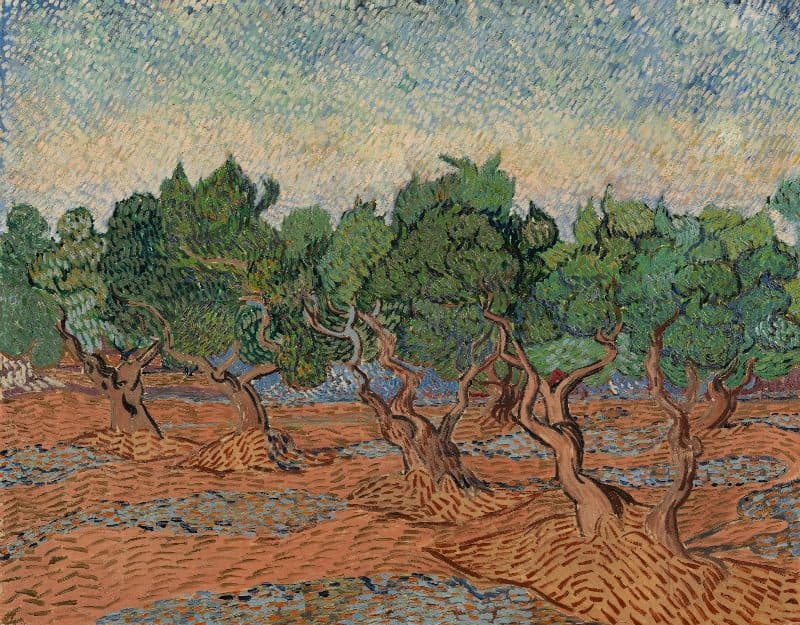
Vincent van Gogh, Olive Grove, 1889, Van Gogh Museum, Amsterdam (Vincent van Gogh Foundation)
“I’ll probably do 2 or three repetitions of it, for in fact it’s the result of a half-dozen studies of olive trees,” he wrote to Theo, “which will hold up . . . with our far-off memories of youth in Holland, and thus I’m treating myself by redoing the olive trees again for our mother and sister.”
Van Gogh preferred painting outdoors despite the inconveniences, finding a deep connection with nature and rural life, as he had expressed in an earlier letter to his brother.
“But just go and sit outdoors, painting on the spot itself!” he wrote. “Then all sorts of things like the following happen – I must have picked a good hundred flies and more off the 4 canvases that you’ll be getting, not to mention dust and sand, etc. […] but for my part, the more I work on it the more peasant life absorbs me.”
For practical reasons, Van Gogh often completed his paintings indoors. Yet much of his work on the olive trees was done in the groves themselves. Scientific analyses of the paintings have revealed tiny fragments of plants, soil particles, and even insect footprints embedded in the paint — tangible traces of the environment in which they were created.
“Sometimes I long so much to do landscape, just as one would for a long walk to refresh oneself, and in all of nature, in trees for instance, I see expression and a soul, as it were,” Van Gogh told Theo in another earlier letter, offering a glimpse of the emotions he would later bring to his depictions of the olive trees of Provence.
Drawing on that sense of awe and the solace he found in the landscape, Van Gogh ultimately created some of the most enduring representations of olive trees in the history of art.
More than a century later, his olive grove paintings remain a profound celebration of the tree’s beauty and symbolism, transcending generations and cultures.