In Maremma, a Family’s Project Grows from Summer Tradition to Global Recognition
The Tuscan olive oil producer KALI combines advanced milling, organic farming and cultivar research to adapt to climate change and growing demand.
Surrounded by Mediterranean scrubland and woods of maritime pines, holm and cork oaks, the KALI olive groves lie inland from the coastal town of Castiglione della Pescaia in the heart of Maremma. At the foot of the Tirli hill, a short distance from the Tyrrhenian coast, the estate was designed to remain in harmony with the surrounding landscape of southern Tuscany.
“Our mission is to seek and maintain a sustainable balance in all our agricultural practices,” co-founder Chiara Gentilini told Olive Oil Times.
Together with her brother, Iacopo and their mother, Anna Maria Sandi, Gentilini manages a farm with 9,000 olive trees spread across 29 hectares. The family produces its flagship extra virgin olive oil, KALI Organic PGI Toscano, from the estate.
The blend, made primarily from Leccino and Frantoio with smaller percentages of Moraiolo and Pendolino, has earned the company four consecutive Gold Awards at the NYIOOC World Olive Oil Competition.
The roots of the project stretch back to the siblings’ childhood in Trento, in northern Italy’s Trentino-Alto Adige region, where annual summer trips to the Tuscan coast shaped the family’s connection to Maremma.
“When we were kids, our parents, Anna and Lino, would bring us to the Tuscan coast in the summer,” Gentilini recalled. “This beautiful yearly ritual began almost by chance, since our pediatrician suggested that sea air would help strengthen our health for the winter.”
Over time, the family developed the ambition to own land with olive trees in the area. After years of searching, they acquired a property in 2018 that included 5,000 trees of traditional Tuscan varieties.
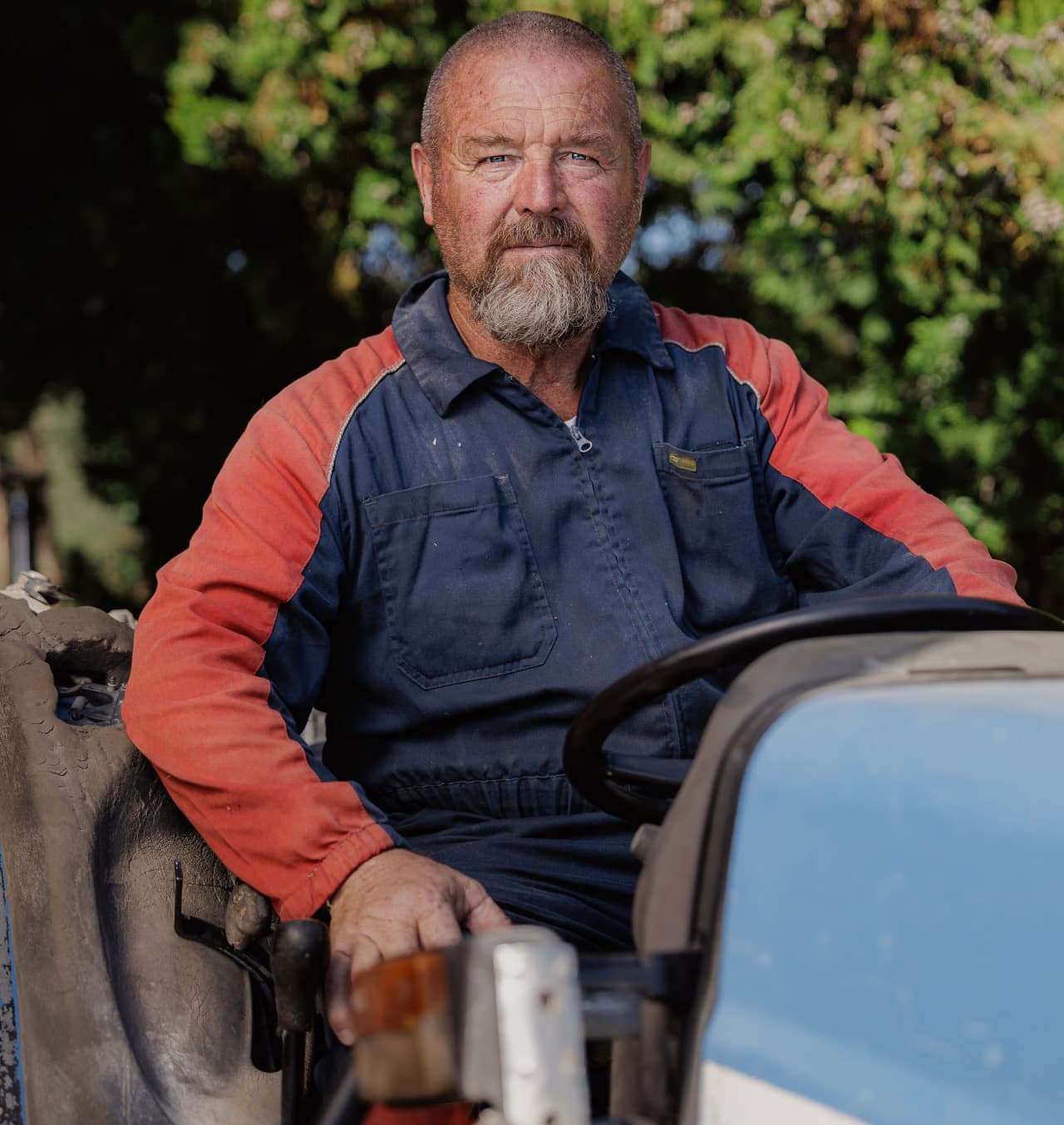
Michele Marignoni is in charge of the field operations at the KALI farm.
“We immediately began producing our olive oil while initiating the farm’s conversion to organic cultivation,” Gentilini said.
Gentilini, a medical doctor based in Germany, and her brother, a mechanical engineer and robotics professor in the United States, continued to balance their professional careers with the demands of olive farming.
The company’s name, KALI, combines the initials of the family members: K for the hard C in Chiara, A for Anna, L for Lino, and I for Iacopo.
During the COVID period, Anna Maria Sandi relocated from Trento to Castiglione della Pescaia. The move encouraged the family to devote more attention to the estate and, eventually, to install a state-of-the-art Mori-Tem mill on the property.
“Having our own facility allowed us to oversee every stage of production through extraction,” Gentilini said. “We set out to create a top-tier oil with a high polyphenol content.”
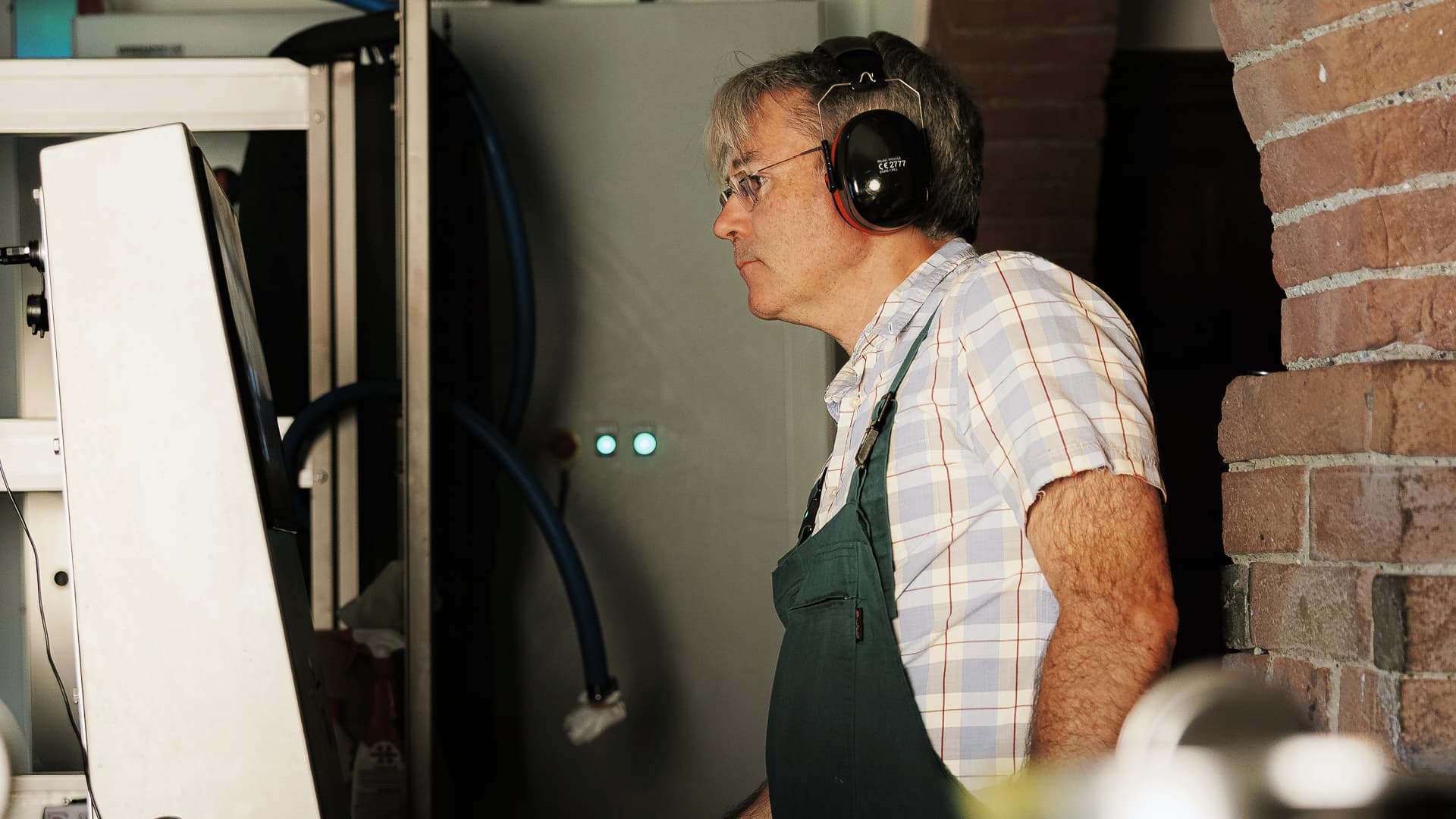
Iacopo Gentilini oversees milling operations at the company’s facility, which is equipped with state-of-the-art Mori-Tem system.
She said her brother’s engineering background and her medical training helped shape a production philosophy focused on both sensory quality and the oil’s nutraceutical properties.
Over the years, the family expanded the estate by acquiring nearby neglected orchards, many of which had been abandoned due to a lack of generational turnover.
The company has also broadened its experimentation with olive varieties, producing monovarietal oils from cultivars such as Cipressino, Maurino, Tosca and Diana.
“We aim to assess the performance of multiple varieties in the context of climate change,” Gentilini said. “This is an issue that calls for continuous research.”
She added that a sustainability-driven approach remains central to the company’s philosophy. Olive leaves and pomace are reused as fertilizer, solar panels are being installed, and electric vehicles are used for transportation on the estate.
An artificial lake stores rainwater for emergency irrigation, supporting not only the olive groves but also additional crops including einkorn wheat, blueberries, peaches and apricots.
Beyond farming, the family has expanded into hospitality with an agritourism operation featuring apartments surrounded by olive groves.
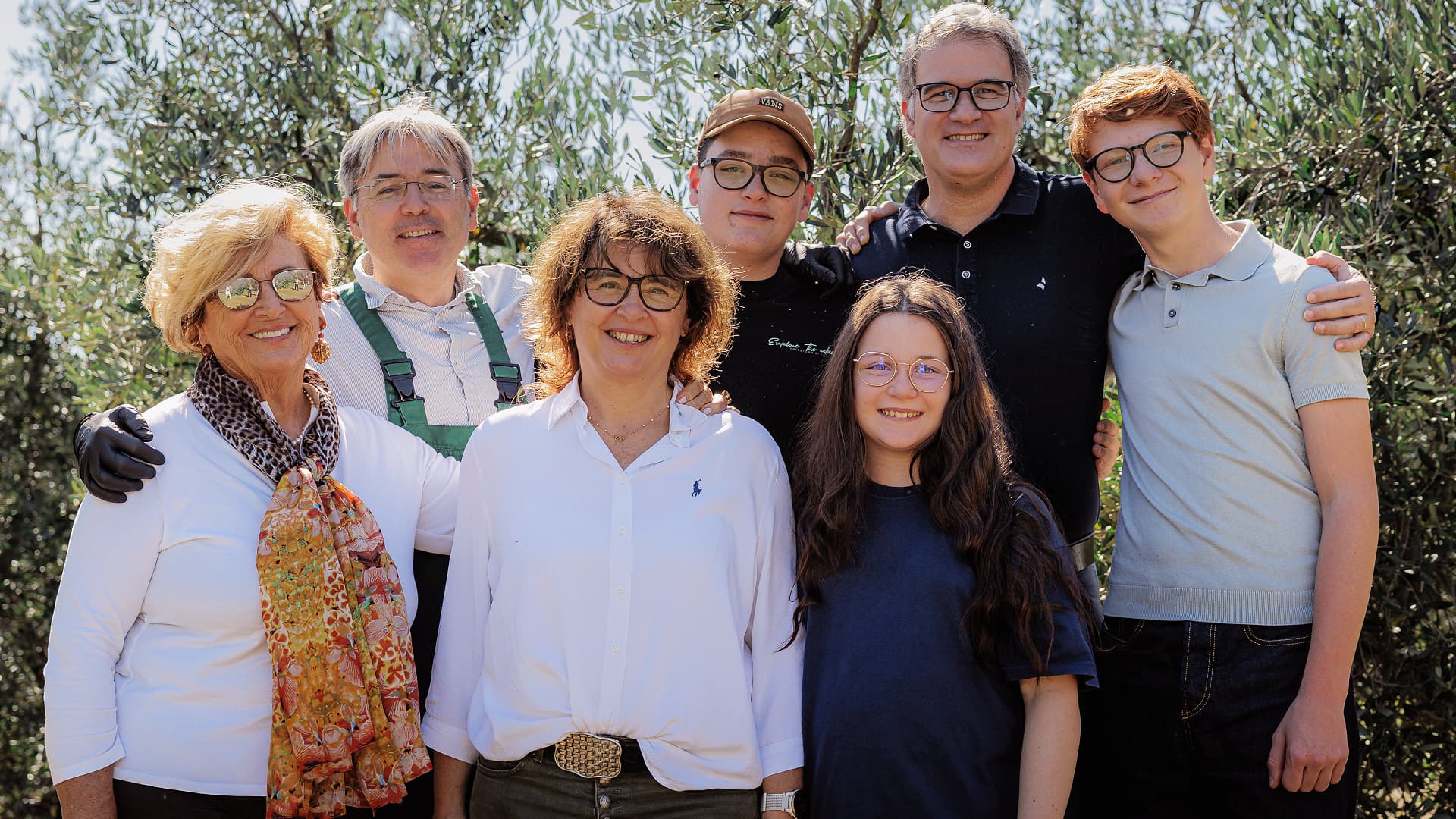
Anna Maria Sandi, Iacopo Gentilini and Chiara Gentilini, together with Chiara’s husband Damiani Violi and their children at the KALI estate in Castiglione della Pescaia, Tuscany.
“The great results we are achieving are the fruit of real teamwork,” Gentilini said, crediting collaborators Michele Marignoni and Edoardo Marignoni along with a small team of workers who manage field operations, accounting and shipping.
The company recently added another 2,000 olive trees near the hamlet of Vetulonia, an area known for its ties to the ancient Etruscan civilization.
“We love this land, which has a deep connection with the Etruscan civilization,” Gentilini said. “The labels of our monovarietals feature the initial of each cultivar written in the corresponding letter of the Etruscan alphabet.”
Today, about half of the company’s production is exported to the United States, while the remainder is sold primarily in Germany and Northern Europe.
“The world of olive oil is truly fascinating,” Gentilini added. “The work is complex and comes with many challenges, especially in these recent years marked by global pressures, but the satisfaction it brings is enormous.”