Italy’s Organic Food Market Nears €7 Billion as Demand Outpaces Supply
A new report says organic is expanding in Italy, but organic extra virgin olive oil remains a niche.
The value of the organic food market in Italy reached €6.9 billion in 2025, a 6.2 percent increase compared to 2024, according to the latest SANA Food/Nomisma report. Exports of Italian organic food rose 174 percent over the last decade, reaching €3.9 billion in 2024.
We are stewards of our olive grove. It was here before us and it will be here after us. Organic farming is part of that responsibility.
Organic consumption outside the home is also expanding. Spending in bars, restaurants and other non-domestic settings now represents 20 percent of the sector’s total value, with extra virgin olive oil among the organic ingredients most commonly used in out-of-home dining.
At the household level, large retailers account for about 64 percent of organic food sales. Specialized organic-only retailers represent 20 percent of sales and posted 7.5 percent year-over-year growth.
In modern large retail, organic products continued to outperform the broader food market in 2025, increasing 4.9 percent in value compared to 2.9 percent for the total food market. Organic volumes rose 3.6 percent, versus 0.8 percent overall.
Even so, only 25 percent of retailers expanded their organic assortments by at least 2 percent. The report suggests growth is being driven more by faster turnover and wider consumer penetration than by meaningful increases in shelf space.
The report found that most consumers buy organic because they see it as a health-boosting, ethical and sustainable choice. Bars and restaurants, meanwhile, are more likely to buy organic to position their offer as premium and appeal to customers seeking healthier, more sustainable options.
However, the same analysis highlights a persistent information gap. About 75 percent of bars and restaurants said they lack sufficient details about organic products, including their origin, production methods, and impacts on the environment, human, and animal health.
That gap appears to shape how organic is presented to diners. While 86 percent of bars and restaurants said they use at least one organic ingredient, it is often not communicated to the public, including on menus.
Rising awareness also does not always translate into purchases, even for staples such as extra virgin olive oil.
“Organic olive oil is still a niche, and the real issue is education. Many consumers don’t fully understand what organic truly means, or why it costs more,” Stefano Zenezini, co-owner of the organic, multi-awarded Le Clarisse, told Olive Oil Times.
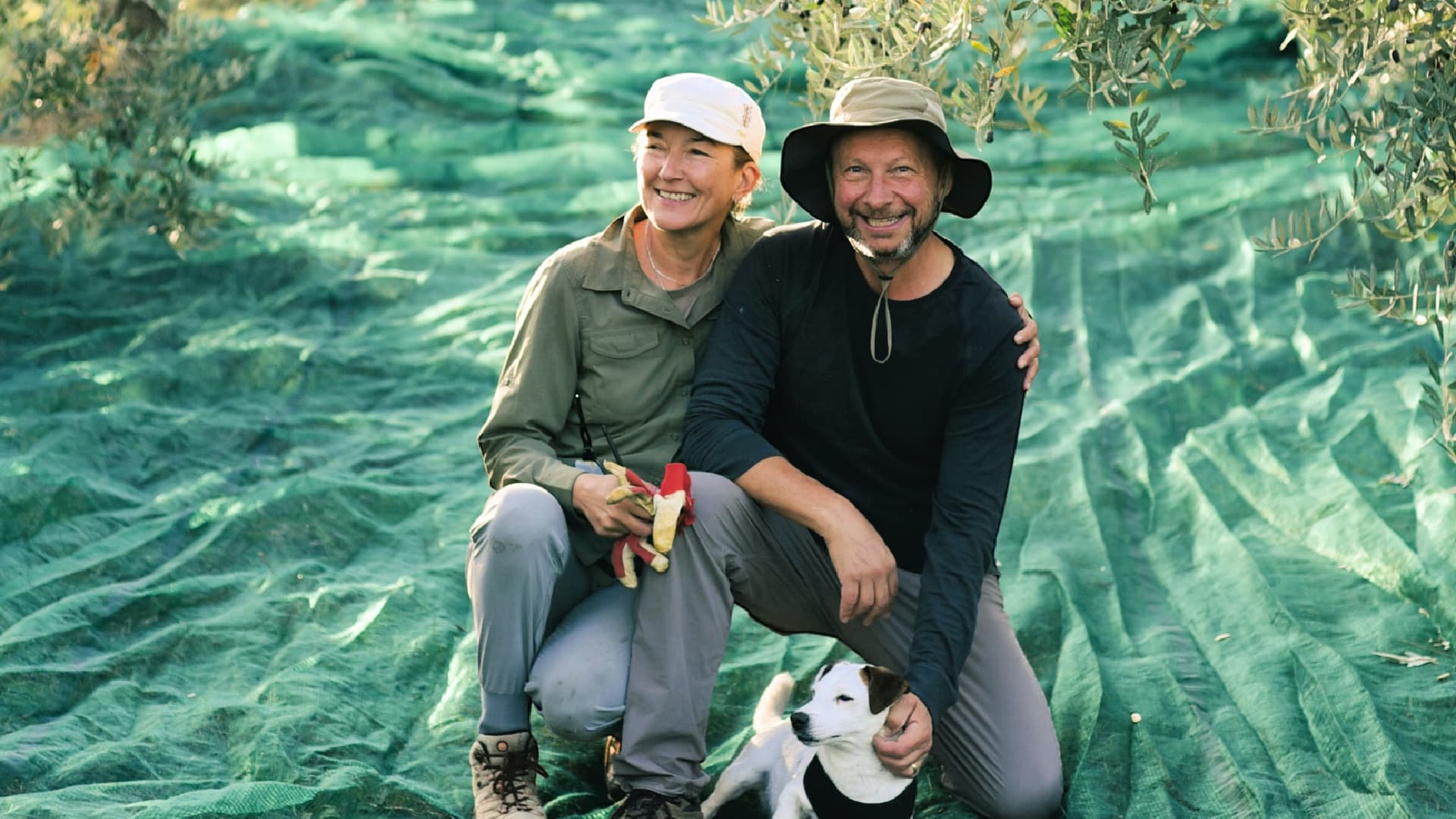
Stefano and Laurence Zenezini
“Some people say organic should be priced less, because it means you do less in the field… In reality, organic means you do more,” he added, citing repeated kaolin treatments after rain, hand pruning and efforts to avoid soil compaction, as well as certification and administrative costs and lower yields linked to early harvest and organic practices. “Organic high-quality extra virgin olive oil, full of polyphenols and delicious, is mathematically more expensive.”
According to the report, organic products — especially olive oil, wine, pasta and tomatoes — are increasingly shaping Italian families’ choices. In 2025, 93 percent of Italy’s 24 million families bought organic food at least once, up from 53 percent in 2014.
Regular purchasing remains more concentrated. Slightly more than half of families buy organic food routinely, and about 66 percent of sales are made by just 20 percent of households.
Within olive oil, the report estimates that organic accounts for 5.7 percent of extra virgin olive oil sales. In large retail alone, organic extra virgin olive oil sales totaled €70.5 million in 2025.
Price remains a central hurdle for producers and retailers. Organic food prices are perceived as “high” by 64 percent of bar and restaurant owners, and many operators said it can be difficult to explain the practical differences between conventional and organic products.
“For us, organic is not a marketing choice. It is a principle,” Zenezini said. “Olive oil is something you use every single day, several times a day. It has to be good for you, not just good in taste.”
He added that consistent communication helps build trust. “Eighty percent of our oil is pre-sold. People trust us because they know the olives come only from our farm, and because we never compromise on how we produce,” he said.
The report also flagged competition from “Km 0” offers, a popular shorthand for local foods. Some operators said it can be difficult to communicate the value of non-local organic products to customers who prioritize proximity.
FederBio, the association of organic food producers, said the educational gap could be addressed in part by the proposed “Organic Made in Italy” seal. If adopted, supporters say the label could link certified sustainability with local biodiversity and traditional products while boosting trust, traceability and recognition of Italian organic food.
Maria Grazia Mammucchini, president of FederBio, said cultivated organic areas and consumption are expanding, pointing to a sector in good health. However, she warned that demand is now growing faster than production and should be monitored to ensure growth creates value for domestic producers rather than increasing imports.
For Zenezini, organic farming is ultimately about stewardship rather than trend-following. “We are not here just to produce olive oil for one season,” he said. “We are stewards of our olive grove. It was here before us and it will be here after us. Organic farming is part of that responsibility — to leave the land better than we found it and to pass it on to the next generation.”
Looking more broadly, he said he sees a new generation pushing the shift forward. “Across Europe I see many young farmers who genuinely want to produce food that is good for people and good for the environment,” Zenezini concluded. “There is a very advanced culture growing around this, but it requires education, coherence and the courage to value quality properly.”