China’s Olive Oil Sector Alleviates Poverty but Struggles to Compete
China’s olive oil sector has expanded rapidly with strong government backing, but experts say heavy subsidies and state control have limited efficiency, profitability and global competitiveness.
This is the sixth in a series of reports on the evolution of China’s olive oil industry.
China’s olive oil sector has come a long way since the country’s first olive trees were planted in 1964, when communist regimes in Albania and China sought to strengthen ties while rebuking the Soviet Union, with which both countries were in political and ideological conflict.
There is little incentive to improve efficiency or cut costs, regardless of official rhetoric at olive oil conferences.
While the death of Enver Hoxha ushered in a new era of democracy in Albania and allowed market forces to reshape its olive oil industry, all levels of the Chinese government have tightened their grip on the sector over the past five decades.
Today, tens of thousands of hectares of olive groves sprawl across roughly half a dozen Chinese provinces. However, China’s command economy has distorted the olive oil market, leaving the industry largely unviable without substantial state support.
A former finance ministry official told Olive Oil Times that creating rural jobs in marginal areas to alleviate poverty is the primary objective of olive farming, with productivity and profitability ranking lower among policy priorities.
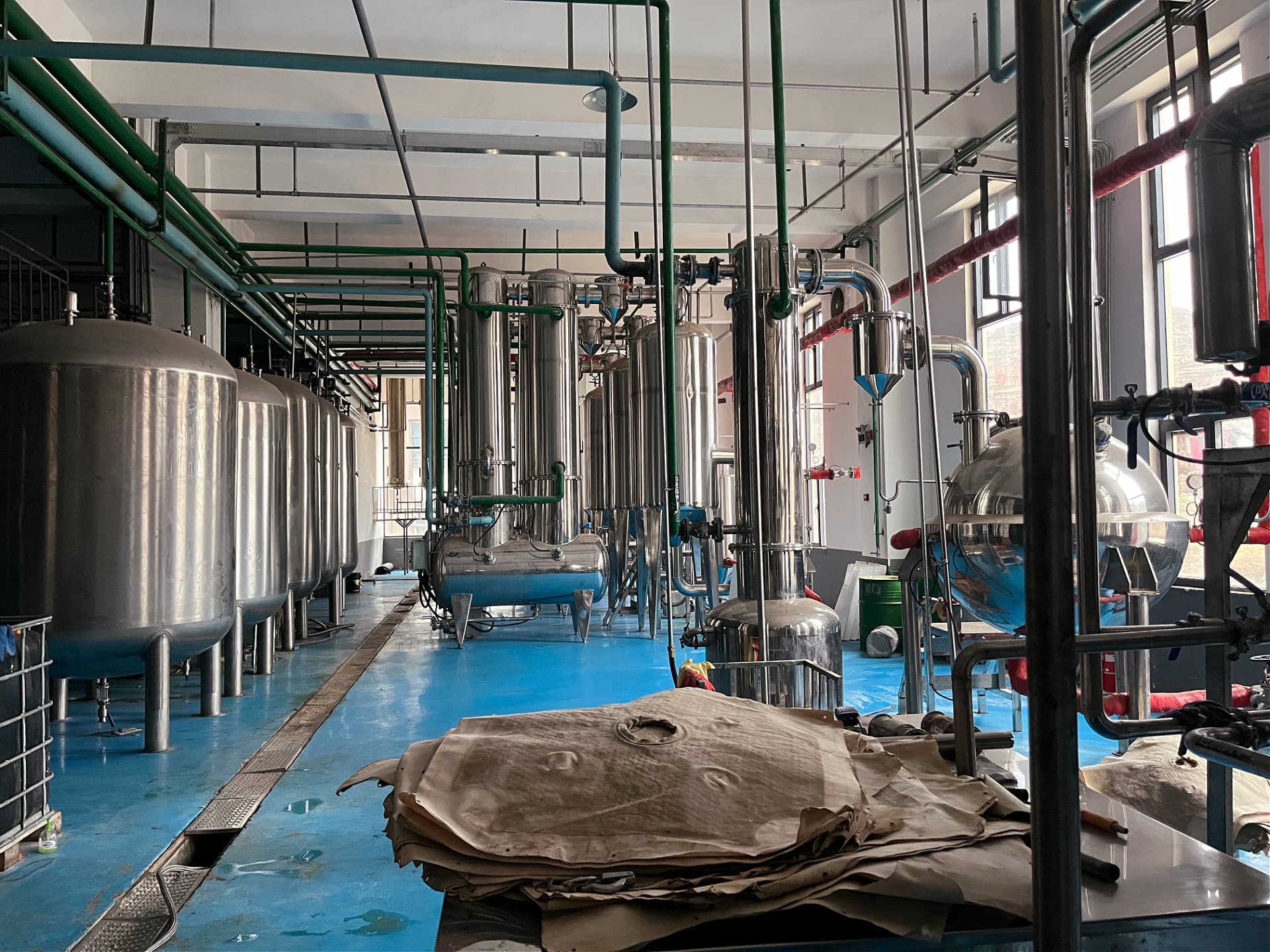
An abandoned olive pomace oil refinery north of Longnan. (Photo: Daniel Dawson)
Government data illustrate this approach. In the Longnan district of Gansu province, China’s answer to Jaén, the olive oil industry is estimated to generate 4 billion Renminbi (€485 million) in value, directly benefiting about 400,000 residents.
In Hubei province’s Shiyan district, olive growing was a lifeline for residents of Yunyang after the city was relocated to make way for dams and water infrastructure supplying Beijing.
Despite these achievements, international experts broadly agree that China’s olive oil sector remains inefficient and unprofitable, with many groves poorly managed.
The most “successful” companies sell nearly all of their olive oil to the government or state-controlled enterprises. They also receive generous subsidies, including payments of 1,000 Renminbi per mu (€1,830 per hectare) for planting trees and guaranteed prices for olives purchased from local farmers.
Some well-connected producers additionally benefit from public grants to build state-of-the-art mills and cutting-edge, though often underused, research facilities.
Producers with fewer government ties—acknowledging that virtually all businesses in China maintain some connection to the state—often subsidize olive oil operations through other ventures, such as construction or manufacturing.
“The more fruit we buy from farmers, the more payment we get from the government,” one producer said.
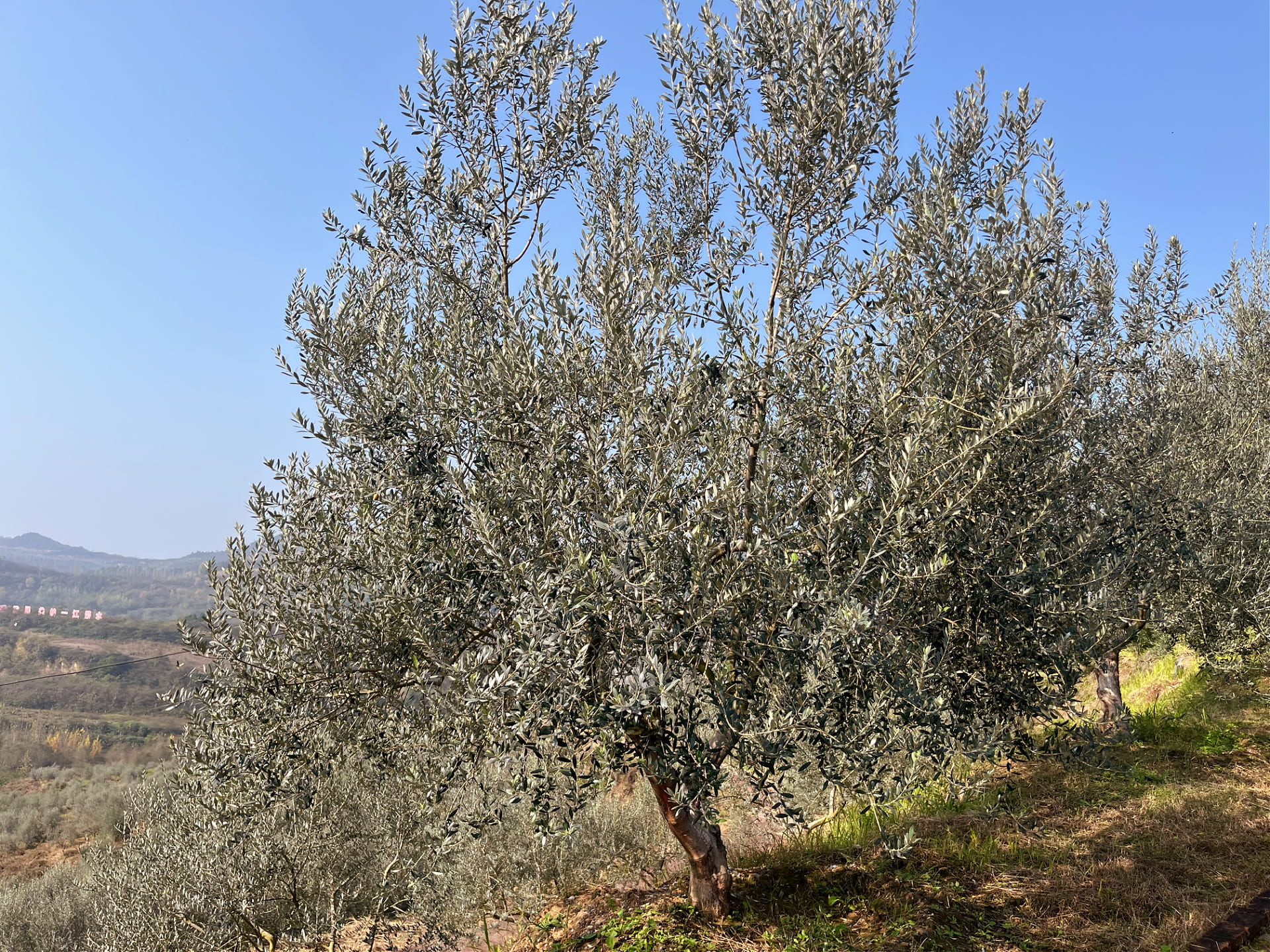
International experts say the lack of effective pruning is holding back the competitiveness of the Chinese olive oil sector. (Photo: Daniel Dawson)
The producer estimated that authorities refund about seven percent of olive purchases. “If we buy 1 million Renminbi (€121,000) of olives, we get 70,000 Renminbi (€8,500) back,” the producer added.
As a result, olive prices ranging from €3 to €9 per kilogram—depending on the region—would leave many farmers in Italy, Greece or Spain envious.
Most Chinese olive oil is then sold directly to the government and state-owned enterprises at prices far exceeding benchmark levels in Jaén, Bari or Chania.
One producer told Olive Oil Times that these state-backed enterprises receive annual budgets for employees to purchase selected goods, including olive oil.
This producer relies on such programs for roughly 90 percent of sales, noting that some companies depend on them entirely.
Consequently, there is little incentive to improve efficiency or cut costs, regardless of official rhetoric at olive oil conferences.
This system contributes to the high retail price of Chinese olive oil compared with imports from major Spanish and Italian bottlers, making market penetration difficult even in affluent coastal cities.
International experts who recently visited China also observed that the extensive safety net dampens motivation to improve agronomic and milling practices.
They cited widespread planting of uncertified olive varieties, which hinders efforts to identify trees best suited to China’s generally wetter, more humid and less sunny climate than the Mediterranean.
Experts also noted that trees are often planted too closely together, encouraging fungal diseases. Inadequate pruning further reduces yields, with trees capable of producing 20 kilograms annually yielding closer to five to ten.
Milling knowledge is similarly uneven. While China produces some of the best extra virgin olive oils in the world, some mills exceed 30 °C during malaxation and decanting, almost certainly disqualifying the oil from the extra virgin category.
Despite these headwinds, public-sector investment remains abundant.
Many mills—often supported by government funding—are equipped with the latest technology from manufacturers such as Pieralisi and Haus. Tank rooms and bottling lines are equally modern, underscoring that capital is rarely a constraint.
Yet not all investments succeed. About 20 minutes north of Longnan stands an empty olive pomace oil refinery.
The massive facility houses advanced equipment that appears barely used.
Officials said the refinery was shuttered because its output failed to meet national standards. Observers expect the machinery to remain idle indefinitely, rendering equipment worth hundreds of thousands—if not millions—of Euros unusable.
China’s strategy of using olive farming to alleviate poverty is widely recognized, and few entering the sector are unaware of the trade-offs inherent in its state-controlled model.
This approach is unlikely to position China as a major olive oil exporter, despite some producers managing to sell to neighboring countries and even to Spain.
Still, following an October gathering in Yunyang, Hubei, where more than 200 officials, researchers and producers discussed ways to improve the sector, questions about the consequences of state control are increasingly being confronted.
International experts argue that adopting certified olive varieties, improving pruning techniques and refining milling practices—alongside selective mechanization and robotics—could raise quality and competitiveness without undermining the sector’s poverty-alleviation goals.