China Bets on Hubei to Lead the Next Phase of Olive Oil Development
Hubei, China’s smallest olive-producing region, is investing heavily in research and olive milling byproducts as it seeks to become a national hub for the industry.
This is the fourth in a series of reports on the evolution of China’s olive oil industry.
YUNYANG, China – Despite being China’s smallest olive oil-producing region, Hubei is emerging as a national hub for olive oil research and byproduct innovation.
The industry is now shifting from past ‘price-based competition’ toward ‘quality-driven’ and ‘brand-driven’ competition, laying a solid foundation for its long-term, sustainable and high-quality development.
The central province, east of Sichuan and on roughly the same latitude as Tunisia, hosts 125,000 mu (8,300 hectares) of olive groves—about six percent of China’s total.
Olive cultivation first succeeded here in 1964, taking root in the rolling hills and along the blue rivers and reservoirs of the northwestern Shiyan district. Today, national and provincial officials see the district as a strategic node for developing China’s olive sector.
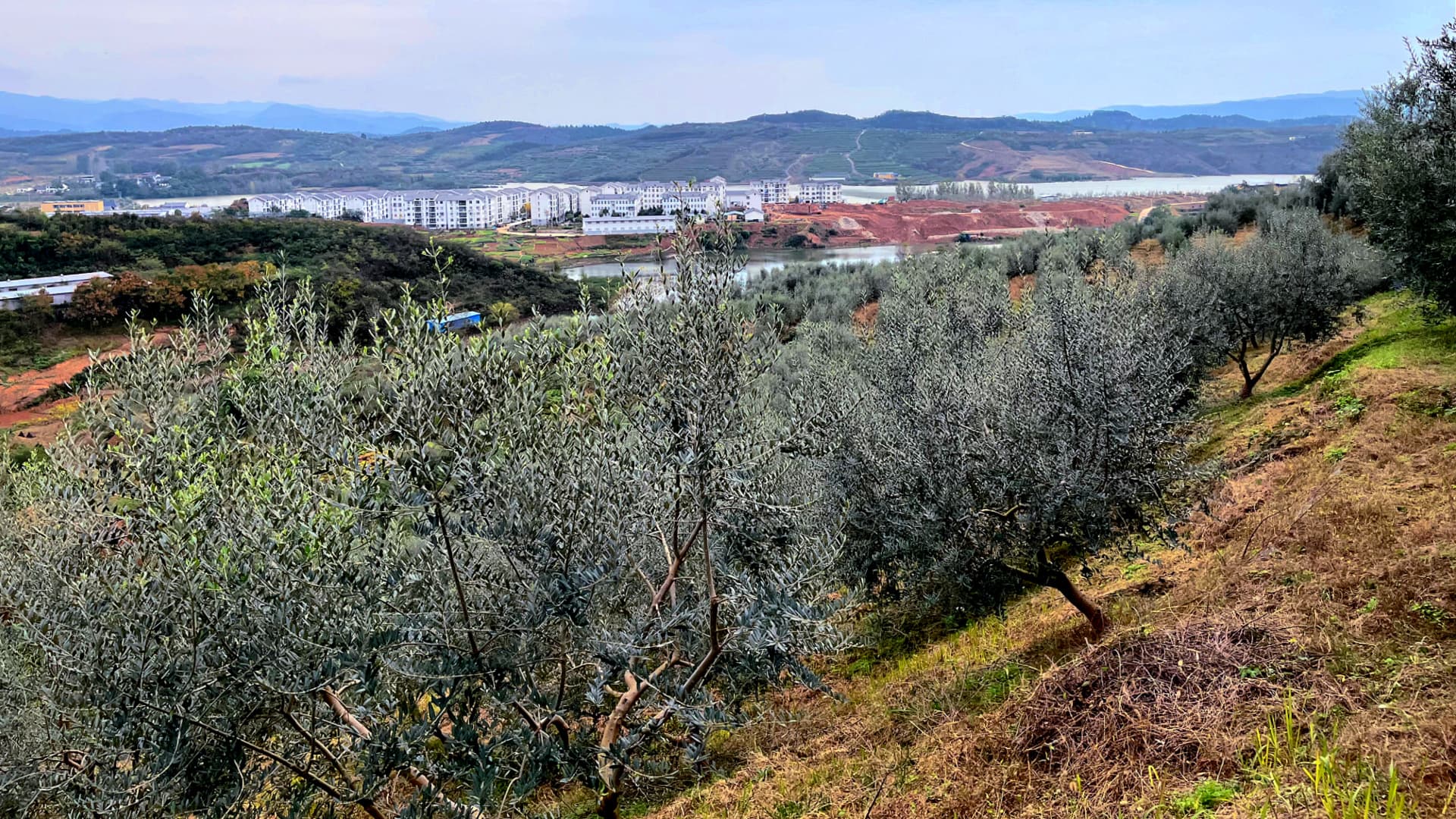
Soon, olives harvested on the steep slopes surrounding Anyang will be taken to a new mill being constructed on the outskirts of the village. (Photo: Daniel Dawson)
Shiyan lies on the central route of the South–North Water Transfer Project, which diverts freshwater 900 kilometers to Beijing and increasingly arid northeastern provinces. To protect this vital water source, authorities are prioritizing sustainable development and discouraging heavy industry.
Officials say expanding olive cultivation offered a lifeline to the district in the mid-2010s after the completion of the Danjiangkou reservoir—the project’s central component—which displaced about 345,000 people.
As in Longnan, the olive sector is increasingly viewed as a key employer. Plans are underway to plant new groves, expand milling capacity and open two olive research centers.
One of these, the Hubei Olive Industry Technology Research Institute, stands atop a hill overlooking the Han River within the complex of Oriental Olive Garden, one of the region’s leading producers.
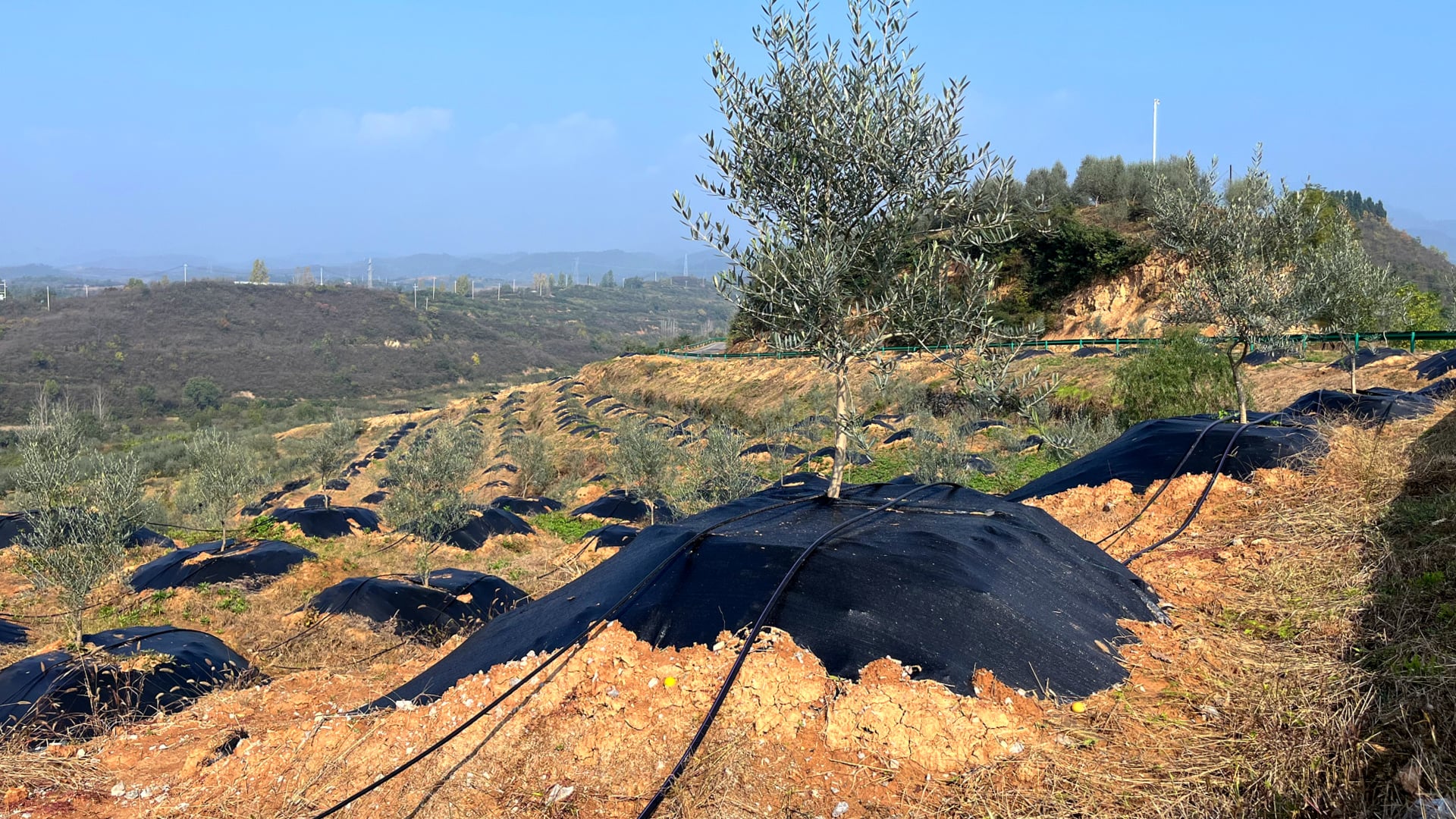
Thousands of hectares of olive trees are being planted across China with producers hoping that new varieties will thrive in the country’s humid olive growing regions. (Photo: Daniel Dawson)
The newly completed three-story facility features offices, meeting rooms and laboratories for cosmetic development and olive oil testing. While the labs remain empty for now, He Dongping, president of the oils and fats section of the Chinese Grain and Oils Association, plans to staff them with PhD candidates from top agricultural universities in Wuhan.
The center’s mission—displayed prominently in its entry hall—includes developing uses for olive leaves, pomace, wastewater and other byproducts. Researchers also aim to build China’s third olive germplasm bank and address the challenges of cultivating olives in the region’s clay soils and humid climate.
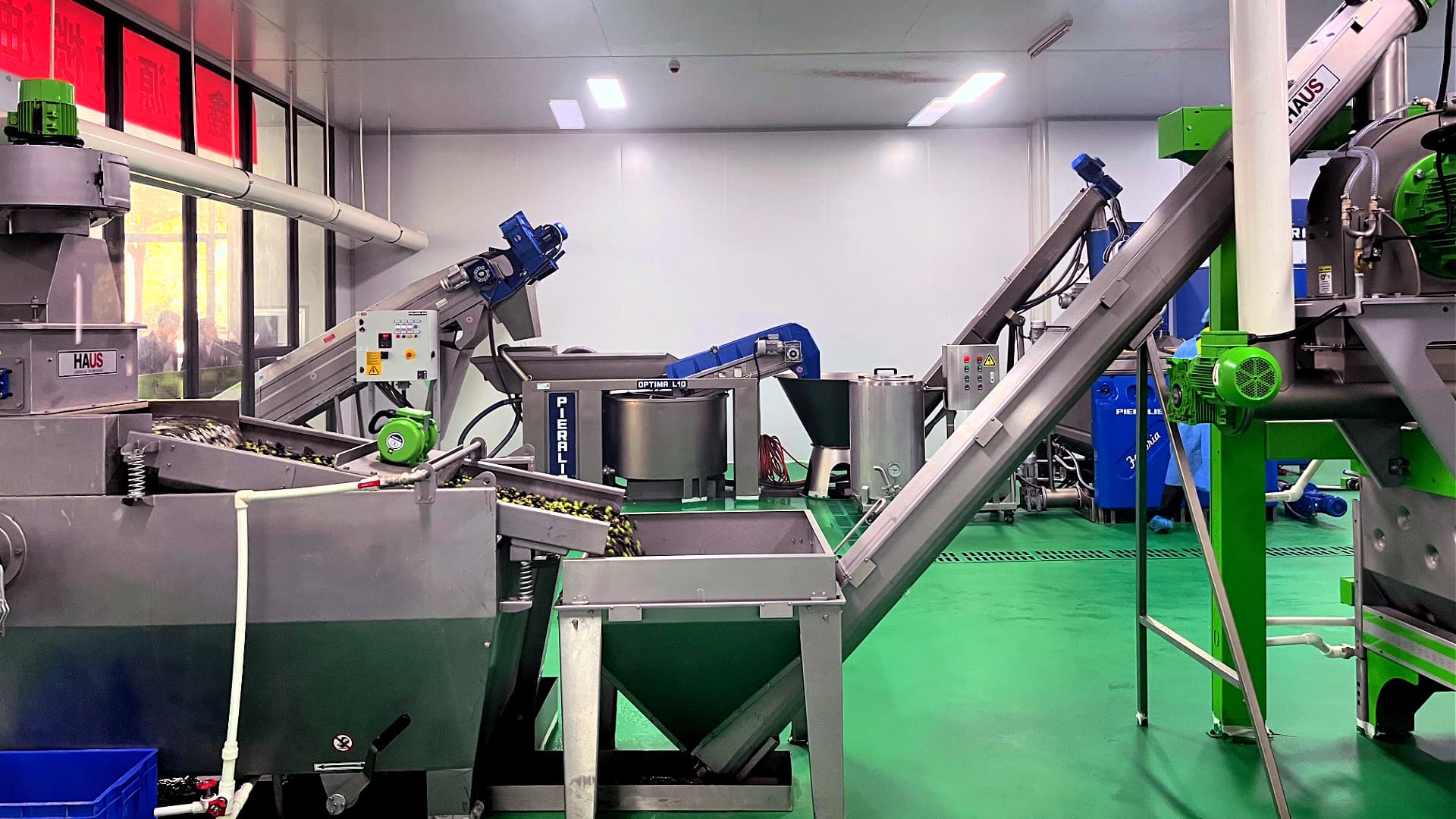
Along with olive oil, companies in the olive sector are increasingly focusing on monetizing olive milling and wastewater byproducts in traditional medicines, cosmetics and other products. (Photo: Daniel Dawson)
“Strengthening research on olive cultivation and olive oil processing can drive technological advancement in agriculture, enhance planting efficiency and product quality, and boost China’s competitiveness in the field of specialty agriculture,” Dongping said.
Researchers from leading Wuhan universities told Olive Oil Times they have already identified 300 components in pomace and wastewater that may have medicinal, cosmetic and industrial value.
One medicine derived from compounds in olive wastewater is undergoing clinical trials for its potential to lower blood sugar levels. Another is in early testing for treating liver disease.
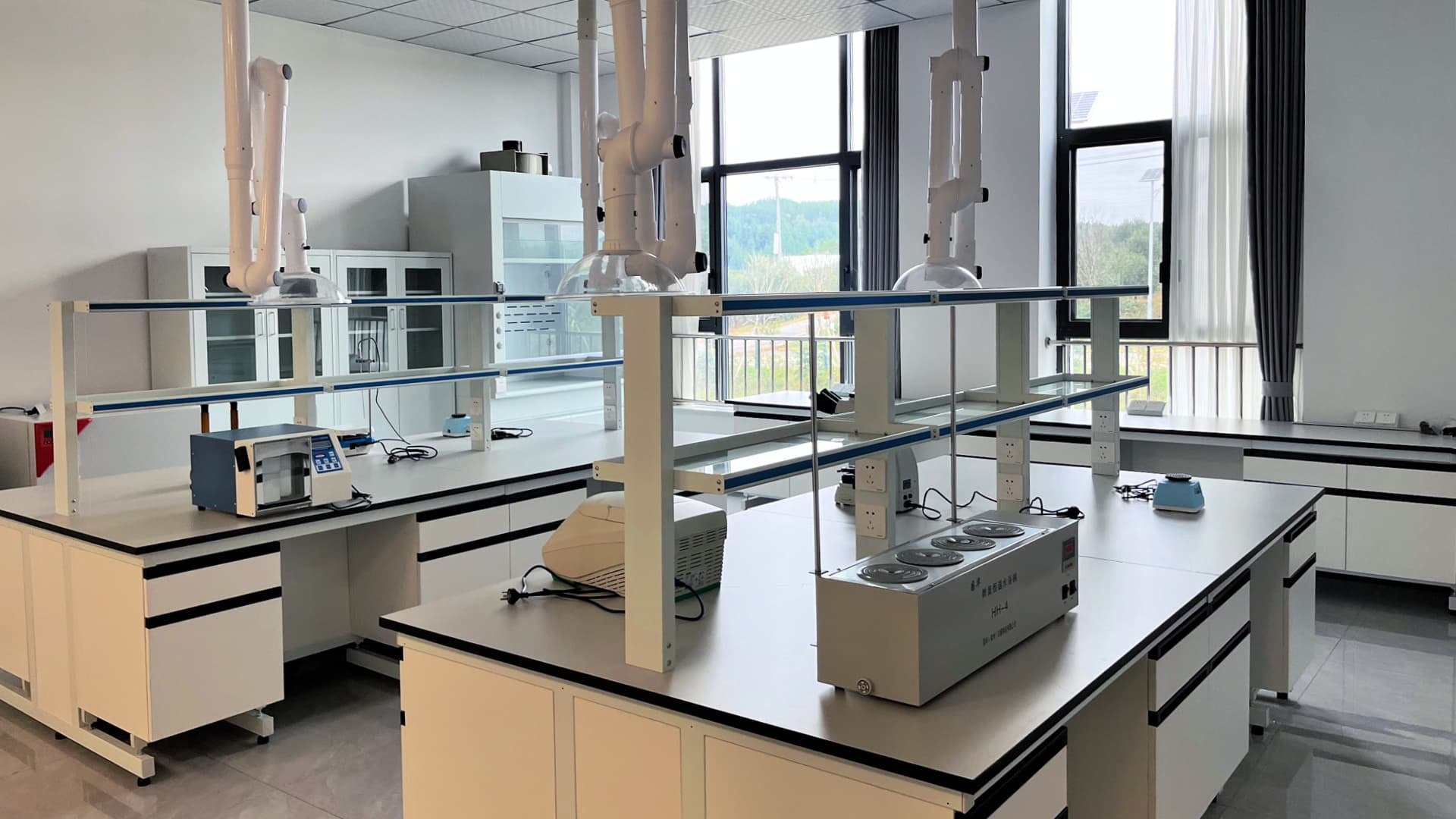
For now, state-of-the-art laboratories in Shiyan sit empty, waiting to be staffed by local PhD students. (Photo: Daniel Dawson)
“We believe that traditional medicine will replace industrial medicine,” a former finance ministry official now involved in the sector said. “We believe olives will bring a healthier lifestyle, and demand for this will increase.”
Alongside extra virgin olive oils made from a mix of international and locally bred varieties, Oriental Olive Garden produces olive leaf infusions, cosmetics and extracts derived from pomace and wastewater components.
The district’s second research center will be developed by Anyang Lake Olive Oil about 13 kilometers east of Oriental Olive Garden, on land between the Han River’s northern bank and the village of Anyang. The complex will include a hotel, a factory to extract polyphenols from pomace, and a modern mill.
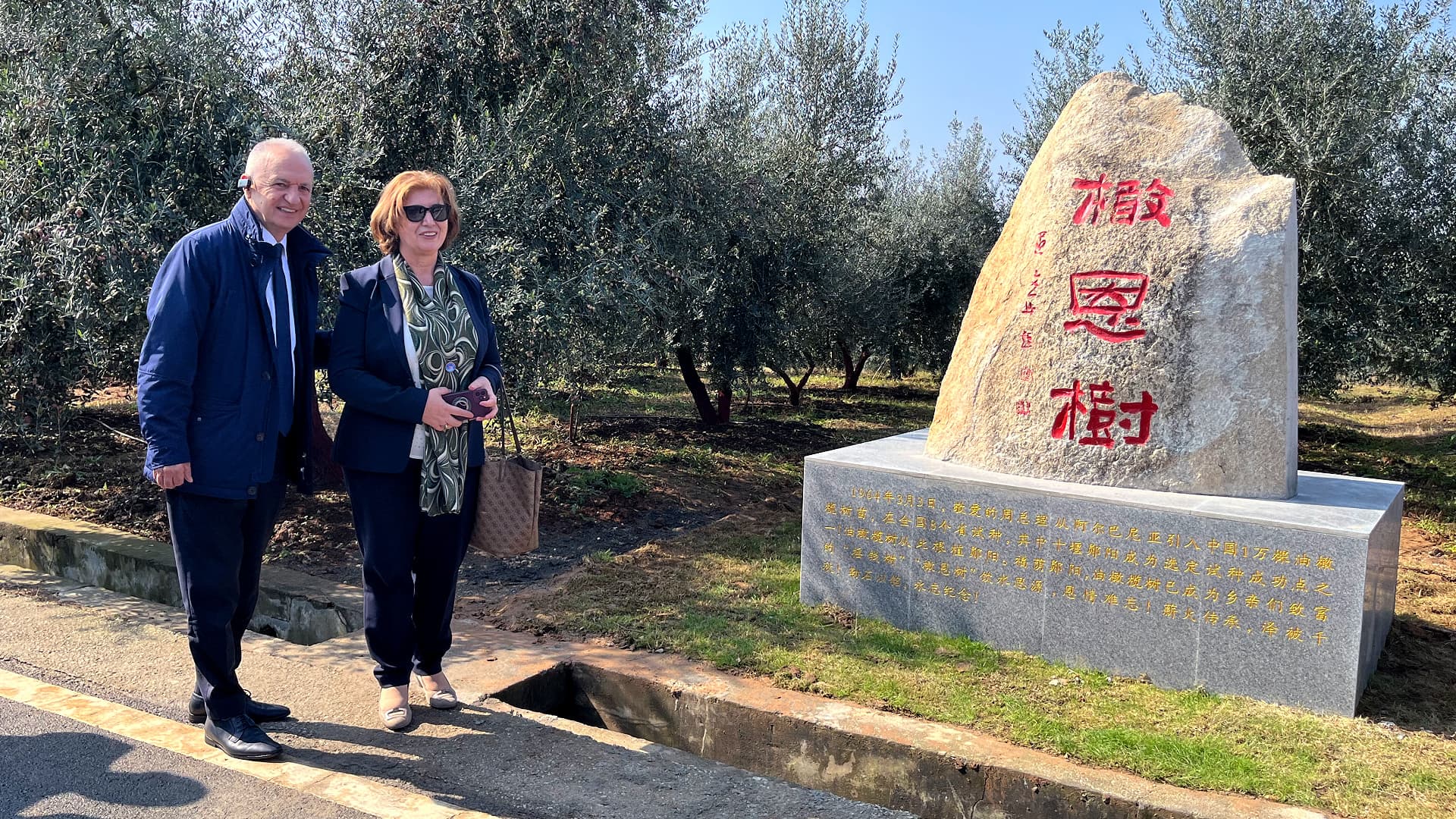
Riza Poda (left), Albania’s ambassador to China, visits one of the 11 sites where Albanian olive tree seedlings were introduced to China in 1964. (Photo: Daniel Dawson)
The 4,500-square-meter mill—designed to process five metric tons of olives per hour—is expected to be completed ahead of the 2026/27 harvest and will form the core of the multi-million-dollar investment.
Although Anyang Lake Olive Oil operates a two-ton-per-hour mill in Zhongyi, Sichuan, it currently sends olives grown in Shiyan to a nearby facility for processing.
The company is also acquiring land to plant 10,000 mu (670 hectares) of olives across Hubei and Sichuan. It now manages 4,800 mu (320 hectares) of Leccino, Arbosana and Coratina in Shiyan, and 4,000 mu (270 hectares) of Coratina in Sichuan.
Once the new groves mature and the mill is operational, the company expects to produce about 50 tons of olive oil annually.
However, significant challenges remain. Densely planted trees are vulnerable to the olive fruit fly and fungal diseases. Steep terrain makes mechanization difficult and labor expensive.
Marketing also presents hurdles. While sales in Shiyan and Hubei are slowly rising, many consumers remain unfamiliar with olive oil and often prefer cheaper imported products.
Anyang Lake’s 500-milliliter blend sells for 180 Renminbi (€22), while its early-harvest Coratina monovarietal—the only one of its kind in China, the company says—costs 288 Renminbi (€35).
To close this gap, the company invests heavily in consumer education, highlighting olive oil’s health benefits on social media to reach younger audiences and build long-term demand.
Despite the obstacles, Dongping praised the efforts of producers such as Oriental Olive Garden and Anyang Lake Olive Oil. He believes China is entering a new phase—one increasingly defined by quality and brand development.
“The industry is now shifting from past ‘price-based competition’ toward ‘quality-driven’ and ‘brand-driven’ competition, laying a solid foundation for its long-term, sustainable and high-quality development,” he said.