How Live Streaming Powers Sales for a Sichuan Olive Oil Producer
Producing organic extra virgin olive oil in the humid climate of northern Sichuan comes with a range of challenges. Social media has proven essential to finding and retaining customers.
This is the second in a series of reports on the evolution of China’s olive oil industry.
LANGZHONG, China – From the 7,000-meter peaks skirting the eastern edge of the Tibetan plateau to the fertile lowlands in the east, Sichuan province is known for its bold cuisine and as the homeland of China’s giant pandas.
It is also emerging as a key player in China’s modest but expanding olive oil sector.
According to Yu Ning, vice president of the olive section of China’s Forestry Economics Association, Sichuan hosts 452,000 mu (30,000 hectares) of olive groves—about one-fifth of China’s total.
The groves follow a north–south corridor through the province, clinging to the rolling hills at the foot of the Tibetan plateau.
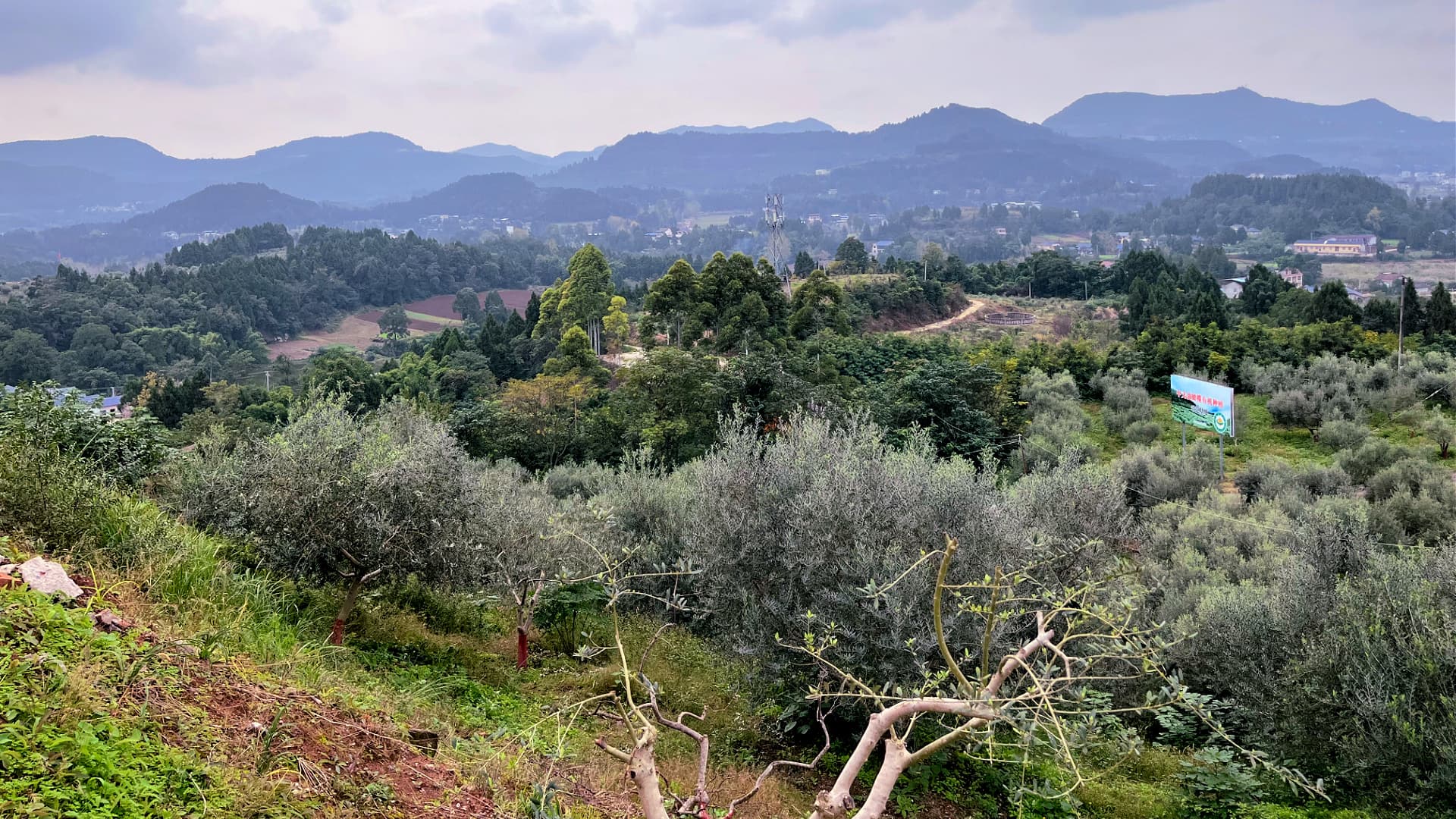
High humidity and steep slopes are the main challenges for producers in the northern reaches of Sichuan province. (Photo: Daniel Dawson)
My journey into this landscape begins in Chengdu, the provincial capital of 21 million people, where I meet the entrepreneurial 20-something Ziyun Jin.
Jin, with shaggy hair, rimless glasses and a chinstrap beard, speaks fluent English after studying visual design in New York City.
As we drive north along Chengdu’s ring roads, his phone chimes every few minutes. “That sound is an online sale,” he says, turning around from the passenger seat with a grin.
We are heading to his family’s farm and mill, Fattoria Zhongyi, in northern Sichuan.
His father, Chongqing Jin—a lean man with a firm handshake and a sharp business sense—entered the olive sector in 2011 after what he describes as an epiphany in Greece.
During a visit to the homeland of Koroneiki, one of the two varieties planted on the family’s 5,600 mu (373 hectares) of groves, he encountered a 3,800-year-old olive tree.
Struck by its longevity and by the similarities he noticed between Greece and Sichuan, he became convinced olive growing was a business that could span generations.
Yet, despite sitting on the same latitude as Tunisia, Sichuan’s climate could not be more different from that of the Mediterranean Basin.
According to research from Sichuan Agricultural University, the province’s olive-growing regions receive 855 to 940 millimeters of rainfall between May and December, and more than 1,000 millimeters annually.
By comparison, Tunisia’s main olive-growing region around Sfax receives only about 200 millimeters of rain in an entire year.
The high humidity in Sichuan provides ideal conditions for olive fruit fly and gloeosporium, posing formidable challenges to producing high-quality extra virgin olive oil.
As a result, Jin stated that the company’s harvest spans approximately eight weeks, from early October to late November.
His phone continues to chime throughout the three-hour drive north to Langzhong.
The historic city draws millions of tourists each year for its preserved architecture and as the birthplace of Zhang Fei, the ancient general venerated for his loyalty and integrity.
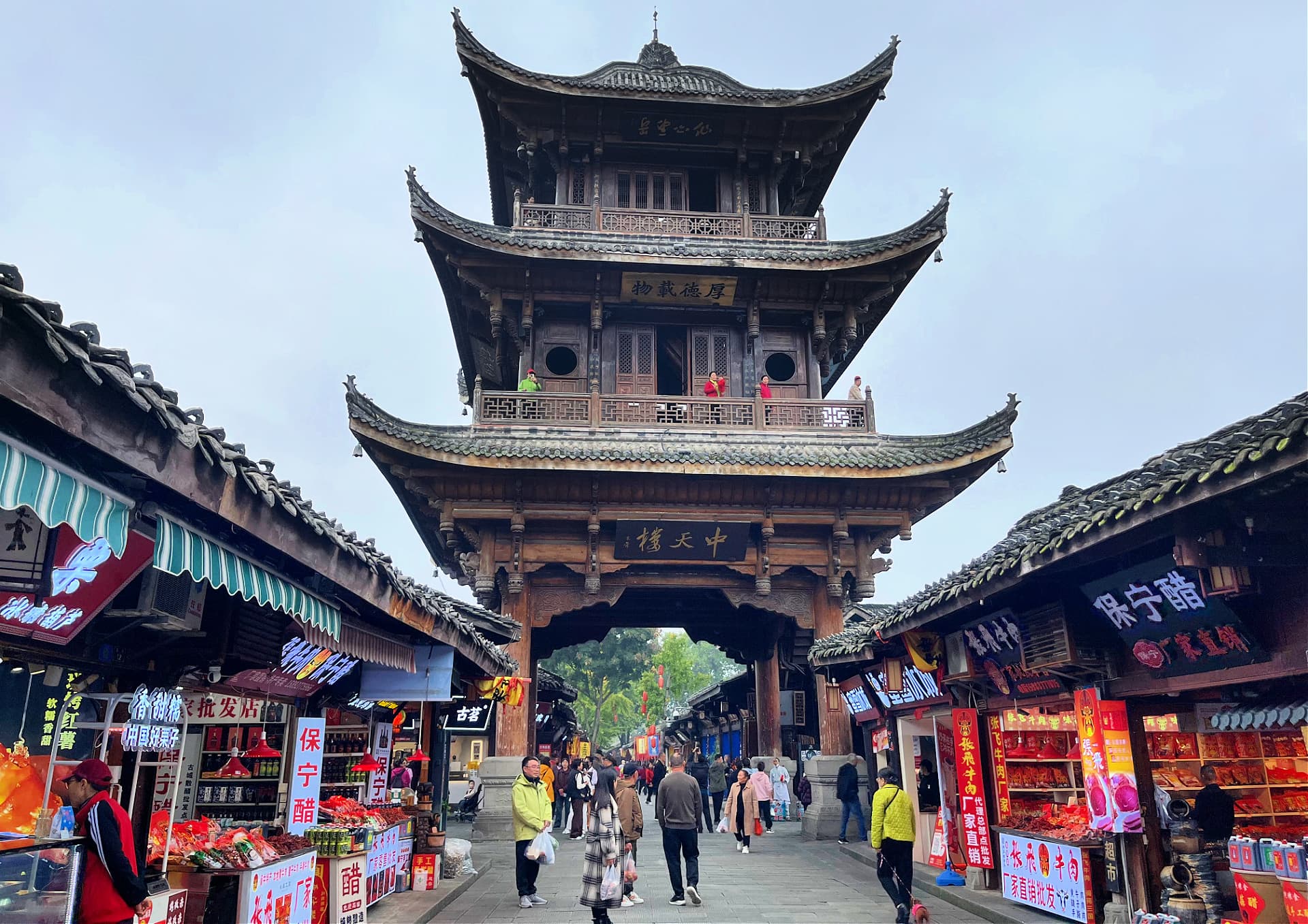
Langzhong is known for being one of China’s best preserved historic cities, dating back to the seventh century. (Photo: Daniel Dawson)
Many visitors stop at the central tomb of Zhang Fei to pray for good fortune. Fattoria Zhongyi takes its name from him—an emblem of moral clarity and commitment to quality that the Jins hope to reflect.
Over a quick lunch at a highway rest stop, Jin reports 17,000 Renminbi (€2,065) in sales since we left Chengdu.
He said nearly all of the company’s olive oil is sold online. State-owned enterprises account for 90 percent of purchases, offering employees stipends to buy products from approved vendors. The remaining 10 percent is sold on the open market.
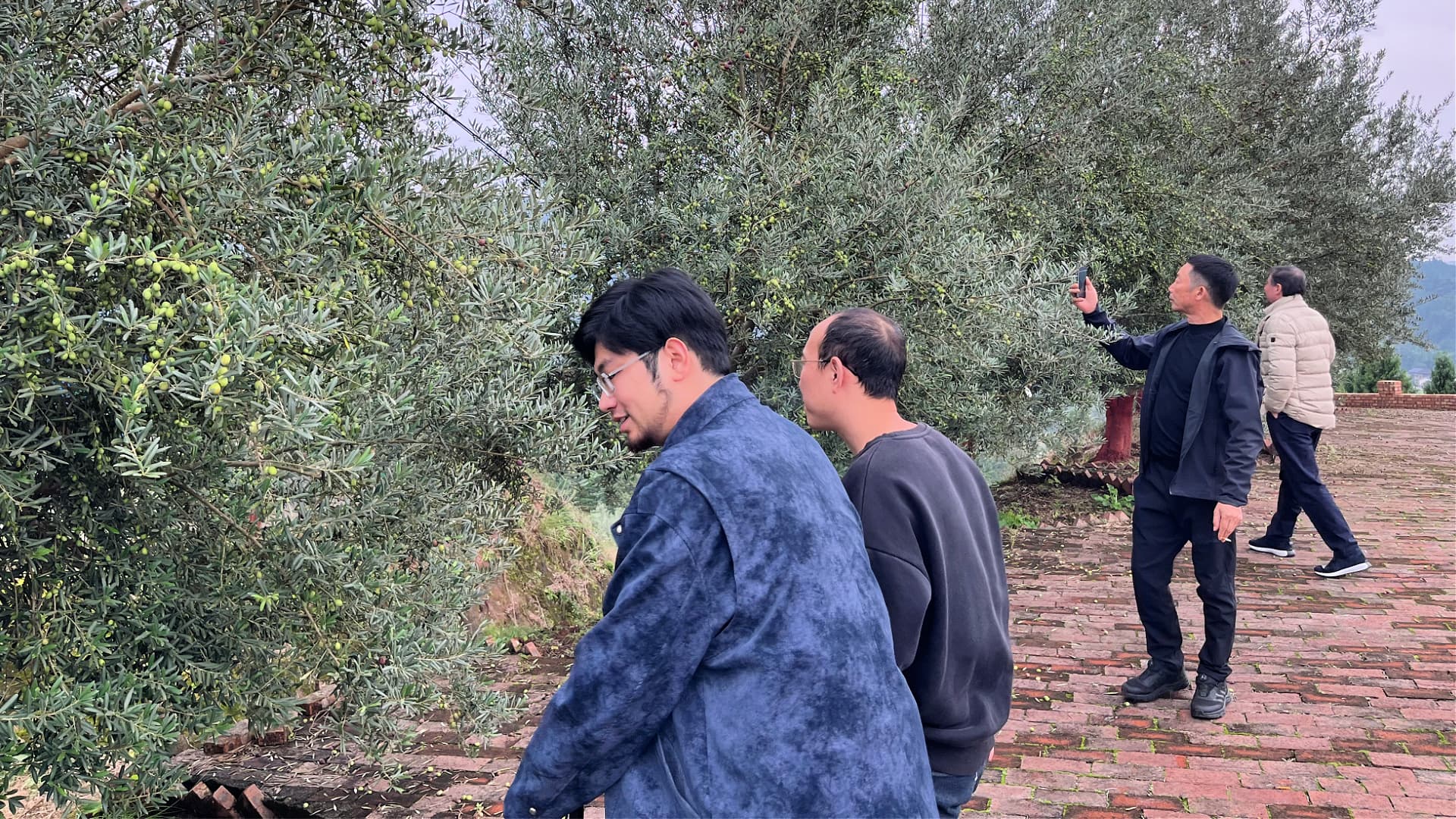
In homage to the origins of the Chinese olive sector, the company planted a row of grafted Arbequina-Kalinjot trees at a scenic outlook in the grove. (Photo: Daniel Dawson)
Most buyers are located in the coastal provinces of Guangdong and Jiangsu, as well as the Shanghai municipal region.
According to the International Olive Council, China consumed an average of 41,000 tons of olive oil annually between 2022 and 2025—growth that has stalled since 2014 but remains nearly triple the volumes from 2006 to 2009.
Ender Gündüz, former head of the IOC’s economy and promotion unit, estimates China has 250 million potential consumers yet to be reached.
Fattoria Zhongyi attracts almost all of its customers through live streaming on Douyin, the Chinese version of TikTok. Jin estimates that 90 percent of its free-market buyers purchase directly through these livestreams; app data show 34 percent return to buy again.

Fattoria Zhongyi has put significant time and effort into selling via live stream, which the companies credits with broadening their customer base across China. (Photo: Daniel Dawson)
The factory sits about 20 minutes from Langzhong’s historic center, surrounded by hills covered with decade-old olive trees.
As we pull into the courtyard—complete with a tea room, offices, showroom, mill and bottling line—a young salesman positions a smartphone on a tripod and starts his six-hour shift.
“He didn’t know anything about olive oil, and now he’s an expert,” Jin says.
The salesman works in five-minute cycles: two minutes describing the product, then three minutes answering questions.
A small live-feed window in the corner of the stream displays the four-ton-per-hour Haus milling line, which operates 24 hours a day during harvest.
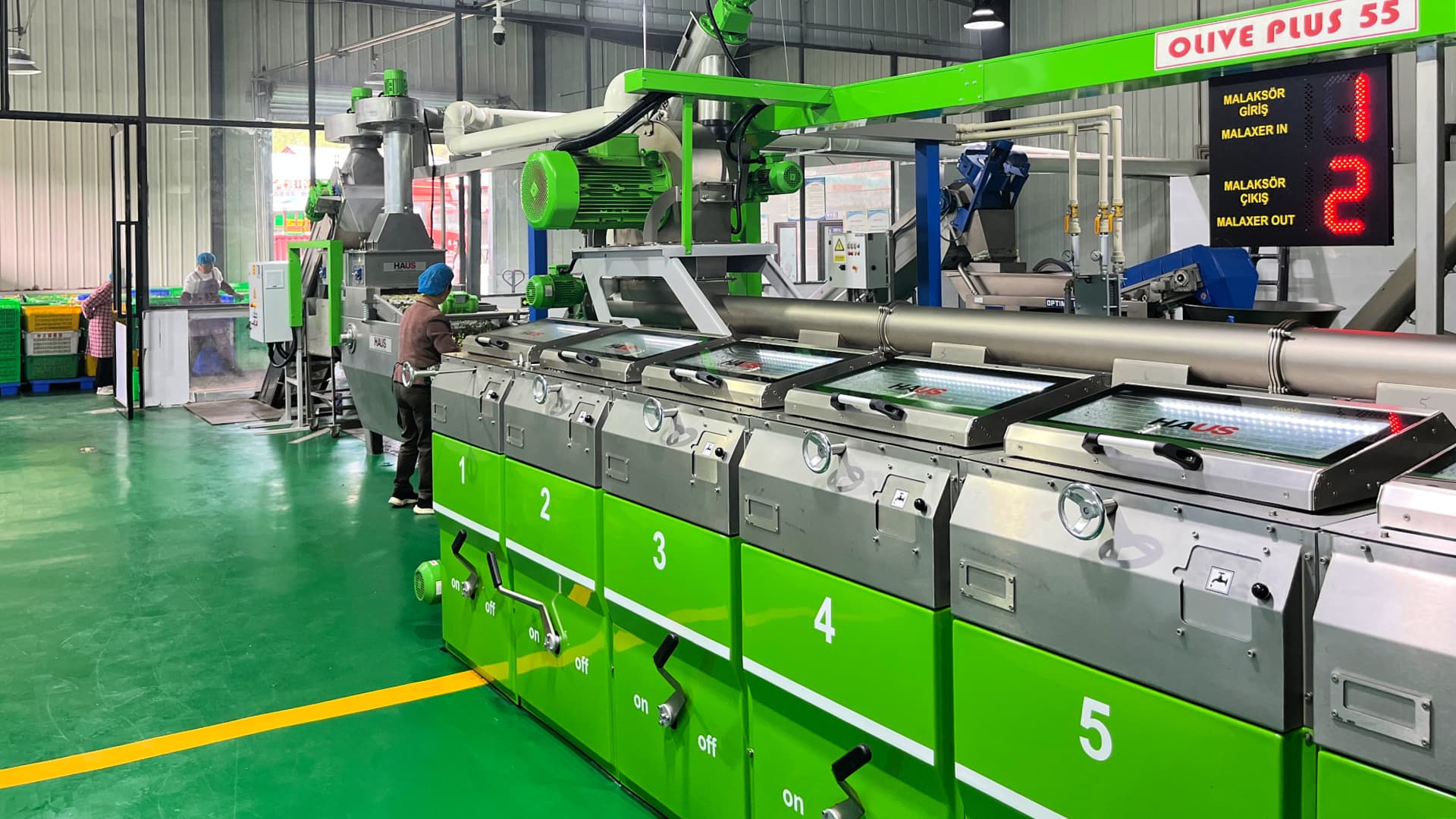
Jin anticipates that Fattoria Zhongyi will produce 200 metric tons of organic olive oil this year. (Photo: Daniel Dawson)
Jin estimates production will reach 200 tons of organic olive oil this year—a blend of Arbequina and Koroneiki—after an above-average harvest. Last year’s total was 130 tons.
Production is expected to continue rising as the company plants an additional 400 mu (approximately 27 hectares) of new trees each year. Five hundred mu (33 hectares) of Picual, planted four years ago, will soon begin bearing fruit.
Jin attributes increasing yields to better pruning, though he acknowledges that Chinese growers still have much to learn.
The company has not yet identified the olive varieties best suited to the humid climate of northern Sichuan.
Back on the livestream, the salesman highlights the company’s organic practices.
Fattoria Zhongyi sells the early harvest of its flagship product for 138 Renminbi (approximately €17) per 500-milliliter bottle, and the later harvest for 108 Renminbi (approximately €13).
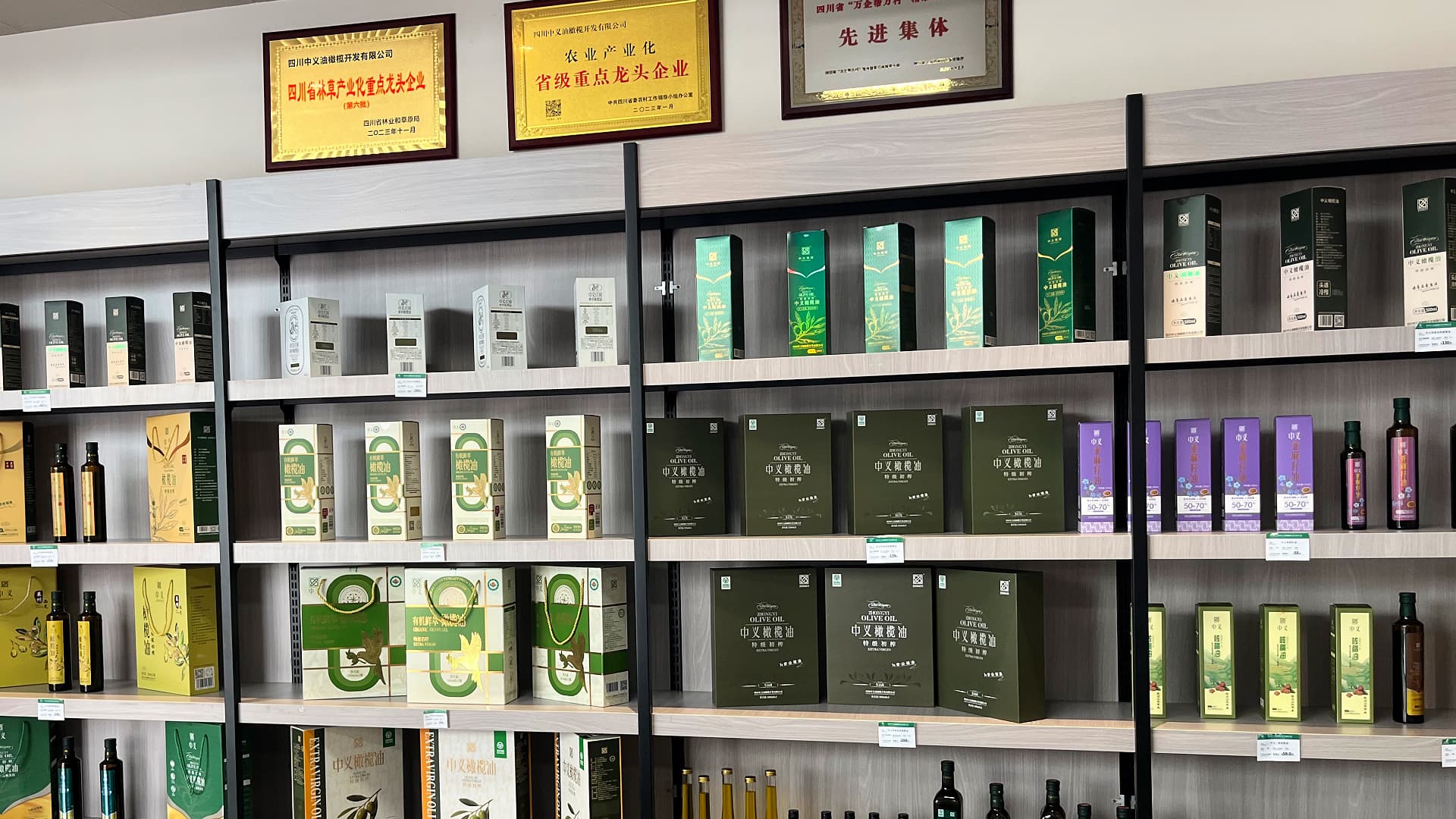
Along with production quality, Fattoria Zhongyi also emphasizes packaging to help drive and maintain sales. (Photo: Daniel Dawson)
“The price of our olive oil is very high, so for people who can afford it, the fact that it is organic is very important,” Jin said.
Organic production presents additional challenges, particularly since most groves are situated on steep terrain where mechanical harvesting is impossible.
Teams of workers hand-pick the fruit and drive it down paved mountain roads to the mill. The company also purchases olives from nearby farmers.
By the end of the visit, a delighted Jin announces that the day’s online sales have reached 30,000 Renminbi (€3,645).
The figure easily covers the salesman’s salary and the 3,000 Renminbi (€365) he paid to promote the livestream to targeted customers.
Waving goodbye, I board a train heading northwest from Langzhong toward Longnan, watching as the rolling green hills fade into low-hanging clouds.