China’s Olive Oil Production Climbs, but Harvest Outlook Remains Uneven
China’s olive oil production reached new highs in 2024/25, but growers across key regions report sharply differing outcomes as the 2025/26 harvest unfolds.
This is the fifth in a series of reports on the evolution of China’s olive oil industry.
Olive oil production is on an upward trajectory in China, the world’s second-largest and second most populous country.
According to Wang Ruiyuan, chairman of the expert committee of the China Grain and Oil Industry Association, the country produced a record 12,200 metric tons of olive oil from nearly 2.2 million mu (146,667 hectares) of olive groves in the 2024/25 crop year.
Ruiyuan announced the figures, representing a nearly five-fold increase over the past decade, during an olive-growing and technology conference in Yunyang, Hubei.
However, a former finance ministry official now involved in the industry disputed the data, estimating production at between 6,000 and 8,000 tons in 2024/25.
Looking ahead to the 2025/26 harvest, which began in early October and is expected to conclude before the end of the year, growers and millers report cautious optimism, though conditions vary widely by region.
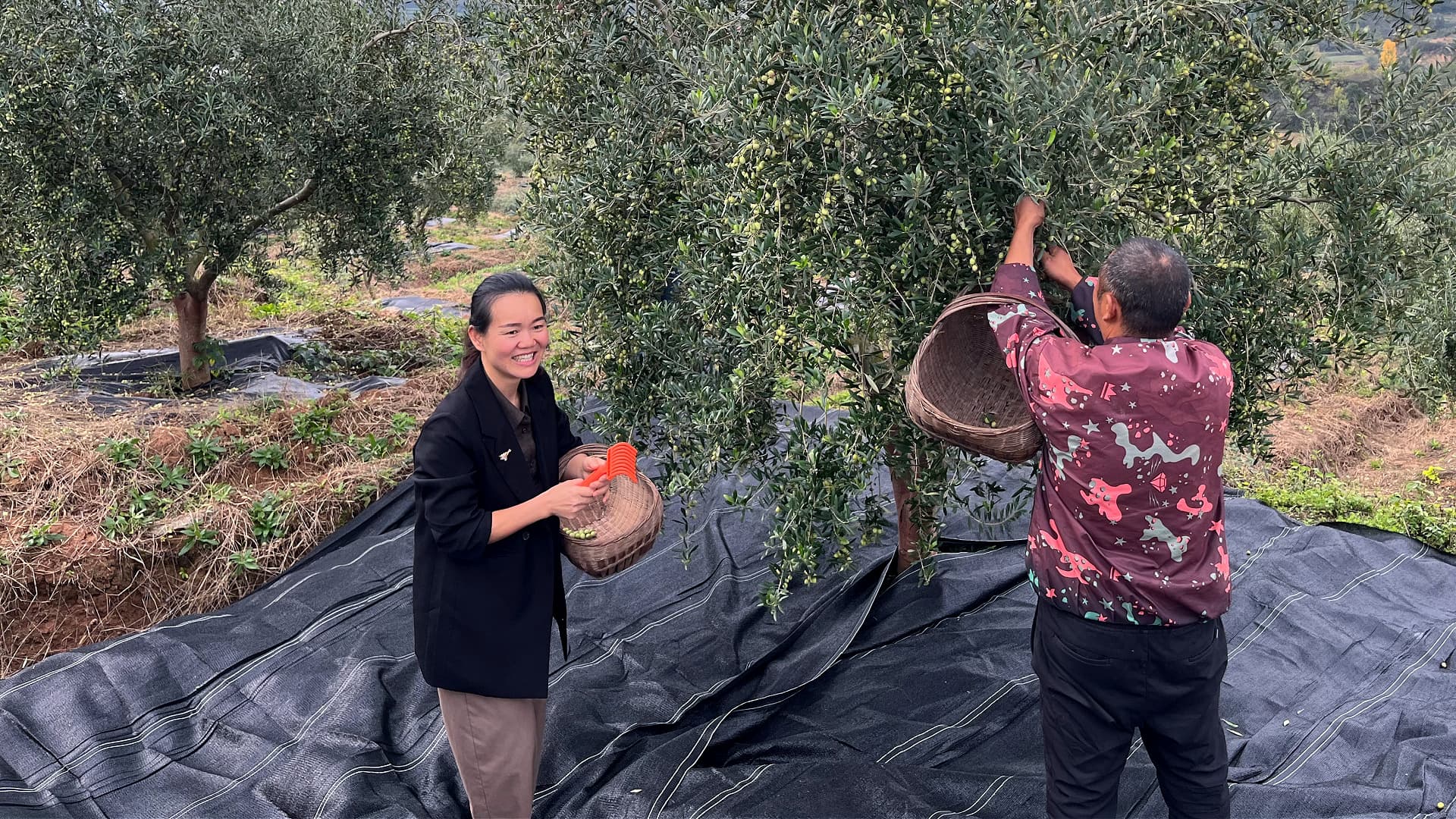
Zhang Li (left) expects a modest increase in olive oil produciton in Hubei province after a significant fruitset. (Photo: Daniel Dawson)
Bai Xiaoyang, chairman of the Longnan Tianyuan Olive Company, said he expects a slight decline from last season, forecasting a total harvest of about 450 tons.
He told Olive Oil Times that harvesting has already concluded in Yunnan, where China’s first olive tree was planted by Premier Zhou Enlai in 1964, producing about 120 tons.
The southern province, which borders Vietnam, Laos and Myanmar, recorded a smaller crop than last year, which Bai attributed to an off-year in the olive tree’s natural alternate bearing cycle.
Meanwhile, operations in Gansu province, which account for the bulk of China’s olive oil production, are still underway and are expected to yield between 160 and 180 tons.
In Longnan district, fellow Gansu-based producer Olive Times anticipates a 20 percent increase in output, with production projected to rise to between 700 and 1,000 tons.
“The main reason is that olive fruit production is higher than last year, so oil output will increase,” a company official said.
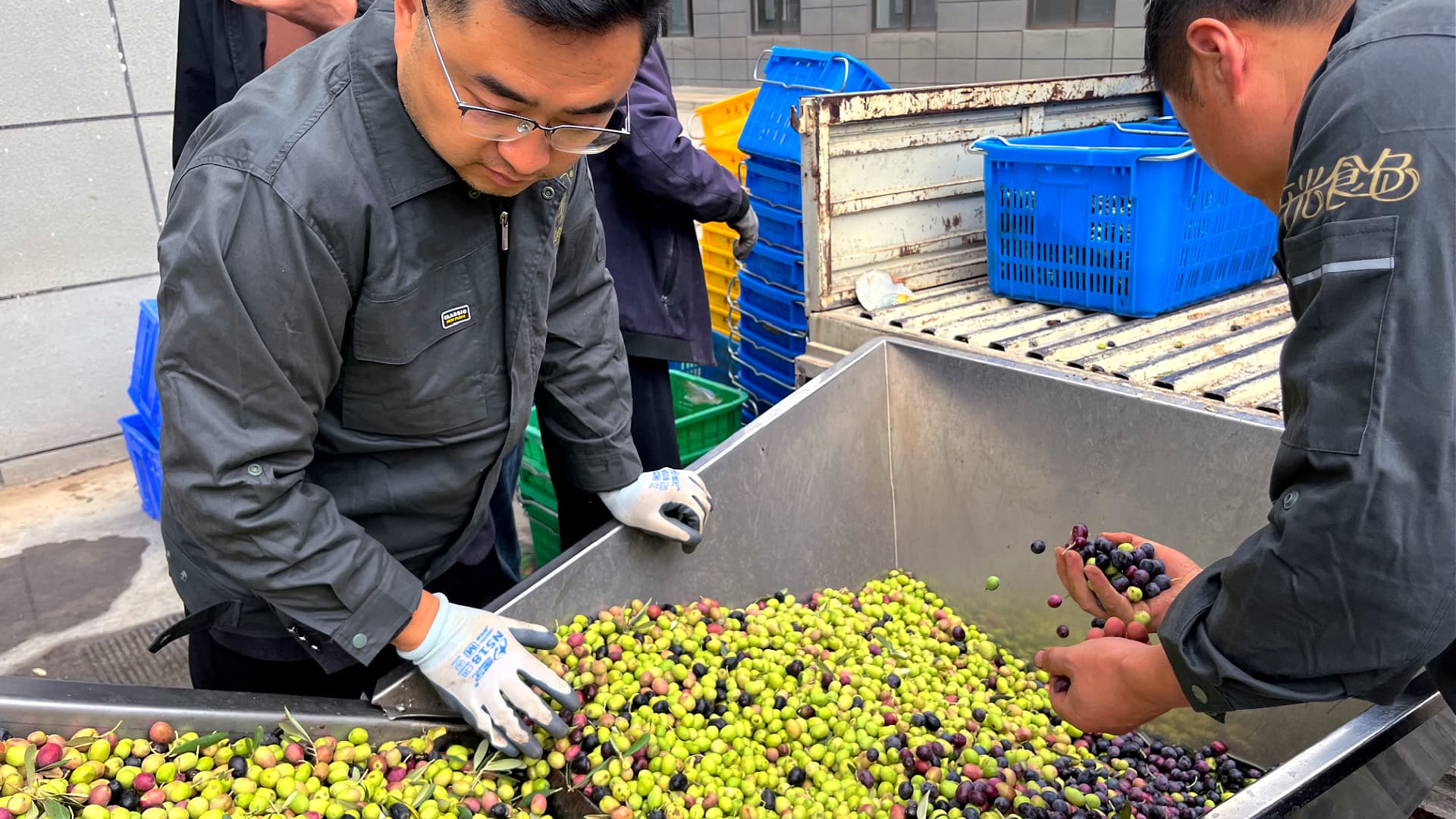
The head of a mill in China’s Longnan district inspects olives on an assembly line leading to a hopper. (Photo: Daniel Dawson)
Dry conditions ahead of the harvest allowed oil yields to reach up to 20 percent in terraced Arbequina groves, where olives are hand-picked by local farmers and sold through a cooperative to Olive Times and other nearby mills.
The trees were heavily laden with fruit when Olive Oil Times visited the area in mid-harvest.
Farther south in Sichuan province, producers also expect mixed results. The father-and-son team Ziyun Jin and Chongqing Jin of Fattoria Zhongyi forecast production will rise from 130 tons in 2024 to 200 tons in 2025.
They attributed the steady growth to a self-imposed goal of planting 400 mu (27 hectares) of new groves annually, with output gradually increasing as trees mature.
By contrast, producers at Anyang Lake Olive Oil expect their Sichuan production to decline by about 50 percent.
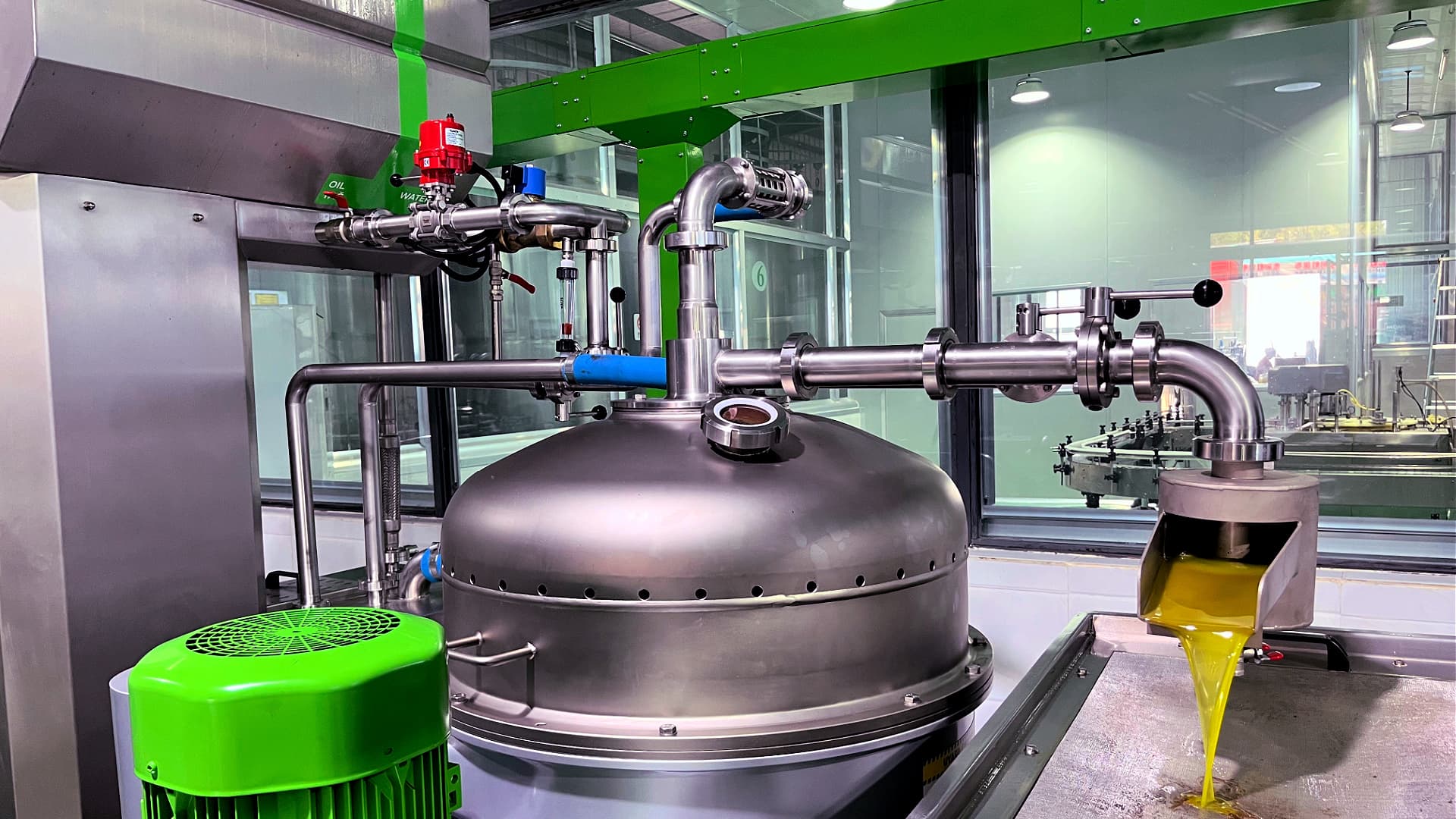
Despite the need to harvest before winter’s onset, producers must also ensure a mild flavor profile to appeal to the median Chinese consumer. (Photo: Daniel Dawson)
“There are three reasons for the decrease,” said Zhang Li, the company’s production manager. “We experienced a prolonged drought earlier in the year. Last year was also a large harvest, so this season is naturally lower. Finally, heavy rainfall during harvest caused some olives to fall from the trees.”
While it remains too early to assess the company’s harvest in Hubei province, Li said she expects a modest increase there due to heavier fruit loads compared to last year.
Nevertheless, 50 consecutive days of rain before harvesting began in early November caused fruit drop and promoted gloeosporium development in some groves.
Over the longer term, Anyang Lake Olive Oil expects production to rise as it continues planting new groves in Sichuan and Hubei, aiming to reach 20,000 mu (1,333 hectares) split evenly between the two provinces.
The company already operates a mill in Sichuan with a processing capacity of two tons of olives per hour. It is investing millions of dollars in a new mill in Hubei, which is expected to produce up to 50 tons of olive oil annually.
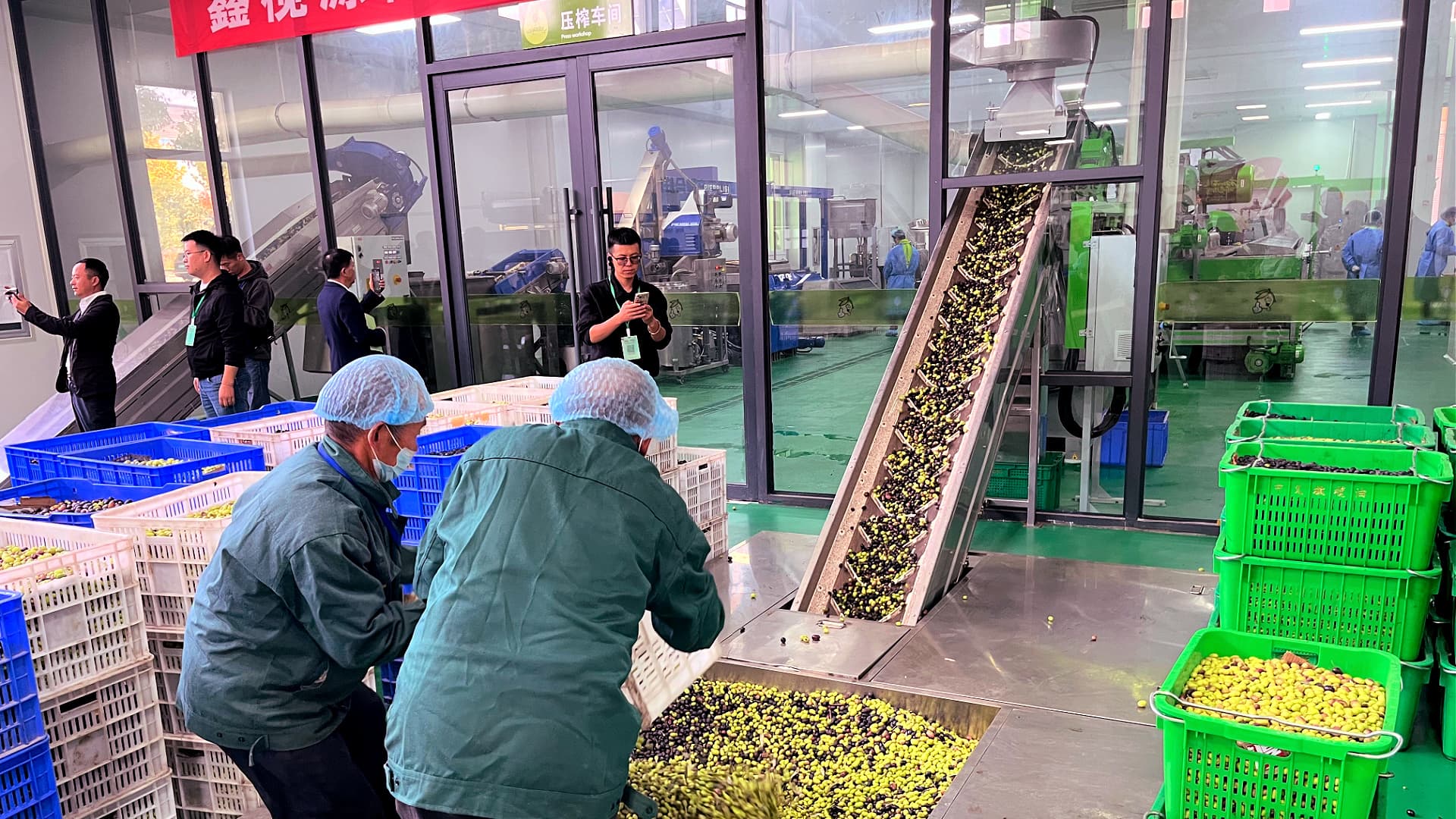
China’s olive oil sector is seen by the state a source of employment in underdeveloped and rural areas, so mills are staffed with dozens of employees. (Photo: Daniel Dawson)
Ender Gündüz, former head of the International Olive Council’s economy and promotion unit, said China’s olive oil production has the potential to double in the coming years.
According to Gündüz, authorities plan to plant 300,000 mu (20,000 hectares) of olive groves by 2032, with total planted area expected to reach 600,000 mu (40,000 hectares) by 2040.
Yu Ning, vice president of the olive section of China’s Forestry Economics Association, said olive cultivation is currently concentrated in five provinces.
Gansu leads with 1.17 million mu (78,300 hectares), followed by Sichuan with 452,000 mu (30,100 hectares), Yunnan with 260,000 mu (17,300 hectares), Chongqing with 165,000 mu (11,000 hectares) and Hubei with 125,000 mu (8,300 hectares).