Israeli Harvest Concludes Against Backdrop of War
Amid rocket fire, workforce shortages and disrupted supply chains, Islaraeli olive growers completed another complicated harvest.
Over the past two months, Israeli olive growers have harvested under challenging conditions.
While some areas were directly affected by ongoing military operations, others faced indirect consequences of the conflict, such as workforce shortages, disrupted supplies and limited access to essential services.
Israel has been at war with Hamas and Islamic Jihad in Gaza since October 7, 2023, when militants crossed from the Palestinian enclave into southern Israel, killing 1,139 people and taking 250 hostages.
During the war, we continue to grow and produce olive oil, even amidst bombings and attacks.
Shortly after, the Lebanese militant group Hezbollah began firing rockets into northern Israel. The conflict simmered until the end of September when Israel started to escalate its attacks on Hezbollah, eventually invading southern Lebanon.
Gaza’s Hamas-run health ministry reports 46,000 deaths since the conflict began. Meanwhile, Lebanese authorities estimate that there have been more than 3,000 deaths. The Israeli Defence Force said 840 soldiers have been killed in the war.
“It is a very challenging time for Israel,” said Nimrod Azulay, co-owner of KeremZait.
See Also: 2024 Harvest UpdatesThe award-winning producer is situated on the outskirts of Mishmar HaYarden, overlooking the Jordan River in northern Israel, at the southern edge of the Hula Valley.
“This season was excellent in both volume and quality, following a poor harvest in terms of volume last year,” Azulay said.
He explained that this year was an ‘on year’ in the olive tree’s natural fruit-bearing cycle, which typically results in a larger yield.
On and off years
Olive trees have a natural cycle of alternating high and low production years, known as “on-years” and “off-years,” respectively. During an on-year, the olive trees bear a greater quantity of fruit, resulting in increased olive oil production. Conversely, an “off-year” is characterized by a reduced yield of olives due to the stress from the previous “on year.” Olive oil producers often monitor these cycles to anticipate and plan for variations in production.
According to preliminary estimates from the International Olive Council, Israel is expected to produce 15,000 metric tons of olive oil in the 2024/25 crop year.
Throughout the harvest, the ongoing conflict made it impossible for most local growers to rely on their usual seasonal workforce, including Palestinian laborers.
“The investment in technology and machinery has proven its worth every season,” Azulay said. “This year, it was especially critical, allowing us to grow, harvest and produce our olive oil without relying on additional workers or services, which are much harder to secure during wartime. Particularly in the northern region, where the conflict has been most intense.”
“For KeremZait, there is no question: during the war, we continue to grow and produce olive oil, even amidst bombings and attacks,” he added.
Further south, near Jerusalem, the war also significantly impacted olive growers.
“The military crisis has undoubtedly shaped the way we operated this year,” said Hani Ashkenazi, founder and head of the multi-awarded Jerusalem Olive Oil.
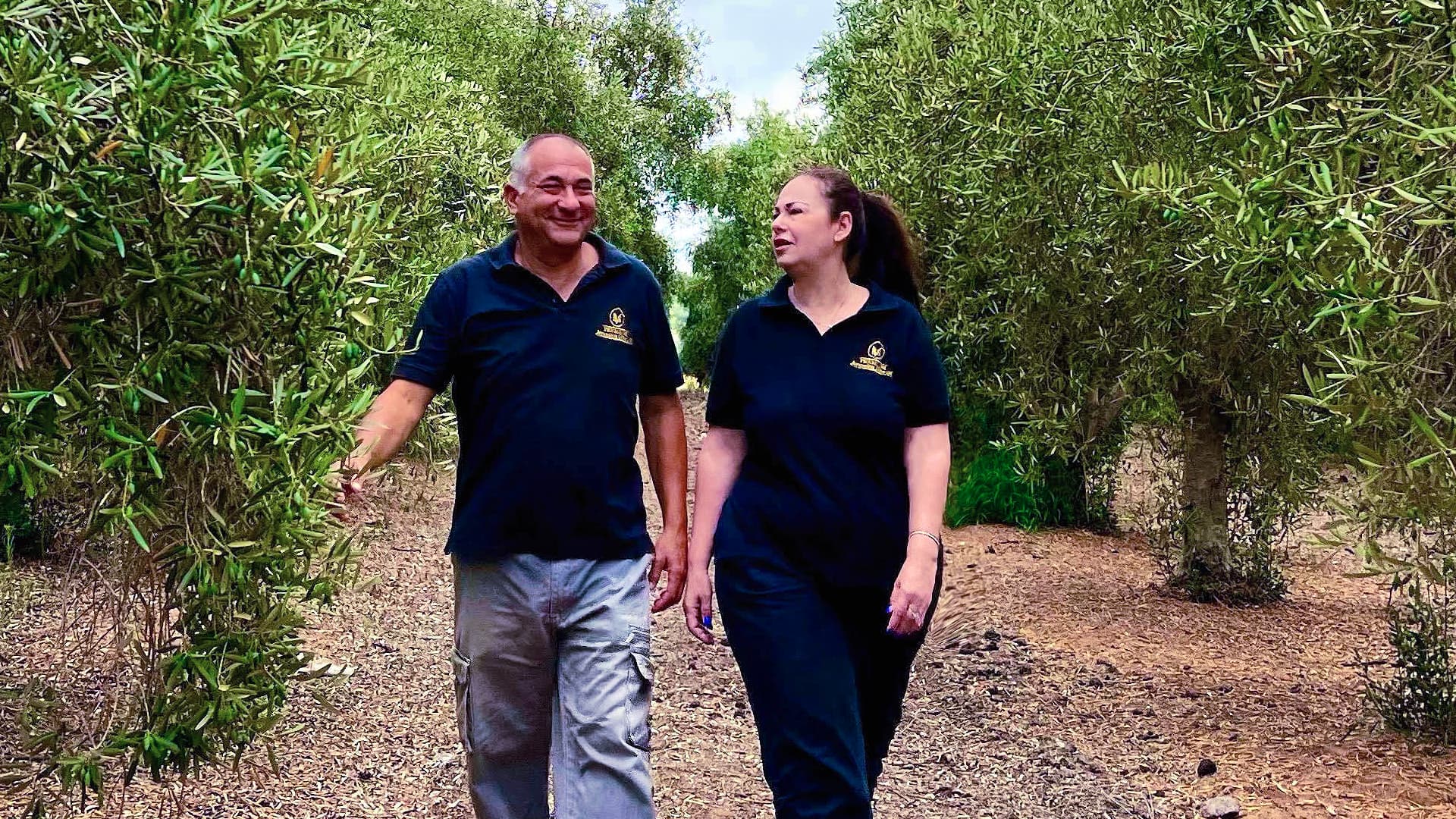
Jerusalem Olive Oil co-owners Moosh and Hanzi Askenenazi inspect their grove. (Photo: Jerusalem Olive Oil)
“While we were fortunate to avoid major logistical and distribution delays, the lack of available workers was a pressing challenge,” she added. “Many individuals were unavailable for work due to the crisis, which placed additional strain on our team during the harvest.”
Ashkenazi said the conflict has a profound emotional impact on everyone involved in the operation, including the farmers, workers and their families.
“However, what stood out to me most was the unwavering spirit of optimism and solidarity among everyone involved,” she said. “Despite the difficult circumstances, we worked harder than ever, motivated by a shared belief in what we do and the importance of bringing the fruits of our labor to market.”
This year’s campaign was highly successful in quantity and quality compared to the previous season.
“The early harvest brought lower conversion rates, around ten percent, but this is typical when prioritizing the production of more aromatic and complex extra virgin olive oil,” Ashkenazi said. “As the season progressed and the olives matured, the conversion rates increased significantly, ranging between 16 and 24 percent, depending on the variety.”
Back in the country’s north, the team behind Sindyanna of Galilee addressed the social and commercial complexities of this year’s challenging harvest.
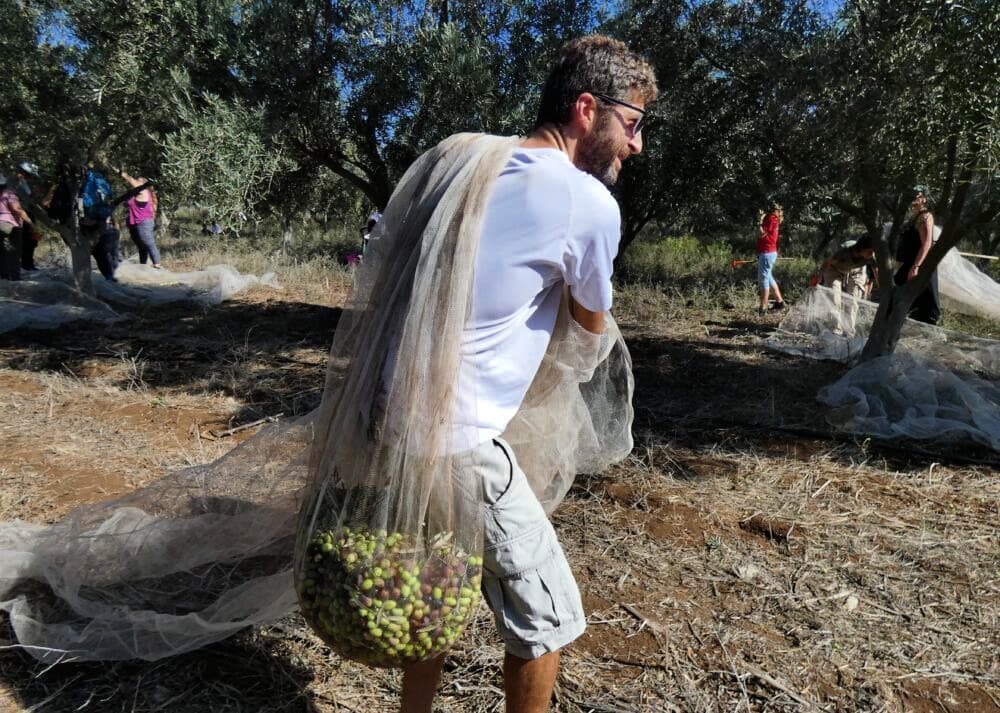
Despite the challenge of labor shortages, Lahav said many Israelis have purchased olive oil to support local producers. (Photo: Sindyanna of Galilee)
“The escalating conflict in our region highlights the urgency and significance of our mission,” said Hadas Lahav, the founder of the award-winning nonprofit. “The ongoing social and political tensions between Arab and Jewish Israeli citizens profoundly affect our community, especially as we work to create a shared space for Arab-Jewish cooperation.”
“Many Israelis are seeking alternatives to the belief that war is inevitable,” she added. “Sindyanna represents a model for a different, more hopeful future for these individuals.”
Despite the challenges created by the ongoing conflict, Lahav said there has been a sense of solidarity among Israelis, especially for local businesses.
“Our local market demand has doubled, with repeat orders for olive oil from Israeli customers,” Lahav said.
Similarly to last year’s harvest, Lahav said the closure of the border with the West Bank has made hiring enough workers very difficult, especially for traditional farmers.
“The most pressing issue was the lack of workforce due to restrictions on Palestinian workers entering Israel from the West Bank,” she said. “This particularly impacted small press houses and Arab farmers with non-irrigated groves, who traditionally rely on manual harvesting.”
“In previous years, around 12,000 seasonal workers assisted with olive harvesting in Israel. Since October 7, 2023, their entry, along with that of an additional 150,000 Palestinian workers in other sectors, has been prohibited,” Lahav added. “This situation has been catastrophic not only for Israeli farmers and the workers themselves but also for the Palestinian economy, which lacks sufficient alternatives in the West Bank labor market.”
Sindyanna operates in Kana of Galilee, near Nazareth, and only 50 kilometers from the border with Lebanon.
“The war in northern Israel took place during the harvest, creating dangerous conditions for the farmers, with the constant threat of rockets falling on the groves,” Lahav said. “This often prevented us from accessing the fields or created significant logistical hurdles,”
Even in such conditions, Sindyanna managed to harvest on schedule, and Lahav said the nonprofit produced high-quality organic olive oil.
“Our commitment to organic farming, fair trade and regenerative agriculture reflects our respect for the environment and belief in sustainable agriculture,” Lahav said.
Sindyanna works with local Israeli and Palestinian farmers to transition to organic practices and seek international certifications to add value to their products.
“Through annual professional audits of olive groves, we ensure the avoidance of chemical pesticides and fertilizers,” Lahav said. “This process promotes healthier soil and trees, resulting in olives of exceptional quality. It also fosters a stronger connection between the community and the land, cultivating a deep respect for nature.”
According to Lahav, this sustainable approach, along with the dedicated personal involvement of many individuals, was a key factor in the success of the latest olive oil campaign.
“This success reflects the extraordinary efforts and determination of our team, as well as the mobilization of family, friends and volunteers who came together to help during this difficult time,” Lahav noted.
“Sindyanna remains steadfast in its mission of promoting peace, collaboration, and sustainable development, even amidst the current challenging circumstances,” she concluded.