Accademia Olearia Builds on Sardinia’s Heritage with Quality-Driven Growth
The Sardinian producer is increasing plantings across five municipalities and updating its milling line, while maintaining wide grove spacing and circular reuse of byproducts.
Accademia Olearia’s olive groves stretch across the northwestern tip of Sardinia, expressing the island’s character through native Bosana, Semidana and Tonda di Cagliari trees. The company’s best-known oils are derived from these cultivars.
I believe that sustainability begins with a mindset. For us, it means doing our part to improve the world.
The orchards span diverse environments, from inland hills to the coast. Sustainably managed and shaped by a traditional low-density layout, the groves reflect a long-term commitment to preserving a living landscape and the region’s olive farming heritage.
“We want our olive trees to be an integral part of this territory, to which we feel deeply connected,” Antonello Fois told Olive Oil Times. “Our family has a long history in the olive oil sector in northern Sardinia, with the first estate established in 1827. The farm gradually specialized in olive growing, especially thanks to our father’s foresight.”
In the late 1970s, Giuseppe Fois took over as CEO, and the company marketed its oil through wholesale channels until 1999. Antonello joined the management a year after his brother, Alessandro, as the company shifted its focus to quality in 2000.
“We decided to use the name Accademia Olearia because the idea of an academy aligned most with our vision,” Fois said. “It went beyond a commercial venture, taking on the task of disseminating and elevating olive oil knowledge among consumers and food service professionals.”
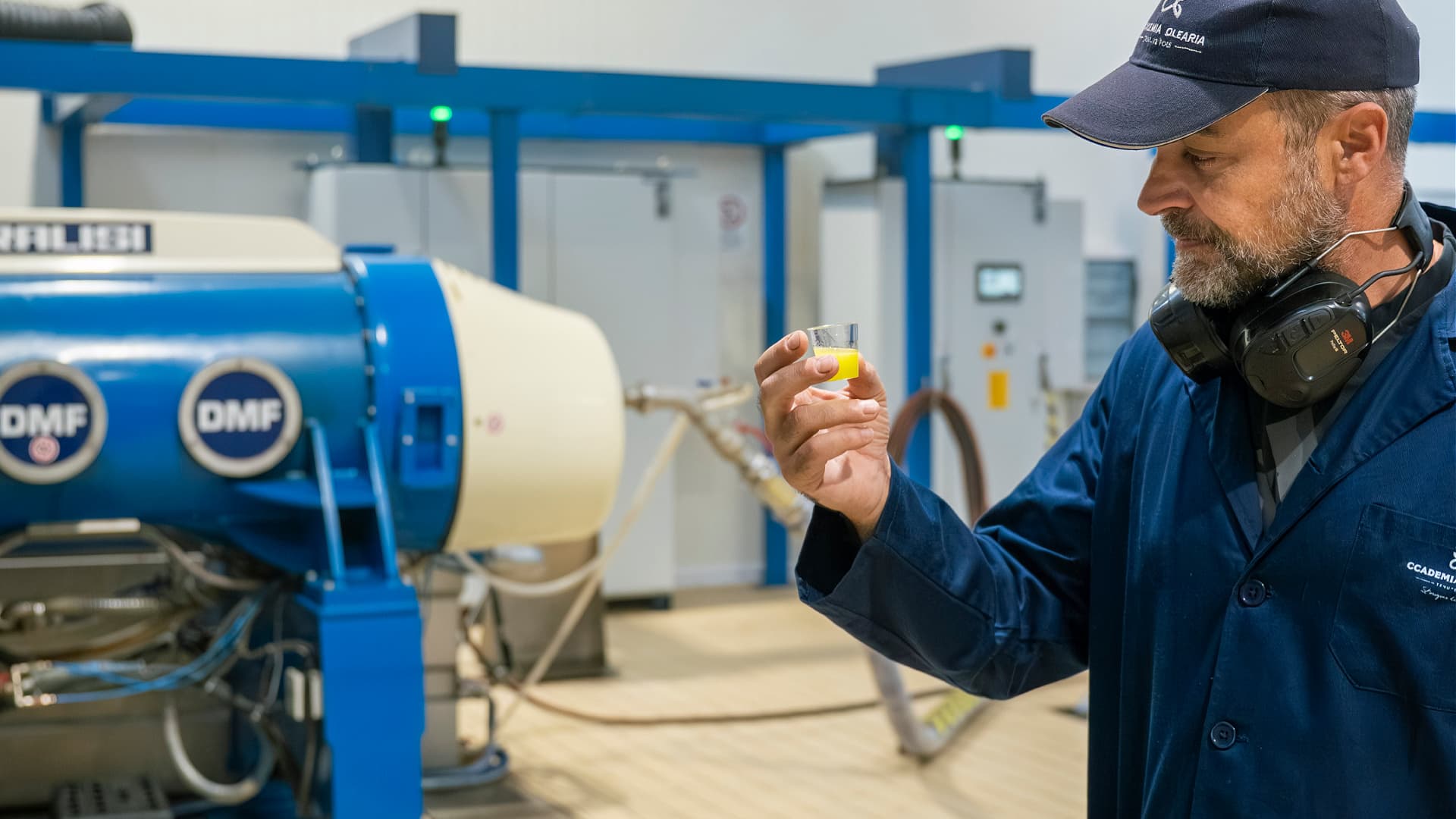
Alessandro Fois is in charge of milling operations at Accademia Olearia mill in Alghero.
He credited his father with placing the next generation at the center of the transition from the start. “With courage, he immediately entrusted me and my brother with operational responsibilities,” Fois said. “In the beginning, when we needed manpower, we found ourselves doing everything that had to be done, from the grove to the mill. That gave us the chance to quickly understand every aspect and challenge of the work.”
Fois recalled being encouraged to focus on what could still be improved rather than resting on past achievements, and to pay attention to the details that could elevate the company’s standards. Working toward that goal, he said, deepened both brothers’ commitment to producing premium extra virgin olive oil.
“We are operating in a very different context from back then, with clearly defined market segments, at the top of which are premium products,” Fois said. “At that time, however, especially due to the lack of legislation on origin labelling, the olive oil market was at the whim of imported mass-market products.”
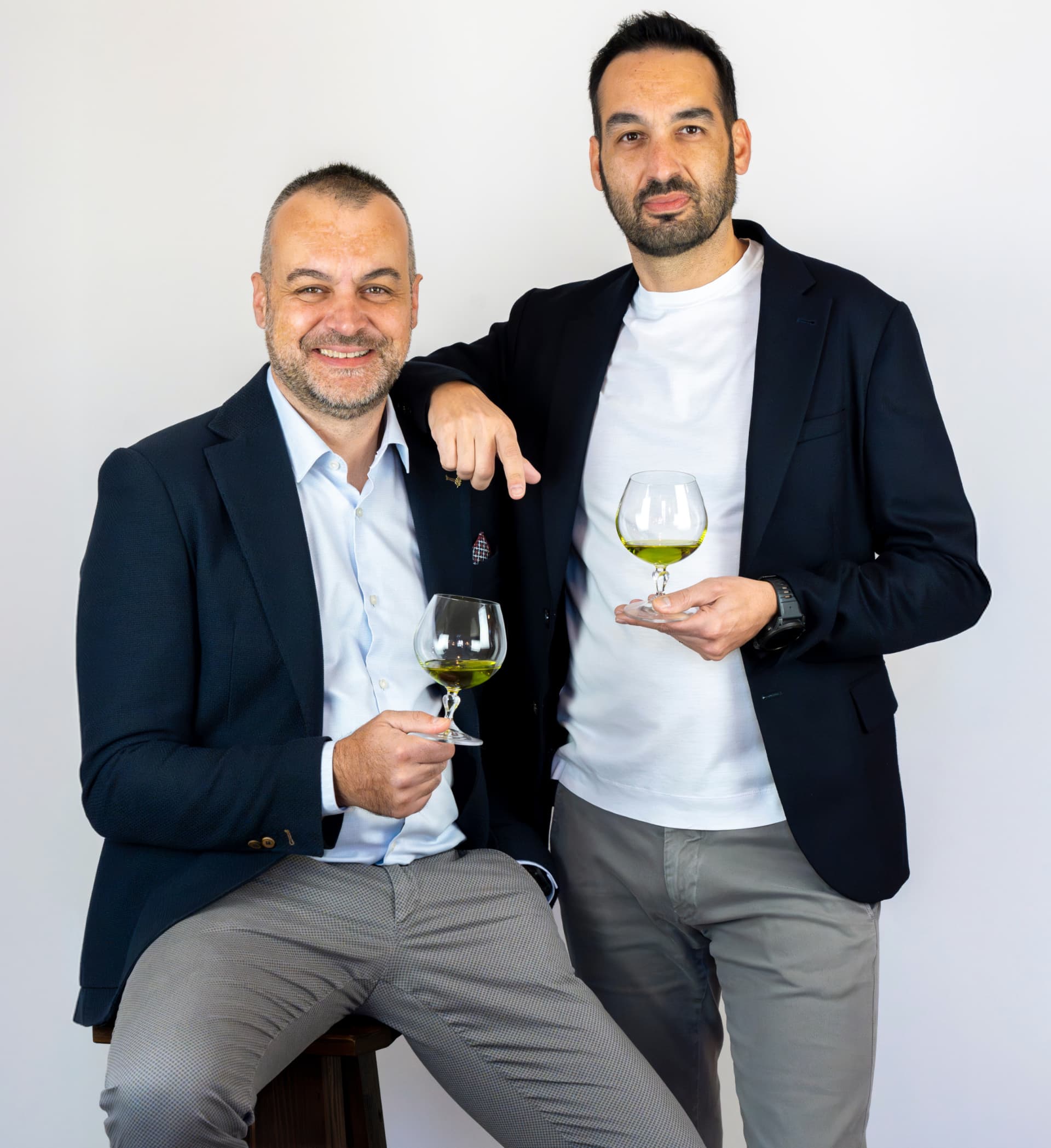
Alessandro (left) and Antonello Fois, Accademia Olearia
He said the company chose to break away from those mechanisms and pursue a path that could bring greater value and recognition to its work, and to that of other producers. “Today, we are proud to have helped spark a quality-driven olive oil movement,” Fois added.
Two developments proved decisive: the European Union’s recognition of the Sardinia Protected Designation of Origin, which entered into force in 2008, and the introduction of mandatory origin labeling a year later. Together, the milestones became strategic levers that helped the company strengthen its standing, alongside broader momentum around protected designations of origin.
“Our reputation has grown also thanks to the successes we racked up at national and international competitions, which helped us gradually lay the foundations for what the company is today,” Fois said. “Our path continues to be inspired by our father’s farsighted vision.”
He said Giuseppe Fois died in 2021, after which their mother, Carmela, stepped into the company’s management. “Following his example, we always work in close synergy, mindful of our responsibilities, while discussing everything together, from the challenges we face to the solutions we build,” Fois said.
Named in his honor, Gran Riserva Giuseppe Fois is recognized in the Official Guide to the World’s Best Olive Oils along with Riserva del Produttore DOP Sardegna and Accademia Olearia Bio DOP Sardegna. Their profiles come from careful in-mill blending of the estate’s olive varieties, sourced from different areas of the property and used in varying proportions.
The company produces a broad selection of blends and monovarietals from 350 hectares across the municipalities of Alghero, Sorso, Sennori, Sassari and Usini. With 35,000 trees currently in production, a further 6,000 will be planted this year, bringing the total to 40,000. Production is expanding, with plans to double output in the next few years.
The fruit is pressed at the estate’s milling facility, which also provides services for third parties. The company pioneered modern milling technology locally, installing a continuous-cycle system in the 1980s that has been continually updated. Today, it operates a Pieralisi line equipped with up-to-date machinery.
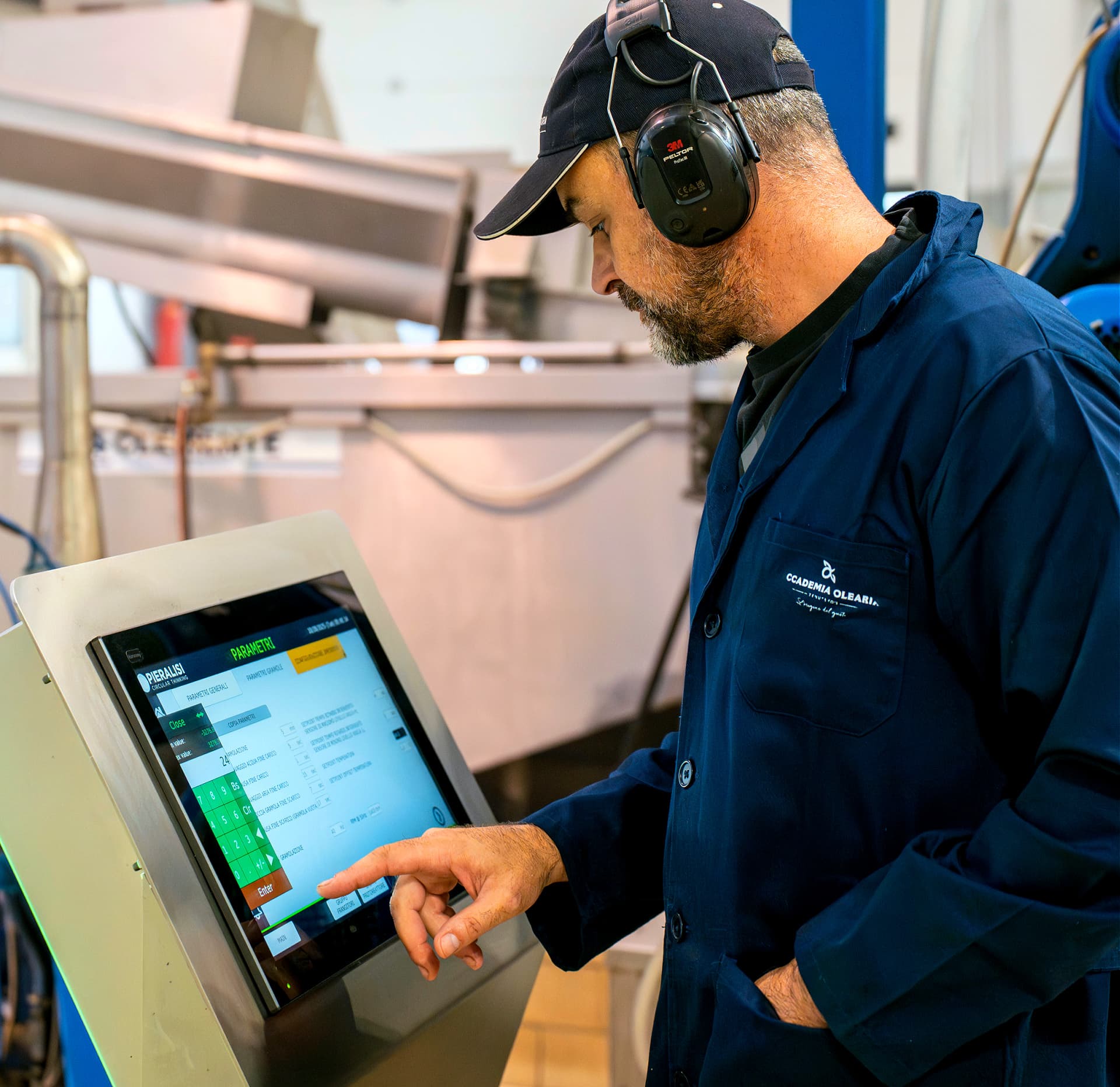
Accademia Olearia pioneered modern milling technology, installing a continuous-cycle olive mill in the 1980s. Today the facility is equipped with latest- generation techology.
“Our milling plant represents the pinnacle of extraction technology, and this allows us to provide top-notch service to our customers as well,” Fois said. “Still, our pursuit of high quality cannot overlook responsibility toward the territory. That means leaving the area in which we operate better than we found it.”
To preserve the land’s natural beauty and environmental balance, he said the company has chosen to maintain traditional orchard layouts. Most groves on the estate retain a wide spacing of 10 by 10 meters, while newer plantings follow established patterns of 6 by 5 and 6 by 6 meters.
“We want even the new olive trees to become an integral part of the local heritage and endure for centuries,” Fois said. “For this reason, we are committed to keeping this environment healthy.”
He added that the estate follows the principles of organic olive oil production, fertilizing the soil with compost and livestock residues not only in certified groves but also in areas managed under integrated farming. “We are the first consumers of our products and therefore our most demanding critics,” he said.
As part of the company’s sustainability strategy, the facilities are powered by photovoltaic systems equipped with storage batteries, which the company said provide complete energy autonomy for the estate.
Milling byproducts are collected and reused, with pits gathered for heating and humid pomace destined for biogas production.
“These operations do not represent a cost but rather an opportunity for our company,” Fois said. “I believe that sustainability begins with a mindset. For us, it means doing our part to improve the world. If we start from that premise, we can truly implement actions that generate real sustainability. This is the only path to follow if we want to be not only food producers but also stewards of this territory.”