New Initiatives Promote Olive Oil Culture in Northern Italy
New projects are advancing olive oil culture in northern Italy, with the opening of an oleoteca and a collective highlighting top-quality producers.
As interest in extra virgin olive oil grows globally, new initiatives are being launched to promote olive oil culture and support high-quality producers.
New olive oil-related projects have recently emerged in northern Italy, an area with increasing production and a growing number of olive oil professionals and enthusiasts.
In the heart of Turin, Piedmont’s capital, Eva Collini opened L’Evo di Eva, the region’s first oleoteca – an Italian neologism for an olive oil shop. Its name is a play on words between the widely used acronym for extra virgin olive oil and her first name.
See Also: PDO and PGI Tourism Boosts Olive Oil Industry in ItalyAlong with high-quality extra virgin olive oil, the shop also offers olive oil-based products, including oil-preserved vegetables and table olives, as well as wines and olive oil-based cosmetic products.
“We serve lunch and an aperitif, and organize several evening events with the producers,” Collini said. “Everything revolves around the extra virgin olive oil, which is always present, even during the wine events.”
“Also, we organize guided tastings and events with Italian schools for foreigners, and we collaborate with producer organizations and institutional bodies to spread the culture of olive oil.”
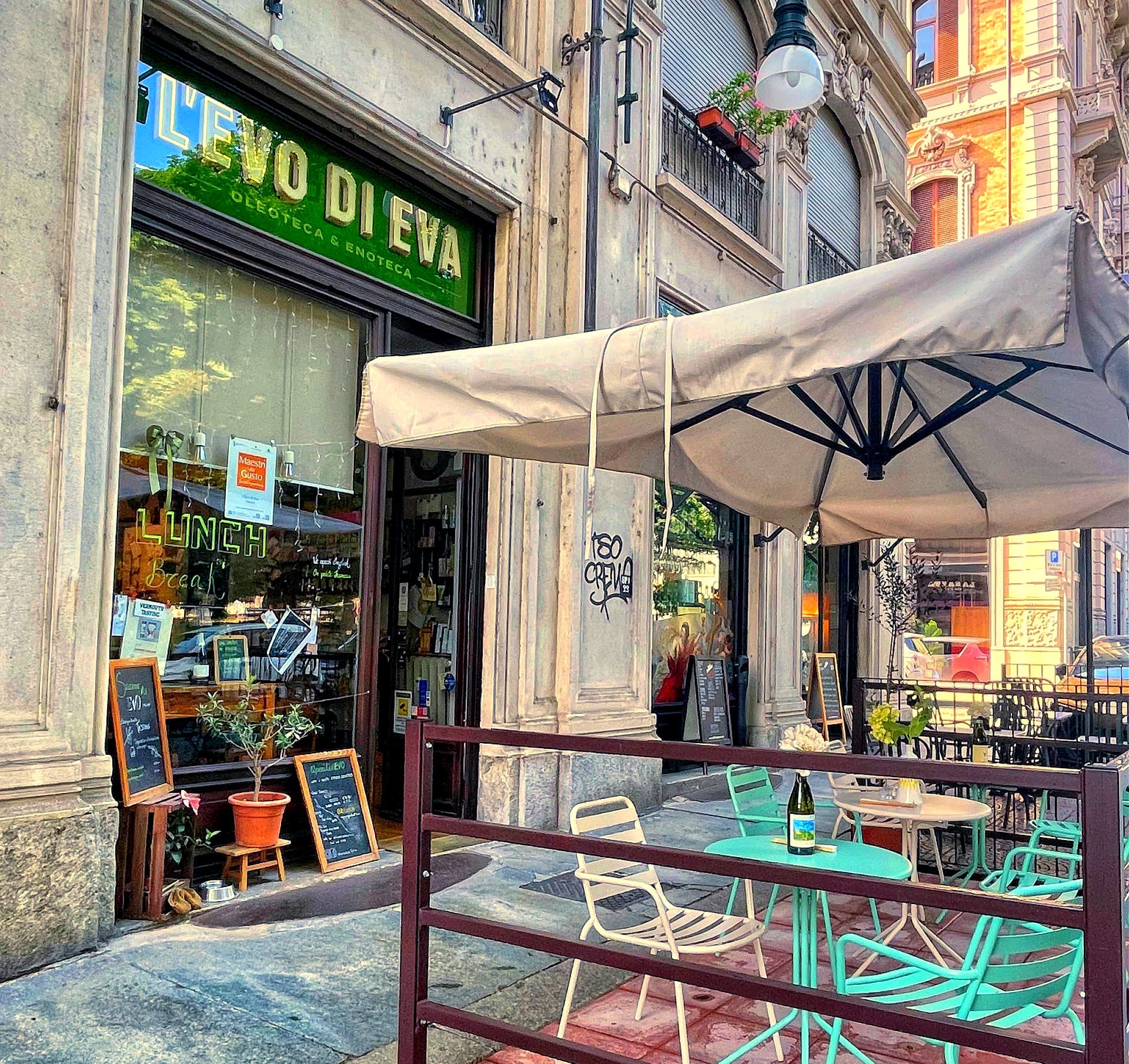
L’Evo di Eva recently opened in Turin to help introduce Italy’s fourth most populous city to the country’s high-quality extra virgin olive oil. (Photo: L’Evo di Eva)
Collini has recently been appointed one of the Maestri del Gusto (Masters of Taste) of Turin and its province by the Turin Chamber of Commerce, in collaboration with its chemical laboratory and Slow Food Italia.
Before becoming an olive professional and opening the oleoteca, Collini worked in the automotive industry for 15 years. She discovered her passion for olive oil by chance while dining in a restaurant in the historical region of Langhe.
“While waiting for dinner, I got a whiff of cut grass and other green notes. It was a lovely scent, and I thought it was coming from the kitchen,” she said.
However, Collini soon discovered that the aromas came from a newly opened bottle of extra virgin olive oil brought to her table by the waiter and served in a small bowl for tasting.
“In that moment, a whole new world opened up to me,” she said. “Back home, I started sourcing the best olive oils I could find around.”
“At some point, there have been changes in my professional life,” Collini added. “It was my husband who motivated me to do something on my own. He immediately said, ‘Work with olive oil, since you love it so much,’ and so I decided to give it a try.”
She began studying the olive oil market and discovered that in Italy, there were only a few olive oil shops in the central and southern regions of the country.
Collini quickly determined that an oleoteca in Turin was much needed. After attending a series of tasting courses, she found the right spot downtown and opened the shop in August 2020, three months later than initially planned due to the Covid-19 pandemic restrictions.
“From that moment on, this work has given me so much,” she said. “Furthermore, I never stopped training, and I have become part of a tasting panel. I also recently attended a course for milling technicians.”
Every day, on the shelves at L’Evo di Eva, visitors can find about 50 of the best Italian blends and monovarietals from across the country in rotation. There is also a selection of oils made by a non-Italian producer.
Collini visits farms and attends trade fairs to select the best products. She chooses each extra virgin olive oil not only for its quality but also based on the vision behind it.
As her company thrives, more producers have proposed starting a collaboration, and Collini is already working on the upcoming olive oil campaign.
“What I like most about this job is the expressions of the people when they sense the aromas,” she said, especially from people new to or skeptical of olive oil tasting.
About two hours up the A4, in Milan, the capital of neighboring Lombardy, the non-profit collective Officina Enoica is one of the latest novelties in the sector.
While its name refers to an oenological workshop, as it was founded to promote artisanal wines, it has recently expanded to include high-quality extra virgin olive oils.
“We started just some months ago, but we are already having excellent feedback from producers and enthusiasts,” said co-founder Giovanni Camocardi.
With a group of friends, including producers, sommeliers, wine lovers and small distributors, he created an association in 2009. Shortly after, they were invited by the municipality of Asti to collaborate on a wine event.
“The partnership with the town hall was supposed to last one year, but it ended up being longer, from 2010 to 2018,” Camocardi said. “Over time, our collective has written some wine guides with Altraeconomia [an Italian publishing house engaged in solidarity economy], and organized events, including big gatherings with over 100 wine producers.”
“Our initiative is non-profit, so we always keep the participation fees as low as possible, and membership to our association is free,” he added.
A former lighting technician, before devoting himself to the agri-food sector, Camocardi worked for 40 years in theaters, including prestigious venues such as La Scala in Milan.
“Thanks to my previous job, I traveled all over Italy, and this fueled a curiosity about the different foods,” he said. “I got to discover agri-food excellences that were unknown elsewhere. This is easy today with the current means of communication, but not back then. That experience allowed me to get closer to the farming world.”
A defining moment for Camocardi was when he met the renowned Italian gastronome Luigi Veronelli in 2000.
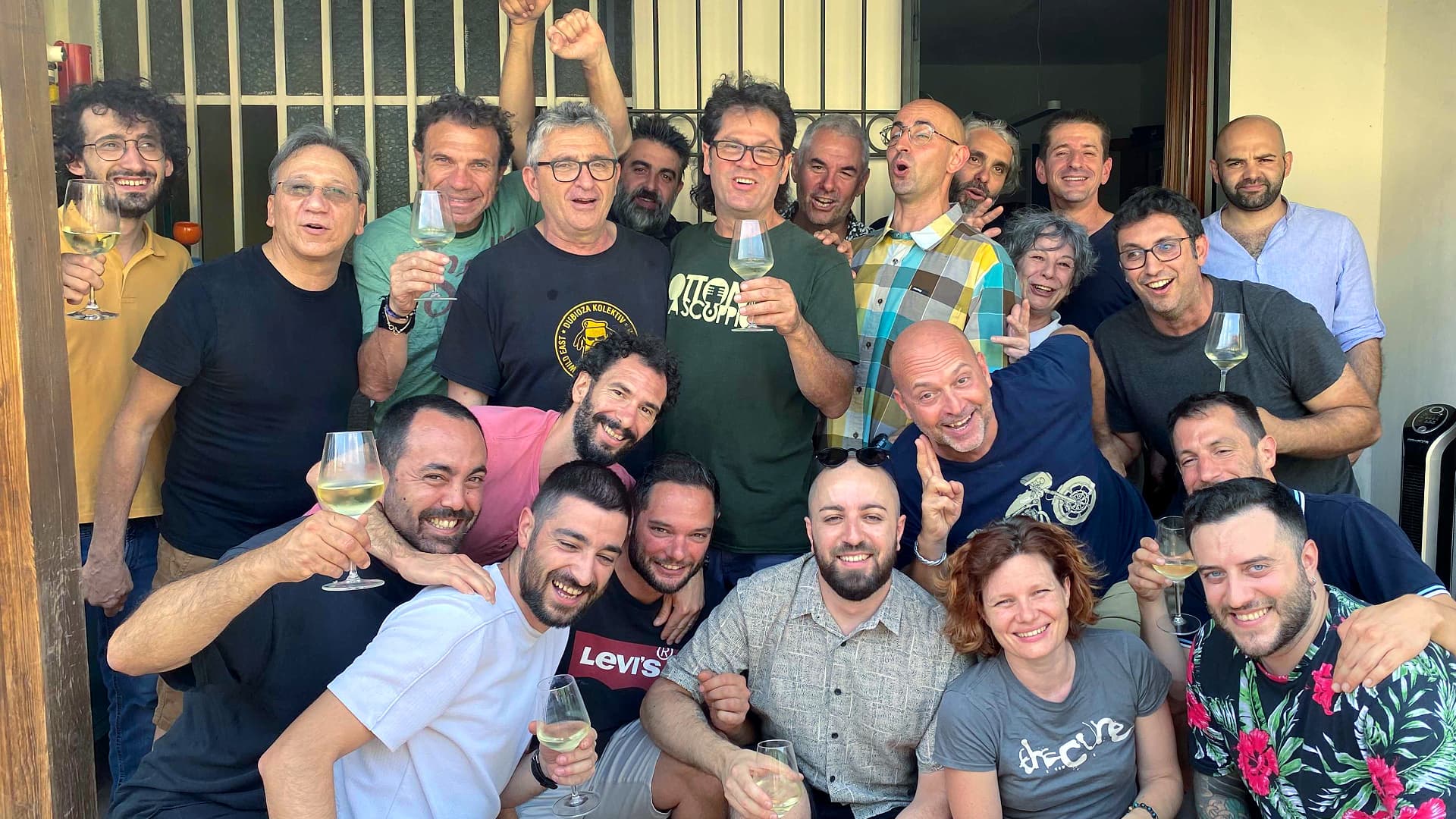
The Officina Enoica collective now tastes ad features extra virgin olive oil producers along with winemakers. (Photo: Officina Enoica)
“We became friends and I took some photos for his magazine,” he said. “Thanks to him, I developed my passion for wine. I understand the importance of not only what is in the glass, but especially of the people who make the product.”
“Veronelli then introduced me to extra virgin olive oil, with his focus on monovarietals and pitted oils,” Camocardi added, leading him to attend a tasting course.
Since its inception, the collective had been exclusively dedicated to artisanal wines, until a few months ago, when a wine producer asked the group to taste his extra virgin olive oil. Having appreciated the product, the collective made a post about its organoleptic profile on Instagram.
“After that post, we had had so many requests from high-quality producers that we decided to regularly include extra virgin olive oils and olive growers on our channels,” Camocardi explained.
On the Officina Enoica’s website, in the section dedicated to winemakers and olive growers, the collective creates a page for each company.
In parallel, the extra virgin olive oils are displayed on the Officina Enoica’s Instagram page, along with wines. Each post usually includes a photo of the bottle and a description of the sensory profile.
“Just as we have communicated artisanal wines so far, we are now doing it with extra virgin olive oils, too,” Camocardi said. “We are keen to support young businesses, which do not have the capability to communicate their products well.”
“We always start with the people; there must be a human story behind the product,” he added. “When a producer reaches out and asks us to taste a sample, we tell them that we need to know the people who make the product.”
The collective’s headquarters are in the Acquabella neighborhood, close to Milan’s city center. The associates usually meet once a week to taste and discuss the products and the projects behind them.
“Several producers asked us to organize tasting events like we already do with wine, and therefore we are considering this option for the next olive oil harvest,” Camocardi said.
“We could arrange meetings at our location, or in other venues, in Milan and all around Italy,” he added. We are now receiving a great response from the olive oil producers. Their enthusiasm and the passion they put into their work, as well as the quality of the products we are tasting, make us want to continue to delve into and spread the olive oil culture.”