PDO and PGI Tourism Boosts Olive Oil Industry in Italy
Report highlights the growing trend of sustainable tourism in Italy, creating new opportunities for producers and promoting the country’s unique regions.
Deviating from the most popular tourist destinations, a growing number of travelers in Italy are embracing more sustainable experiences centered on olive oil, local food traditions, and artisanal culture.
A new report, published by the Qualivita Foundation and supported by the Italian Ministry of Agriculture, Food Sovereignty, and Forestry, sheds light on a phenomenon that is reshaping how food excellencies, such as olive oil, are presented to tourists and consumers alike.
It’s essential to tell the story of olive oil, where it comes from, how it’s made, and the region behind it.
According to the “PDO Tourism – 1st Report,” 70 percent of the tourism activities associated with Protected Designation of Origin (PDO) and Protected Geographical Indication (PGI) certified products began in the last five years.
The report shows that PDO and PGI areas encompass more than 2,100 Italian towns, most of which are small borghi and villages located in the interior and rural regions.
See Also: Italy Mints Special Labels for Its PDO and PGI Olive OilsOverall, PDO and PGI products are worth €20 billion, with more than 200,000 operators and companies involved.
PDO and PGI-certified foods are products associated with specific traditions and geographies. The European Union-backed designation provides guarantees of quality and production method, along with legal protection against imitation products.
In the case of extra virgin olive oil, Italy has 50 PDO and PGI certifications, accounting for nearly ten percent of the country’s total production.
Tapping into tourism and linking it to the value conveyed by PDO and PGI certifications has become an additional source of income for olive oil producers, farmers, millers and farmhouses.
“Wine has always benefited from the support of restaurants, which helped it grow in value and volume. Olive oil, unfortunately, never had that privilege. It’s been the neglected sibling in the hospitality world,” Mauro Rosati, director of the Qualivita Foundation and scientific coordinator of the report, told Olive Oil Times.
According to Rosati, oleotourism, particularly when associated with PDO and PGI regions, provides a powerful means to enhance communication between producers and consumers.
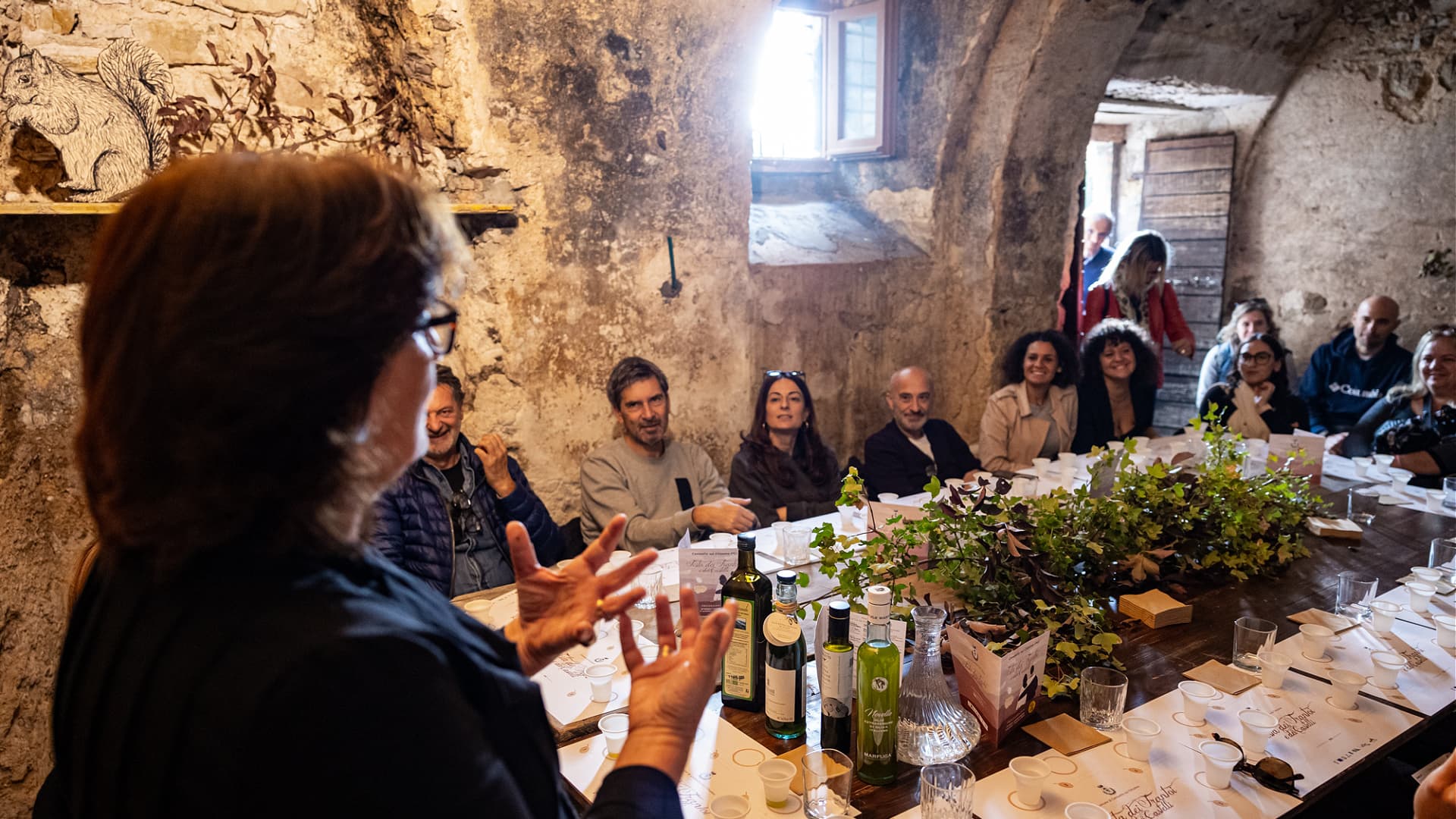
Oleotourism in PDO and PGI regions is seen as a way for local producers to grow their domestic customer base. (Photo: Qualivita Foundation)
“And not just to communicate [olive oil’s] uniqueness in taste, but also its landscape, its heritage and what it means to care for the land. This kind of storytelling doesn’t often come through in traditional marketing,” he explained.
“The Tuscany PGI succeeds because, in the popular imagination, it’s filled with rolling hills and olive groves,” Rosati said. “Still, smaller olive-growing areas could also become ambassadors for their regions through olive oil.”
“If I take you to a grove in Garda, or anywhere else, and show you how the olive oil is made, explain the landscape and its identity, you’ll pay €30 per kilogram for Riviera Ligure PDO with satisfaction, because you’ll understand the true value of what you’re buying,” he said.
“I’ve even paid €40 per kilogram to producers in Lucinasco,” Rosati added, referring to a small municipality of 320 residents in northwestern Italy, nestled in the Ligurian hills dotted with thousands of olive trees.
“That was a fair price, because I saw the difficulty of keeping those places alive. That’s the real impact of oleotourism: it helps create understanding and appreciation,” he said. “It’s essential to tell the story of olive oil, where it comes from, how it’s made, and the region behind it.”
According to Rosati, producers who want to sell their extra virgin olive oil at a price that reflects the effort behind it can find in PDO and PGI tourism a “fast track to recognition.”
“Of course, there’s always effort involved. Entrepreneurs must invest in their businesses, in their consortia, in the initiatives they promote,” Rosati said, referring to the crucial role of the PDO and PGI consortia.
These consortia are publicly recognized non-profit entities formed by local stakeholders to protect and promote the geographical indication.
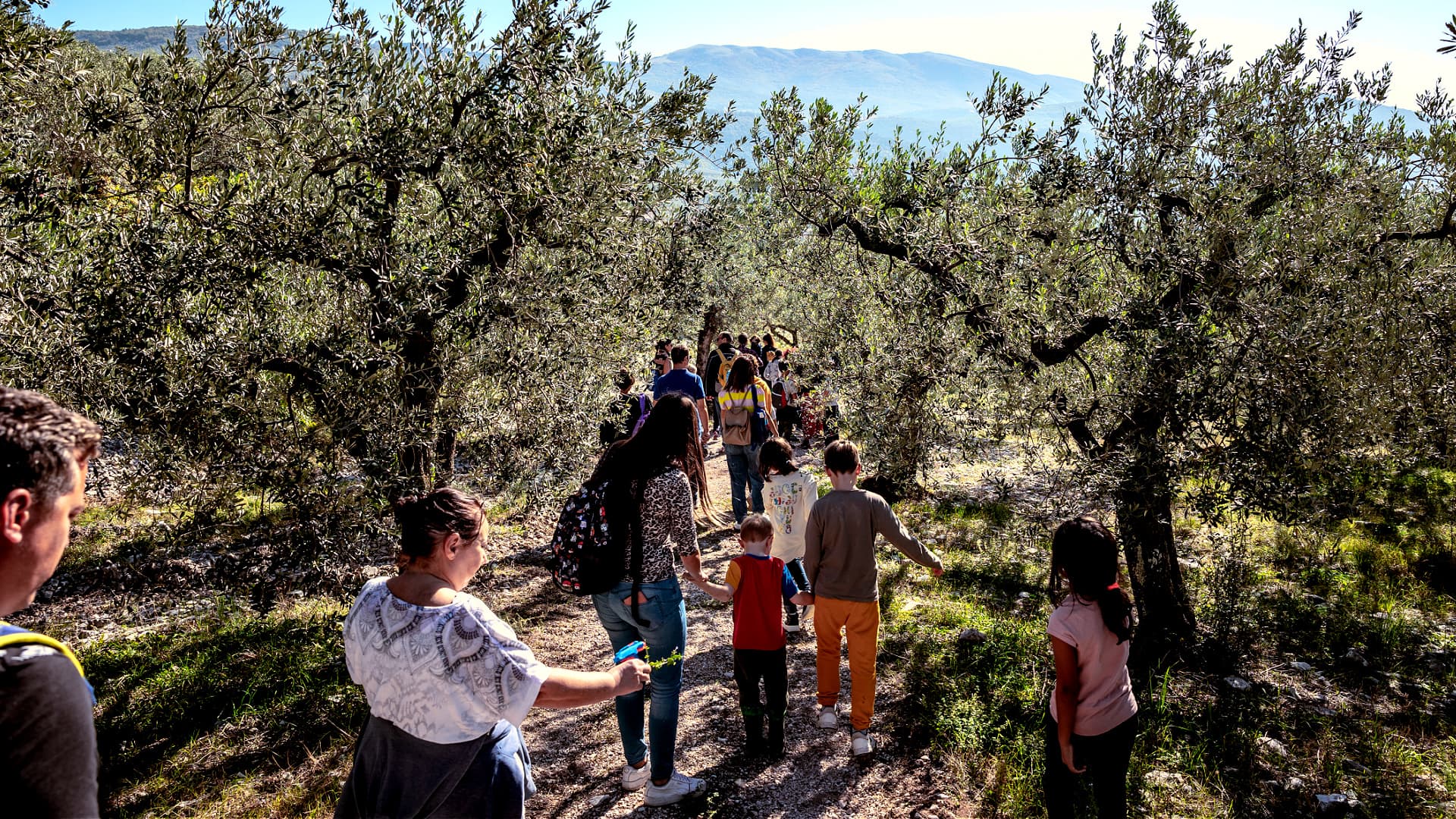
Visiting olive groves to learn about the harvest and production process improves consumer appreciation for extra virgin olive oil. (Photo: Qualivita Foundation)
Today, 320 consortia across Italy include tourism promotion among their goals.
“Over the years, not exactly by chance but in a somewhat spontaneous way, the consortia have increasingly taken on a leading role,” Rosati said.
“They realized that promoting products locally can be much more effective than investing large sums solely in international markets, especially now that there’s renewed interest in Italian regions and growing demand from international tourism,” he added.
According to Rosati, many consortia have undergone significant evolution over the last ten years. And that is when Qualivita Foundation began monitoring their tourism activities.
“Today, we’re facing a reality we tried to capture in this report: it’s no longer a blank slate, but a rich ecosystem of initiatives and experiences that can improve, grow and become a structured system capable of welcoming tourists and supporting the consortia’s mission to raise awareness of certified products,” Rosati said.
“The line between tourism and promotion is always quite thin,” he added. “But the moment you organize an engaging event, you’re essentially creating both a promotional and a tourist initiative.”
In several regions, PDO and PGI consortia have invested in promoting the unique link between food and local identity.
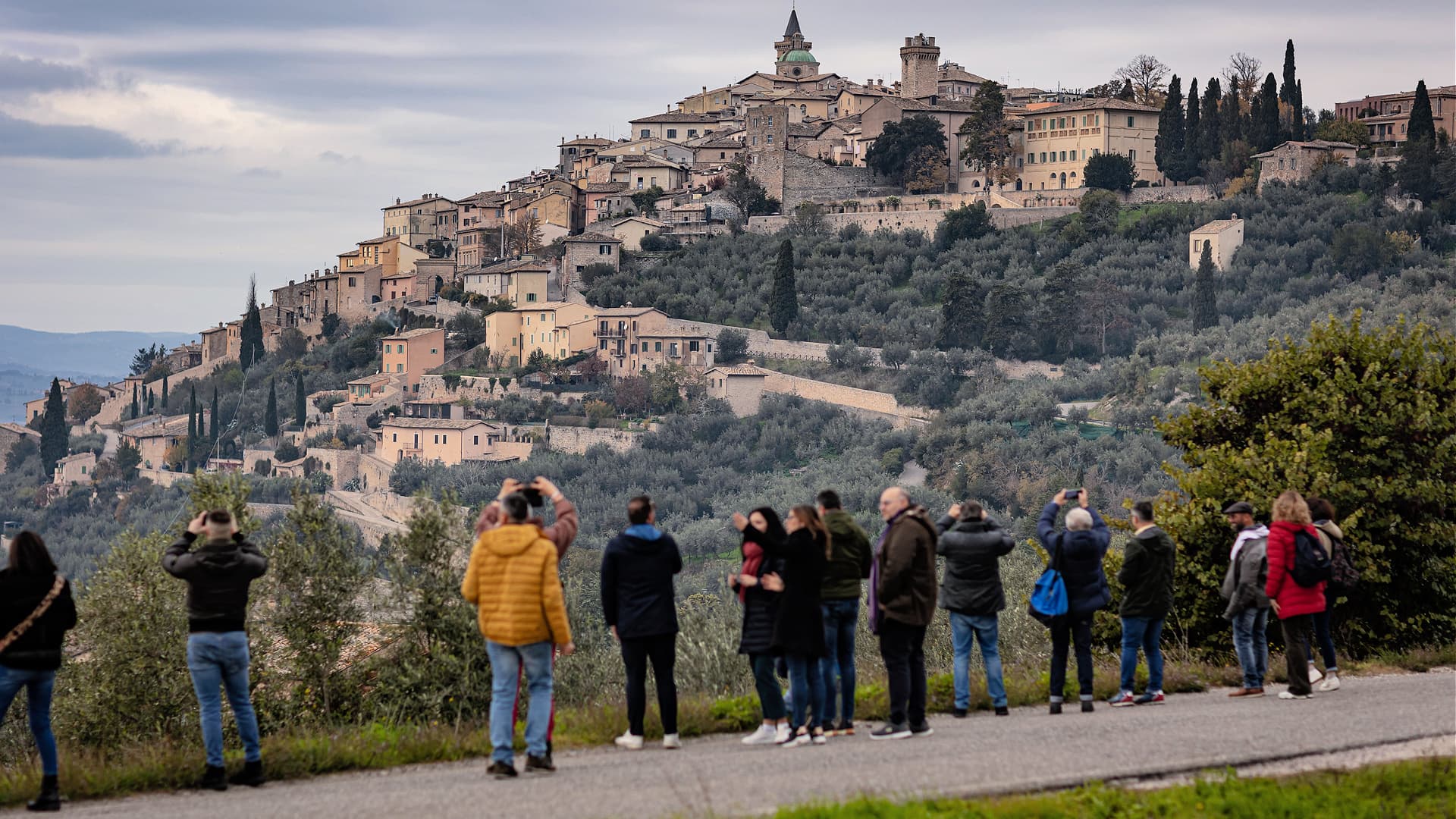
The Tuscany PGI region has been at the forefront of oleotourism that many other inland and rural Italian municipalities and regions are working to emulate. (Photo: Qualivita Foundation)
“For example, Chianti Classico PDO has a wine museum, and the Modica PGI consortium now has a chocolate museum. Despite its small size, it perfectly embodies what it means to build networks. It’s about developing infrastructure that adds real value,” Rosati said.
One of the case studies cited in the report involves the Umbrian Olive Oil Road, which is likely the most advanced oleotourism network in the country, bringing together municipalities, olive oil mills, and producers.
“Looking at some examples of such a network in action, we can pick the EVOO and Art Experience,” Daniela Tabarrini, director of the Umbrian Olive Oil Road, told Olive Oil Times.
The event is geared toward journalists to raise awareness of the work and the territories behind high-quality extra virgin olive oil.
The program included visits to the town of Bettona and Villa Boccaglione, followed by tastings and guided tours of olive oil mills, some led by renowned tasters.
Participants could also choose to tour the Trasimeno Hills, including a fishing tourism experience and a focus on locations linked to the Renaissance painter Perugino.
Another tour explored the hills between Assisi and Spoleto, featuring visits to UNESCO World Heritage sites.
According to Tabarrini, these initiatives blend agriculture, history and cultural identity. They also aim to connect the olive product chain with tourism operators.
“With the well-established Open Olive Oil Mills initiative (Frantoi Aperti in Italian), stable tourism itineraries were created,” Tabarrini said.
Frantoi Aperti takes place during the harvest season, celebrating freshly pressed extra virgin olive oil.
The event spans several weekends featuring art, nature, food, and music, along with a variety of cultural and agricultural activities.
These include cycling and trekking routes through the iconic Umbrian hills, as well as concerts in the region’s most scenic olive landscapes.
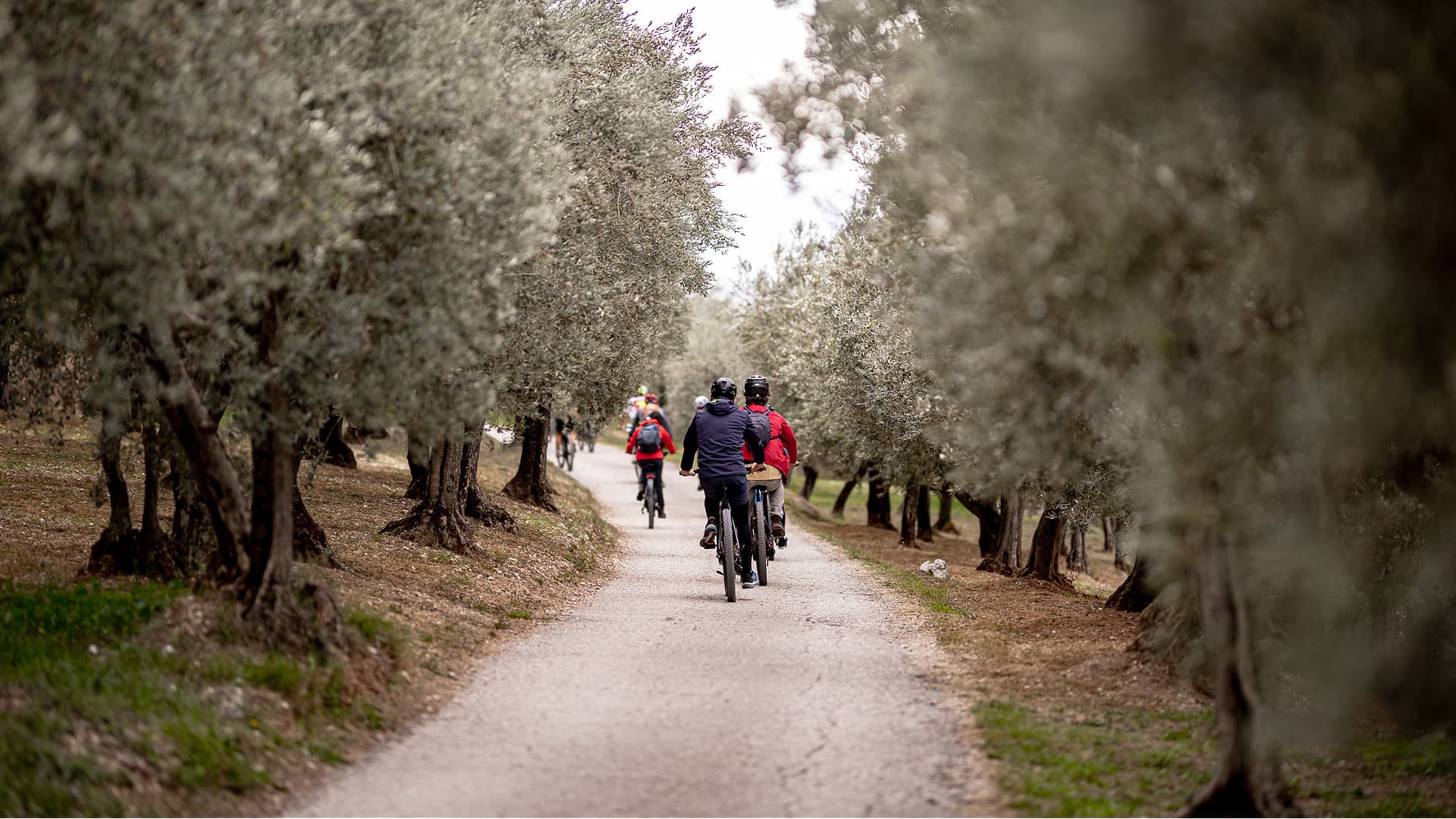
Cycling and hiking through olive groves creates synergy between the growing trend of outdoor tourism and health benefits of olive oil. (Photo: Qualivita Foundation)
The Umbrian Olive Oil Road and its network actively support and promote the initiative.
“Due to the success of these initiatives, many olive oil mills are now open to visitors throughout the year, not just during the harvest,” Tabarrini said.
“Over time, olive oil producers have realized that their landscapes are attractive. They’ve made them cleaner and more welcoming. They represent an opportunity to talk about olive oil culture, to narrate olive oil and, of course, to sell it,” she added.
One of the most interesting aspects of these developments is that the Umbrian Olive Oil Road is now a growing part of the regional economy, with an increase in off-season visits, new jobs and a sales uptick.
“We are not just talking about the olive oil economy, but the broader economy tied to regional production, culture and agriculture. This is a very interesting development that could serve as a model for other Italian regions as well,” she concluded.