Passion for Quality Becomes Legacy at Oro di Giano Farm in the Heart of Umbria
Oro di Giano produces premium extra virgin olive oil in Umbria from native varieties, centered on one of the region’s oldest olive trees. The farm is run by Claudia Pompilj, who built a second career in olive oil with great success.
One of Umbria’s oldest olive trees stands in Macciano, a hamlet of Giano dell’Umbria, in the heart of central Italy. With its more than one thousand years of age and an impressive trunk that seems to carry its entire story, the ‘Olivo di Macciano’ is the centerpiece of Claudia Pompilj’s farm at the foot of the Martani Mountains.
“This year marks exactly 10 years since I founded the company, and looking back on this first decade, I am filled with gratitude,” Pompilj told Olive Oil Times.
At its first participation in the NYIOOC World Olive Oil Competition, her blend Oro di Giano Macciano DOP Umbria Colli Martani earned a Gold Award, thanks to an elegant profile with captivating herbal notes.
“This experience has taught me, first and foremost, patience,” Pompilj pointed out. “Before, I was restless, always juggling a thousand things and impatient for immediate results. I remember, early on, my collaborators at the farm warned me, ‘Look Claudia, here it takes months to reap the fruits of what you sow – there are no shortcuts!’ I arrived thinking I would just pick the olives and go right back to my life. It did not take long to realized that harvesting takes a full year of dedication. I have carried that insight into my personal life.”
The Oro di Giano farm spans 160 hectares (395 acres), of which fifteen hectares are devoted to olive groves with 4,000 trees, including Moraiolo, Frantoio, and Leccino, as well as San Felice and Tendellone, native to the area. On the property, which has been in Pompilj’s family for generations, stands a farmhouse built by her ancestors in the early 1400s.
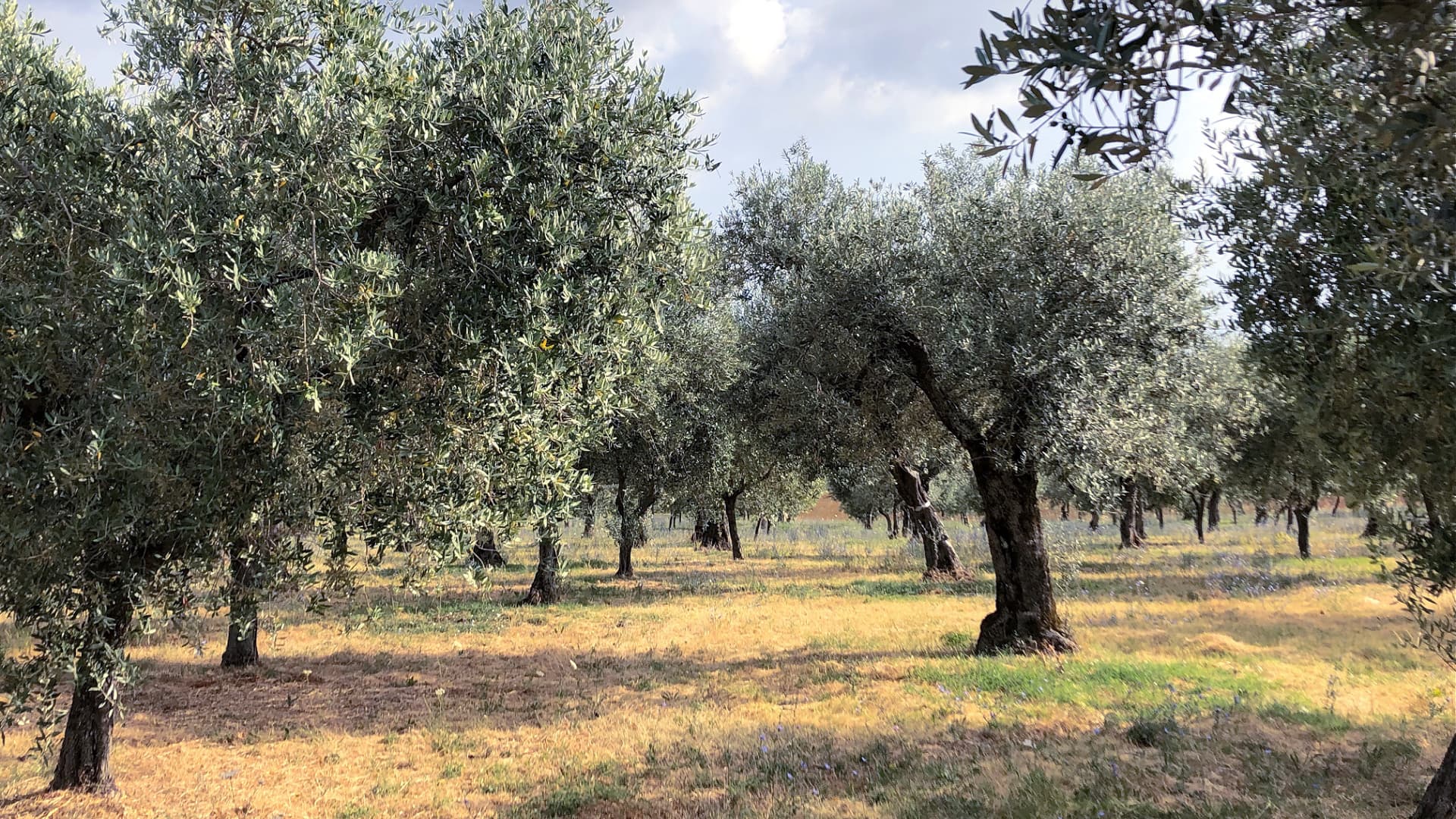
An olive grove at the Oro di Giano estate
“My father Martino was a lawyer who also managed this farm. In 2011, after his passing, I found myself taking over its reins,” Pompilj recalled. “Until then, fully immersed in my previous work, I knew nothing about the agricultural world.”
Born and raised in Rome, she earned a bachelor’s degree in business and economics. She spent 18 years working in marketing and advertising, followed by another ten in television production — a past far removed from her life today.
“Two years later, my husband and I separated. The years leading up to the founding of my own company were extremely challenging, yet ultimately proved pivotal,” Pompilj said. “With my son Simone still little, I was suddenly in charge of handling numerous responsibilities.”
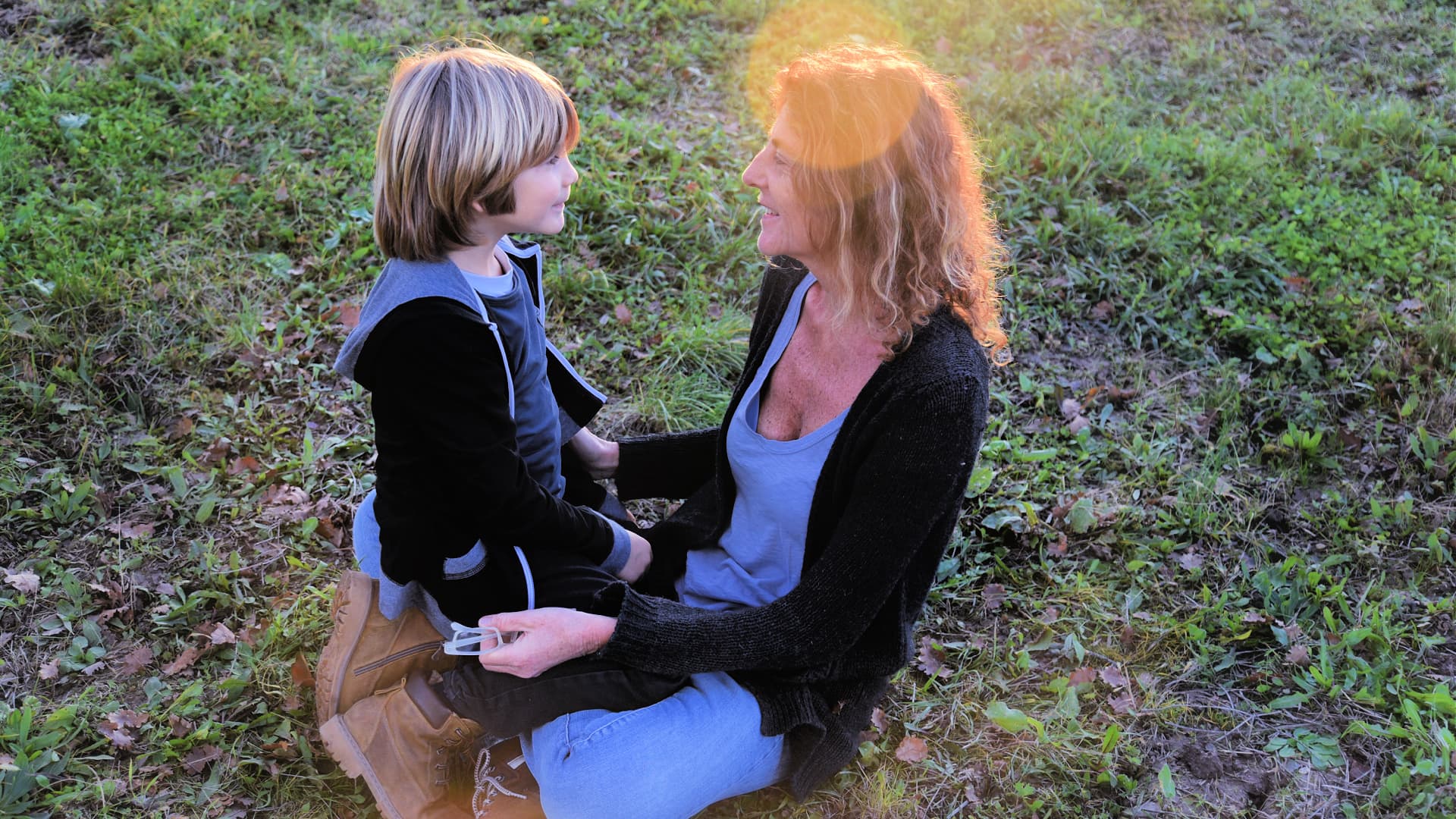
Claudia Pompilj and son Simone during their first harvest at Oro di Giano farm
Encouraged by her collaborator, Alessandro Flamini, she decided to launch her own brand of extra virgin olive oil. It was not only a business move but also a defining moment in her life journey.
“At first, it was an instinctive, almost improvised leap of faith. Then, one day in a restaurant, I tasted an extraordinary Umbrian extra virgin olive oil. It was an enlightenment. From that point on, I knew I would pursue the highest standards of quality in my own work,” she emphasized. “Soon, olive oil became more than a product; it became the soul of the project, and the spark that launched a new chapter in my life. I must say that Simone witnessed my gradual transformation into a passionate devotee of agriculture, guided by the unyielding pursuit of olive oil excellence.”
Pompilj soon embarked on an intensive training path, completing courses to qualify as a taster, pruner, and olive mill technician, while also earning advanced certifications for managing an efficient, high-standard business.
“I began with the idea of selling abroad, convinced of the product’s potential on the international stage. But then I found such a welcoming and familiar environment among the Italian retailers and other operators in the sector, I told myself that my path should begin there, before eventually taking me across the ocean,” she revealed.
The brand name Oro di Giano, meaning Gold of Giano, evokes the idea that, in the past, the products of the earth were valued and exchanged like currency. It also draws inspiration from Janus, one of the oldest Roman deities, from whom the name of the town Giano dell’Umbria likely derives. Revered as the god of doorways (ianua in Latin) and of passages (iani), he was portrayed with two faces, looking both to the entrance and the exit, to the past and to the future.
“I found it meaningful that Janus is the deity presiding the past and the future, the transitions and the beginnings,” Pompilj underlined. “So, I personally designed the company logo, placing my father’s profile on the left and mine on the right, to symbolize the passing of the torch from him to me. I owe him for passing this land down to me, a place of beauty and wonder, where I am blessed to host one of the region’s oldest olive tree.”
Listed in Italy’s national register of monumental trees, the Olivo di Macciano belongs to the Raja variety and is distinguished by a broad trunk. It measures just over 8 meters in girth, unfolding as if to offer an embrace.
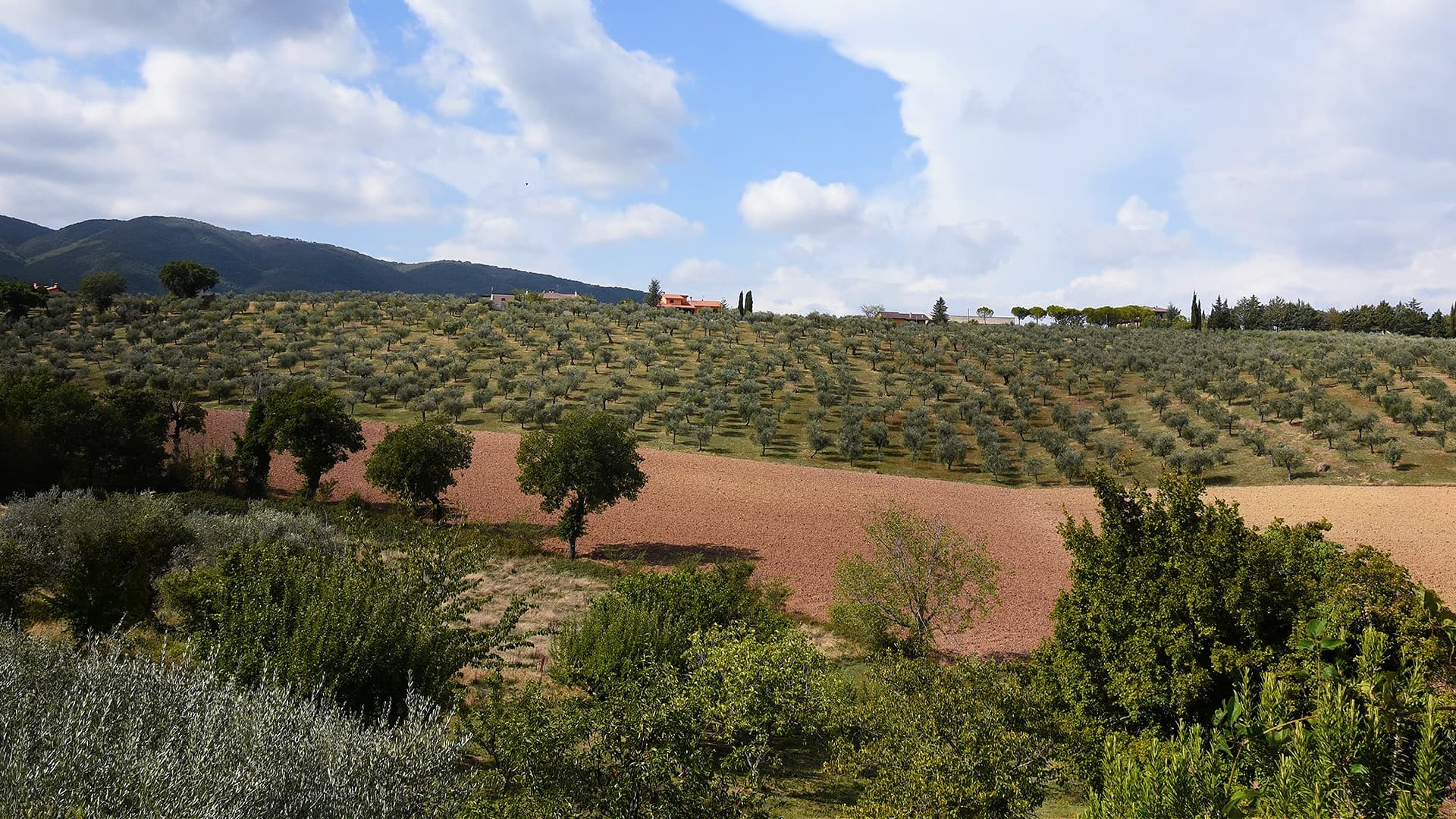
‘La Chiusa’ olive grove at the Oro di Giano estate. Claudia Pompilj’s father, Martino, was especially fond of this area of the property.
“Many visitors say they feel something profound radiating from it, like an energy shaped by the many centuries it has endured,” Pompilj revealed. “When I face challenging moments, I go there, I wrap myself in its trunk’s embrace, I ask what to do, and somehow, the answer always comes.”
The monumental tree is the centerpiece of an ancient 15-hectare orchard, composed of three plots arranged in a traditional planting layout, with approximately 6 meters (20 feet) between trees. Recently, 5 hectares of San Felice were added, extending the grove in the same pattern.
“As is often the case in traditional groves, the older plots contain a mix of olive varieties interspersed throughout. To obtain the San Felice monovarietal, I usually track down each tree of that variety, selecting them from among the others scattered across the field,” Pompilj explained. “Once the new grove, planted entirely with San Felice, begins producing in four to five years, harvesting will be easier.”
The company’s current production includes one monovarietal and two blends. In certain seasons, Oro di Giano also creates exclusive editions crafted in limited quantities. The olives are entrusted to Frantoio Filippi, a state-of-the-art mill located near the farm.
A few years ago, Pompilj designed an irrigation system based on a well and cisterns to collect water, with 10 kilometers of underground piping connecting them to the orchards, and 9,000 linear meters of above-ground irrigation.
“The installation demanded great effort, but given the current climate situation, it was a very farsighted measure, as I can now prevent drought stress in the olive trees,” she considered. “However, our goal is to make the most efficient use of available resources. Today, it is pivotal to manage the agricultural land sustainably in order to tackle the effect of climate change and limit our impact on the environment.”
Most of the farm’s energy comes from photovoltaic panels, and the land is cultivated mainly following organic and regenerative practices.
“I practice crop rotation across the entire property, with thirty hectares sown with alfalfa and a rich mix of meadow grasses for six consecutive years to promote biodiversity and regenerate the soil,” Pompilj pointed out.
At least 15 hectares of the estate are dedicated to the cultivation of pearl barley, pearl spelt, various types of lentils and chickpeas, green beans, buckwheat, and the ancient Roveja, which was recently introduced.
In a virtuous circle of sustainability, the olive groves are fertilized exclusively with local cattle manure sourced from nearby farmers through a mutual exchange: the company provides them with byproducts from legume and cereal processing, which are used to feed their cattle.
“For some years now, we have also hosted beehives for small-scale honey production. Every year I add something new, and many wonderful thing are still to come,” Pompilj highlighted. “With this first phase concluded, during which all the structural and organizational foundations were laid, I have countless ideas and projects in mind.”
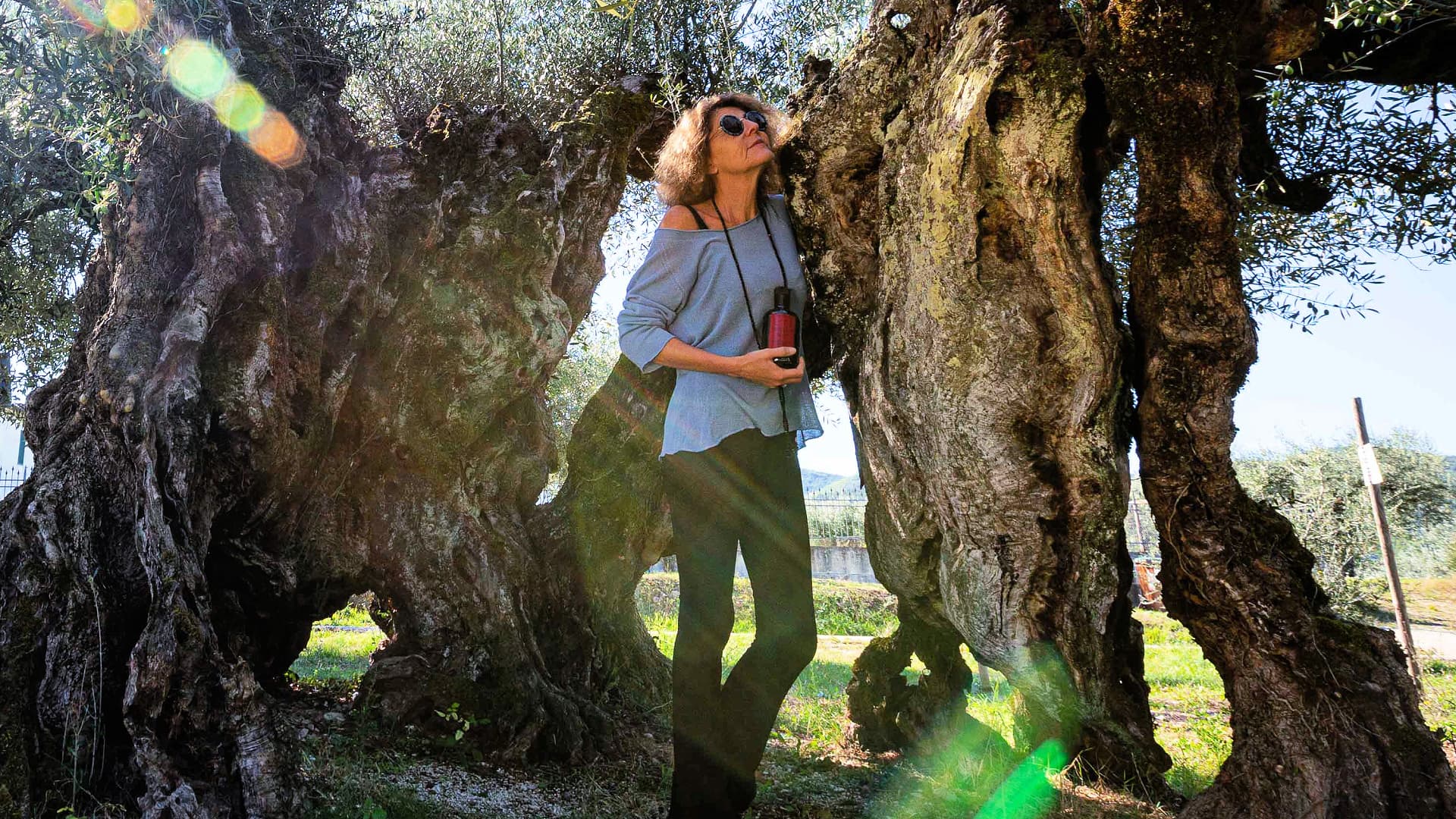
Claudia Pompilj and the Olivo di Macciano
The company organizes olive oil tastings and events upon request, which are met with enthusiastic participation from both Italian and international guests. Plans are currently underway to create hospitality spaces, opening her property to more immersive oleotourism experiences.
“Each event, tasting, and meeting with visitors becomes a meaningful moment, enriched by heartfelt human exchange,” Pompilj said. “I believe quality is not an end in itself. I do not simply present my product, I also share the vision behind them, one that embraces the beauty of this land and respects its environment and people through sustainable, wholesome agriculture.”
“When I think about the care and immense effort I have poured into this work, alongside the challenges of recent years, which have been especially tough for us farmers, from extreme weather to countless other hardships, I realize it is not always easy,” she added. “Yet, for every difficulty there is recognition and affection from those who appreciate my products, and have stood by me through the years. Every time I receive an award, I am happy above all because I know I am making them happy. And that is what makes it all worthwhile.”
As the legacy once flowed from father to daughter, so now the passion is being passed to her child. The Oro di Giano homepage greets visitors with an image of mother and son standing back-to-back, mirroring the company logo. It is paired with a verse by Nazim Hikmet: ‘The most beautiful sea is that which hasn’t been crossed yet…’ A vision that honors heritage while looking toward the promise of the future.
“Simone has seen how deeply I have intertwined my journey with this project. He is young, yet he has already embraced the world of extra virgin olive oil with enthusiasm,” Pompilj revealed. “Still, I do not want him to feel pressured. At times I worry I may influence him too much, because he sees the strong bond I have with this land and how fulfilled I feel by this work. He does love this place and is genuinely interested in our activities. If he chooses to follow in my footsteps, I will be truly glad. But more than anything, I want him to be free and happy with whatever path he chooses.”