Willow Creek’s Cooperative Approach Brings Stability to Olive Growers
Inspired by models in Europe and Chile, Willow Creek’s Guild of Groves brings 35 South African olive growers together to share resources, reduce costs, and boost quality.
Located in the Nuy Valley at the foot of the Langeberg Mountains near Worcester in South Africa’s Western Cape, the award-winning Willow Creek Olive Estate is undergoing a significant transformation.
The farm, one of the country’s largest olive oil producers, recently earned two new awards at the 2025 NYIOOC World Olive Oil Competition Southern Hemisphere Edition.
As producers in the southern hemisphere, we have a unique advantage: we can supply the world with the freshest olive oil right when the northern hemisphere’s stocks are aging.
Inspired by successful models in Italy, Spain, and Chile, Willow Creek has become a hub for a new cooperative movement among local farmers. Its latest venture, the Guild of Groves, was launched at the start of the last campaign to make olive farming more economically and socially sustainable for growers facing rising costs and shrinking margins.
“Olive farming in South Africa is quite expensive, and historically the local olive oil price was tied to import parity, mostly Spanish bulk prices. At those low levels, farmers would not be able to make a profit,” said Willow Creek CEO Eleanor Stoker in an interview with Olive Oil Times.
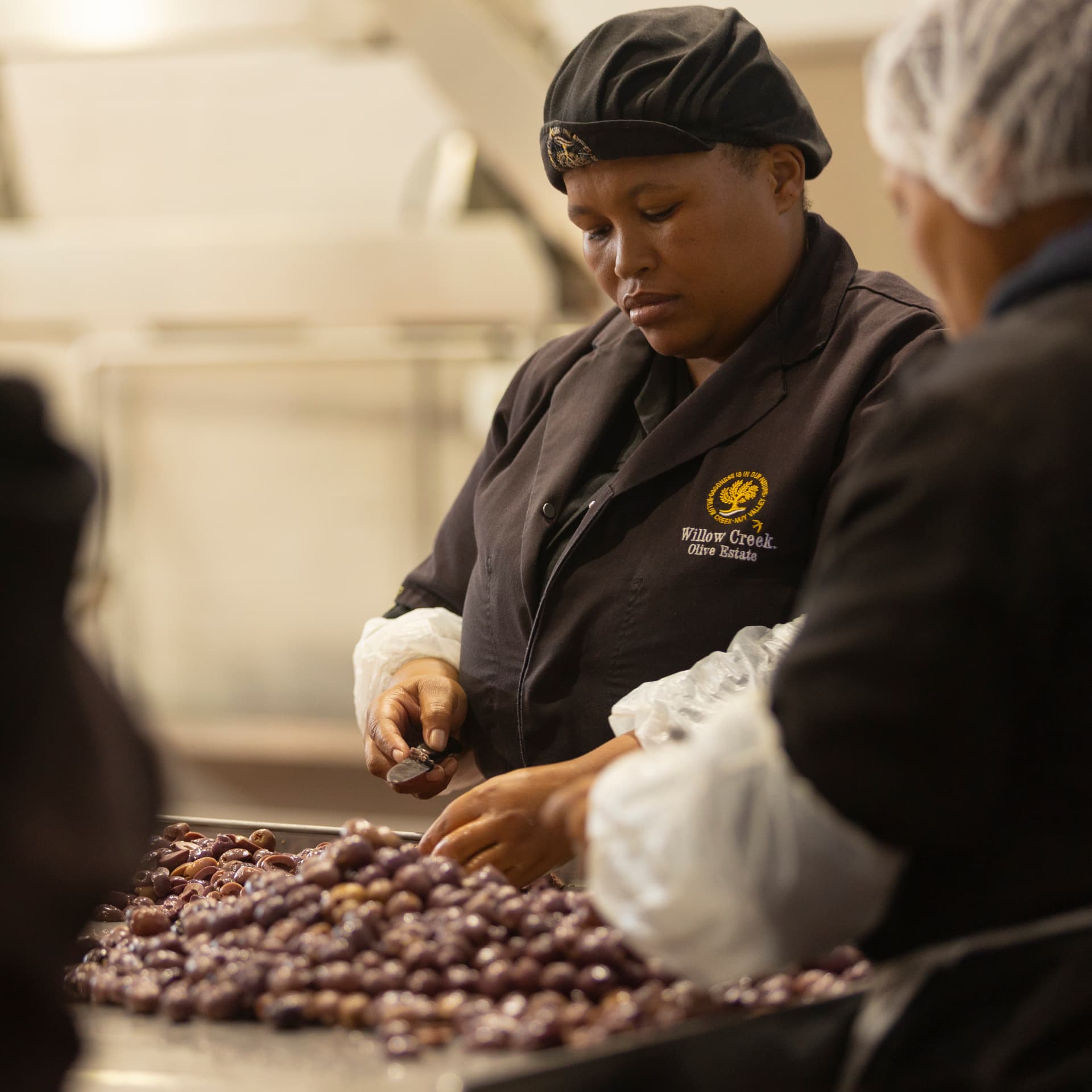
“Farmers focus on growing olives, while we take care of processing, bottling, and marketing,” she added. “They bring their fruit, we grade it carefully, process it, store the olive oil, and distribute it throughout the year according to our customer base.”
Similar cooperative structures are common in South Africa’s citrus and apple industries. Now, olive growers can also benefit from shared infrastructure and expertise. Willow Creek operates one of the country’s largest processing facilities, allowing members to reduce production and certification costs through collective services.
“We have the infrastructure, experience, experts, and personnel,” Stoker said. So far, 35 olive farmers have joined the Guild, which is open to producers of all sizes. New members undergo a review of their past production, farming practices, and orchard conditions before joining. The technical team continues to visit and advise them throughout the year on irrigation, fruit development, and treatments.
“The idea is to ensure that all practices align with the Guild’s standards,” Stoker explained.
Over nearly three decades, Willow Creek has garnered numerous awards for the exceptional quality of its extra virgin olive oils. The Guild now builds on that foundation to strengthen the overall profile of South African olive oil while improving farmers’ livelihoods.
“The initiative was created to stimulate the industry, grow employment, and strengthen communities. Olives are just the means we’re using to achieve those goals,” Stoker said. “Our farmers trade as if they own a small portion of Willow Creek. The financial benefits flow back to them, while we take a small commission for managing operations.”
By pooling production and sharing risk, the Guild helps make olive farming more stable and sustainable. Weather events, fluctuating yields, and the natural alternate bearing cycle of olive trees can cause severe income swings for individual growers. Through cooperation, farmers can count on steady returns.
“Even if there’s weather destruction in one area, it doesn’t affect everyone. And if one farmer has little olive oil this year and a lot next year, they still receive a constant price,” Stoker said.
In its first year, the cooperative produced about 250,000 kilograms of olive oil. “This year, with new members and a big producer joining us, we’ve doubled that to 450,000 kilograms,” Stoker noted. “It’s ambitious to talk about a one-million-liter production, but we believe it’s achievable if the model continues to deliver benefits for farmers.”
(Photo: Willow Creek Olive Estate)
Willow Creek’s products are now appearing more widely in retail chains across South Africa. “Retailers like Woolworths and Checkers appreciate the sentiment behind what we’re doing,” Stoker said. “There’s a deeper ‘why’ to the product, and that helps us get listed more easily.”
The cooperative aims to shift olive oil away from being treated as a commodity and toward a premium, value-based product that rewards quality. “Our goal is to move away from treating olive oil as a commodity and toward a premium, stable model that rewards high quality,” Stoker said.
Global demand for premium extra virgin olive oil is rising faster than demand for standard grades, both domestically and internationally. Willow Creek currently exports to the United Kingdom, Thailand, and the United Arab Emirates, with plans to expand its international distribution.
“As producers in the southern hemisphere, we have a unique advantage: we can supply the world with the freshest olive oil right when the northern hemisphere’s stocks are aging,” Stoker said.
Looking ahead, the Guild plans to welcome more farmers into its network. “The proof is in the pudding,” Stoker concluded. “The success we’ve seen so far gives us confidence, but it also reminds us how important it is to keep building on what we’ve started.”