Slovenian Producer Plans Olive Grove Glamping After Ninth Straight NYIOOC Gold
The Morgan family has combined organic olive oil production, international awards and visitor experiences to build a resilient business in Slovenia’s small but acclaimed olive-growing sector.
After winning a ninth consecutive Gold Award at the 2026 NYIOOC World Olive Oil Competition, Morgan Organic Farm is preparing to expand its agritourism operations in Slovenian Istria.
The family-run producer, based in Grintovec near Šmarje, plans to add environmentally sensitive luxury glamping accommodations among its century-old olive trees, extending a tourism model built around grove walks, tastings and local food.
The recognition we receive today confirms that persistence and respect for nature pay off over time.
Slovenia’s olive oil sector is tiny by global standards, producing about 600 to 800 metric tons annually. Yet producers in the country’s coastal Istrian region have built an international reputation for quality.
“We are few, but we are successful,” said Jenny Morgan, who manages the century-old family farm and is recognized as Slovenia’s first officially registered professional female olive grower.
The farm sits 219 meters above sea level, overlooking the Istrian hills and the Croatian Adriatic coast. It combines organic olive oil production with visitor experiences on land cultivated by the family for more than a century.
“Here in Grintovec, my grandfather Ivan cleared stones from the difficult terraced terrain and planted the first olive trees more than 100 years ago,” Morgan said.
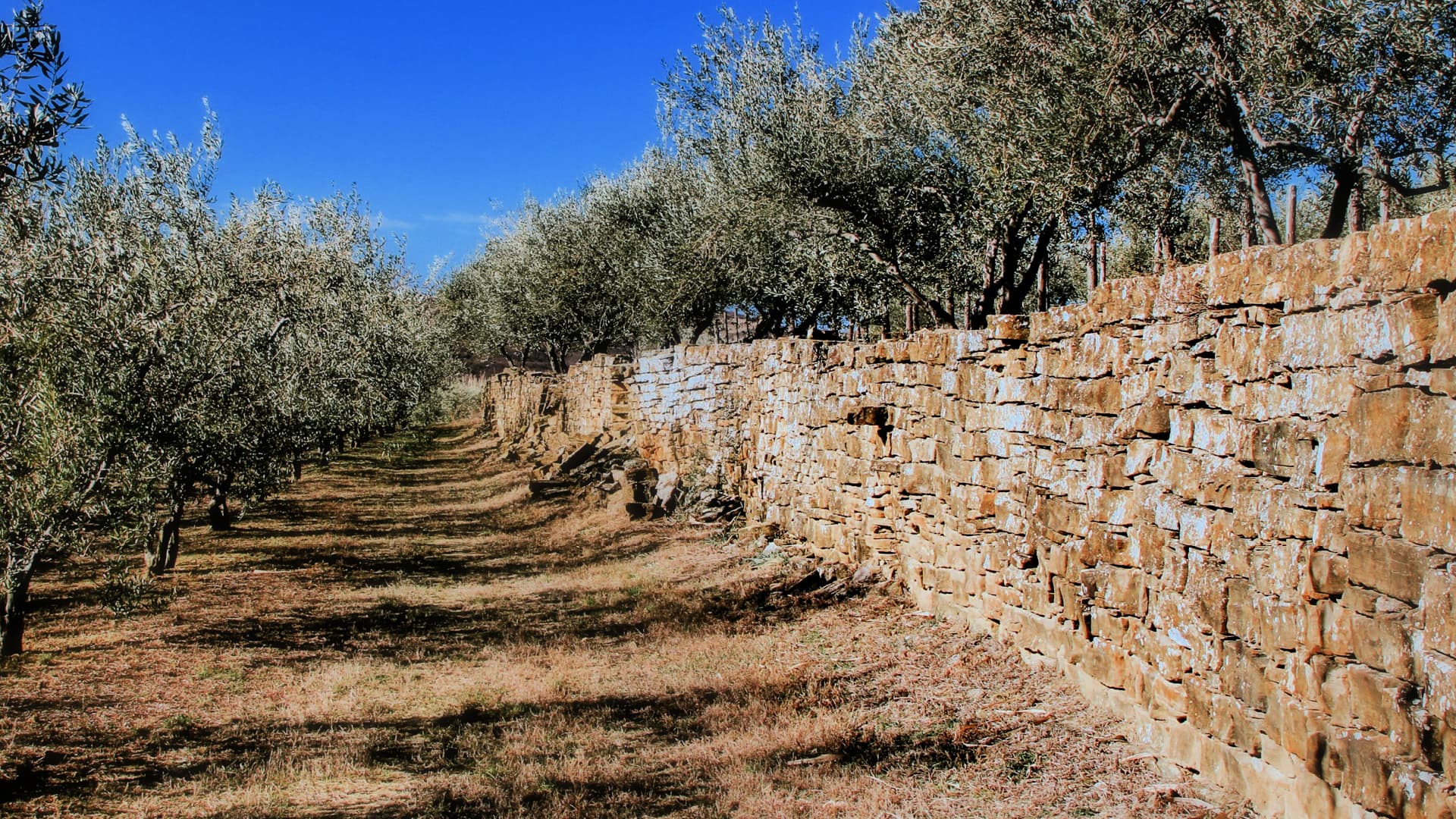
Century-old dry-stone walls support the terraced olive groves at Morgan Organic Farm in Grintovec, Slovenian Istria, preserving a landscape shaped by generations of cultivation.
“Dry-stone walls were built between the terraces, and today their weathered appearance is one of the first things that attracts visitors,” she added.
Her father, Franc Morgan, later took over the property and began restoring its historic terraces and expanding the groves in the late 1990s.
“I could not have imagined that our oil would win in New York nine years in a row,” he said. “At the time, we were focused on reviving abandoned terraces and preserving a landscape created by generations before us.”
“There was a great deal of work, and the conditions were difficult,” he added. “We were not thinking about awards. We wanted to make a product we could be proud of. The recognition we receive today confirms that persistence and respect for nature pay off over time.”
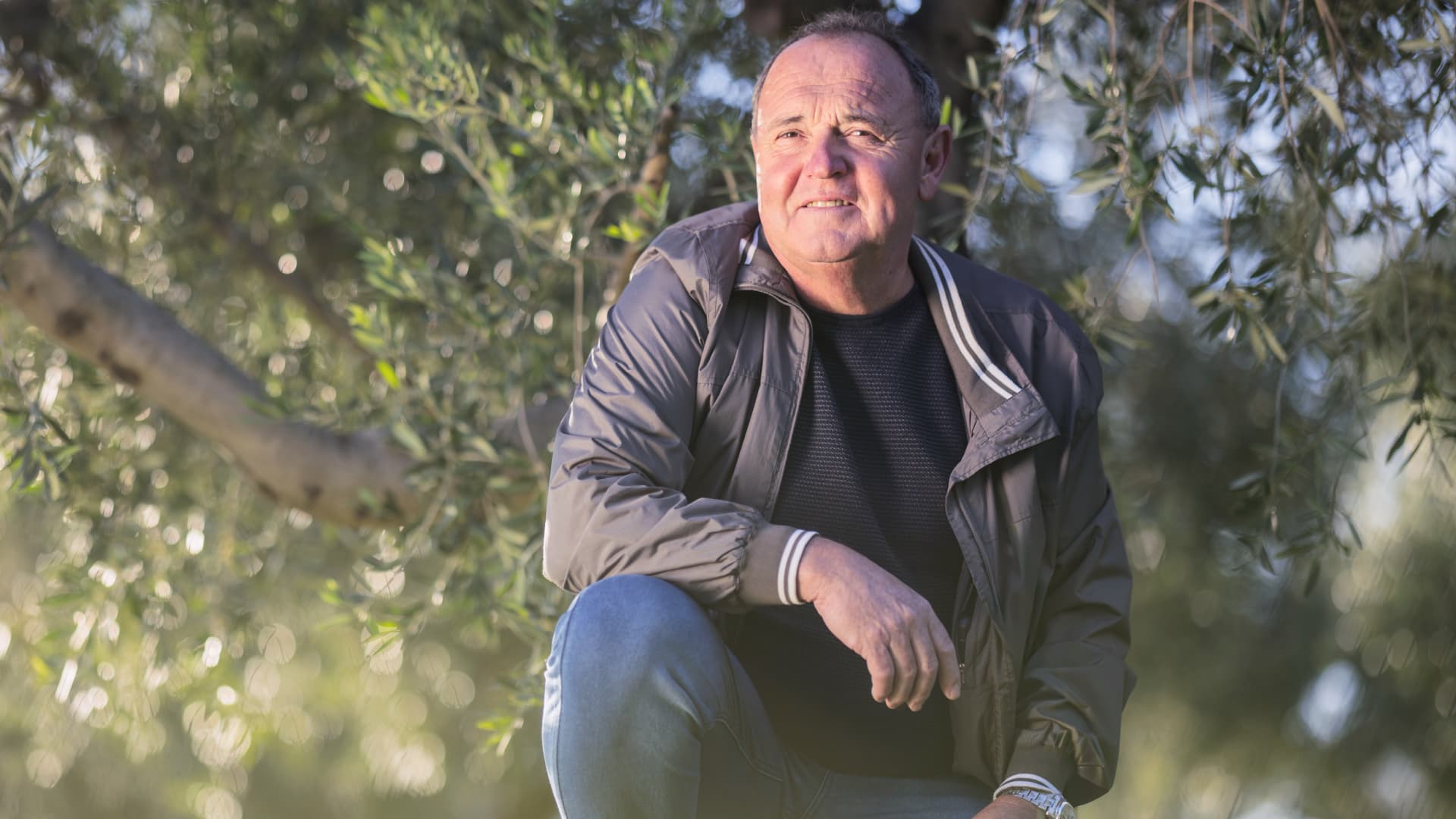
Franc Morgan, who began restoring the family’s historic terraces and expanding its olive groves in the late 1990s, oversees cultivation at Morgan Organic Farm in Grintovec, Slovenian Istria.
Morgan Cuvée is an organic blend of Istrska Belica, Leccino, Maurino, Moraiolo and Rosciola olives that the family describes as fresh, fruity and intensely flavored.
Olive growing in the region has long been shaped by climate risk. Franc Morgan recalled severe freezes in 1929, 1956 and 1985 that destroyed much of Istria’s olive-growing area.
After the 1985 freeze, the native Istrska Belica, known for its cold tolerance, became the region’s dominant variety. The family said it now accounts for about 70 percent of the area’s olive trees.
Morgan converted entirely to organic farming about 20 years ago, choosing to cultivate without synthetic crop-protection products.
“The olive tree taught us to observe nature, adapt to it and accept its rules, because this work requires enormous patience,” Franc said.
“We feel the effects of climate change more than ever, from prolonged droughts to growing pressure from new pests,” he added. “Organic production requires more sacrifice, but it is the only right decision for the future and for protecting the environment.”
The family launched the Morgan brand in 2004 and expanded distribution to specialty shops and high-end restaurants between 2011 and 2013. Its oils are now exported to Germany, Austria and Italy.
In 2014, rather than relying solely on wholesale and export markets, the family opened the property to visitors and began developing agritourism.
“Tourism increases direct sales and attracts customers who want to experience the whole story,” Jenny said. “The easiest way for people to understand our philosophy is to come here, experience the quiet and see olive trees that are more than 100 years old.”
“When they taste the oils while looking at the trees where the fruit was harvested, the experience is complete,” she added.
The family now wants to add eco-conscious luxury glamping units within the groves. The accommodations would allow visitors to stay among the old trees and look across the Slovenian and Croatian coastlines.
However, the project faces administrative hurdles.
“Projects like this require complex procedures and coordination with several institutions,” Jenny said. “We currently cooperate well with the local authorities, but glamping development on farms is still constrained by rigid procedures, which slows progress.”
She said more flexible regulations could support sustainable tourism, help small farms remain viable and preserve the region’s olive-growing heritage.
Alongside its tourism activities, Morgan has invested in e-commerce, digital outreach and international olive oil marketing.
“Through our website, social media and online shop, we can tell our story to people who might otherwise never hear of Grintovec,” Jenny said. “Customers are looking for authenticity, traceability and a personal story behind the product.”
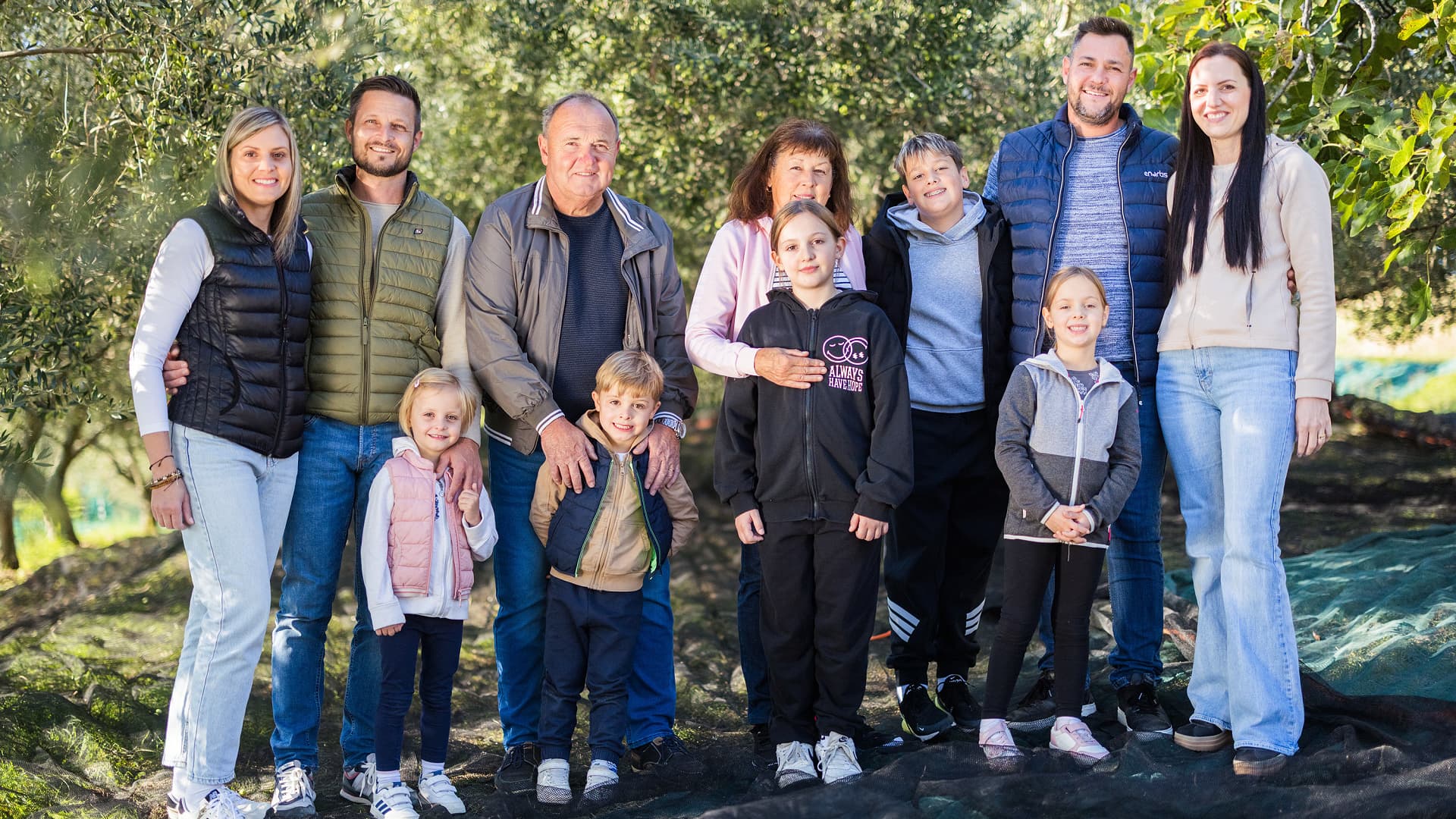
Three generations of the Morgan family — Franc and Silvana, their daughters Jenny and Ariana, their partners and grandchildren — gather in the family’s olive grove in Grintovec, Slovenian Istria. (Photo: Jaka Ivančič)
The farm offers educational walks through groves containing more than 1,200 trees, introductions to sensory analysis and guided olive oil tastings paired with Istrian foods.
Its location about 12 kilometers from the port of Koper has also made it a popular stop for cruise passengers.
“Many of our visitors come from cruise ships,” said Jenny’s sister, Ariana Morgan Opašić, who helps welcome guests and manage the farm shop.
“They are often impressed by the drive through the Istrian countryside, but what surprises them most is the peace and authenticity of the farm,” she said. “Although they are accustomed to mass-tourism destinations, they quickly notice the personal approach.”
Morgan Opašić said many visitors describe touring the groves and meeting the family as among the most authentic experiences of their time in Slovenia.
During tastings, visitors often arrive with misconceptions about extra virgin olive oil.
“The biggest surprise is usually learning that high-quality extra virgin olive oil does not have to taste mild or neutral,” Ariana said. “Many are surprised to learn that bitterness and pungency are signs of freshness, early harvesting and a high polyphenol content.”
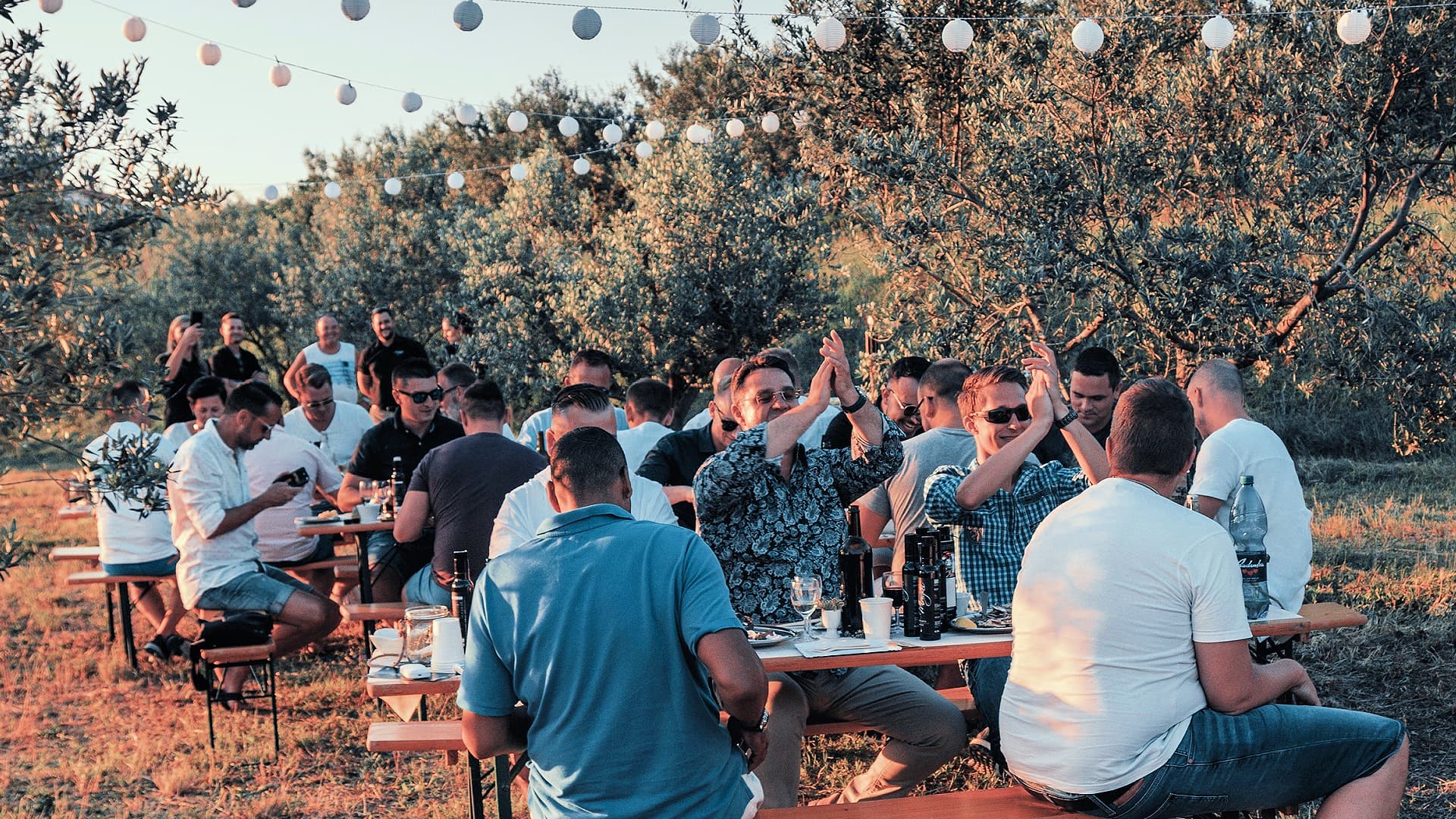
Guests gather in the olive groves at Morgan Organic Farm, where guided walks are followed by olive oil tastings paired with traditional Istrian delicacies.
“After tasting, they discover how complex the flavors can be, from freshly cut grass and artichoke to tomato leaf and almond,” she added. “They begin to understand olive oil in a completely different way.”
A clearly defined division of responsibilities supports the family business. Franc and Jenny’s partner, Borut, an agronomist, manages the groves and oversees agronomic work.
Silvana, Jenny’s mother, helps maintain the tasting room’s welcoming atmosphere and prepares specialties including olive liqueur and marinated table olives.
Jenny oversees the business, marketing, finances and tourism strategy, while Ariana manages inventory and helps organize tastings. The grandchildren are also involved, particularly during the autumn harvest.
“For us, the farm has never been just a business; it is a way of life,” Jenny and Ariana said. “We grew up with the values of olive cultivation that our parents passed on to us.”
“Of course, we sometimes have different views about development, but we see that as an advantage — a combination of the older generation’s experience and the younger generation’s energy,” they added.
“The bond between generations, respect for family values and our shared love of olive growing are the farm’s greatest wealth.”
Morgan’s experience illustrates how producers in small regions can compete through quality rather than volume. By combining organic production, international recognition, direct sales and tourism, the family is building a more resilient model for the future of olive growing in Slovenian Istria.