
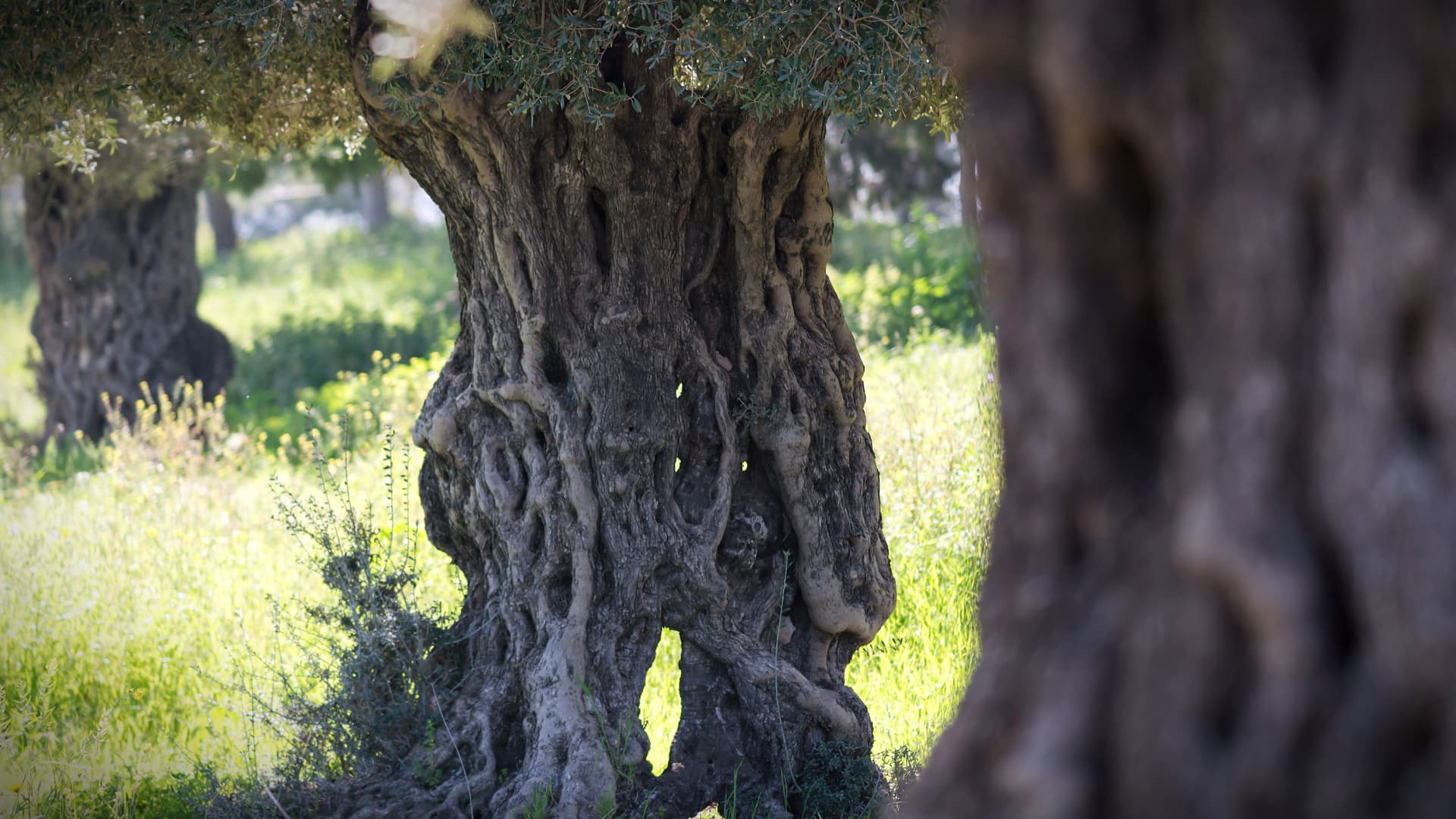
Experts say eradicating the Xylella fastidiosa outbreak recently reported in the Gargano area of northern Puglia is far from certain, as the number of infected olive trees has now exceeded 400.
The Puglia regional Phytosanitary Observatory confirmed 83 newly detected infections involving the subspecies pauca near the municipality of Cagnano Varano, where several hundred trees had already been infected. The bacterium has affected an estimated 21 million olive trees in Puglia since it was first detected in 2013.
The work being done is extremely useful, at least as a containment measure, but the chances of achieving complete eradication are far from certain. It is an uphill struggle.
The findings are based on 559 plant samples collected during the 2026 monitoring campaign and documented in five laboratory reports issued by the National Research Council (CNR) between June and September. The results prompted authorities to expand the demarcated infected area and its surrounding buffer zone, where special eradication measures apply.
“In this case, the infection in the area may have been detected only once the outbreak was already well-established. It is possible that, in the future, we will have to settle for containment protocols in that part of the region, as efforts to eradicate the bacterium might not succeed if the infection is as advanced as it appears to be in this instance,” Donato Boscia, researcher emeritus at CNR, told Olive Oil Times. Boscia and his fellow researchers have studied Xylella in Italy since its presence first became apparent in 2013.
Elsewhere in Puglia, eradication efforts in the north-central areas of Giovinazzo, Bisceglie and Minervino Murge are showing signs of success. With no additional infections detected, authorities have reduced the buffer zones around the three outbreaks from 2.5 kilometers to one kilometer, shrinking the area subject to specific monitoring and phytosanitary requirements.
The decision followed an analysis of 42,026 plant samples collected during the 2025 and 2026 monitoring campaigns, all of which tested negative.
“This is not happening by chance, as early detection of the outbreak proved crucial in limiting the spread of the bacteria,” Boscia explained.
He expressed considerable optimism about the three outbreaks, suggesting that the affected areas could potentially be declared free of the bacterium within about a year.
In those cases, early detection was crucial to the eradication efforts. Reports from local residents helped authorities quickly identify infections and respond. Only a handful of infected trees were initially found, some showing few or no symptoms.
“The situation in the Gargano is different,” Boscia said. “As early as last year, there was a well-founded suspicion that this could be a rather mature outbreak, with the bacterium having been introduced several years earlier.”
“Looking at Street View images, you could already see trees showing fairly evident symptoms two or three years earlier,” he explained. “And considering that the latency period of pauca in olive trees is very long, averaging around two years, we could hypothesize that the introduction of the bacterium dates back at least five or six years.”
“It is therefore not surprising that the [Gargano] outbreak is already fairly widespread,” Boscia said. “The work being done is extremely useful, at least as a containment measure, but the chances of achieving complete eradication are far from certain. It is an uphill struggle.”
According to Boscia, modeling included in the European Food Safety Authority’s (EFSA) draft update of its Xylella risk assessment, currently under public consultation, indicates that removing only plants known to be infected is often insufficient to eradicate established outbreaks, particularly when undetected infections remain nearby.
EFSA’s draft pest risk assessment indicates that increasing the radius of host plant removal could improve the probability of eradication, although the effectiveness of such measures depends on local epidemiological and landscape conditions.
Boscia pointed to the recently discovered outbreak in Taurianova, Calabria, where regional authorities have adopted a wider intervention radius of 80 meters, compared with the 50-meter minimum provided for under European regulations.
The Taurianova outbreak was also discovered following reports from residents who had noticed suspicious symptoms on olive trees.
For Boscia, the case underscores the growing importance of public participation in phytosanitary surveillance, an approach he described as citizen science.
“No matter how substantial the resources and personnel deployed by regional phytosanitary services, the territory is so vast and there are so many plants to monitor that they cannot cover everything,” Boscia said. “If an outbreak is not detected in time, it does not mean the authorities have been negligent. The territory is simply too vast, and active participation from the public is also needed.”
Beyond developments in southern Italy, Boscia said the experience gained since 2013 is also changing scientists’ understanding of the presence and distribution of Xylella in Europe.
What initially appeared to be the exceptional introduction of a highly destructive plant pathogen has progressively emerged as a more complex situation involving different subspecies and strains, with widely varying effects on their host plants.
He cited the example of Xylella fastidiosa subsp. multiplex, which has been detected in several European countries, including France and Portugal, sometimes with limited or almost undetectable effects on infected plants.
According to Boscia, some infections may have gone unnoticed for years or even decades because they produced few significant symptoms. In such cases, newly identified infections do not necessarily mean the bacterium has only recently reached an area.
“We are finding it because we are looking for it,” he said.
The recent identification of Xylella fastidiosa in Luxembourg illustrates how surveillance continues to reveal the bacterium in new European territories.
On October 12, Luxembourg authorities confirmed the presence of Xylella fastidiosa subsp. fastidiosa in grapevines at three locations in the country’s Moselle wine-growing region, prompting the establishment of infected and buffer zones.
For Boscia, the increasingly diverse epidemiological picture raises questions about whether the same regulatory approach is appropriate for outbreaks involving substantially different bacterial strains, host plants and levels of damage.
He noted that European phytosanitary rules were developed largely in response to the devastating impact of the original Puglia outbreak.
“We now have a single set of European rules that does not distinguish between different variants of the bacterium or different epidemiological situations,” Boscia said. “In some cases, these rules are appropriate, or may even be insufficient. In others, they may be excessively strict, and applying them literally could cause more damage than the bacterium itself.”
“This is why we are now at a very delicate stage,” he added, referring to the ongoing EFSA public consultation. “It will provide the basis for a reconsideration of European regulations in the coming months, involving the member states. The evidence accumulated over the years has completely changed our understanding of the situation,” Boscia concluded.