Apulian Producers Turn Family Roots and Ancient Legend Into Award-Winning Oils
At their family estate near Giovinazzo, Savino and Luigi De Palo combine local cultivars, sustainable farming and a deep attachment to the Apulian landscape.
An ancient local legend traces the origins of the Apulian town of Giovinazzo to the Greek hero Perseus, son of Zeus and the mortal princess Danae.
Weary from his exploits and long wanderings, Perseus is said to have sought rest on a fertile stretch of land along the Adriatic coast. There, he established a small hamlet in honor of his father. According to the tale, the village’s Latin name, Iovis Natio, meaning “Zeus’s people,” evolved into the town’s present name.
Producing quality today is not just about working in the fields. It also requires a complete awareness of what you are creating.
“We truly cherish this place, whose documented origins date back to a fourth-century B.C. settlement that developed into a community of fishermen and merchants during Roman times,” said Savino De Palo, who manages an estate just inland from the seaside village north of Bari with his father, Luigi.
“Yet in that fascinating legend, we found characters that seem to resonate naturally with the soul of our oils,” he told Olive Oil Times.
Named after the town’s mythological founder, the company’s Perseo blend combines the area’s signature cultivars, Coratina and Ogliarola Barese.
The varieties are also used to produce two monovarietals: Giove, the Italian name for Zeus, and Danae. Giove, known for its bold and vibrant character, earned a Gold Award at the NYIOOC World Olive Oil Competition, while Danae is defined by a more delicate and elegant profile.
The labels’ color palette reflects the same interplay. The monovarietals feature blue and yellow hues, respectively, while their union produces the green used for the blend.
Thriving on mostly flat land in a microclimate influenced by the nearby sea, the family’s 12,000 olive trees stretch across several parcels totaling approximately 50 hectares.
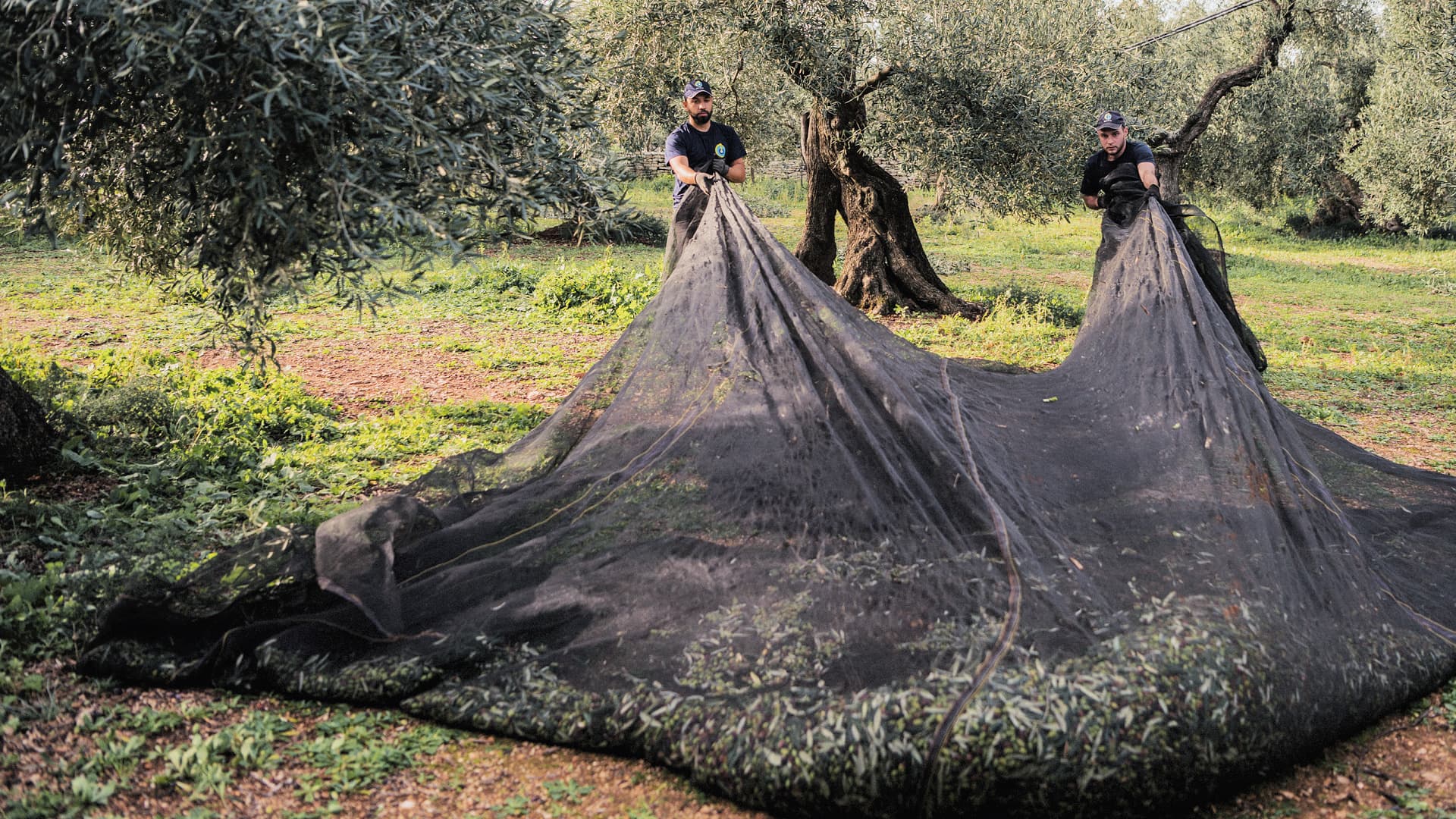
The De Palo estate spans several plots over 50 hectares of land and hosts 12,000 Coratina and Ogliarola Barese trees.
At the beginning, the company consisted of one hectare of land and 100 olive trees, De Palo said. His grandfather, also named Savino, cultivated the plot to sell olives and produce oil to support his family, with each family member contributing to the farm work, as was common in rural communities until the last century.
Luigi was 17 when his father died. Suddenly alone with his mother, he devoted himself to working the land.
While many of his friends left southern Italy during a wave of migration to the industrial north, Luigi chose to remain and care for the small orchard. After years of hard work, he gradually expanded the property.
“My father instilled in me a love for these olive trees,” De Palo said. “When I was a child, he would tell me, ‘If you want pocket money, you have to earn it.’”
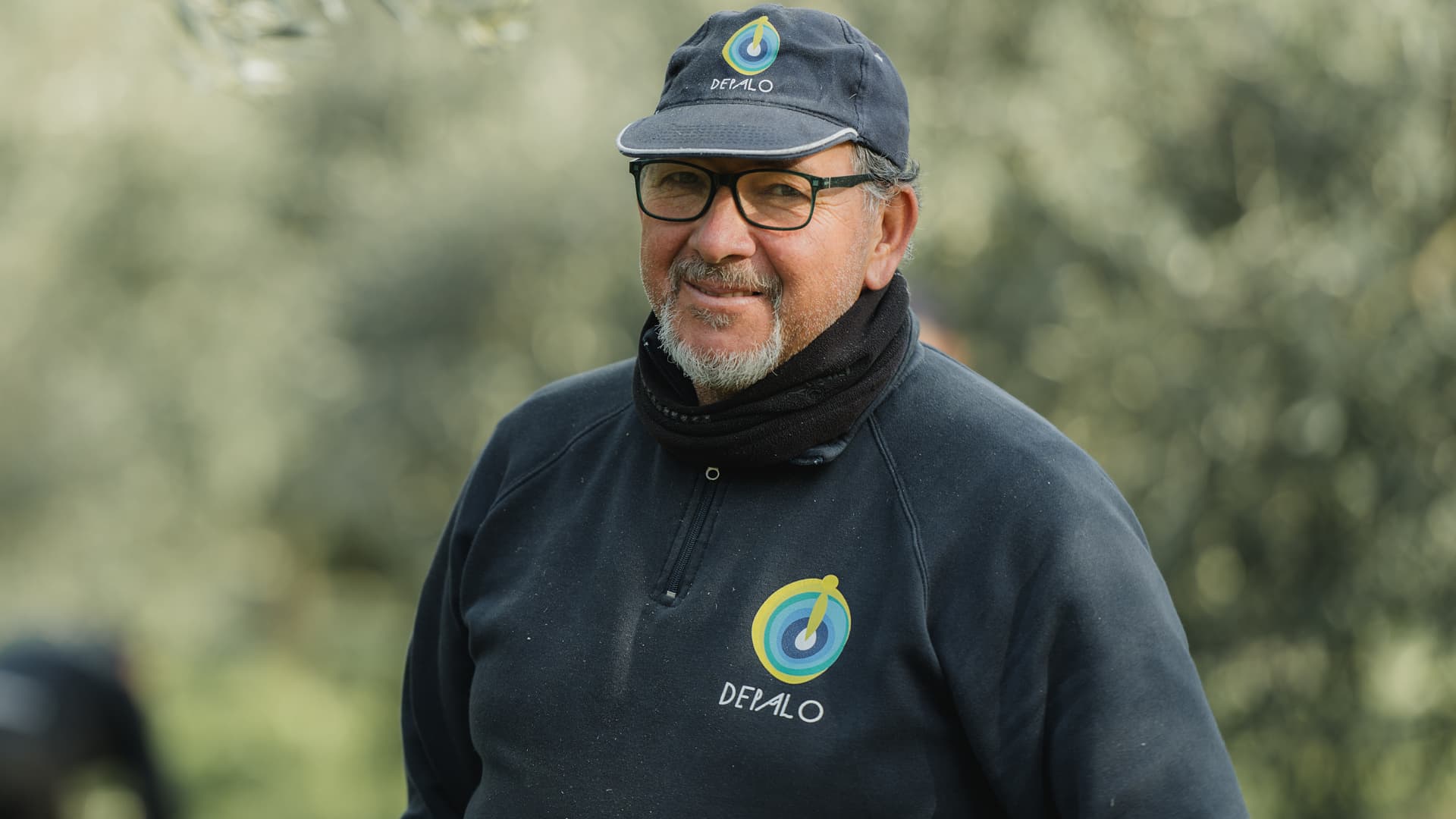
Luigi De Palo manages a 50-hectare estate together with his son, Savino, in Giovinazzo, near Bari.
“So I went with him to the farm and helped with small tasks, and that is how my passion began to grow,” he added.
Even before formally joining the company, De Palo enrolled in his first olive oil tasting courses.
“The fundamental step for me was to study and understand the product,” he said. “Producing quality today is not just about working in the fields. It also requires a complete awareness of what you are creating.”
“Only by truly understanding the product can you offer consumers the best possible result,” De Palo added.
De Palo joined his father in managing the farm 12 years ago, intending to enhance its value. At the time, the company still sold olives, a long-standing practice in the region, where many growers delivered their fruit to mills or wholesalers.
With roughly 35 hectares and a substantial number of olive trees, De Palo believed the family should develop the estate and create a brand that reflected its value. He proposed producing and bottling their own oil.
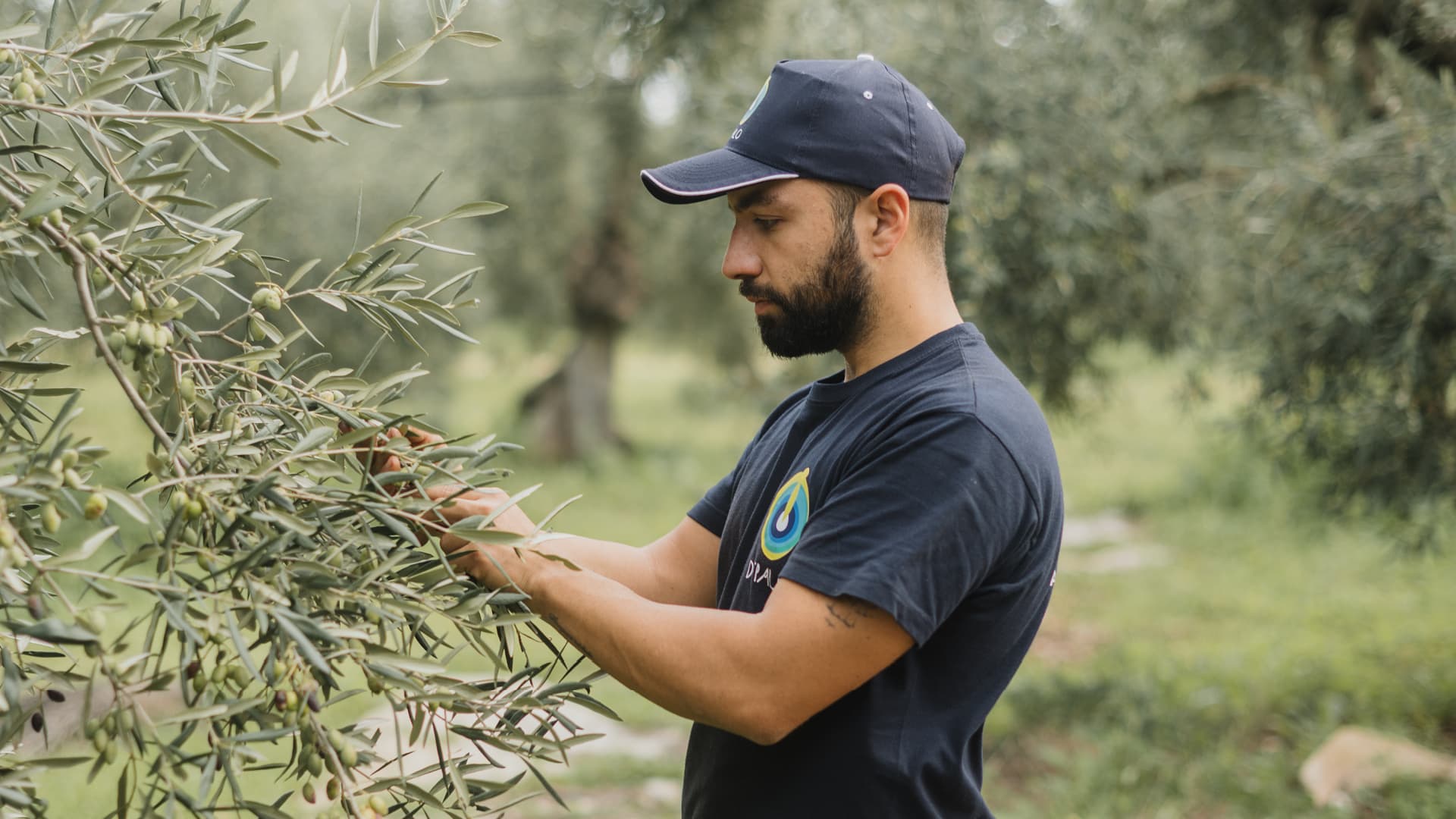
Savino De Palo and his father Luigi craft premium monovarietals and a blend from Coratina and Ogliarola Barese.
His father could not have taken on the project alone, but working together made it feasible, and Luigi embraced the idea.
The area is home to several reputable milling plants. From the outset, the family chose to entrust its olives to Le Tre Colonne, which De Palo said provides a top-quality production process.
“Over the years, we have acquired several orchards that also contain centuries-old trees,” De Palo said.
“While areas in northern and southern Puglia still have vacant land suitable for new planting, this landscape is already densely cultivated,” he added. “Most of the groves we have acquired are therefore traditional, with wide and often irregular spacing shaped by the age and history of the mature trees.”
The property is also divided into numerous parcels, reflecting the land fragmentation that has long characterized the area.
The estate’s two youngest groves were planted 30 years ago by De Palo’s father, who arranged them in a regular six-by-four-meter layout to allow for more efficient cultivation.
The fruit from these plots is reserved exclusively for the company’s Gran Cru Coratina monovarietal, one of the hallmarks of its production.
Because of its late ripening, Coratina is the last cultivar to be harvested, beginning in early November. Ogliarola Barese is usually harvested starting in the second week of October.
The two varieties are milled and stored separately, and the blend is assembled afterward.
At the optimal moment to pick the fruit, a small team of seasonal harvesters joins the family and three skilled employees who work year-round on the farm, bringing the workforce to 10.
“Today, we farmers must adapt to nature rather than force nature to adapt to agriculture,” De Palo said.
“Climate change has become increasingly evident,” he added. “In the face of extreme events such as drought, as happened here last year when no rain fell from April through June, we must simply do our best and work even harder.”
“This year, a few spring showers have at least helped us face the warm season,” De Palo said.
“With this in mind, we strive to protect our land and adopt a sustainable approach that helps us cope with the challenges of the climate crisis,” he added. “Cultivating while safeguarding the environment is crucial. It is also a way to create a beautiful landscape and demonstrate genuine care for our land.”
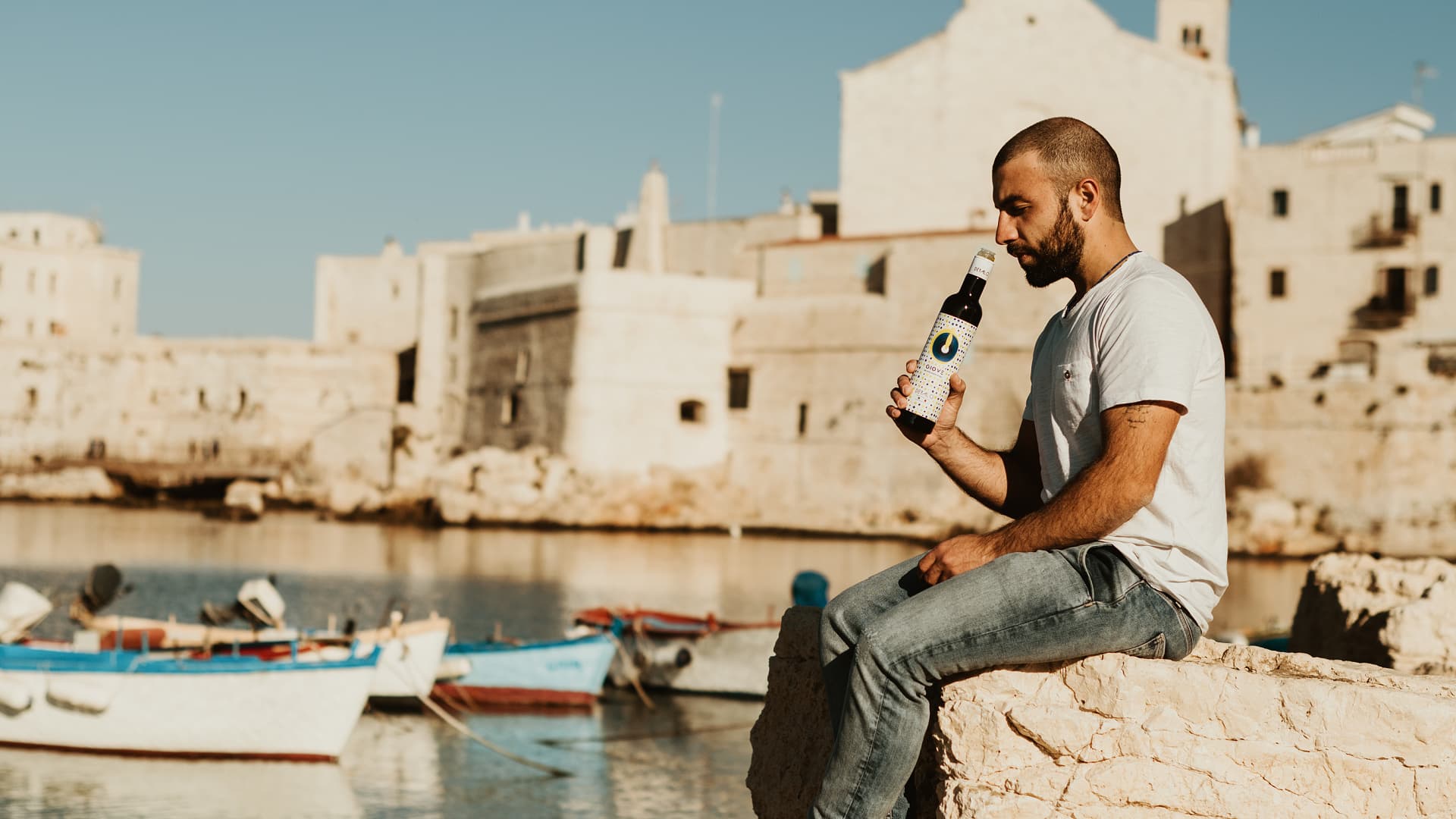
Savino De Palo and his father Luigi host oleourist experience on their farm and actively promote the area, driven by a strong bond with the seaside village of Giovinazzo.
The farm is powered by photovoltaic panels, and most of its equipment runs on electricity. The family also pays close attention to soil management, maintaining controlled ground cover and mowing periodically.
Pruning waste is shredded and returned to the groves as mulch and natural fertilizer.
De Palo said the family also wants to teach visitors and tourists about the importance of caring for the land responsibly.
Developing the estate’s tourism potential is one of the company’s two main investment goals, alongside constructing its own mill to complete the production cycle.
Since 2021, the family has offered oleotourism experiences, including tastings and aperitifs among the olive trees. Visitors may also participate in farm activities, such as the olive harvest.
“My father and I strive to communicate the value of our land, and that is the foundation of our project,” De Palo said. “When we embarked on this path, it was precisely because of our attachment to this place.”
“I enjoy meeting our guests, sharing stories about our town and encouraging people to visit it because I love it,” he added.
“We make oil and care for our olive trees because we feel a deep connection, with roots that sink into the Giovinazzo countryside,” De Palo said.
“This becomes a real strength because I believe that true quality always comes from a strong connection to the territory,” he concluded. “Ultimately, quality is a principle that comes from love and passion for the land.”