Gold Awards Highlight Montenegro’s Quality-First Olive Oil Ambitions
In Montenegro’s olive-growing center of Bar, a publicly owned mill is combining innovation, education and tradition to produce award-winning extra virgin olive oil.
An olive oil born among millennial olive trees and rooted in local history is bringing a distinctive Montenegrin identity to the global stage with Mirovica, a monovarietal from Montenegro.
We are a small country. We will never compete with other countries in terms of volume. But we definitely can compete in terms of quality.
In the coastal city of Bar, at the heart of Montenegro’s olive oil production, the publicly owned miller and producer Kuća Maslina-House of Olives is celebrating its first Gold Award at the 2026 NYIOOC World Olive Oil Competition.
“Mirovica is a very special olive oil,” Marija Markoč, agronomist, biotechnical researcher, olive oil sommelier and chief executive of Kuća Maslina, told Olive Oil Times. “It is the name of the place in our town where you can admire the oldest among our millennial Žutica olive trees, a tree that was literally the bearer of peace in the history of our nation.”
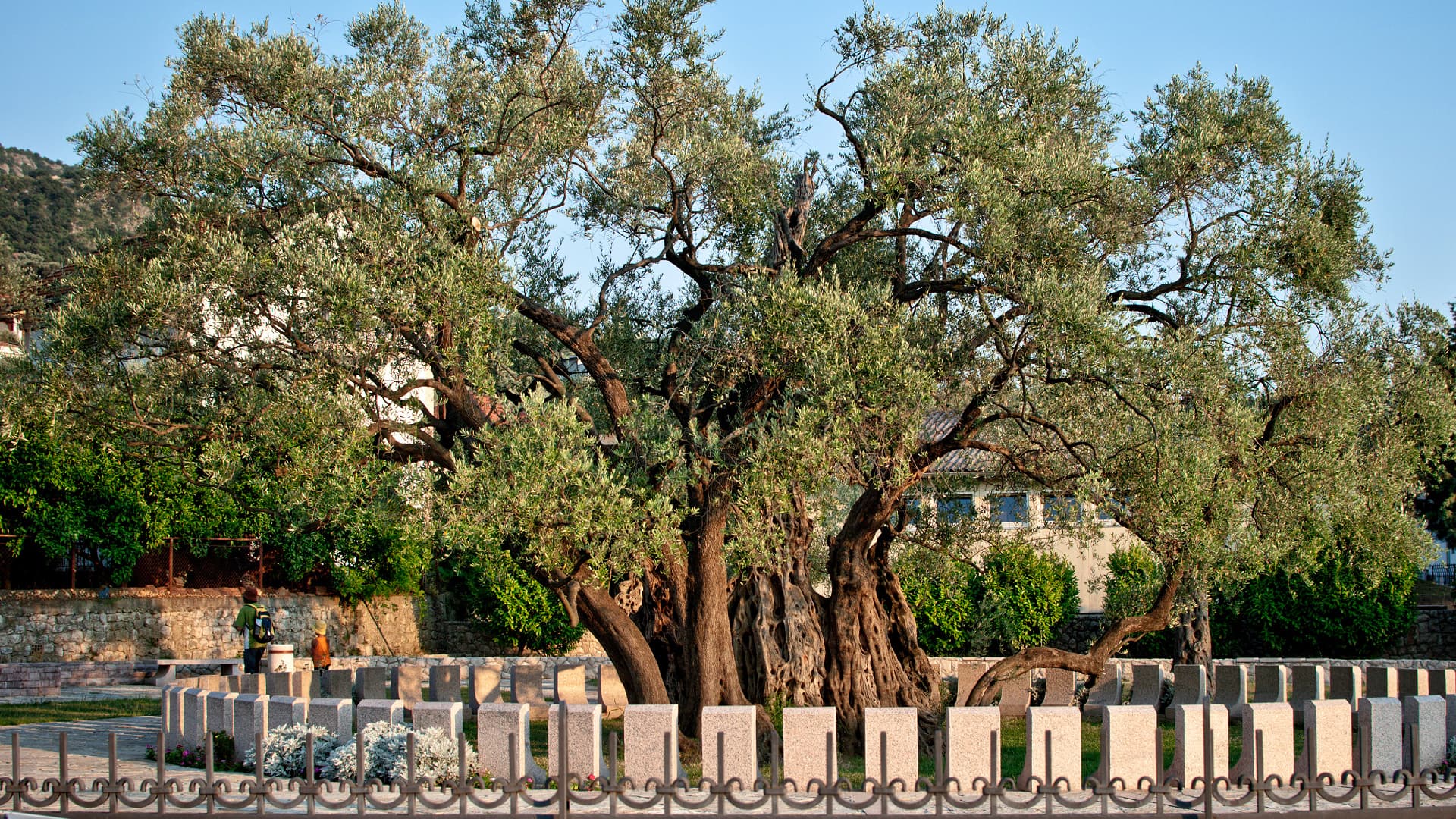
The old olive tree in Bar, Montenegro
Markoč said the Mirovica olive tree, known locally as Stara Maslina, or “old olive tree,” is regarded as a natural monument. Local tradition attributes 2,250 years to the tree, and this year, Bar is marking its enduring place in the area’s culture and social life.
According to widely documented local tradition, families and tribes in conflict once gathered beneath the tree’s canopy to reconcile disputes. The name Mirovica derives from the Slavic root “mir,” meaning peace, and the site has long been described as a place where quarrels were settled and coexistence restored.
See Also: The Best Olive Oils from MontenegroAlmost 90 percent of the olive oil produced in the area comes from the Žutica cultivar. About 100,000 olive trees grow in Bar and its immediate surroundings, and many farmers turn to House of Olives for access to the latest technologies in cultivation and processing. The institution also hosts the local olive growers’ association.
“We are a small country. We will never compete with other countries in terms of volume,” Markoč said. “But we definitely can compete in terms of quality.”
According to Markoč, the institution uses state-of-the-art milling equipment imported from Tuscany and applies advanced standards in both processing and storage, combining local tradition with modern production methods.

The processing mill in Bar
“When it comes to tradition, we should keep our autochthonous variety. That really differentiates us,” she said. “But when it comes to production and innovative practices, that is what we need to stand for.”
Mirovica’s production process is tightly controlled from harvest to storage. Olives are picked manually and milled within minutes of arrival. Markoč said the oil is produced at low temperatures and that the milling process is configured never to exceed 22.5 ºC, well below the upper threshold commonly associated with cold extraction.
After milling, the oil is stored in steel tanks under an inert atmosphere using argon and nitrogen. House of Olives does not use vertical separators, and the oil is filtered twice, once immediately after production and again before bottling.
Technology is also becoming more widespread in the groves surrounding Bar. Markoč said the goal is to achieve continuous and detailed monitoring of soil conditions to support more precise agronomic decisions.
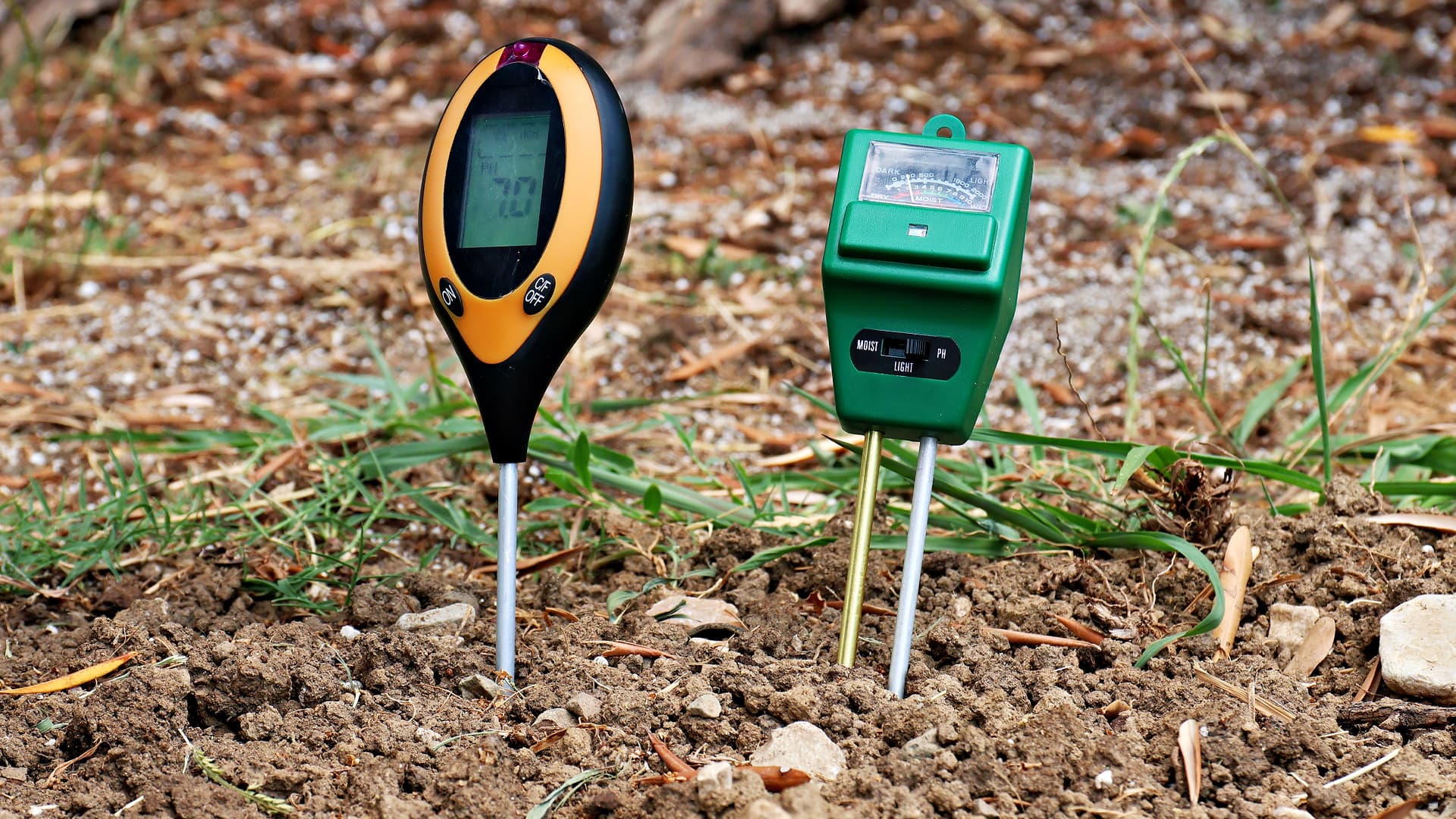
Moisture-measuring devices in the orchards
“We dedicate a lot of attention to the soil,” she said. “Every six months or every year we conduct complete soil analysis.” Those tests include plant material, underground water and the soil’s chemical and physical characteristics.
Portable devices are also used to monitor parameters such as soil moisture and nutrient levels, allowing operators to respond quickly to changing conditions. Daily data from a local meteorological station further informs decisions in the groves.
That data-driven approach also guides targeted interventions, including boron applications during pre-flowering and early fruit development, stages that Markoč said improve fruit set and overall yield. “We learned that our olives respond very well when you give them boron, especially during those two moments of the season,” she said.
Markoč said Žutica, whose name refers to the fruit’s golden-yellow color during ripening, has often been criticized for its tendency toward alternate bearing. But she argued that careful agronomic management can significantly reduce that variability.
“Some will point out that it might not bear fruit for even two or three years in a row,” she said. “But that is not correct. When you incorporate adequate agronomic practices, you will experience a significant yield each year.”
Kuća Maslina officials did not expect to win Gold at the NYIOOC. Markoč said the team believed the oil was strong enough to earn recognition, but the top award came as a surprise, especially because the producer chose to enter only the world’s largest olive oil competition.
In its first year, House of Olives offered its services free of charge, effectively acting as a subsidy to accelerate quality improvements across the region. The institution also organizes a national competition, hosts training sessions and works to connect tourism, education and production.
“Education is critical,” Markoč said, not only for farmers and consumers but also for the specialized personnel who operate olive mills. She recalled examples of mills with expensive machinery that still failed to win awards because of a lack of knowledge and technique.
To help address that gap, she wrote a 300-page technical book on olive oil production aimed at producers and students. The broader goal, she said, is to reinforce the idea that olive oil quality depends not on a single intervention but on knowledge applied consistently across the sector.
Although Kuća Maslina is not focused primarily on exports, it is exploring ways to reach people of Montenegrin origin living in the United States and Western Europe. Markoč said the country’s diaspora maintains close ties to the land, its traditions and its agricultural products.
With Montenegro’s population just above 600,000, its diaspora, shaped by waves of emigration from the late 19th century through the Balkan conflicts of the 1990s, is estimated at between 250,000 and 350,000 people.
For Markoč, that community represents a natural audience for oils such as Mirovica. “I would really love to give them the olive oil, because this is a great link to their home country,” she said.