Quality Push Redefines Olive Oil Production in Montenegro
Modern equipment, renewed collaboration, and respect for ancient groves are redefining olive oil production in Montenegro,.
A renewed focus on quality is driving a new era in olive oil production in Montenegro.
“In the last decade, significant investments have enabled producers to acquire equipment for olive oil production according to the most modern technological standards,” said Marija Markoč, biotechnical researcher, olive oil producer, and CEO of Kuća Maslina – House of Olives.
“With the help of the Ministry of Agriculture, Forestry and Water Management, processing mills, packaging units, and stainless steel tanks for safe storage under inert gas were procured,” she told Olive Oil Times.
Nestled in the Balkans on the Adriatic Sea between Bosnia and Albania, Montenegro is roughly the size of Connecticut and home to medieval coastal towns, dramatic mountains, pristine lakes, and ancient olive groves.
Montenegrin growers produce about 500 tons of olive oil annually, and the current campaign looks promising. “Several Montenegrin olive growers have started harvesting early — at the optimal stage of olive fruit maturity,” Markoč said. “The fruit is harvested manually and with electric vibro shakers, and processed within twelve hours.”
According to the House of Olives’ estimates, most olive orchards in the country are in good condition this season, and an abundant harvest is expected. “These results indicate the positive implementation of agro-technical measures in olive groves throughout the year,” Markoč added.
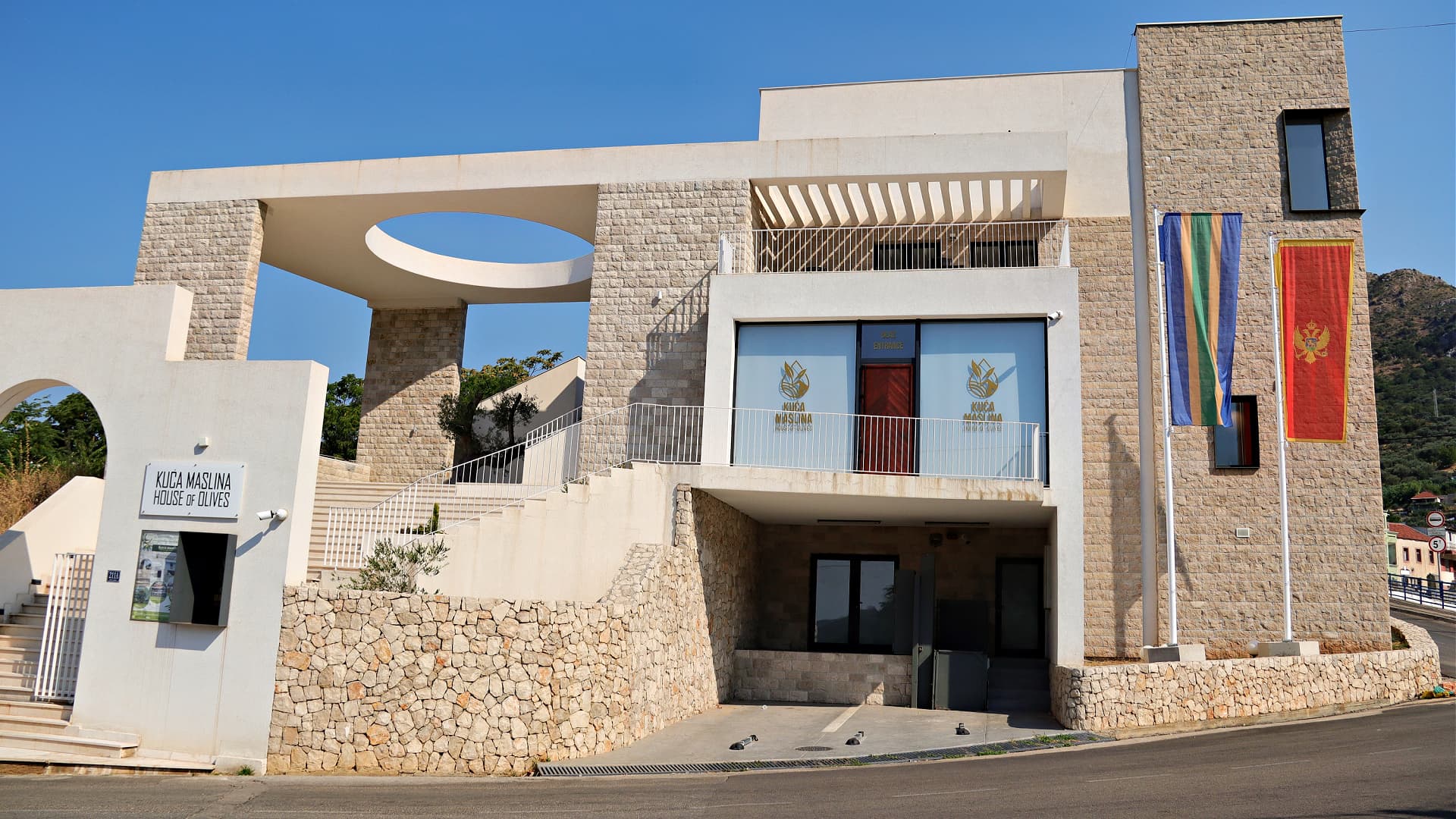
Montenegro’s House of Olives
Growers and millers in Montenegro are increasingly connected with their counterparts in Croatia, Greece, Albania, and Italy, exchanging valuable knowledge about production and processing.
This year’s campaign features a special, limited-edition olive oil produced from the Stara Maslina in Mirovica, near the coastal town of Bar, one of the oldest olive trees in the world. Protected by state law since 1957, the monumental tree is estimated to be 2,250 years old.
“We are proud to have produced this special olive oil in the year we celebrate the tree’s jubilee,” Markoč said.
House of Olives serves as a hub connecting Montenegro’s agricultural and tourism sectors, supporting rural development and farmer education. The initiative, launched through collaboration between national and local authorities and the Administration for Capital Projects, includes a new laboratory for chemical and organoleptic analysis of olive oil quality.
“The team is dedicated to preserving the autochthonous assortment and genetic resources characteristic of Montenegrin soil,” Markoč said. The group includes agronomists, biotechnologists, economists, engineers, and sommeliers specializing in olive oil quality and assessment.
Beyond traditional production, Montenegrin experts are exploring how to expand cultivation in response to climate change. “They recognize the opportunity to extend olive orchards into the country’s central, continental areas,” Markoč explained. “Modern olive growing is no longer a choice — it’s an obligation.”
While embracing innovation, Montenegro’s producers are not pursuing high-density or super-intensive systems. “It would not even be possible here due to our unique landscape and mountainous terrain,” Markoč said. Instead, growers are focusing on adapting traditional methods and diversifying with foreign cultivars to improve fertility and productivity.
Markoč emphasized the importance of education and awareness among growers. “High-quality multi-varietal blends are not obtained by mixing all varieties from the grove,” she said. “Blending requires knowledge and precision.”
She noted that many growers are unaware of Montenegro’s numerous native olive varieties beyond the popular Žutica. These include Barkinja, Drobnica, Gloginja, Lumbardina, Lumbardeša, Sitnica, and Šarulja, as well as foreign varieties such as Frantoio, Leccino, Arbequina, Koroneiki, Maurino, and Pendolino.
“I particularly appreciate Coratina among the Italian cultivars, which shares many similarities with our domestic Žutica,” she said. Growers are also experimenting with Croatian varieties like Oblica, Istarska Bjelica, and Buža.
Ongoing initiatives include identifying ancient trees and clones with naturally high polyphenol content. “The academic community should intensify these efforts, as such varieties are vital for preserving olive genetic heritage,” Markoč said.
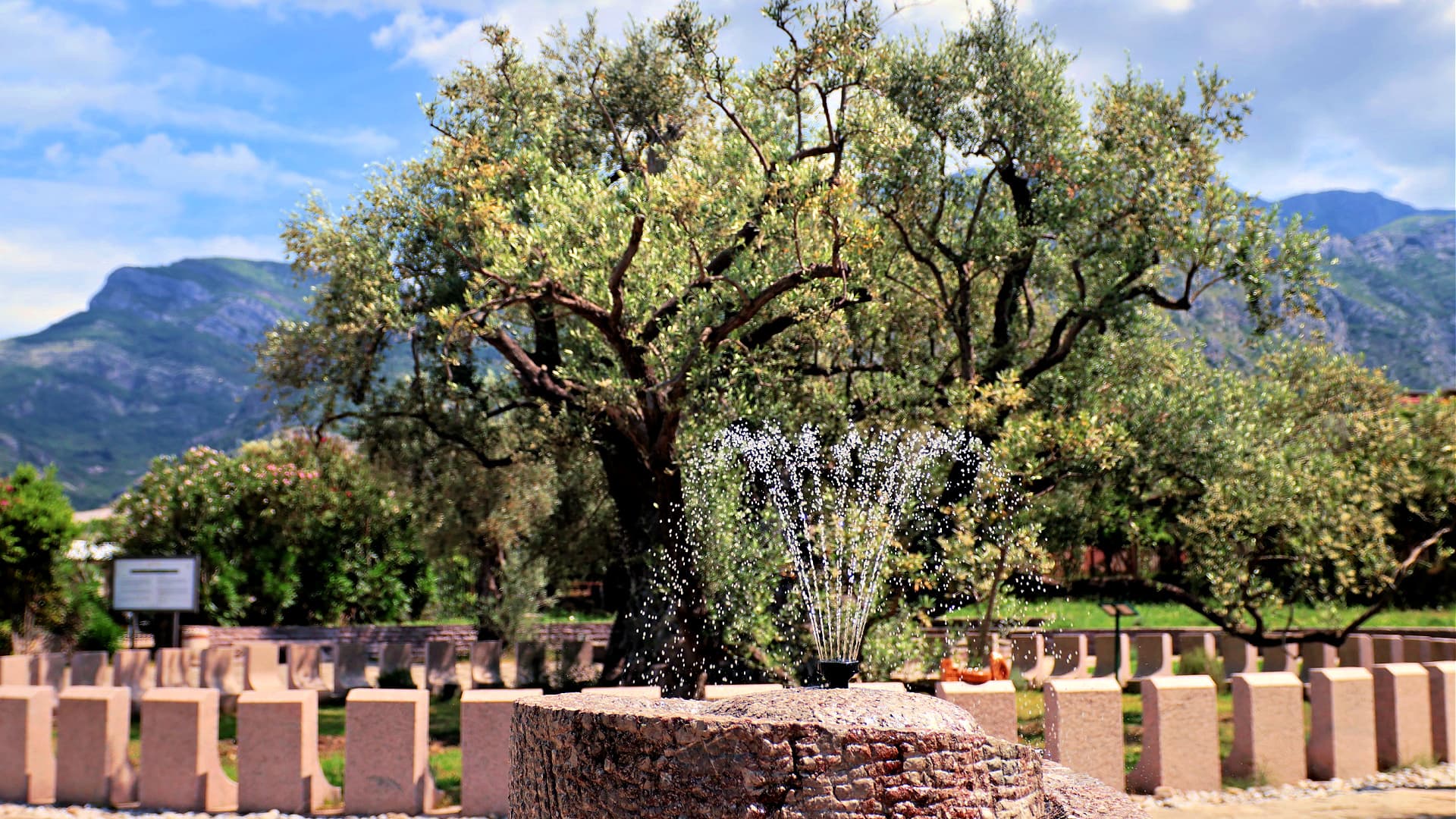
Stara Maslina in Mirovica
She added that the sector’s next steps should include expanding cultivation and developing tertiary industries — from by-product processing and packaging to marketing, education, and waste management.
Markoč cited a previous project on pelletizing olive production waste as “a perfect way to regulate waste in an environmentally friendly manner.”
Ultimately, she believes greater attention must be paid to Montenegro’s millennial trees and historic groves. “They are a treasure we do not appreciate enough,” she said. “We must recognize the obligation to preserve them — and the potential they hold.”
Research shows that olive oil produced from hand-picked fruit from these old plantations has higher polyphenol content and more potent antioxidant properties. “These oils not only deliver greater health benefits but also feature a distinctive sensory profile — a harmonious balance of fruitiness, bitterness, and pronounced spiciness,” Markoč said. “They represent the finest expression of Montenegro’s olive-growing heritage.”