
The midterm elections are rapidly approaching in the United States, with all 435 members of the House of Representatives and 35 Senators on the ballot, and widespread discontent with the governing Republican Party during President Donald J. Trump’s second term.
However, the North America Olive Oil Association executive director Joseph R. Profaci said the first two years of Trump’s second term have not been bad for the olive oil industry, even factoring in the on-again, off-again impact of tariffs on U.S. olive oil imports.
We are reaching a demographic that was not part of the olive oil world.
“There have been a lot of positives under [the leadership of Robert F. Kennedy, Jr. at the Department of Health and Human Services], and I think the good of what’s happened in the last two years far outweighs the bad,” Profaci told Olive Oil Times.
“He has assembled a team of advisors who are apparently very aware of olive oil and its health benefits. Among them is [senior advisor] Calley Means, who I believe is a supporter of olive oil,” he added.
One way the Trump administration has supported the olive oil industry is by revising and finalizing a Food and Drug Administration health claim rule initiated by President Joseph R. Biden, Jr.’s previous administration.
“When Trump took office, the new administration had a review period before the rule took effect. They reviewed it for a few weeks and confirmed it,” Profaci said. “Olive oil is prominently featured as one of the products that can now be labeled healthy.”
“The new rule applies to pretty much all plant-based cooking oils with less than 20 percent saturated fat, which is basically all of them except coconut oil,” he added. “But what did they choose to use as the symbol? A bottle of olive oil, with a little olive branch and olives below it.”
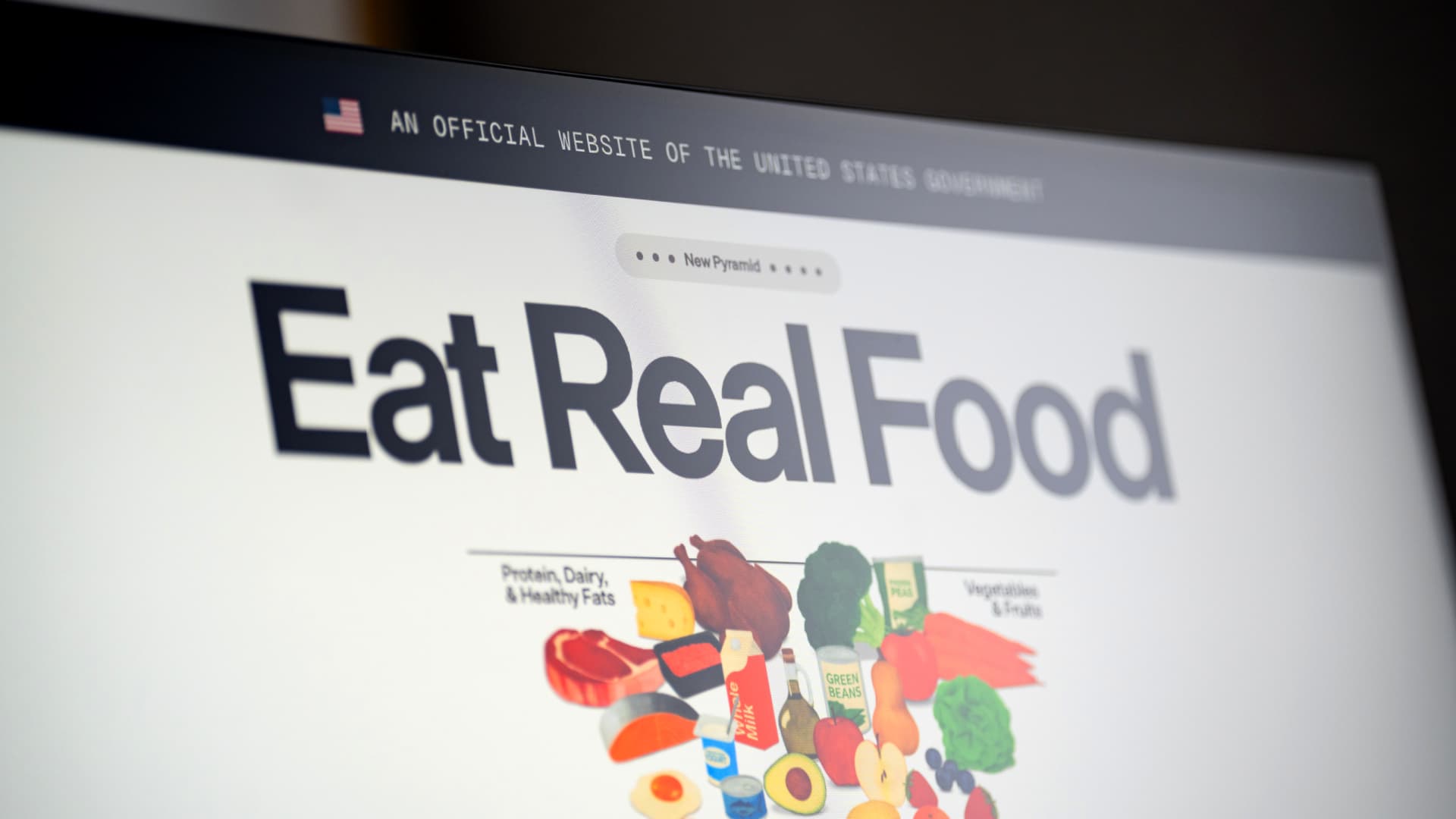
Profaci also noted the prominent role of a cruet of olive oil at the center of the Trump administration’s re-imagined food pyramid, applauding the administration’s effort to replace recommended dietary guidelines with recommended real food, which he believes more closely tracks with modern understanding of food science and nutrition—without getting into which foods, other than olive oil, deserve to be promoted.
However, there has been plenty of criticism of the new food pyramid, including placing no limits on recommendations to consume red meat or saturated fat, despite decades of evidence linking high saturated fat consumption with higher rates of strokes or heart attacks.
Profaci said he prefers to focus on the administration’s relationship with olive oil rather than comment on other administration health policies. Instead, he praised the new dietary guidelines recommendation for Americans to cook with “essential fatty acids, such as olive oil.”
Profaci also applauded the role of Kennedy’s new government-funded Real Food Show, which featured olive oil prominently in the first episode with guest chef Andrew Gruel and, in the most recent episode, included a “non-negotiable” recommendation from Lori Taylor of Produce Moms to stock your pantry with olive or avocado oil.
In the debut episode, Gruel and Kennedy prepared crispy salmon cakes with a side salad. Gruel began by recommending baking salmon fillets in “good extra virgin olive oil” to “introduce addictive flavors” without increasing cost or ultra-processed foods.
However, Gruel also said beef tallow or avocado oil were adequate olive oil substitutes, recommendations with which some health professionals disagree.
Notably, other recipes recommend avocado oil, which also lacks the health benefits associated with extra virgin olive oil, specifically the polyphenols.
Later in the process, Gruel instructed viewers to use one-quarter cup of extra virgin olive oil in a vinaigrette for the side salad, emphasizing the nutritional value it adds and that the home preparation costs about half as much as a store-purchased salad dressing.
“Here we have the Secretary of Health and Human Services standing next to a chef who is pouring extra virgin olive oil all over the place,” Profaci said. “It’s quite remarkable.”
He added that he had shown the clip at a recent conference in Spain, where members of the local olive oil industry remarked that no member of the Spanish government would make such an explicit endorsement of the product.
Complementing Kennedy’s efforts to promote whole foods, Profaci said NAOOA research has shown an increase in Google keyword searches for olive oil and related topics.
“We found that searches for extra virgin olive oil were up about 22 percent year over year, while searches for all other cooking oils were down by roughly the same amount,” he said. “We subsequently ran another search to find out what people were asking about extra virgin olive oil. By far, the two most popular topics were cooking with it and its health benefits, which were tied.”
Profaci added that questions about purity and price were negligible in comparison, which he said was a real shift in what people are interested in and want to learn about compared to previous research.
“To me, this is a really unusual time. In my nine years as executive director, I’ve never seen an environment like this,” he said. “ We are reaching a demographic that was not part of the olive oil world.”
Profaci said that the NAOOA’s proprietary data supports this claim, with household penetration increasing from 38.5 percent to 41.3 percent as of April 2025, before the Trump administration announced its first wave of tariffs.
Despite the apparent benefits to olive oil consumption from Trump administration efforts around dietary changes, the impact of tariffs is difficult to ignore.
Profaci added that the same data indicated that overall U.S. consumption has not increased, which he attributed to a “price barrier,” partially raised by tariffs.
According to data from the United States Department of Agriculture, domestic olive oil consumption dropped from 454,000 metric tons in the 2024/25 crop year to 430,000 tons in 2025/26. However, the USDA forecasted consumption to rebound to 454,000 tons in 2026/27.
The U.S. originally implemented a 25 percent tariff on olive oil in April 2025 under the International Economic Emergency Act. After the U.S. Supreme Court ruled it unlawful, the Trump administration implemented a 10 percent tariff in March 2026 under a separate framework.
“Global olive oil costs have fallen significantly, but because of tariffs, that relief isn’t reaching American families,” Profaci wrote to the U.S. Trade Representative in May.
According to NAOOA projections, American consumers are likely spending $2 (€1.79) to $3 (€2.68) more per liter of olive oil than in a scenario without tariffs, about an 18 to 25 percent premium.
For his part, Profaci said the NAOOA has lobbied the Trump administration to exclude extra virgin olive oil imports from tariffs, citing their role in the Make America Healthy Again agenda.
“They gave coconut oil an exemption, and not olive oil,” Profaci said. “I believe the reason is that they know that olive oil is very important to the European economy.”