The Essential Guide to Extra Virgin Olive Oil
What makes an olive oil ‘extra virgin?’ How is EVOO made, and why is it the healthiest cooking oil? We have answers.
Extra virgin olive oil can be confusing, but it doesn’t have to be. Understanding what makes this elite grade of olive oil so special comes down to a few basic facts.
In this article:
What ‘extra virgin’ really meansYou can taste the difference
How extra virgin olive oil is made
Why extra virgin olive oil is so healthy
Cooking with extra virgin olive oil
Where to buy extra virgin olive oil
Extra virgin olive oil is the highest quality of olive oil and is governed by the strictest chemical and organoleptic standards.
As a result, extra virgin olive oil provides the most health benefits and is the most flavorful of the nine grades of olive oil.
Extra virgin olive oil is also the most difficult to produce and requires both chemical and organoleptic assessments, making it the most expensive grade of olive oil to produce.
However, anyone who has tasted high-quality extra virgin olive oil knows it is worth all the trouble.
What ‘extra virgin’ really means
The Codex Alimentarius and International Olive Council (IOC) – the two main sources of governance over olive oil quality – define extra virgin olive oil as having excellent flavor and odor.
To be ‘extra virgin,’ an olive oil must have a median of defects – or the median score of one of the 12 olive oil defects, which is perceived with the greatest intensity – as zero, and the median of fruitiness above zero (but more on that later).
Extra virgin olive oil also has a free fatty acid content expressed as oleic acid of less than 0.8 grams per 100 grams, the lowest of any non-refined grade of olive oil. (The refining process removes free fatty acid, which is why refined olive oils have less.)
Generally, the higher values of free fatty acids indicate that the triglycerides, which bind three fatty acids to a glycerol backbone, have broken down. This happens when olive oil is made from damaged or diseased fruit, when there are delays in the milling process, or when the oil is exposed to high temperatures or other poor storage conditions.
While 0.8 grams per 100 grams is the highest acceptable amount of free fatty acids in extra virgin olive oil, many of the highest-quality EVOOs have a free fatty acid content closer to 0.3.
In addition to the free fatty acid content, the milliequivalent peroxide oxygen per kilogram of the oil must also be less than or equal to 20. The higher the peroxide value recorded, the more oxidation that has already taken place, and the less time the oil is likely to be fresh.
While most governments follow Codex Alimentarius and IOC standards, the definition for extra virgin olive oil is stricter in California, which permits a free fatty acid content expressed as oleic acid of less than 0.5 grams per 100 grams. However, the organoleptic requirements remain the same.
You can taste the difference
Away from the chemical parameters, extra virgin olive oil is also judged by the magnitude of its three positive attributes and the absence of five common defects.
EVOO’s positive attributes – fruitiness, bitterness and pungency – are determined by a trained tasting panel using a linear scale to rate their intensity.
Fruitiness is determined by an oil’s aroma and taste. It is often described as fresh, green, mature and ripe.
On the other hand, bitterness is perceived on the tongue and is a less sought-after flavor in most foods.
However, its presence indicates that an extra virgin olive oil has been made with fresh olives and is full of polyphenols. As with certain types of beer, chocolate and coffee, bitterness is an acquired taste. A true appreciation of the flavor comes over time.
See Also: Certain Food Proteins Reduce Bitterness and Pungency of EVOOThe third positive extra virgin olive oil attribute is pungency, a stinging sensation in the back of the throat and associated with the presence of oleocanthal, a polyphenol. Pungency, which has a similar sensation to that of chili peppers, is also an acquired taste.
Producers must balance these positive attributes when crafting a high-quality extra virgin olive oil to create the most flavorful oil possible.
Along with the positive attributes, tasting panels also identify the five most common negative ones listed by the IOC: frostbitten, fusty, musty, rancid and winey. Any of these defects means that an olive oil cannot be graded as ‘extra virgin.’
Frostbitten olives give the olive oil sample a wet-wood taste. The defect occurs when the olive trees are damaged by frost.
Fustiness occurs when olives are stored improperly after harvest and before milling and begin to ferment. Fustiness can be detected both by taste and a muddy sentiment that forms at the bottom of the container.
Mustiness, which gives olive oil a humid or earthy taste, occurs when fungi or yeast grow on olives due to humid storage conditions or if they have not been washed.
Rancidity is a fat “gone bad.” It occurs when the oil is oxidized, which happens with prolonged exposure to air, heat or light, and naturally occurs over time. Rancid oils have a greasy mouthfeel and a waxy, stale taste.
When olive oil becomes winey, it develops a vinegary, acidic or sour taste. The defect occurs when mill equipment is not properly cleaned, and olive residue begins to ferment, forming acetic acid, ethanol and ethyl acetate.
How extra virgin olive oil is made
EVOO is extracted mechanically without heat or chemical solvents.
The process begins in the olive groves. After daily temperatures have cooled, farmers harvest their olives (by hand or mechanically) and immediately take them to the mill.
Lower temperatures during harvest help preserve polyphenols in EVOO, so many farmers in hotter regions opt to harvest at night.
Once the olives arrive at the mill, the leaves are removed, and the olives are washed.
See Also: Spanish Study Suggests More Effective Way to Transform Cold-Stored OlivesAfter the olives are washed, they are brought to the grinder. Most modern mills use a blade, disc or hammer mill to grind the olives into a paste. Traditional mills still use stone mills, but these are less efficient.
After being crushed, the olive paste goes to the malaxer, where it is slowly stirred, and the oil droplets accumulate. This is the stage at which olive oil develops its characteristic aromas and flavors.
From the malaxer, the paste is brought to the centrifuge to separate the oil from the water and pomace, solid waste comprising stems and pits. Traditionally, this was done with a hydraulic press (hence the term cold-pressed).
After the first centrifugation, many mills opt to centrifuge the leftover oil again to remove the last of the water and pomace particles.
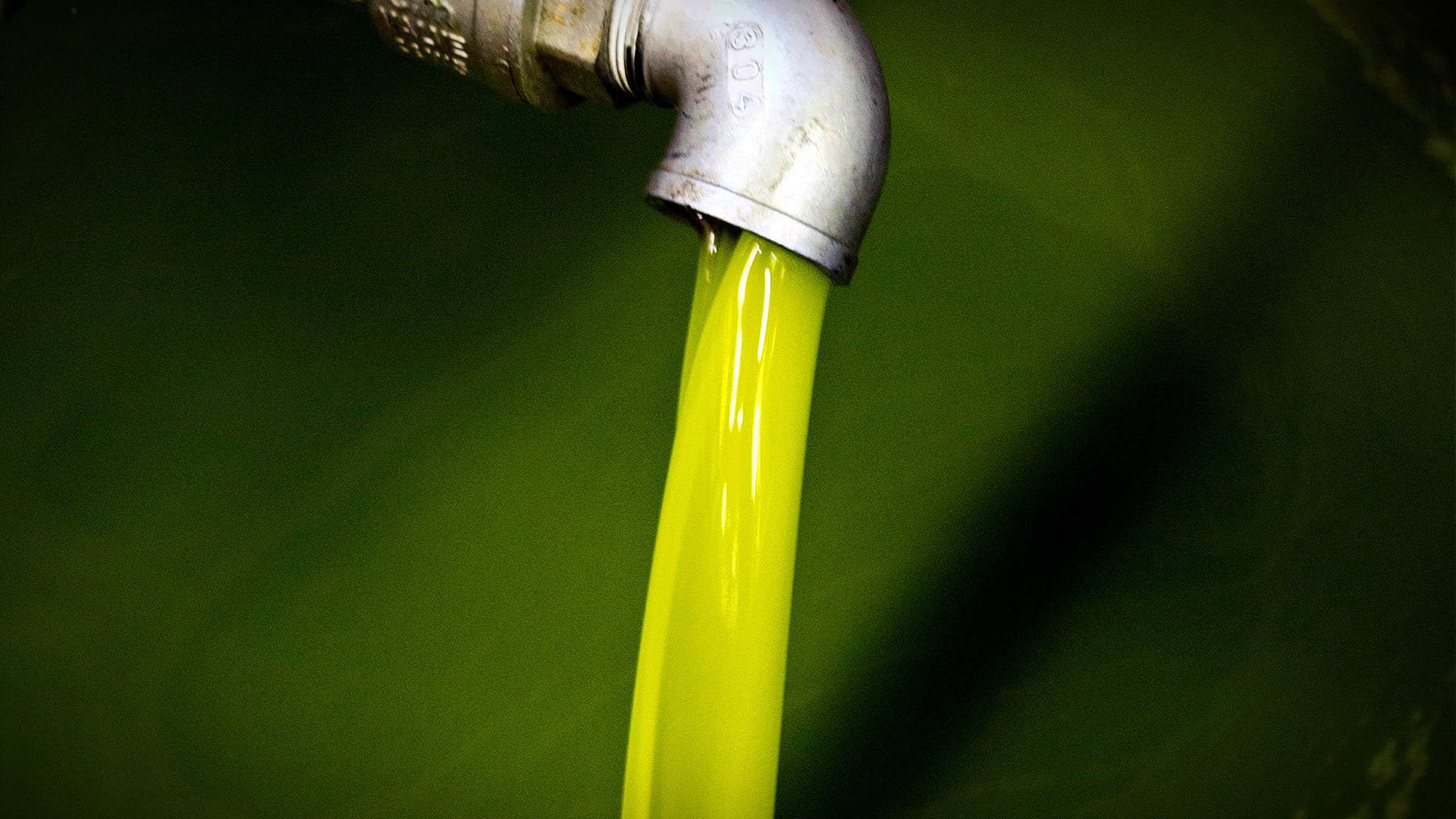
From here, the oil is poured out and either filtered and/or stored in stainless steel tanks under an inert gas.
Provided the oil meets the aforementioned chemical and organoleptic standards, it is graded as ‘extra virgin.’
Why extra virgin olive oil is so healthy
The monounsaturated fatty acids and bioactive compounds, such as polyphenols and vitamin E, confer a wide range of health benefits on extra virgin olive oils that are not present in other oils.
The overwhelming majority of these health benefits come from the polyphenols in EVOO, which is why virgin and refined olive oils do not offer the same health benefits.
Lowering the risk of cardiovascular disease and diabetes, preventing cancer, and reducing the risk of a range of neurodegenerative diseases are the main health benefits of EVOO.
However, there are also plenty of others, ranging from improved skin care and dental hygiene to other diseases associated with inflammation. Scientists in Spain are even using supplements made from polyphenols found in extra virgin olive oil in a trial to treat Covid-19.
These health benefit bona fides have been borne out over the past 60 years by thousands of peer-reviewed academic studies.
You should cook with extra virgin olive oil
Due to its healthy qualities and exquisite flavor profiles, extra virgin olive oil should be an essential ingredient in every cook’s kitchen. Plenty of Michelin-star chefs think so.
While most consumers are accustomed to dipping bread in or dressing salads with extra virgin olive oil, there are plenty of other excellent culinary applications.
See Also: Cooking With Extra Virgin Olive OilEVOO’s high smoke point – up to 240 ºC (475 ºF) for short periods and 180 ºC (355 ºF) for longer periods – is excellent for baking, grilling, sauteéing and frying.
However, extra virgin olive oil is best known as a finishing oil and an excellent option for making stews and soups.
While extra virgin olive oil has proven to be an essential ingredient in any cook’s pantry, it is important to note that not all EVOOs are created equally.
Depending on the dish, cooks should select a delicate, medium or robust oil (measured by fruitiness). While some recipes specify the type of extra virgin olive oil necessary, there are a few rules of thumb for pairing food and extra virgin olive oils.
- Delicate extra virgin olive oils have the lightest flavors and are best for sautéing and baking. They are also excellent for complementing the subtle flavors of fish and poultry.
- Add a medium extra virgin olive oil to soups and salads with strong flavors for an extra kick.
- A robust extra virgin olive oil is great for adding flavor to soups, stews and red sauces. They are also great for finishing grilled red meat dishes.
Where to buy extra virgin olive oil
Specialty food shops that deal directly with producers or importers are the best place to start when looking for extra virgin olive oil.
The retail finder on the Official Guide to the World’s Best Olive Oils makes it easy to find award-winning extra virgin olive oils near you or through online retailers.