Researchers Uncover Hidden Genetic Diversity in Southern Italy’s Ancient Olive Trees
Researchers identified 114 previously uncatalogued genetic profiles among ancient olive trees in Calabria and Basilicata, highlighting a largely unexplored reservoir of biodiversity with potential value for breeding and climate resilience.
A team of researchers found greater genetic diversity than expected among ancient and monumental olive trees sampled across Calabria and Basilicata in Southern Italy.
The study, published in Frontiers in Plant Science, analyzed 347 olive trees from the two regions, including 172 monumental specimens, some of which have survived for centuries.
We have extraordinary potential, but much of it remains unexplored.
Researchers identified 114 distinct genetic profiles that did not match any cultivar in the reference databases they used, revealing a previously undocumented reservoir of olive biodiversity.
Given the high proportion of previously unidentified genetic profiles found in the limited survey, the researchers believe broader sampling could reveal even greater diversity.
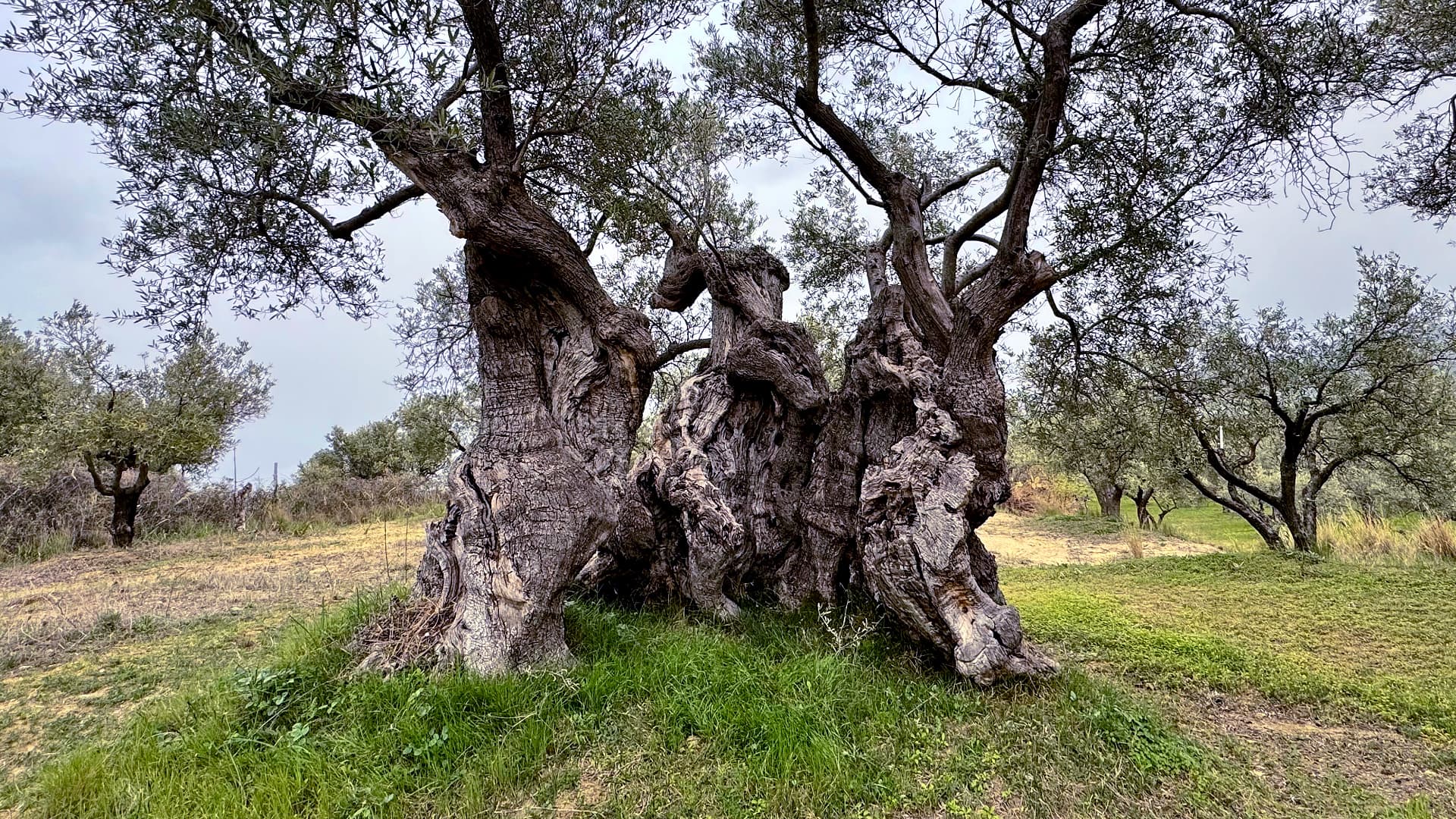
Scientists studying ancient olive trees in Calabria and Basilicata found dozens of previously unidentified genetic profiles, unusual reproductive patterns and clues to centuries of olive cultivation across the Mediterranean. (Photo by Thomas Vatrano)
“We expected to find a rich biodiversity, not up to those numbers though. It is impressive and highly interesting, it is a genetic potential that could also hold solutions to some of the challenges faced by the olive sector today,” Thomas Vatrano, agronomist and co-author of the study, told Olive Oil Times.
Vatrano, who has been investigating Calabria’s largely unexplored olive biodiversity for about 15 years, said climate change, productivity challenges and emerging pathogens have made identifying and studying this genetic heritage increasingly urgent.
“I firmly believe that biodiversity can save us,” Vatrano said. “With the arrival of Xylella in Calabria, I am even more convinced of this. With all the biodiversity we have here, I believe there must be material somewhere that can show resistance or other useful characteristics.”
Scientists used different molecular markers to identify the trees’ genetic profiles, trace their maternal lineages and determine their reproductive compatibility.
By comparing the genetic makeup of canopies and rootstocks, they also uncovered evidence of centuries-old grafting and selection practices.
“During the project I travelled across Calabria, from the north to the deepest south, and I would say I collected perhaps 30 percent of what could be there,” Vatrano said. “So you can imagine what may still remain to be found.”
Referring to the newly identified genetic profiles, Vatrano stressed that an unidentified genotype should not automatically be described as a new cultivar.
“When we say that a genotype is uncatalogued or previously unidentified, it means that its genetic profile does not match the international reference databases,” he said. “It can be a new individual, it can be an oleaster (wild olive), or it can be a plant that over time became important to a local population, which people may have used for olive oil without knowing its origin.”
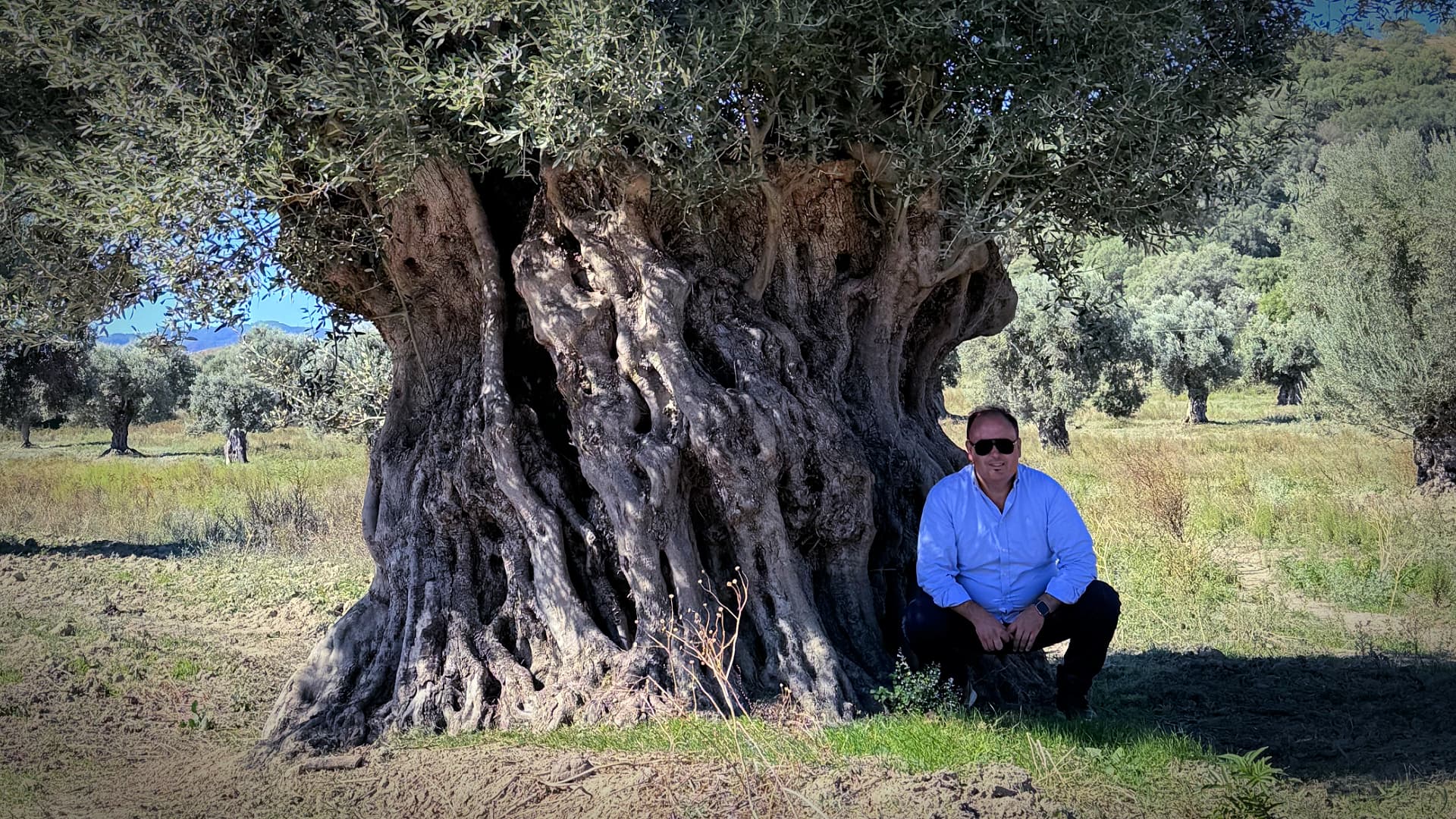
Thomas Vatrano beside a monumental olive tree in Calabria, where researchers uncovered unexpectedly rich genetic diversity among ancient specimens.
The genetic analysis also added new details to the history of olive cultivation in the region.
Vatrano pointed to material collected in Santa Sofia d’Epiro, an Arbëreshë community in Calabria’s Cosenza area, where local populations have cultivated olives for generations.
“Who knows whether one of these plants may have been brought there by Arbëreshë communities centuries ago,” he said, referring to the migration of populations from the Balkans to Southern Italy in the 14th and 15th centuries. “There are plants that local people still use to make olive oil, but whose origin we simply do not know.”
The study also provided genetic evidence consistent with historical grafting practices and showed that the hidden diversity is not confined to the visible, productive portions of the trees.
Researchers identified 34 cases in which the canopy and rootstock had different genetic profiles. They also found 35 uncatalogued genotypes exclusively in rootstocks, suggesting that ancient olive trees may preserve genetic material no longer represented in the cultivars growing above them.
The researchers traced the trees’ maternal genetic lineages by analyzing DNA contained in chloroplasts, cellular structures whose genetic material can be used to follow maternal inheritance. This allowed them to distinguish between two major lineages, known as E1 and E2.
The cultivated canopies predominantly belonged to the E1 lineage, associated with the Eastern Mediterranean and widespread among cultivated olives. Many rootstocks, however, preserved the E2 lineage, associated with indigenous Central-Western Mediterranean olive populations.
According to the researchers, the divide is consistent with generations of farmers grafting selected cultivated varieties onto local wild olive trees already adapted to local conditions.
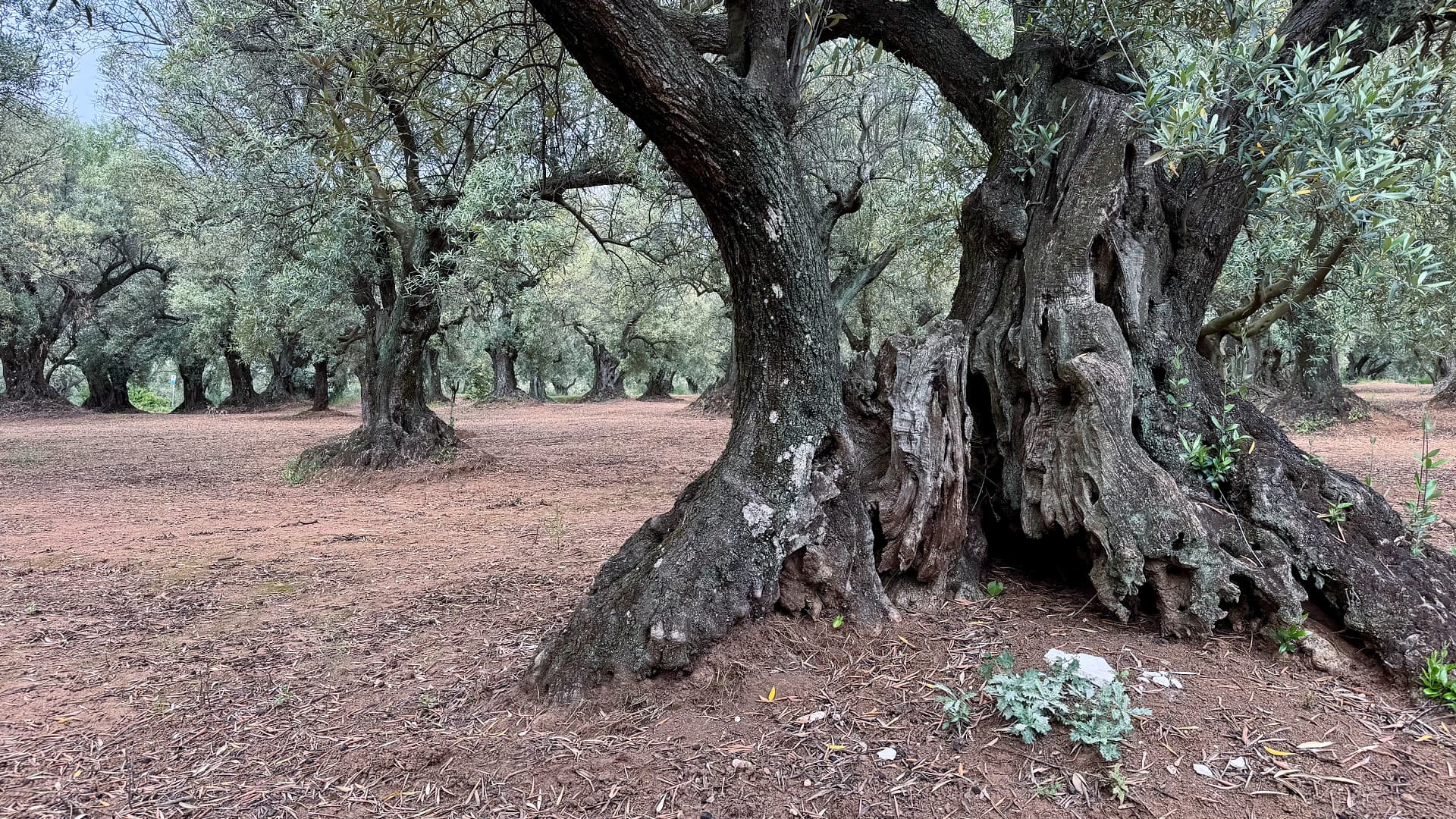
Scientists studying ancient olive trees in Calabria and Basilicata found dozens of previously unidentified genetic profiles, unusual reproductive patterns and clues to centuries of olive cultivation across the Mediterranean. (Photo by Thomas Vatrano)
Among the most unusual findings were three Calabrian trees showing evidence of possible polyploidy.
Olive trees are normally diploid, meaning their cells carry two sets of chromosomes, one inherited from each parent. A polyploid plant, by contrast, carries additional sets of chromosomes.
The researchers cautiously described the finding as “putative polyploidy” because they did not directly count the trees’ chromosomes.
Instead, the signal came from their genetic profiles. While a diploid plant would normally show no more than two alleles, or different versions of the same DNA region, at each marker, the three trees showed more than two at eight of the 10 markers examined.
To rule out laboratory error, the researchers extracted DNA three separate times and ran the amplification and genetic analyzer in duplicate, consistently obtaining the same pattern.
They also found that the canopies and rootstocks had identical genetic profiles, suggesting the trees grew on their own roots rather than being grafted onto genetically different rootstocks.
If confirmed, the finding would be unusual because cultivated olive is generally regarded as a diploid species, while established cases of polyploidy have mainly been reported in other, geographically isolated olive subspecies.
The researchers also determined the reproductive compatibility group of the sampled trees.
Olive trees have a reproductive mechanism known as diallelic self-incompatibility, which divides them into two compatibility groups, G1 and G2. Trees belonging to the same group are reproductively incompatible: pollen from a G1 tree cannot normally fertilize another G1 tree, just as a G2 tree cannot normally fertilize another G2. Successful fertilization instead occurs between trees belonging to opposite groups.
Using a genetic marker, the researchers found a clear difference between the two regions. In Basilicata, G1 was strongly dominant, with 185 trees assigned to G1 and 64 to G2. In Calabria, the pattern reversed, with 62 trees in G2 and 36 in G1.
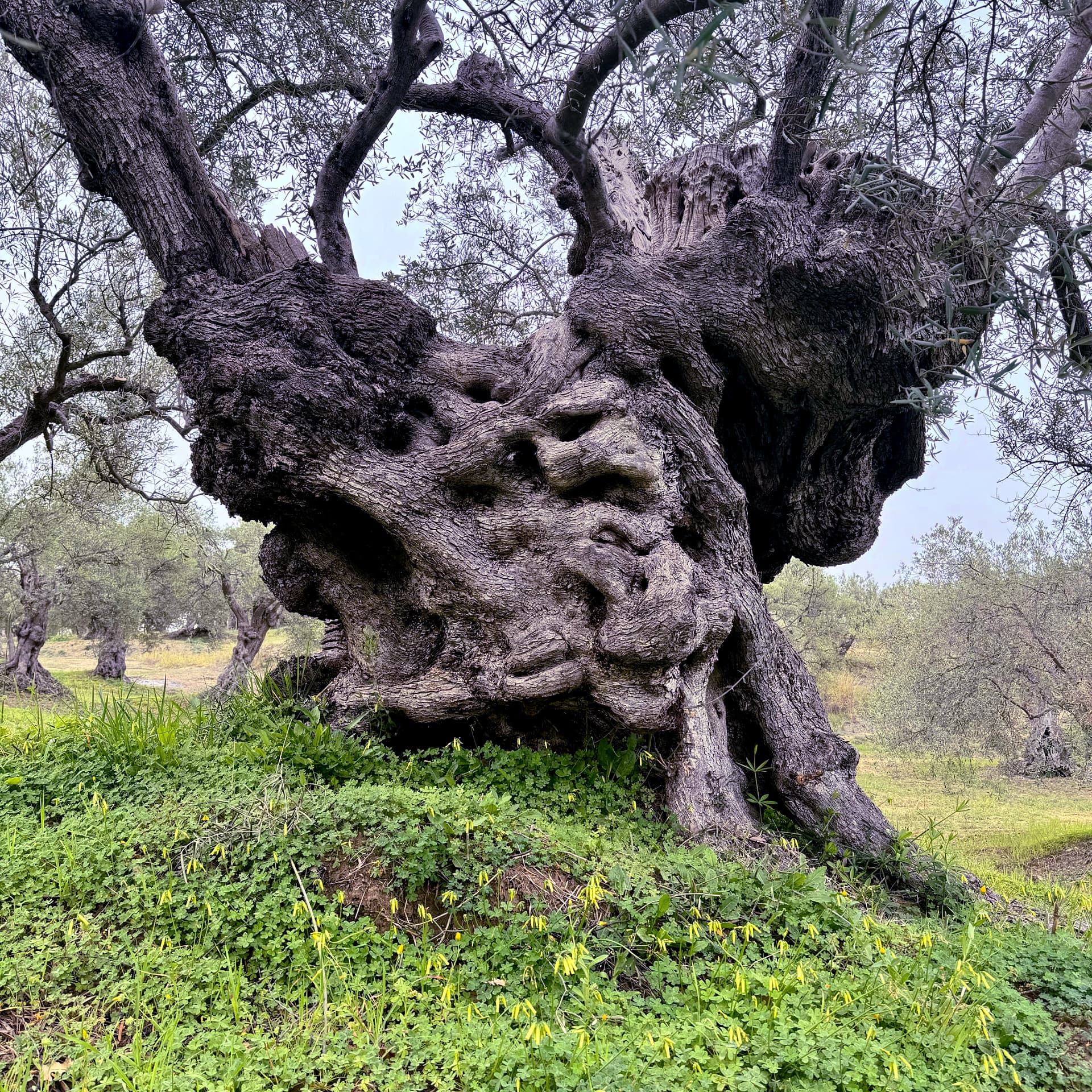
(Photo by Thomas Vatrano)
The finding has practical implications beyond understanding how local olive populations developed.
Knowing an olive variety’s reproductive compatibility group can help growers ensure suitable pollinators are present in an orchard and reduce the risk of poor fruit set. The same information can help researchers select compatible parents when developing new varieties through breeding programs.
The broader genetic analysis also showed that Southern Italian olive populations were far from isolated. The local material shared genetic affinities with other Mediterranean populations, particularly those from Greece and Algeria, a pattern consistent with a long history of movement and exchange of plant material across the Mediterranean.
“There is an enormous amount to investigate,” Vatrano said. “We found ancient oleasters, rootstocks associated with Greek varieties and with material connected to the Eastern Mediterranean. All of this helps reconstruct the long process of olive domestication and the movement of plant material from east to west.”
For Vatrano, identifying this diversity extends beyond reconstructing agricultural history.
“Climate change does not necessarily threaten the survival of the olive tree as a species,” Vatrano said. “The plant may survive extreme drought, but it can drop its fruit, and then we have no production. What we have to protect is agricultural production.”
“We have extraordinary potential, but much of it remains unexplored,” he added. “There may be varieties better suited to high-density systems, varieties with useful growth habits, or material that could be used to develop clonal rootstocks. We have a great deal of biodiversity, but we still know far too little about it.”
The next step, Vatrano said, should be to preserve and evaluate the material identified in the survey rather than allow the work to end with genetic characterization.
“We should establish a germplasm field collection, propagate these plants and start working on them,” he said. “There are plants growing close to the sea that appear to tolerate extreme salt stress, ancient oleasters that could have potential as dwarfing rootstocks, and other material that deserves to be studied. The work should not stop here.”
Vatrano said he is concerned that some of the genetic material identified in the research could disappear before its agronomic value is properly understood.
“This is my fear,” he said. “We have identified all this material, but now it needs to be conserved and studied. There is still so much work to do.”