
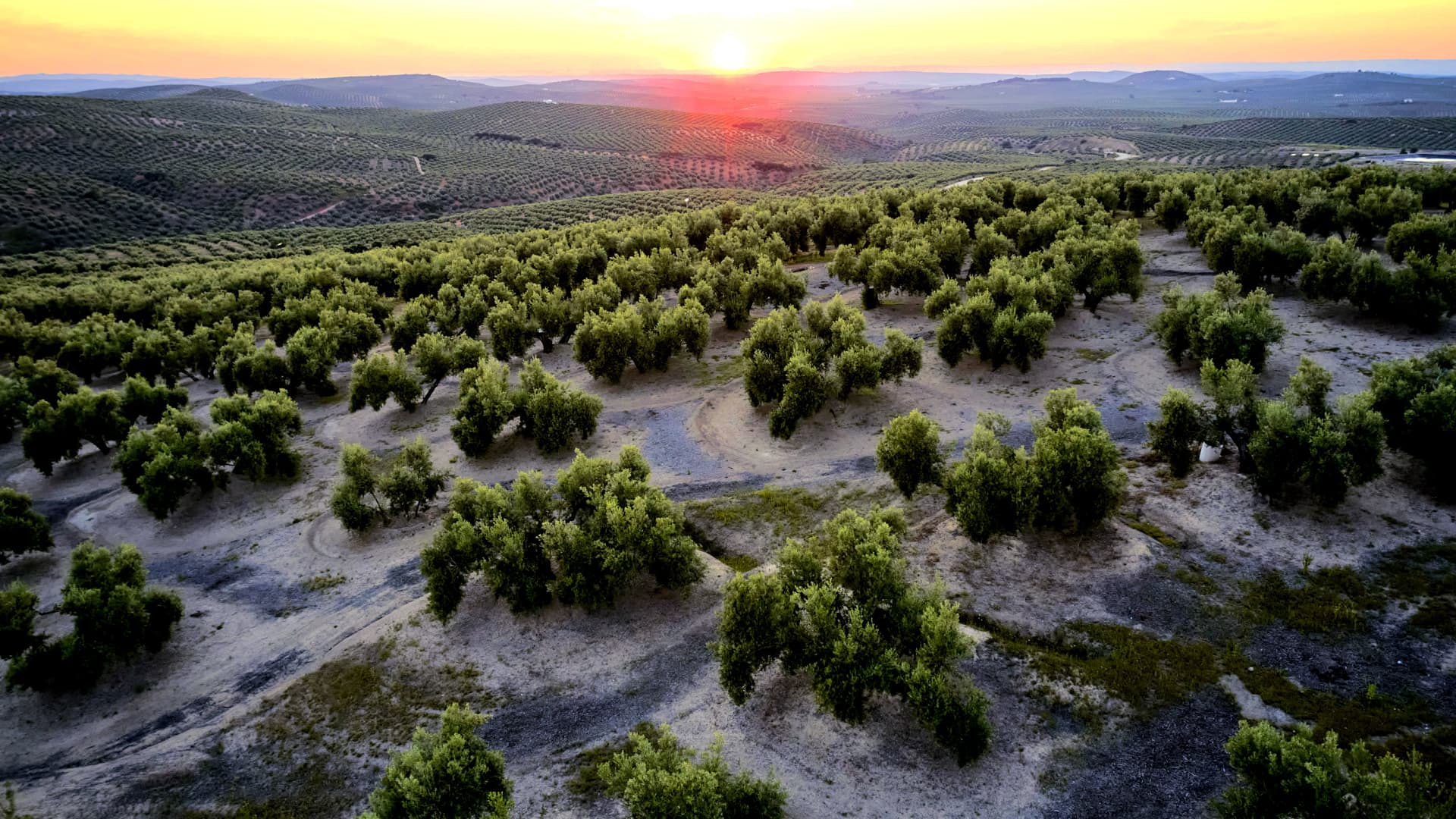
Spain’s Ministry of Agriculture, Fisheries and Food (MAPA) has published a resolution requiring mills to temporarily withhold an estimated 188,000 metric tons of olive oil from the market.
The olive oil market needs stability to avoid the dreaded price swings that harm both producers and consumers.
Under the measure, Spanish mills must withdraw 12 percent of the olive oil produced during the 2026/27 crop year and store it in their own facilities or those of third parties until September 30, 2027.
The order took effect at the beginning of November, exempting oil produced in October.
It applies to all olive oil grades, allowing mills to choose whether to withhold extra virgin olive oil, virgin olive oil or lampante oil.
MAPA said the measure “aims to regulate supply to improve and stabilize the functioning of the market and the sector.”
“The measure aims to guarantee the profitability of farmers and also protect the interests of olive oil buyers,” the ministry added. “The objective is to provide greater market stability, which will benefit both producers and consumers.”
According to the ministry, Spain is expected to produce 1.6 million metric tons of olive oil in the 2026/27 crop year, more than 23 percent above the previous season. The country entered the new campaign with 357,040 metric tons in stocks, also 23 percent higher than a year earlier.
“Based on this data, the technical criteria established in the marketing order for the activation of the product withdrawal mechanism are met, since the sum of the forecast for the new campaign and the carryover stocks from the previous one reaches 120 percent of the average olive oil production of the previous six campaigns,” the ministry wrote.
The ministry added that it could modify the measure after December 31, 2026, depending on how the harvest develops.
The decision also comes amid rising input costs, with local media reporting about 60 percent increases in fuel and 50 percent in fertilizer. The increases are partly attributed to shortages linked to conflict involving Iran and other parts of the Middle East.
Four major agricultural unions that have lobbied for the move welcomed the government’s intervention, hoping higher prices at origin would help offset rising production costs.
“The olive oil market needs stability to avoid the dreaded price swings that harm both producers and consumers. We hope this regulation will help resolve this,” said Cristóbal Cano, secretary-general of the Union of Small Farmers (UPA).
Francisco Elvira, head of the olive sector at the Coordinator of Farmers’ and Ranchers’ Organizations (COAG), argued that the mechanism would help prevent price volatility for consumers.
“It will prevent extreme situations such as seeing olive oil at nine euros in the supermarket or olive growers selling below cost,” he said.
However, other producers, bottlers and exporters have been more critical of the measure.
The National Association of Edible Oil Packers and Refiners (Anierac) said it would appeal the resolution, calling it “not the most appropriate” way to address the anticipated bumper harvest.
Anierac director Primitivo Fernández said a better approach would be to “seek new markets and outlets” for olive oil production that the domestic market cannot absorb.
Jerónimo Palacios, co-founder of Granada-based Molino & Cata, said producers of high-quality olive oil also oppose the measure.
He argued that the policy could encourage mills to produce lower-quality oils, since withdrawing them from the market could support their prices while spreading the risk among producers of high-quality extra virgin olive oils.
Rafael Picó, general manager of the exporter association Asoliva, said the measure could undermine Spain’s international competitiveness, given that about 70 percent of the country’s olive oil production is exported.
Other critics argued that the government should first seek to curb olive oil imports before removing domestic production from the market.
According to data from the Ministry of Economy, Trade and Business, Spain’s olive oil imports between October 2025 and August 2026 slightly exceeded 230,000 metric tons, an increase of more than 17 percent compared with the same period in 2024/25.
“It makes no sense to force us to store our oil to prevent prices from falling while allowing Moroccan and Tunisian products to enter the market at much lower prices,” one disgruntled producer told La Gaceta.